
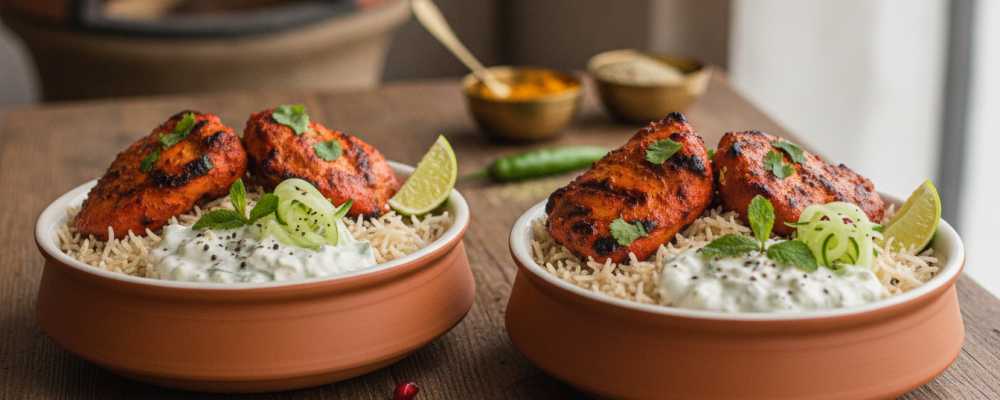

The tandoori marinade is one of the most efficient flavor and texture delivery systems in all of cooking, and understanding why it works the way it does is what explains both the recipe’s one-hour minimum marination time and the specific outcome it produces: chicken that is deeply colored, deeply flavored, and genuinely tender rather than simply well-seasoned.
Yogurt marinades operate through three simultaneous mechanisms. The first is enzymatic: yogurt contains naturally occurring proteolytic enzymes—primarily from the bacterial cultures used in its fermentation—that begin breaking down the surface proteins of the chicken’s muscle fibers during marination. This breakdown is mild and controlled, producing a more permeable surface structure that allows the marinade’s flavor compounds to penetrate more deeply than they could through an intact surface. The second mechanism is acid-based tenderization: yogurt’s lactic acid continues the surface softening that the enzymes begin, but through a different chemical pathway—partial denaturation of the myosin proteins at the fiber surface rather than enzymatic hydrolysis. Together, these two mechanisms produce a chicken surface that is physically more receptive to flavor absorption than raw, unmarinated chicken.
The third mechanism is the most practically important for a bowl that will be stored and reheated: the yogurt’s protein matrix forms a physical coating on the chicken surface that slows moisture loss during cooking. This coating partially coagulates during the heat of cooking and creates a barrier between the chicken’s internal moisture and the drying effect of the pan—which is why tandoori chicken cooked from a yogurt marinade stays noticeably more moist through refrigerator storage than chicken cooked from an oil-based or acid-only marinade. The yogurt is doing structural preservation as much as flavor delivery, and that preservation extends meaningfully into the meal prep window.
─────────────────────────────────────────
The Inspiration Behind This Recipe
The design objective was to bring the specific qualities that make tandoori chicken extraordinary in a restaurant context—the char, the color, the deeply penetrated spice, the specific moistness of properly marinated chicken thighs—into a weekly meal prep format that is achievable in a home kitchen without a tandoor oven. The tandoor’s clay walls reach temperatures of 480 to 900°F and produce a cooking environment that no home oven can replicate; what can be replicated at home is the marinade’s function and a stovetop char that approximates the direct-heat character the tandoor produces.
Chicken thighs rather than chicken breasts are the correct protein choice for this bowl in a meal prep context, and the reasoning is straightforward: thigh meat has a higher fat content than breast meat (approximately 9% versus 3%), and that fat provides internal moisture during refrigerator storage in a way that breast meat cannot. Well-marinated, properly cooked chicken thighs are tender and juicy on day four; properly cooked chicken breasts in the same preparation are noticeably drier. The fat is not a nutritional compromise—it is the mechanism that keeps the bowl performing across the full week.
The cucumber raita is not a garnish in this bowl—it is an essential functional component. Tandoori masala’s heat compounds are fat-soluble and persistent; without a cooling dairy element to contrast them, the heat builds across the eating experience in a way that can make the bowl feel aggressive rather than generously spiced. The raita’s yogurt fat phase binds the capsaicin and other heat compounds on the palate, providing physical relief alongside its flavor contribution. The cucumber adds water content and crunch. The mint amplifies the cooling sensation through its menthol compounds’ action on cold receptors. The raita is a precision instrument, not an accessory.
─────────────────────────────────────────
A Brief History of Tandoori Cooking
The tandoor—a cylindrical clay oven used across South and Central Asia and the Middle East—is among the oldest cooking technologies still in active daily use, with evidence of clay oven use in the Indus Valley civilization dating back more than five thousand years. Its defining characteristic is the capacity to reach and sustain extremely high temperatures through charcoal or wood combustion in an enclosed clay environment, producing a dry heat that simultaneously chars the exposed surface of food and radiates intense heat from the clay walls to cook the interior. The result is a cooking outcome that no other method replicates: deep char at the surface, extraordinary moistness within.
Tandoori chicken specifically—the preparation of chicken marinated in spiced yogurt and cooked in the tandoor—is documented in the Mughal court cooking traditions of the Indian subcontinent, where it became one of the defining preparations of the elaborate dastarkhwan (spread) that characterized royal Mughal feasts. Its modern commercial form—the vivid red-orange color from Kashmir chili and food coloring, the slightly charred exterior, the deeply spiced yogurt marinade—was popularized in India in the 20th century and became one of the most globally recognized Indian culinary preparations through the diaspora and the international expansion of Indian restaurant culture.
Tandoori masala—the spice blend at the heart of the marinade—is a composite preparation that varies by regional tradition and individual recipe, but typically combines cumin, coriander, turmeric, garam masala, Kashmiri chili (for color as much as heat), dried ginger, and garlic into a single balanced blend. The use of Kashmiri chili specifically produces the deep orange-red color that is the visual signature of tandoori preparations without the corresponding high heat of other red chilies—a flavor and aesthetic calibration developed specifically for this preparation style.
─────────────────────────────────────────
Why This Cooking Method Works for Meal Prep
The one-hour minimum marination time is the preparation step that makes this bowl perform well across the full storage window, and it should not be shortened. One hour is the minimum time required for the yogurt’s enzymatic and acid mechanisms to meaningfully alter the chicken surface’s permeability—below this threshold, the marinade has primarily coated the surface without penetrating it, and the flavor result is similar to a dry-rubbed chicken with a yogurt exterior. At one hour, the marinade’s flavor compounds have penetrated the outer muscle fibers; at three to four hours, the penetration is noticeably deeper; overnight is the best possible result, producing chicken that is seasoned throughout rather than primarily at the surface.
Blooming the cumin seeds in butter before the chicken is added—rather than simply adding them to the cooked rice—is the technique that produces the most flavorful base for the bowl. Whole cumin seeds in hot butter undergo the same fat-soluble extraction process as any spice in hot fat: their essential oils dissolve into the butter and create a seasoned cooking medium that coats the chicken as it cooks. The same cumin butter flavors the pan drippings that eventually distribute through the assembled bowl at serving time. This is one step producing two flavor outcomes—the cumin character in the cooking fat and the cumin character in the residual pan flavors—and it is worth executing carefully rather than quickly.
The “slightly charred” instruction for the chicken is not aesthetic suggestion—it is a flavor specification. The Maillard reaction products that form at the chicken’s charred surface are among the most complex and most deeply savory flavor compounds available from a home stovetop preparation. They are also what makes reheated tandoori chicken taste genuinely good rather than merely adequate, because the char compounds are stable through refrigeration and reheating in a way that fresher surface flavors are not. A chicken that is merely cooked through but not charred at the surface will taste noticeably duller at day three than one that developed proper surface browning during cooking.
─────────────────────────────────────────
Flavor Profile: What to Expect
This bowl is bold, deeply spiced, and precisely balanced—a flavor profile built on the productive tension between heat and cooling:
- Complex tandoori masala depth – The bowl’s defining character: a layered spice blend whose cumin, coriander, turmeric, and chili components are each distinct in the first bite and unified in the finish—warm, earthy, and specifically identifiable as the flavor tradition it represents
- Charred, savory chicken thigh – The Maillard-reacted surface adds a deeply savory, slightly bitter complexity that no uncharred chicken can provide—the flavor that makes the whole bowl taste restaurant-quality rather than home-cooked
- Tangy, tenderizing yogurt marinade – Present in the chicken’s surface and as a flavor note in the pan fond—contributing its characteristic slight tang that complements and amplifies the spice blend’s complexity
- Cumin-butter basmati base – The bloomed cumin seeds release their essential oils into the butter and produce a grain base that is fragrant throughout—more aromatic than plain basmati and more specifically seasoned than salt-and-water rice
- Cool, creamy cucumber raita – The bowl’s essential counterpoint: yogurt’s fat phase cooling the spice, cucumber’s water content refreshing the palate, mint’s menthol deepening the cooling sensation—together producing a contrast that makes the chicken’s heat feel generous rather than overwhelming
- Bright lemon acidity – Present in the marinade and perceptible in the finished chicken as a vivid citrus brightness that cuts through the spice’s richness and keeps each bite tasting clean at the finish
The tandoori spice compounds continue to distribute through the chicken’s fat during refrigerator storage. Day-two chicken is more evenly and deeply spiced than day-one—a consistent pattern in any well-marinated meat preparation, and one of the better arguments for making this bowl on Sunday specifically.
─────────────────────────────────────────
Tips for Making the Best Tandoori Chicken & Cucumber Raita Rice Bowls
Execution at the marination and charring stages most determines the bowl’s quality:
- Marinate as long as possible – One hour is the minimum; overnight in the refrigerator is the optimal outcome. A longer marination produces a chicken that is more deeply seasoned throughout rather than primarily at the surface—a perceptible quality difference in every bite, particularly by day three of the prep week.
- Score the chicken thighs before marinating – Two or three shallow cuts made with a knife across the thickest part of each thigh significantly increases the marinade’s surface contact area and allows deeper penetration of the yogurt’s enzymes and the masala’s spice compounds. This technique is standard in restaurant tandoori preparation and produces a noticeably more deeply flavored result.
- Don’t skip the char – The “slightly charred” instruction is the most flavor-critical step in the recipe. Medium-high heat, minimal stirring during the first few minutes of contact, and patience with the sizzle produces the surface browning that makes this bowl taste specifically and authentically of its spice tradition.
- Use whole cumin seeds, not ground – Whole cumin seeds bloomed in hot butter produce a toasty, popped aromatic quality that pre-ground cumin cannot achieve—the seeds’ volatile oils are released by heat and fat-extraction in a way that produces a fresher, more vivid cumin character in the finished preparation.
- Make the raita fresh daily if possible – Raita stored for multiple days develops a progressively more watery consistency as the cucumber releases its liquid into the yogurt base. For the best texture and flavor, combine the cucumber, yogurt, and mint fresh each morning—it takes two minutes and produces a meaningfully better result. If batch-preparing, store the diced cucumber separately and combine with the yogurt at serving time.
- Rest the chicken before slicing – Five minutes of resting after cooking allows the internal juices to redistribute. Sliced resting chicken releases less liquid into the rice base during assembly and remains noticeably more moist when the bowl is reheated.
Optional: A drizzle of fresh mango chutney over the assembled bowl adds a sweet, fruity counterpoint to the spice that is deeply rooted in the same culinary tradition this recipe draws from—and makes the bowl taste specifically, memorably of a well-considered Indian restaurant preparation.
─────────────────────────────────────────
Portioning and Container Suggestions
This recipe produces four generous bowls from a single batch—one per day across a four-day lunch or dinner rotation. A three-container system works best per serving: the cumin-buttered basmati rice in one flat, wide container; the tandoori chicken in a second container; and the raita components—diced cucumber, yogurt, and mint—stored separately to be combined fresh at serving time. This separation prevents the raita’s moisture from softening the rice base and the chicken’s marinade from over-seasoning the raita yogurt during storage.
The rice container benefits from a wide, flat design that allows the cumin seed distribution to remain visible and accessible through the surface—spoon-serving from a deep container tends to leave the cumin seeds at the base where they contribute less flavor to each portion. A flat layer allows each spoonful to carry cumin across the full serving.
For a fully efficient grab-and-go setup, pre-portion the rice and chicken into individual daily containers on Sunday, and store the raita ingredients as a shared batch to be assembled at serving. Each day’s total assembly time—combining the cucumber, yogurt, and mint for the raita—is under two minutes and produces a result that is visibly and tastably better than pre-assembled raita stored for multiple days.
─────────────────────────────────────────
Storage, Reheating, and Shelf Life Tips
- Tandoori chicken storage: Keeps in an airtight container for up to 4 days in the refrigerator. The spice compounds continue distributing through the chicken’s fat phase in storage—day-two and day-three chicken is often the most deeply and evenly flavored.
- Basmati rice storage: Keeps for 4–5 days refrigerated. Add a teaspoon of butter or water before reheating to restore moisture and the cumin’s aromatic character.
- Raita: Best made fresh daily from stored components (pre-diced cucumber in one container, yogurt in another, mint separately). Pre-assembled raita keeps for 2 days maximum before the cucumber’s water content makes it noticeably watery. The two-minute daily assembly is worth it.
- Freezer storage: Tandoori chicken freezes exceptionally well for up to 2 months—the yogurt marinade’s fat is freeze-stable and the spice compounds maintain their character through the freeze-thaw cycle. Basmati rice freezes equally well for up to 2 months in portioned bags. Raita components do not freeze.
- Reheating the chicken: Microwave at 50–60% power for 60–90 seconds, or reheat in a lightly oiled skillet over medium heat for 2–3 minutes. Skillet reheating re-activates the char compounds at the chicken surface and produces a result noticeably closer to the freshly cooked version than microwave reheating.
- Reheating the rice: Add a teaspoon of butter, cover loosely, and microwave at full power for 60–90 seconds, stirring halfway through. The butter restores the fat phase that carries the cumin’s aromatic character and keeps the grains from clumping under microwave heat.
─────────────────────────────────────────
Why This Recipe Deserves a Spot in Your Meal Prep Rotation
The efficiency argument for this bowl is clean: a one-hour-minimum marinade that does three simultaneous jobs (tenderize, flavor, protect), a char step that produces the meal prep-stable surface compounds that make reheated chicken taste genuinely good rather than merely passable, and a raita that takes two minutes daily and provides the cooling balance that makes the spice feel generous rather than aggressive. The result is a bowl that performs at restaurant-quality flavor levels from a preparation that requires no specialized equipment and fits comfortably into any Sunday cooking session.
The stronger argument is the experiential one. Tandoori is one of the great spice traditions in the world—a preparation with centuries of refinement behind every decision in the marinade’s composition—and eating a properly made tandoori chicken bowl at desk on a Wednesday is a specific and genuinely meaningful flavor experience rather than simply a nutritious lunch. A bowl that tastes like it came from somewhere specific, made by someone who understood the ingredients and the tradition they represent, is a bowl that makes the week better in a way that is difficult to quantify but immediately felt. This bowl provides that experience, reliably and efficiently, across every day of the prep week. That combination of quality and consistency is worth building a Sunday prep session around.
─────────────────────────────────────────
Meal Prep Pairing Suggestions
Tandoori Chicken & Cucumber Raita Rice Bowls pair most naturally with other deeply spiced grain bowls that offer genuine contrast in protein and flavor tradition. Our Coconut Curry Chickpea & Basmati Rice Bowls are the natural South Asian rotation partner—both draw from the same broad spice tradition with the same grain base, but the curry bowl’s coconut milk richness and chickpea protein are completely distinct in character from the tandoori bowl’s dry-spiced char and chicken thigh depth. Rotating between them across the week delivers two genuine expressions of South Asian flavor in a shared grain format with no flavor redundancy.
For a complete three-bowl weekly spread, our Harissa Chicken & Roasted Cauliflower Grain Bowls provide the flavor contrast that takes the rotation in a clearly different direction—North African where the tandoori is South Asian, roasted-vegetable where this is spiced-protein, quinoa where this is basmati. Three bowls covering three distinct spice traditions—South Asian, South Asian plant-based, and North African—built around a consistent bowl structure and assembled from a single Sunday session: a rotation with genuine culinary range that delivers meaningfully different flavor experiences every day of the week without requiring meaningfully different preparation approaches. That efficiency of variety is the standard a well-designed meal prep rotation should aspire to.
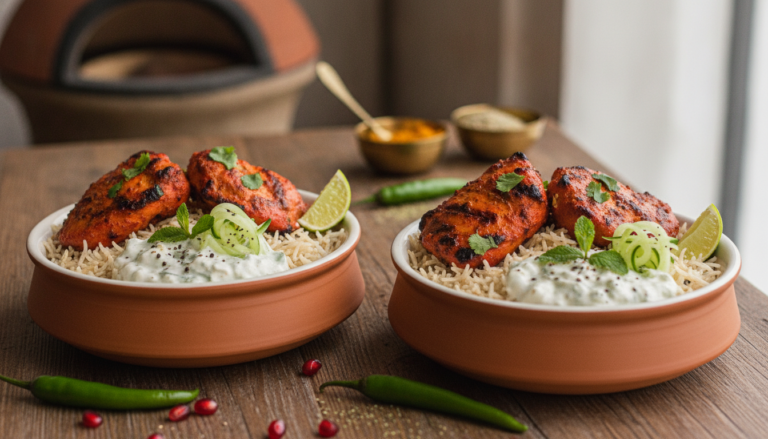
Tandoori Chicken & Cucumber Raita Rice Bowls
These Tandoori Chicken & Cucumber Raita Rice Bowls are a boldly spiced, deeply flavorful meal prep bowl built on a yogurt-and-tandoori-masala marinade that tenderizes, flavors, and chars the chicken simultaneously—balanced by a cool cucumber raita that makes every element of the bowl taste more vivid by contrast.
4
servings20
minutes40
minutes600
kcal1
hourIngredients
500 grams chicken thighs
150 ml yogurt
2 tablespoons tandoori masala
1 tablespoon lemon juice
2 cups basmati rice
1 tablespoon butter
1 teaspoon cumin seeds
1 cucumber diced
200 grams raita yogurt
2 tablespoons mint leaves
0.5 teaspoon salt
0.5 teaspoon pepper
Directions
- Mix yogurt, tandoori masala, and lemon juice to make the marinade.
- Marinate chicken in the mixture for at least 1 hour.
- Cook rice according to the package instructions.
- Heat butter in a pan, add cumin seeds, then add marinated chicken.
- Cook chicken until fully cooked and charred slightly.
- Combine diced cucumber, raita yogurt, mint leaves, salt, and pepper to make raita.
- Serve chicken over rice and top with cucumber raita.
Nutrition Facts
- Total number of serves: 4
- Calories: 600kcal
About This Author

Benjamin Brown
Recipe Developer
Benjamin is our flavor engineer. A classically trained chef turned recipe developer, he’s obsessed with balancing taste, texture, and creativity. He ensures that every recipe we publish is not only delicious but also reliable, approachable, and repeatable — even for beginners.
Favorite dish: Slow-braised short ribs with red wine reduction.
Kitchen motto: “Cooking is part science, part soul.”















