
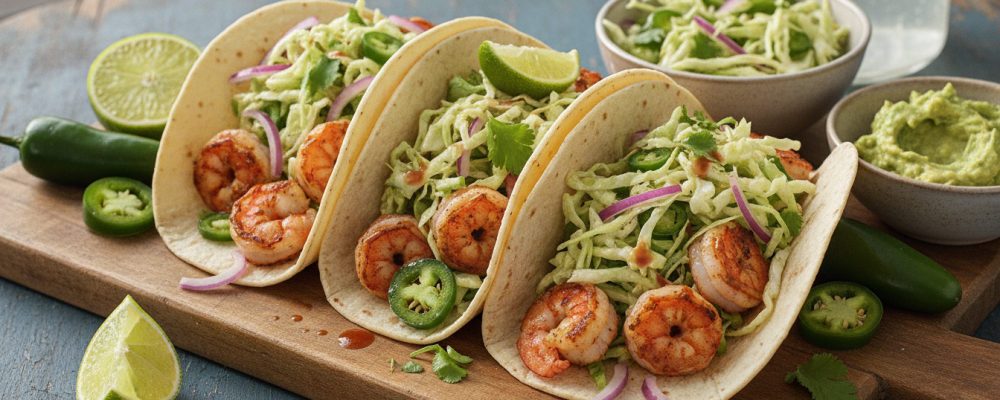

Shrimp tacos succeed or fail based on one fundamental principle: textural contrast. The shrimp provides tender, slightly springy protein. The tortilla provides soft, pliable structure. Without something crunchy, creamy, and bright between those elements, you end up with a taco that’s texturally monotonous—pleasant but forgettable. The jalapeño lime slaw in this recipe solves that problem with precision, and understanding exactly how it does so reveals why this dish works so exceptionally well.
Let’s begin with the shrimp seasoning. Smoked paprika, cumin, garlic powder, and salt form a spice profile that’s specifically engineered for quick high-heat cooking. Smoked paprika contains capsaicinoids and pyrazines that develop complex, roasty flavors when exposed to direct heat—essentially creating the impression of outdoor grilling even in a skillet. Cumin’s terpenoid compounds bloom immediately in hot oil, releasing earthy, slightly citrusy aromatics that permeate the shrimp’s surface. Garlic powder, rather than fresh garlic, is the correct choice here because it distributes evenly across the shrimp’s surface and doesn’t burn in the 2-3 minutes of high-heat cooking that would turn fresh garlic bitter.
The cooking technique for shrimp is defined by its constraints. Shrimp are delicate proteins that cook in minutes—2-3 minutes per side at medium-high heat is the window between perfectly cooked and rubbery. During this brief cooking time, two things need to happen simultaneously: the exterior needs to develop color and char for flavor, and the interior needs to reach the temperature (around 120°F for ideal texture, safe at 145°F) where it becomes tender and opaque rather than translucent and raw. A properly preheated skillet over medium-high heat achieves both goals. Don’t move the shrimp constantly—let them sit for the full 2-3 minutes per side to develop browning.
The slaw is where the real technical sophistication lies. The two-cabbage approach isn’t just visual—green and red cabbage have slightly different cell structures and flavor profiles. Green cabbage is more tender and mild; red cabbage is slightly firmer, more peppery, and adds anthocyanin antioxidants alongside its visual appeal. The carrot contributes both sweetness and beta-carotene, plus additional crunch from its denser cell structure. Together, they create a slaw with textural complexity that a single-cabbage version can’t match.
The dressing formula deserves careful analysis. Mayonnaise provides the creamy base and emulsified fat that coats every strand of vegetable evenly. Lime juice provides citric acid that does two things: it brightens the dressing’s flavor and it begins to soften the cabbage slightly through osmosis, making it more pliable and better integrated. Honey contributes sweetness that balances the lime’s acidity and the jalapeño’s heat—without it, the dressing would be too sharp. The jalapeño provides capsaicin heat that builds gradually, cilantro adds aromatic top notes, and black pepper contributes a different kind of heat that’s more immediate and less lingering than jalapeño’s. This is a dressing engineered for balance—fat, acid, sweet, heat, and fresh aromatics in deliberate proportion.
─────────
The Inspiration Behind This Recipe
This recipe draws from the Baja California fish taco tradition, which established cabbage slaw and creamy sauce as essential accompaniments to coastal seafood tacos. The original Baja fish taco—fried white fish, shredded cabbage, crema, and salsa in a corn tortilla—created a template that home cooks and chefs have been riffing on ever since. Substituting shrimp for fish is a natural evolution that changes the texture and flavor profile while maintaining the essential architecture. The jalapeño lime slaw represents a more modern, integrated approach than the traditional cabbage-and-crema separation—by combining the creaminess, heat, and acidity into a single unified topping, the slaw functions as sauce and vegetable simultaneously. This efficiency reflects contemporary home cooking priorities: fewer components, more integration, no less flavor.
─────────
A Brief History of Slaw in Mexican-American Cuisine
Cabbage slaw’s appearance in Mexican and Tex-Mex cuisine reflects the ingredient’s practicality and versatility in coastal regions where it grows abundantly. Traditional Mexican coleslaw (ensalada de col) predates the Baja fish taco but found its most prominent modern expression alongside it. The taqueria slaw tradition differs significantly from American barbecue coleslaw: it’s typically lighter, more acidic, and less sweet, often dressed with lime juice and minimal or no mayo. The American influence brought creaminess through mayonnaise-based dressings, creating the hybrid style this recipe represents—a slaw that’s simultaneously bright and creamy, acidic and rich, with the jalapeño providing distinctly Mexican heat. This synthesis of Mexican and American culinary traditions in slaw form mirrors the broader story of Baja-Californian cuisine: a border region where two food cultures have been trading influences for generations, creating something richer than either tradition produces independently.
─────────
Why This Cooking Method Works
High heat creates char on shrimp — Medium-high heat in a well-preheated skillet creates the browning and slight char that develops the complex flavors smoked paprika and cumin are primed to deliver.
Smoked paprika compensates for indoor cooking — The pyrazine compounds in smoked paprika create the impression of outdoor grill char, giving skillet-cooked shrimp complexity typically achieved only through wood smoke or direct flame.
Two-cabbage slaw creates textural complexity — Different cabbage varieties have distinct cell structures and flavor profiles, creating a slaw with more textural and flavor nuance than single-cabbage versions provide.
Mayo-lime dressing coats evenly — The emulsified fat in mayonnaise distributes across every shred of vegetable uniformly, ensuring consistent flavor in every bite rather than concentrated pockets of dressing.
Honey balances acid and heat — Without honey, the lime-jalapeño combination would be too sharp and one-dimensional. The honey creates the tension between sweet, sour, and hot that makes the slaw addictive.
Immediate assembly preserves texture — Assembling right before eating ensures the slaw stays crunchy and the shrimp stays warm, preserving the temperature and textural contrasts that make this taco exceptional.
─────────
Flavor Profile: What to Expect
Smoky, creamy, crunchy, and bright — these tacos open with tender, slightly charred shrimp carrying smoky paprika depth, earthy cumin warmth, and subtle garlic savoriness. The jalapeño lime slaw arrives immediately with creamy richness from the mayo dressing, honey’s gentle sweetness, sharp lime acidity, jalapeño’s building heat, and multi-textured crunch from the two cabbages and carrot. Cilantro threads herbal brightness throughout. The warm corn tortilla provides sweet, toasty foundation that absorbs the slaw’s dressing and the shrimp’s cooking juices. It’s a complete taco experience—no element is missing, nothing is excessive. The interplay between the shrimp’s smoke and the slaw’s brightness creates the kind of layered complexity that keeps you reaching for another taco before you’ve finished analyzing the first one.
─────────
Tips for Making the Best Shrimp Tacos with Jalapeño Lime Slaw
Choose medium shrimp (31-40 count) — Large shrimp take longer to cook and risk under-seasoned interiors; small shrimp cook too fast and can be difficult to manage in tacos. Medium is the sweet spot.
Pat shrimp completely dry — Moisture prevents browning and creates steam rather than sear. Paper towels thoroughly before seasoning.
Make slaw at least 15 minutes ahead — The brief resting period allows lime juice to slightly soften the cabbage and integrate the dressing flavors. Too fresh and it tastes like separate components; properly rested and it tastes unified.
Don’t overdress the slaw — Start with less mayo than you think you need. The slaw should be lightly coated, not swimming in dressing. You can always add more.
Adjust jalapeño carefully — Jalapeños vary enormously in heat level. Taste before adding the full amount and adjust based on your specific pepper and your crowd’s heat tolerance.
Preheat the skillet properly — The pan should be hot enough that shrimp sizzle immediately on contact. A properly heated pan is the difference between sear and steam.
Don’t flip too early — Shrimp release naturally when a proper sear has formed. If they’re sticking, they need another 30 seconds.
Season the slaw after resting — Taste the slaw after it’s rested and adjust lime juice, salt, and honey. Flavors change as the cabbage releases moisture.
Warm tortillas individually — Each tortilla deserves 30 seconds per side in a dry skillet. This step is brief but significant for texture and flavor.
─────────
Serving Suggestions and Side Pairings
These bright, smoky shrimp tacos pair beautifully with:
- Corn Salsa for additional sweet, fresh vegetable contrast
- Cilantro Lime Rice for a complete, balanced plate
- Black Bean Dip with tortilla chips as a starter
- Mexican Street Corn Salad (Esquites) for creamy, charred corn complement
- Guacamole for extra creaminess alongside the slaw
- Pickled red onions for additional acidity
- Lime wedges for tableside citrus adjustment
Additional topping ideas:
- Crumbled cotija cheese for salty, crumbly contrast
- Avocado slices for cooling richness
- Hot sauce for heat beyond the jalapeño in the slaw
- Extra cilantro for herb enthusiasts
- Thinly sliced radishes for peppery crunch and visual appeal
─────────
Storage, Reheating, and Make-Ahead Tips
Storage:
- Store cooked shrimp and jalapeño lime slaw separately in airtight containers for up to 2 days
- Slaw holds surprisingly well due to the mayo dressing’s protective fat coating; drain excess liquid before serving if made ahead
- Keep tortillas and any additional toppings stored separately
Reheating:
- Reheat shrimp briefly in a hot skillet for 60-90 seconds—just enough to warm through without overcooking
- Microwave on 50% power in short 20-second bursts
- Never reheat the slaw; serve cold directly from the refrigerator for best contrast against warm shrimp
Make-Ahead Tips:
- Make the slaw up to 4 hours ahead; it actually improves as flavors meld—drain any accumulated liquid before serving
- Season shrimp up to 2 hours ahead; refrigerate uncovered on paper towels
- Cook shrimp fresh immediately before serving for best texture
- Prep all additional toppings the day before for effortless assembly
Freezing:
- Freeze raw seasoned shrimp for up to 2 months; thaw overnight in refrigerator before cooking
- Do not freeze cooked shrimp or assembled tacos
- Do not freeze slaw—cabbage becomes completely waterlogged and loses all texture
- Always make slaw fresh or same-day for best results
Batch cooking:
- For larger gatherings, keep cooked shrimp warm in a 250°F oven on a wire rack for up to 15 minutes while preparing remaining batches
- Make slaw in double or triple quantities—it scales perfectly and is the most time-consuming element to prepare
─────────
Why This Recipe Deserves a Spot in Your Taco Tuesday Rotation
Because this is the recipe that demonstrates what thoughtful construction looks like in taco form. Every element—the spice selection, the two-cabbage approach, the dressing ratios, the cooking technique—reflects deliberate decisions that produce a taco with genuine textural and flavor complexity. That kind of intentionality usually requires either restaurant technique or complicated recipes. Here, it’s achieved through straightforward execution of well-considered components that any home cook can manage on a Tuesday evening. The shrimp cook in under 10 minutes. The slaw comes together in one bowl. The assembly takes seconds. But the result tastes like more effort was invested than actually was—the hallmark of a truly well-designed recipe. These tacos are reliable enough for regular weeknight rotation, impressive enough for guests who appreciate food that’s clearly been thought through, and satisfying enough that the absence of them on a given Tuesday feels like something genuinely missed. When a recipe can be simultaneously easy, thoughtful, and delicious, it has earned permanent rotation status.
─────────
Recommended Drink Pairing
Classic Lime Margarita — The citrus in both the cocktail and the slaw dressing creates harmony, while tequila’s agave notes complement the smoky shrimp seasoning.
Beergarita — Light, refreshing, and slightly sweet, it mirrors the slaw’s honey-lime balance while providing effervescent contrast to the smoky shrimp.
Mexican lager with lime (Pacifico, Corona) — The quintessential coastal pairing. Crisp, clean beer and seaside shrimp is a combination with excellent reason to be universal.
Sparkling water with lime and jalapeño — For a non-alcoholic option that stays on theme, a few jalapeño slices muddled into sparkling lime water echoes the slaw’s flavor profile in the glass.
Dry rosé (chilled) — Fruity enough to complement the honey-lime slaw, crisp enough to cut through the mayo’s richness, and light enough not to compete with the shrimp’s delicate flavor.
Shrimp Tacos with Jalapeño Lime Slaw
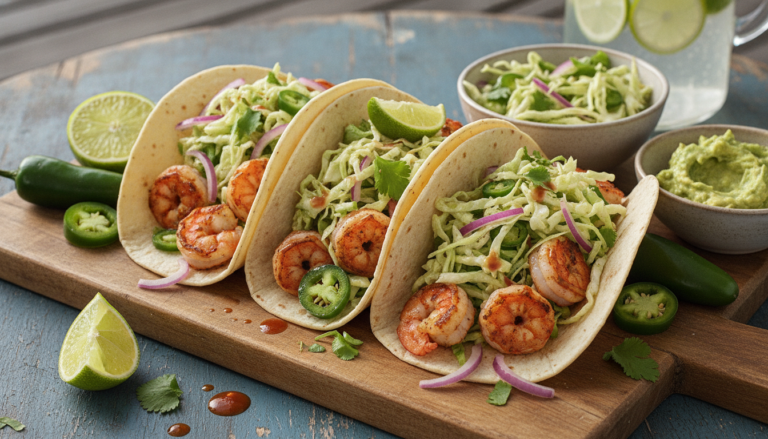
Shrimp Tacos with Jalapeño Lime Slaw feature smoky, cumin-spiced shrimp paired with a creamy, crunchy slaw of two cabbages, shredded carrot, fresh jalapeño, and honey-lime dressing for a taco that delivers textural and flavor complexity in every single bite.
4
servings30
minutes40
minutes300
kcal1
hour10
minutesIngredients
1 lb shrimp, peeled and deveined
1 tbsp olive oil
1 tsp smoked paprika
1 tsp cumin
1/2 tsp garlic powder
1/2 tsp salt
8 small corn tortillas
1 cup green cabbage, shredded
1 cup red cabbage, shredded
1 whole jalapeño, seeded and minced
1 medium carrot, shredded
1 lime, juiced
1 tbsp honey
1/4 cup cilantro, chopped
1/4 cup mayonnaise
1/4 tsp black pepper
Directions
- In a bowl, combine shrimp, olive oil, smoked paprika, cumin, garlic powder, and salt. Mix well to coat shrimp.
- Heat a skillet over medium-high heat. Add shrimp and cook for 2-3 minutes each side until pink and cooked through.
- In a large bowl, combine green cabbage, red cabbage, jalapeño, carrot, lime juice, honey, cilantro, mayonnaise, and black pepper. Mix to combine.
- Warm the corn tortillas in a dry skillet or in the microwave.
- Assemble tacos by placing a portion of cooked shrimp in each tortilla and topping with jalapeño lime slaw.
- Serve immediately and enjoy!
Nutrition Facts
- Total number of serves: 4
- Calories: 380kcal
- Cholesterol: 0mg
- Potassium: 400mg
- Sugar: 8g
- Protein: 6g
- Calcium: 60mg
- Iron: 2mg
About This Author

Benjamin Brown
Recipe Developer
Benjamin is our flavor engineer. A classically trained chef turned recipe developer, he’s obsessed with balancing taste, texture, and creativity. He ensures that every recipe we publish is not only delicious but also reliable, approachable, and repeatable — even for beginners.
Favorite dish: Slow-braised short ribs with red wine reduction.
Kitchen motto: “Cooking is part science, part soul.”















