
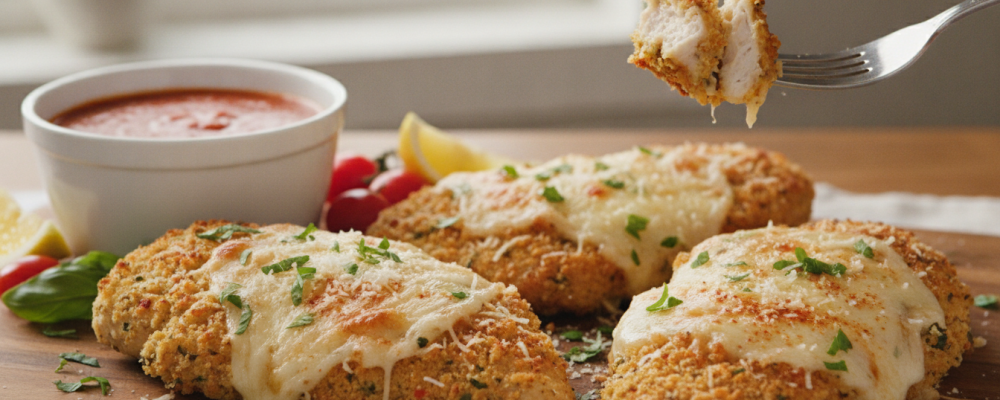

There is a version of breaded baked chicken that is disappointing—pale on the underside, slightly soggy in the middle, never quite achieving the crust that the concept promises. And then there is this version, which delivers on every count. Crispy Baked Italian Parmesan Chicken achieves a genuinely golden, genuinely crispy crust through a combination of proper breading technique, a well-seasoned Parmesan and Italian breadcrumb coating, and an olive oil drizzle that conducts heat into the crust from above and produces the kind of browning that an ungreased baking sheet simply cannot replicate. It is Italian-American comfort food at its most practical and most satisfying.
The Parmesan in the breading is the ingredient doing the most work. Mixed into the breadcrumbs before the coating is applied, it caramelizes under the oven’s heat into something nutty, slightly bitter at the edges, and deeply savory—adding a flavor dimension to the crust that plain breadcrumbs cannot achieve regardless of how they’re seasoned. The Italian seasoning and garlic powder distribute through the coating evenly, so that every surface of every chicken breast carries the same bold, herbaceous character rather than having it concentrated in certain spots.
The egg wash is the technique step that determines whether the breading adheres properly throughout the bake or peels away from the chicken in patches. A proper dip—allowing excess to drip off before pressing into the breadcrumb mixture—creates a thin, even layer of egg protein that bonds the coating to the chicken surface as it cooks. Pressed firmly into the coating on both sides before going onto the baking sheet, the result is a crust that stays intact through the full twenty-five to thirty minutes and produces a clean, defined exterior rather than a crumbly, patchy one.
The Inspiration Behind This Recipe
This recipe draws from the Italian-American tradition of breaded and baked chicken—the category that includes chicken Milanese, chicken Parmigiana, and the countless home-kitchen variations that appear across Italian-American tables in restaurants and homes from New York to Chicago. Where the Lemon Chicken Romano in this collection uses Romano cheese and a butter-olive oil pan fry, this recipe uses the more accessible combination of Parmesan and Italian seasoning in an oven format that produces similar results with significantly less active involvement.
Why the Olive Oil Drizzle Is Non-Negotiable
The olive oil drizzled over the breaded chicken before baking is the technique decision that separates a golden, properly crisped result from the pale, uneven crust that baked breaded chicken so often produces. Oil on the surface of the breading conducts heat from the surrounding oven air directly into the coating, accelerating the browning and crisping process that dry heat alone handles inefficiently. Without oil, the breadcrumb surface dehydrates and dries rather than browning—producing a pale, slightly chalky crust rather than a golden, crunchy one. The olive oil also contributes its own flavor—fruity and slightly grassy—that complements the Italian seasoning and Parmesan in the coating.
Flavor Profile: What to Expect
- Golden, shatteringly crispy Parmesan breadcrumb crust with nutty, caramelized cheese at the surface
- Herbal Italian seasoning distributed evenly through the coating and aromatic throughout
- Savory garlic powder that carries through every bite of the crust
- Juicy, well-seasoned chicken interior that the even pounding ensures cooks through at the same rate as the exterior crisps
- Fruity olive oil that contributes to the golden color and the crust’s satisfying crunch
Tips for Making the Best Italian Parmesan Chicken
- Pound to a consistent half-inch thickness: This is the single most important step for ensuring the chicken cooks through before the crust overcooks.
- Press the coating firmly: After dipping in egg and laying in the breadcrumb mixture, press with your palm on both sides. A firmly pressed coating stays intact; a loosely applied one falls off during baking.
- Use freshly grated Parmesan: Pre-grated Parmesan contains anti-caking agents that prevent proper caramelization. Fresh-grated produces a noticeably crispier, more flavorful crust.
- Drizzle oil generously: Every surface of the coated chicken should have some oil contact. This is what produces the even golden color across the entire piece.
- Check at 25 minutes: Pounded chicken breasts vary in thickness. Use a thermometer and pull at 165°F internal temperature.
Serving Suggestions and Side Pairings
- Over pasta with marinara or a simple butter and garlic sauce for a weeknight chicken Parmesan-adjacent dinner
- Alongside roasted asparagus or a simple arugula salad with lemon vinaigrette
- With warm garlic bread for a complete Italian-inspired spread
- Sliced over Caesar salad for a crispy chicken Caesar that genuinely earns the name
Storage and Make-Ahead Tips
- Refrigerate for up to 3 days. Reheat on a wire rack in a 375°F oven to restore crispness—the microwave turns the crust soft.
- Bread and refrigerate uncooked chicken for up to 24 hours before baking—the coating actually adheres better after a rest.
- Freeze fully baked chicken for up to 2 months. Reheat directly from frozen in a 375°F oven for 15–18 minutes.
Why This Recipe Deserves a Spot in Your Rotation
Crispy Baked Italian Parmesan Chicken earns its rotation spot as the breaded chicken recipe that actually delivers on the format’s promise—genuinely golden, genuinely crispy, and deeply flavored with the Italian-American character that makes this category of cooking so enduringly beloved. Once this technique is in your hands, it becomes the default approach to breaded baked chicken across dozens of applications.
Recommended Drink Pairing
The Parmesan crust and Italian seasoning call for a wine with enough acidity to complement both. A Pinot Grigio or a dry Verdicchio is the natural Italian companion—clean, slightly mineral, and bright enough to cut through the richness of the crust without overpowering the delicate chicken. For cocktails, a Prosecco Margarita brings sparkling citrus that plays beautifully alongside any Italian-inspired preparation.
For non-alcoholic options, sparkling water with lemon and fresh basil or a cold Italian-style lemon soda keeps the palate refreshed throughout the meal.
Crispy Baked Italian Parmesan Chicken
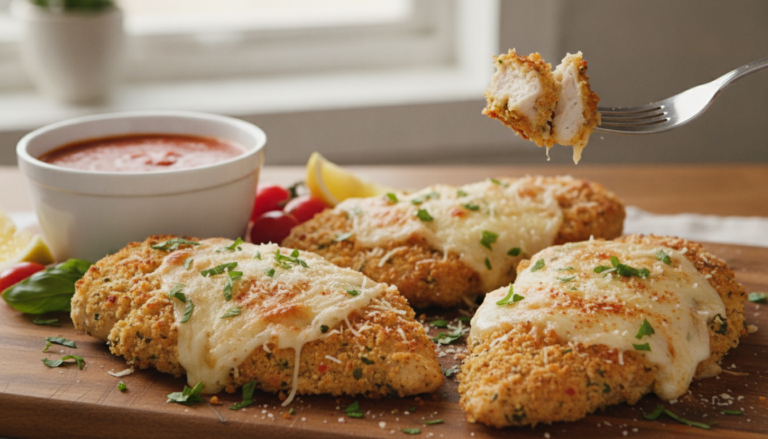
Crispy Baked Italian Parmesan Chicken coats pounded chicken breasts in a Parmesan, breadcrumb, and Italian seasoning crust, drizzles with olive oil, and bakes at 400°F until genuinely golden and crispy—the breaded baked chicken recipe that actually delivers on its promise.
4
servings15
minutes30
minutes430
kcal45
minutesIngredients
4 pieces chicken breasts
1 cup breadcrumbs
0.5 cup grated Parmesan cheese
1 teaspoon garlic powder
1 teaspoon Italian seasoning
0.5 teaspoon salt
0.5 teaspoon black pepper
2 tablespoons olive oil
2 large eggs
Directions
- Preheat oven to 400°F (200°C).
- Pound chicken breasts to even thickness.
- In a bowl, combine breadcrumbs, Parmesan cheese, garlic powder, Italian seasoning, salt, and pepper.
- In another bowl, beat the eggs.
- Dip each chicken breast in the egg, then coat with breadcrumb mixture.
- Place chicken on baking sheet and drizzle with olive oil.
- Bake for 25-30 minutes until golden brown and cooked through.
Nutrition Facts
- Total number of serves: 4
- Calories: 430kcal
- Cholesterol: 0mg
- Potassium: 400mg
- Sugar: 8g
- Protein: 6g
- Calcium: 60mg
- Iron: 2mg
About This Author

Benjamin Brown
Recipe Developer
Benjamin is our flavor engineer. A classically trained chef turned recipe developer, he’s obsessed with balancing taste, texture, and creativity. He ensures that every recipe we publish is not only delicious but also reliable, approachable, and repeatable — even for beginners.
Favorite dish: Slow-braised short ribs with red wine reduction.
Kitchen motto: “Cooking is part science, part soul.”















