
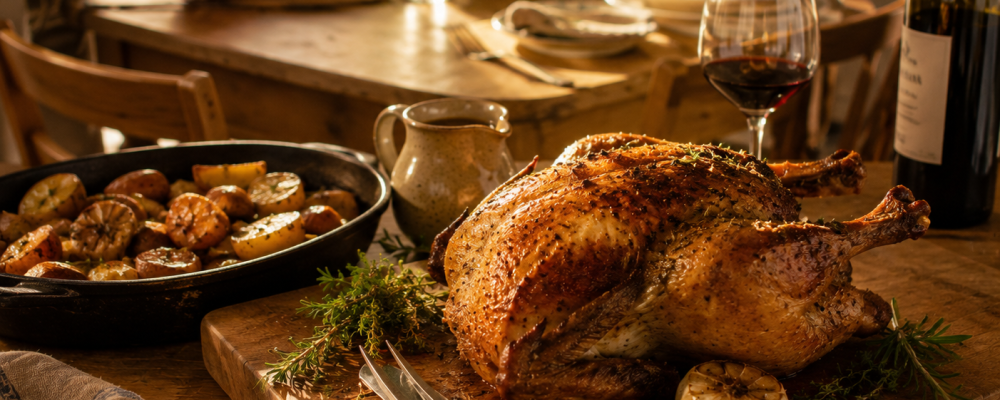

There is a meal that once organized the week.
Not just the Sunday of the week — though it was specifically and deliberately Sunday, the day that the meal most required and that most required the meal. It organized the days before it and the days after it in a way that no other meal in the week’s rhythm did. The shopping that happened Saturday. The preparation that happened Sunday morning. The long afternoon that the roast occupied in the oven while other things happened in the house. The gathering that the meal produced. And then the week that followed — the cold roast on Monday, the stock from the bones on Tuesday, the hash or the pie or the sandwiches that used the last of the meat through the middle of the week.
This was not meal planning in the contemporary sense — not the organized, efficiency-optimized batch cooking of the modern food-aware household. It was something older and more organic than that — a rhythm built around a single significant cooking event that generated food and warmth and occasion in waves that extended through the week.
The Sunday roast — in its British form, its American form, its French form of the Sunday gigot or the pot-au-feu, its Italian form of the Sunday ragù that simmered all morning — was one of the most practical and most humanly satisfying meal formats ever developed. And it has been, in most contemporary households, almost entirely abandoned.
The abandonment is understandable. The circumstances that made the Sunday roast central to domestic life have changed — the households with one primary cook who was home on Sunday mornings, the economic conditions that made a large piece of meat a weekly luxury worth stretching across multiple meals, the specific rhythm of a week organized around Sunday as a genuinely different day from the others.
But the Sunday roast’s abandonment is also a loss worth acknowledging — and worth, in the specific conditions of August’s long weekends and warm afternoons, reversing.
What the Sunday Roast Actually Is
The Sunday roast is not a specific recipe. It is a format — a set of principles that can be applied to an enormous range of proteins and preparations, that produces a specific kind of meal and a specific kind of week regardless of the specific protein or preparation chosen.
The format requires a significant piece of protein — whole rather than portioned, large enough to serve more people than will eat it at the initial meal, chosen for its suitability to the long, dry heat of roasting. A whole chicken. A leg of lamb. A pork shoulder. A beef roast in any of its forms. A whole fish in its largest available form. Even a large-format vegetable preparation — the stuffed and roasted squash, the whole cauliflower, the sheet pan of roasted vegetables significant enough to serve as a centerpiece — can carry the Sunday roast format if the cook’s circumstances call for it.
The format requires sides — the accompanying preparations that make the roast a complete meal rather than a piece of protein on a plate. The roasted potatoes that cook in the fat rendered from the roast. The vegetable preparation that uses what is best this week. The sauce made from the drippings. These sides are not optional additions but integral components of the meal — the elements that together with the roast produce the specific satisfaction of a Sunday dinner.
The format requires the occasion — the specific quality of a meal that was prepared with more time and more attention than the weeknight allows, that is served with a deliberateness that Tuesday’s dinner doesn’t require, that produces the gathering of people at a table in a way that the quick weeknight meal doesn’t aspire to.
And the format requires the aftermath — the plan for what the roast becomes in the days that follow. The stock from the chicken carcass. The cold lamb in a sandwich. The pork that becomes tacos on Tuesday. The drippings that flavor Wednesday’s vegetables. The Sunday roast’s value is not complete until its aftermath has been considered and used.
The Mechanics of the Roast
The specific mechanics of producing an excellent roast — the technique that converts a large piece of protein into something that is deeply browned on the exterior and perfectly cooked through the interior — are worth understanding in some detail, because the roast is a preparation where technique makes a significant and visible difference.
The preparation that happens before the oven is as important as what happens inside it. The seasoning applied in advance — the generous rubbing of salt over the entire exterior of the protein, done the night before or at minimum several hours before roasting — is the preparation that determines whether the roast is seasoned throughout its structure or merely at the surface. The dry brine that the overnight salting produces penetrates the protein, seasons the interior, and dries the surface in a way that promotes browning.
The temperature of the protein at the time it enters the oven affects how evenly it cooks. The cold roast from the refrigerator creates a large thermal gradient between its exterior and its interior — the oven heat must traverse this gradient before reaching the center, which means the exterior is exposed to extended heat while the interior catches up. Allowing the protein to approach room temperature for thirty to sixty minutes before roasting reduces this gradient and produces more even cooking.
The oven temperature strategy — whether to roast at a single temperature or to use a high-then-low or low-then-high approach — depends on the specific protein and the specific result desired. High heat throughout produces deeply browned exterior with a more significant gradient of doneness from the crust to the center. Low-then-high produces more even doneness throughout with a crust developed at the finish. High-then-low is less common but produces a similar even doneness to the reverse, with the crust formed first and then protected by the subsequent lower temperature.
The rest is not optional. The protein pulled from the oven at the right internal temperature and then rested for fifteen to thirty minutes before carving — depending on its size — is a fundamentally different product from the same protein carved immediately. The rest allows the muscle fibers to relax, the juices to redistribute, and the carryover cooking to complete the cooking of the interior without further oven heat.
The Sunday Roast Chicken and Its Possibilities
Of all the proteins suited to the Sunday roast format, the whole chicken is the most accessible, the most flexible, and the one that most clearly demonstrates the format’s specific pleasures and specific economics.
A whole chicken costs significantly less per pound than any boneless, skinless preparation — because the labor of butchering and the waste that butchering eliminates has not been included in the price. It provides, in a single purchase, the dinner for Sunday, the carcass for stock, the cold meat for Monday, and the rendered fat for whatever cooking it improves in the days that follow.
The roast chicken is also the preparation that most directly rewards good technique and good sourcing — because the whole chicken, simply seasoned and properly roasted, has nowhere to hide. A chicken raised with access to pasture, fed a diet that produces flavorful meat, and roasted at the right temperature for the right duration with the right resting time is one of the most satisfying and most honest meals available in any season. A factory-farmed chicken roasted identically is a different and lesser eating experience that no technique fully compensates for.
The specific technique that produces the best roast chicken at home — high heat, dry surface, generous seasoning, proper resting — has been covered in these pages before. What is worth adding in the context of the Sunday roast format is the specific attention to what happens after the chicken.
The carcass and the neck and the backbone — all the parts that remain after carving — go into the pot with water and aromatics within an hour of the meal’s end, while they are still warm. The stock that results from two hours of simmering is the foundation of the week’s soup, the liquid for the week’s grain cooking, the base for whatever sauce or braise the week requires.
The rendered fat that accumulates in the roasting pan — the golden, deeply flavored liquid that pools around the chicken during roasting — is strained and stored in a jar in the refrigerator. It flavors the potatoes that accompany Tuesday’s meal. It enriches the grain that is cooked for Wednesday’s bowl. It is the specific taste of Sunday that extends through the week.
The Lamb That Means Sunday
In certain food cultures — British, French, Greek, Middle Eastern — lamb occupies the specific Sunday roast position that chicken occupies in others. And the specifically Sunday quality of roast lamb — its depth, its richness, its specific flavor that is too substantial for a weeknight but exactly right for a Sunday — deserves acknowledgment.
The leg of lamb — the large, bone-in cut that produces the most impressive presentation and the most versatile leftovers — is the Sunday lamb preparation. Studded with garlic and rosemary in the Italian and French tradition, marinated in yogurt and spices in the Middle Eastern tradition, simply seasoned with salt and pepper and roasted in its own fat in the British tradition — each is a genuinely different preparation that produces a genuinely different eating experience from the same cut.
The cold lamb that remains after Sunday’s meal is one of the great leftover pleasures available in any culinary tradition. Sliced thin and eaten in a sandwich with mint sauce or with aioli or simply with good mustard and good bread. Pulled from the bone and combined with chickpeas and harissa for a quick Monday dinner. Chopped and added to a hash with potatoes and the drippings from the roasting pan.
The lamb bone — the remaining structure after the meat has been carved and used — is the foundation of a stock with a specific richness and depth that chicken stock doesn’t quite reach. This stock, made Sunday evening from the remains of Sunday’s meal, is the resource for a week of cooking that would not otherwise have access to lamb’s specific depth of flavor.
The Pork Shoulder and the Low-and-Slow Sunday
Among all the Sunday roast options, the pork shoulder — cooked low and slow for many hours until completely tender and falling from the bone — is the one that most completely embodies the Sunday roast’s specific relationship with time.
The pork shoulder that goes into the oven at eight in the morning for a five o’clock dinner is not an inconvenience. It is the organization of the Sunday around the cooking — the specific rhythm of a day that has a long, slow background activity that fills the house with smell and that requires periodic attention rather than constant management.
This rhythm is itself one of the Sunday roast’s specific pleasures — the awareness, throughout the day, that something excellent is happening in the kitchen without requiring the cook’s constant presence. The smell that builds over hours. The occasional check of the internal temperature. The anticipation that the long cooking produces in everyone who is in the house during it.
The pork shoulder that emerges from six to eight hours of low-temperature roasting is completely different from any pork preparation that shorter cooking produces — the collagen converted entirely to gelatin, the fat rendered through the muscle, the meat yielding completely to the gentlest pressure and pulling apart in long, rich strands that carry the flavor of the cooking and the specific depth that long time produces.
This meat serves Sunday’s table and Monday’s tacos and Tuesday’s grain bowl and Wednesday’s sandwich. It produces a week of good eating from a single Sunday morning of minimal active cooking.
The August Sunday Roast
The August Sunday roast takes advantage of the specific abundance of the season in ways that other months’ Sunday roasts cannot.
The vegetables that accompany the August roast are the vegetables that are at their absolute peak — the potatoes that have been dug recently and that have a specific density and sweetness that stored potatoes don’t have, the peppers that are roasting alongside the meat, the tomatoes that are roasted in the drippings and that produce the sauce from their own juice and the fat of the roast.
The herbs that season the August roast — the rosemary and the thyme and the basil from the garden, the garlic that is at its freshest, the lemon that provides the acid that makes everything around it brighter — are the herbs at their most vivid and their most fragrant.
And the outdoor table that serves the August Sunday roast — the long summer evening that extends the meal past its eating into the specific ease of a late August evening at a table where no one is quite ready to go inside — is the context that makes the Sunday roast most completely what it always aspired to be.
The Takeaway
The Sunday roast is not a dated relic of a domestic arrangement that no longer exists. It is a format — for cooking, for eating, for organizing the week around a single significant culinary event — that is as relevant and as rewarding in any contemporary household that chooses to practice it as it was in the households that developed it.
Choose the protein. Prepare it properly. Roast it with patience. Rest it completely. Use the aftermath deliberately.
And gather people around the table when it is done.
The Sunday roast is available to any household willing to invest the time and the attention it requires.
The investment returns itself across the entire week.














