
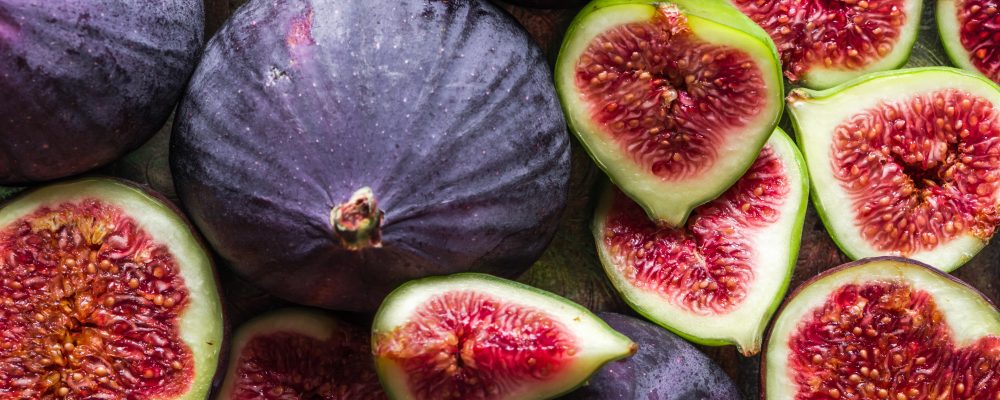

There is a fruit that arrives without much announcement and disappears before most people realize it was there.
Not the tomato, which announces itself with weeks of market-table abundance and whose season, though finite, is long enough to feel generous. Not the peach, which provides enough warning of its arrival and enough duration at its peak to allow the attentive eater to plan accordingly.
The fig.
The fig arrives in late summer with the specific quality of something that was never meant to be widely distributed — a fruit so fragile that it barely survives the journey from the tree to the table, so perishable that it must be eaten within days of harvest, so specific in its peak that the window between unripe and overripe is measured in hours rather than days.
This fragility is not a defect. It is the fig’s defining quality — the specific combination of delicacy and brevity that makes it, to the cook and the eater who encounter it at its best, one of the most extraordinary eating experiences that any season provides.
The fig does not perform abundance. It performs rarity — and in doing so, it produces a quality of attention in anyone eating it that the more generously available summer fruits cannot quite match.
What a Fig Actually Is
Before the cooking and the eating, there is the botany — and the botany of the fig is extraordinary enough to be worth understanding before the fruit is encountered at the table.
The fig is not, technically, a fruit in the conventional sense. It is a syconium — an inverted flower structure in which hundreds of tiny flowers bloom on the inside of a fleshy receptacle. What appears to be the flesh of the fig is the wall of this receptacle. What appears to be the seeds are actually the individual fruits of the hundreds of flowers inside — each tiny crunchy element in the interior of a ripe fig is a complete fruit, the fig-as-we-understand-it being the structure that contains them.
This botanical reality is responsible for the fig’s specific flavor and texture — the jammy, honey-like sweetness of the flesh, the crunch of the seeds, the specific combination of the two that makes the interior of a perfectly ripe fig one of the most complex and most satisfying textural and flavor experiences available in any fruit.
The fig’s pollination biology is equally remarkable — the specific co-evolutionary relationship between the fig and the fig wasp, a tiny insect that enters the fig through a small opening at its base to lay its eggs and in doing so pollinates the flowers inside. This relationship is one of the most elegant examples of co-evolution in nature, and it is responsible for the fact that the commercial fig varieties most commonly available — the Black Mission, the Brown Turkey, the Kadota — have been specifically developed to produce fruit without requiring pollination, allowing them to be grown and sold without the specific wasp that the wild fig depends on.
The understanding that a fig is an inverted flower rather than a conventional fruit changes the experience of eating it — it is not just a sweet thing but a specific and extraordinary botanical structure, evolved over millions of years, that happens also to be delicious.
The Varieties Worth Knowing
The fig world is larger and more varied than the limited selection available in most grocery stores suggests — and understanding the specific qualities of different fig varieties is worth the knowledge for the cook who encounters them at farmers markets or specialty stores or, most fortunately, on a tree.
The Black Mission fig — the most widely available variety in the United States, with its deep purple-black skin and its intensely sweet, jammy interior — is the fig that most people know. Its flavor is rich and complex, with notes of honey and berry and a specific depth that develops as the fruit fully ripens. It is excellent raw and excellent cooked — its high sugar content making it one of the best figs for caramelization and for preserving.
The Brown Turkey fig — slightly less intensely flavored than the Black Mission but more widely adaptable to different climates — has a milder, more delicate sweetness and a flesh that is lighter pink rather than the deep red of the Mission. It is the fig most likely to be found growing in gardens outside of California and Mediterranean climates, and its relative mildness makes it particularly suited to preparations where the fig’s flavor is a background note rather than the primary one.
The Kadota fig — yellow-green in color, with a mild sweetness and a honey-like flavor that is less complex than the Mission but specifically suited to certain applications — is the fig most commonly used in commercial canning and preserving, its lower sugar content and firmer flesh making it hold up better to processing than the more delicate Mission.
And the Calimyrna fig — the California-grown version of the Turkish Smyrna variety, with its golden skin and its nutty, rich flavor that is distinct from the sweeter Mission — is the fig that most specifically demonstrates the range of flavor available in the fig family. Its specific combination of honey, nut, and a very slight bitterness that balances its sweetness makes it one of the most complex figs available.
The Raw Fig and What It Requires
Of all the fig preparations available, the raw fig eaten at peak ripeness is the one that most directly reveals what the fruit is — and the one that requires the most from the quality of the fig itself.
The perfectly ripe fresh fig — the one that gives slightly to pressure at its shoulders, that has a small drop of nectar visible at its base, that smells of honey and fruit and a specific sweetness that is detectable from several inches away — needs nothing added to be one of the most complete eating experiences available in any season.
The raw fig split open and eaten immediately, with nothing, is the beginning of the fig encounter. But the raw fig in combination with the specific partners that honor its qualities without competing with them is where the eating becomes something more considered.
The fig with good cheese — the specific combination of the fig’s jammy sweetness with the salt and the fat and the complexity of an aged sheep’s milk cheese or a soft, tangy chèvre — is one of the most reliable flavor pairings available in any season. The sweetness of the fig and the salinity and fat of the cheese create a balance that neither achieves alone, and the textural contrast between the jammy fig and the crumble of aged cheese or the creaminess of fresh cheese adds a dimension that pure sweetness without contrast cannot provide.
The fig with cured meat — the specific pairing of fig with prosciutto or jamón or coppa that appears across the Mediterranean culinary tradition — operates on the same sweet-salt-fat principle. The salt and the fat of the cured meat provide the contrast to the fig’s sweetness, and the specific flavors of aged pork and ripe fig have a specific affinity that produces something greater than either alone.
And the fig with honey — which seems redundant given the fig’s own honey-like sweetness — is actually a specific and interesting combination when the honey used has its own character, its own floral or bitter notes that provide counterpoint rather than simply adding sweetness to sweetness.
The Cooked Fig and Its Transformations
The fig subjected to heat undergoes a transformation that is specifically and dramatically different from most other fruit cooked preparations — because the fig’s high sugar content and its specific structure respond to heat in ways that produce results that are simultaneously more intense and more complex than the raw fruit.
The fig halved and placed cut-side down in a hot pan with butter — the surface caramelizing quickly in the hot fat, the sugar darkening and concentrating in the thirty to forty seconds of contact — produces a caramelized fig that is one of the most dramatically transformed fruit preparations available. The cut surface develops a deep, dark caramel that carries both the sweetness of the fig and the specific bitterness of caramelization, producing a flavor more complex and more rounded than the raw fruit’s direct sweetness.
This caramelized fig — served alongside cheese, or over good vanilla ice cream, or as a component in a composed dessert — demonstrates something that the raw fig doesn’t fully reveal: that the fig has depth as well as sweetness, and that heat brings out the depth in a way that eating it raw doesn’t.
The roasted fig — halved, dressed with a small amount of balsamic vinegar and honey and perhaps a sprig of thyme, roasted in a moderate oven until soft and slightly collapsed — is a preparation that takes twenty minutes and produces something that serves as both a dessert and a condiment — excellent over yogurt or ice cream, excellent alongside a piece of roasted pork or duck, excellent simply on toast with good cheese.
The fig jam — made from the excess of the season, the figs that have reached the point where they must be used immediately or lost — is the most durable preservation of the fig’s flavor. Made simply with sugar and lemon and nothing else, cooked until thick and deeply colored, it carries the specific sweetness and complexity of peak-season figs into the months when no fresh fig is available.
The Fig and Its Savory Partners
Beyond the sweet applications and the sweet-savory pairings of fig with cheese and cured meat, the fig has a specific and underexplored range of savory applications — preparations in which its sweetness functions as a counterpoint to richness or acidity rather than as the primary flavor.
The fig in a grain salad — halved fresh figs combined with cooked farro or barley, with arugula or bitter greens, with a vinaigrette that provides acidity against the fig’s sweetness — is one of the most balanced and most seasonal grain salad preparations available in August. The bitterness of the greens, the acidity of the vinaigrette, and the sweetness of the fig produce a three-way balance that makes each element taste more specifically like itself.
The fig in a sauce for duck or pork — the figs cooked down with shallots and vinegar and a small amount of stock until they produce a thick, sweet-savory sauce — demonstrates the specific affinity between the fig’s sweetness and the richness of fatty proteins. The sauce reduces the fig’s sweetness slightly through cooking while concentrating its flavor, producing a condiment that cuts through the fat of the meat while providing the sweetness that makes the combination satisfying.
And the fig as a pizza topping — halved figs with gorgonzola and prosciutto and honey and walnuts on a thin, crisp crust — is one of the most specifically seasonal pizza preparations available, using the August fig at its sweetest and most vivid in a preparation that showcases it against the salt and the fat and the bitterness of its companions.
The Season That Lasts Two Weeks
The fig’s season — the specific window of peak quality when fresh figs are at their best — is one of the briefest of any fruit commonly available.
Depending on the variety and the climate, the main fig season runs from approximately late July through September, with the peak of flavor and availability in August. Within this window, the specific moment of peak ripeness for any individual fig is measured in hours — the fruit that is perfect this morning may be overripe by afternoon.
This brevity is what makes the fig both the most precious and the most demanding of the late summer fruits. It cannot be planned around in the way that the tomato or the peach can be planned around. It must be encountered when it is available and eaten immediately, with the specific urgency that its brevity requires.
The cook who develops the habit of looking for figs specifically — who asks the farmers market vendor when they will have figs and makes a point of being there — experiences a specific reward for that attentiveness that the more casually available summer fruits don’t provide in the same form.
The fig eaten at its peak, at the exact right moment, is the specific and specific reward of that attentiveness.
The Takeaway
The fig is summer’s most fleeting luxury — not the most widely available, not the most generously abundant, not the most familiar. But in the specific window of its peak, one of the most extraordinary.
Seek it out. Eat it raw at its best. Caramelize it for something more complex. Pair it with cheese and with salt and with the bitter things that make its sweetness vivid by contrast. Make jam from what cannot be eaten immediately.
And notice it — with the specific quality of attention that its brevity deserves and that any extraordinary thing, encountered briefly, is worth receiving.
The fig season lasts two weeks.
Be there for it.














