
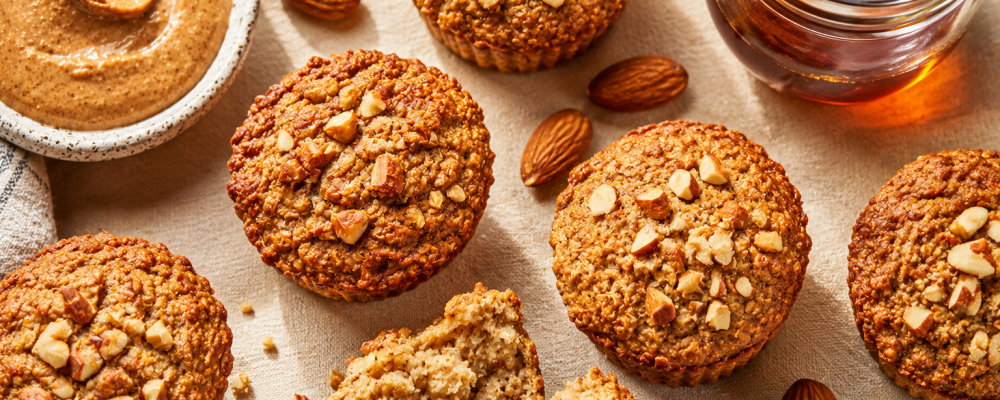

I want to talk about something that sounds counterintuitive and bakes into something extraordinary: miso paste in a sweet oat cup. Not as a savory element. Not as a flavor that announces itself and declares its presence. As a background compound that makes everything around it taste more fully of itself—the way salt does in caramel, the way coffee does in chocolate, the way a small amount of vinegar does in a fruit pie filling. Miso paste, in a sweet baked preparation, is functioning as a flavor amplifier rather than as a flavor note.
Here is what actually happens when miso meets almond butter and maple syrup in a baking context. White miso’s fermented glutamates—the same compounds responsible for umami depth in savory preparations—interact with the sweet batter’s sugar phase in the oven and produce Maillard reaction products that are more complex and more interesting than what the same batter produces without them. The almond butter’s roasted nuttiness becomes more pronounced. The maple syrup’s caramel depth becomes more forward. The vanilla’s warmth becomes more present. The miso doesn’t taste like miso in the finished cup. It tastes like the reason the cup tastes better than you expected it to.
This is one of pastry’s best-kept insights, and it has been employed by sophisticated bakers for considerably longer than its current trend cycle would suggest. The use of fermented or umami-adjacent ingredients in sweet preparations—miso in cookies, soy sauce in caramel, Worcestershire in chocolate cake—reflects an understanding that the flavor perception of sweetness is not simply the presence of sugar, but the balance between sweet, salty, bitter, and savory signals that makes the brain experience something as fully delicious. Miso provides that balance in a way that is sophisticated rather than detectable, and it makes this cup one of the most interesting baked oat preparations in the collection.
─────────────────────────────────────────
The Inspiration Behind This Recipe
The inspiration was the specific and well-documented magic of miso chocolate chip cookies—a preparation that took the food internet by moderate storm a few years ago because it produced a cookie that was, inexplicably, better than any other chocolate chip cookie the people who made it had ever made, without any visible evidence in the recipe of why that should be the case. The miso was the answer, and the principle transferred immediately to my mind to every other sweet baked preparation where a small amount of savory fermented depth might make the primary sweet flavors more vivid.
Almond butter was the pairing choice that made the most sense structurally and aromatically. Almond butter has a natural roasted nuttiness and a faint bitterness that miso’s savory depth complements rather than competes with—the two share an earthy, slightly mineral character that makes them more compatible than peanut butter-and-miso would be. Maple syrup was the sweetener choice because its characteristic complexity—slightly caramel, slightly mineral, with the faintest smoky undertone—is one of the few natural sweeteners that has enough of its own flavor to interact with miso’s fermented depth rather than simply providing background sugar.
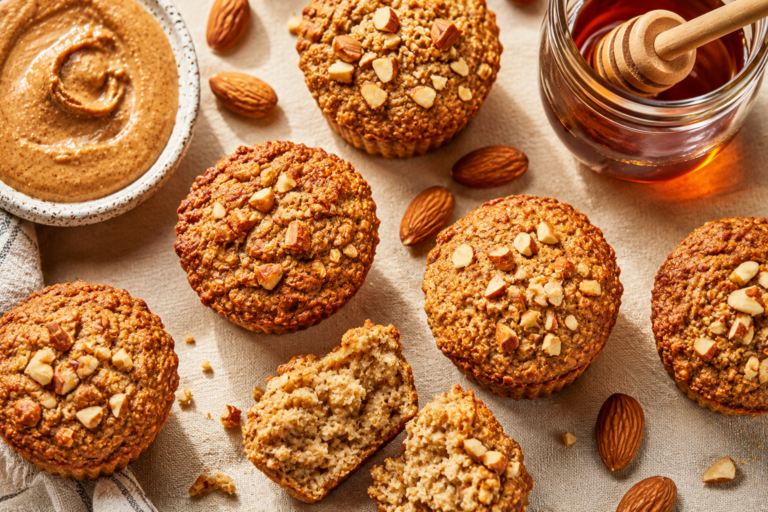
The chopped almonds folded into the batter and visible at each cup’s surface were the aesthetic and textural decision that completed the composition. In a cup whose primary flavor story is nutty, roasted, and faintly complex, the toasted almond pieces at the surface provide both visual texture—golden-brown irregular pieces that make each cup look specifically beautiful—and a satisfying crunch that contrasts with the cup’s tender, slightly chewy interior. The almond on top is the cup’s visual signature.
─────────────────────────────────────────
A Brief History of Miso in Sweet Preparations
Miso’s use in sweet preparations has a longer and more distinguished history than its current trend moment in Western baking would suggest. In Japanese confectionery—wagashi—white miso has been used as a component in sweet preparations for centuries, most notably in saikyo miso preparations from Kyoto where the white miso’s mild, sweet, and faintly fermented character was considered an ideal complement to sweetened bean pastes and rice flour confections. The specific sweetness of saikyo miso—produced from white rice koji and a higher-than-usual ratio of rice to soybean—made it a natural bridge ingredient between savory and sweet preparations in the Japanese culinary tradition.
White miso’s particular suitability for sweet applications reflects its composition: fermented for a shorter period than red or mixed miso, its glutamate content is lower and its residual sugar content from the koji fermentation process is higher, giving it a flavor profile that is mild, slightly sweet, and faintly savory rather than aggressively umami. It is the miso that is closest to dessert without crossing into dessert territory—the one that makes a sweet preparation more interesting without making it taste like it shouldn’t have miso in it.
Contemporary Western pastry’s adoption of miso in sweet preparations—accelerating through the 2010s and now appearing in everything from caramels to brownies to cookies to the baked oat cup in this recipe—reflects the same cross-cultural ingredient discovery process that has enriched Western pastry with every other adoption: an ingredient understood in its original cultural context in one register, encountered by a different culinary tradition, and found to perform unexpectedly and brilliantly in a new one. The Japanese confectioners understood this a long time ago. Western bakers are catching up, and these oat cups are a direct expression of that catching-up process.
─────────────────────────────────────────
Why This Cooking Method Works for Meal Prep
The two-bowl wet-dry mixing method is the correct technique for a batter containing both almond butter and miso paste, and the reason is emulsification. Almond butter is an emulsified preparation—oil suspended in protein and starch—and miso paste is similarly dense and complex. Whisking them together with the maple syrup, almond milk, and vanilla in the wet ingredient bowl before the dry ingredients are added allows the two dense ingredients to fully incorporate into a smooth, homogeneous liquid phase. Adding almond butter and miso directly to the dry ingredients without this pre-emulsification step produces an uneven batter with pockets of unincorporated almond butter that bake into dense, gummy spots rather than distributing evenly through the cup’s crumb.
Using muffin tin liners rather than greasing the tin directly is the practical choice for a batter with this fat content. Almond butter’s oil content is high enough that a baked cup can be difficult to release cleanly from a greased tin, particularly after refrigeration, when the almond butter fat solidifies and can adhere to the tin’s surface. Liners eliminate this problem entirely and have the additional advantage of keeping each cup’s exterior clean and intact through removal, storage, and reheating—a quality that matters for a cup that will be handled multiple times across the storage window.
The twenty-five minute baking time is calibrated for a cup whose moisture content is relatively high due to the almond milk and the almond butter’s natural oil content. The chopped almonds on the surface serve as a visual doneness indicator as much as a textural component: when the almonds are toasted to a pale golden color and the cup’s edges are set and slightly darker, the interior has reached its target texture—set but yielding, with the tender, slightly chewy quality that makes a baked oat cup genuinely satisfying rather than merely baked.
─────────────────────────────────────────
Flavor Profile: What to Expect
These cups are warmly complex—a flavor profile that rewards attention and reveals more than it announces:
- Roasted almond butter depth – The foundational flavor of the cup: warm, slightly bitter, deeply nutty, and rich in a way that coats the palate and carries every other flavor throughout each bite
- Miso-amplified complexity – The invisible flavor agent: not detectable as miso, but responsible for the cup’s greater-than-expected depth—the reason the almond butter tastes more roasted and the maple tastes more caramelized than they would without it
- Caramel-toned maple sweetness – Maple syrup’s characteristic rounded sweetness with its faint smoky undertone, made more vivid and more forward by the miso’s savory balance
- Warm vanilla depth – Threading through every other flavor with its bakery-warm softness, rounding the miso’s subtle edge and the almond’s bitterness into a cohesive, welcoming whole
- Toasted almond crunch – The textural counterpoint: slightly bitter, crisply toasted, and specifically almond-flavored in a way that focuses the cup’s overall almond character at the surface
- Wholesome oat body – The mild, slightly grassy base that provides substance and structure without competing with the cup’s more assertive flavors
The miso’s glutamate compounds continue to interact with the baked crumb’s sugars during refrigerator storage, producing a cup that is measurably more complex and more cohesive on day two than immediately after baking. These are cups that taste better every day—the miso’s work is ongoing, and the results are consistently rewarding.
─────────────────────────────────────────
Tips for Making the Best Miso Almond Butter Baked Oat Cups
A few specific technique choices produce a noticeably superior cup:
- Use white miso specifically – Red or mixed miso has a significantly stronger, more assertive flavor that will be detectable as miso in the finished cup rather than functioning as a background amplifier. White miso’s mild, slightly sweet profile is what makes the ingredient invisible in the best possible sense.
- Whisk the miso fully into the wet ingredients – Miso paste has a tendency to remain in lumps if not actively whisked into liquid. A smooth, fully incorporated wet mixture is the precondition for even distribution through the batter. A small whisk rather than a spoon is the more effective tool for this step.
- Use natural almond butter – Natural almond butter (just almonds and salt) produces a cleaner, more roasted almond flavor than stabilized commercial varieties and integrates more smoothly into the batter. Stir thoroughly before measuring.
- Don’t overmix after combining wet and dry – The oats’ starch and the almond butter’s protein are both sensitive to overmixing. Combine until just no dry streaks remain—a slightly rough batter bakes into a more tender cup than a uniformly smooth one.
- Press almond pieces gently into the surface – After dividing the batter among the muffin cups, press a small additional pinch of chopped almonds onto each surface. The almonds folded into the batter settle as the cup rises; surface-pressed almonds stay visible and toast more prominently, producing the golden, textured top that makes these cups visually distinctive.
- Use liners – Non-negotiable for this recipe. The almond butter fat content makes clean tin release unreliable without them.
Optional: A light drizzle of additional maple syrup over the warm cups immediately after removing from the oven adds a glossy, slightly sticky surface that deepens the maple character and makes the toasted almonds look particularly beautiful before the cups are cooled and stored.
─────────────────────────────────────────
Portioning and Container Suggestions
A standard 12-cup muffin tin produces twelve individual cups—two to three per serving as a breakfast portion, yielding four to six complete servings. Two cups with a piece of fresh fruit is a nutritionally complete and genuinely satisfying morning meal; three cups is appropriate for higher-energy mornings or post-exercise recovery.
Once fully cooled, these cups are among the most stackable in the collection—the almond butter’s fat content gives the baked crumb a slightly denser, more resilient structure than a lower-fat oat cup would have, which means the cups hold their shape under stacking weight without compressing. A wide, flat airtight container with parchment paper between layers accommodates a full batch efficiently, and the golden, almond-topped surface remains visually intact through careful stacking.
The muffin liner serves its purpose beyond the baking step: liners kept on through storage protect the cup’s sides from moisture absorption in the refrigerator and make each cup easy to handle and unwrap at serving time without crumbling at the edges. They are worth keeping on until the moment of eating.
─────────────────────────────────────────
Storage, Reheating, and Shelf Life Tips
- Refrigerator storage: Baked cups keep in an airtight container for up to 5 days. The miso’s flavor-amplifying compounds continue developing through days two and three—the peak flavor window for this recipe.
- Freezer storage: Freeze exceptionally well for up to 2 months. Cool completely, keep liners on, and transfer to a freezer bag. The almond butter’s fat structure is highly freeze-stable with no significant texture change after thawing.
- Oven reheating (recommended): Place cups on a baking sheet at 300°F for 8–10 minutes from refrigerated. This method restores the almond topping’s slight crispness and produces the most freshly-baked result.
- Microwave reheating: Wrap in a damp paper towel and microwave at 50% power for 45–60 seconds. The almond butter’s fat content means these cups reheat pleasantly even in the microwave—the interior stays moist and the miso complexity is unaffected by brief microwave heat.
- Room temperature serving: Genuinely excellent at room temperature—the almond butter’s flavor is most forward and the miso’s complexity most perceptible without refrigerator suppression. A valid and recommended no-heat serving option.
- From frozen: Thaw overnight in the refrigerator and reheat as above, or place directly from frozen in a 300°F oven for 15–18 minutes. The oven-from-frozen method produces the best possible texture result.
─────────────────────────────────────────
Why This Recipe Deserves a Spot in Your Meal Prep Rotation
There are baked oat cups in this collection that earn their place through their color, and some through their spice profile, and some through the efficiency of their nutrition. This one earns its place through genuine flavor surprise—the specific, pleasurable experience of eating something and finding it more interesting than you expected, without being able to immediately identify why. That quality—the depth that comes from miso’s quiet work in a sweet batter—is something you stop and notice, and noticing it is part of the enjoyment.
It is also, from a purely practical standpoint, one of the most reliable performers in the baked breakfast category: five-day refrigerator life, two-month freezer life, a flavor that improves rather than fades over the storage window, and a protein-and-fat profile from the almond butter that makes each cup sustaining enough to carry through the morning. A breakfast that is simultaneously nutritionally sound and genuinely, specifically interesting to eat is a breakfast worth making every Sunday without exception. These cups are that breakfast, and the miso is why.
─────────────────────────────────────────
Meal Prep Pairing Suggestions
Miso Almond Butter Baked Oat Cups pair most naturally with baked breakfast preparations that offer genuine contrast in flavor profile and aromatic character—ensuring the week’s oven-baked mornings feel varied rather than returning to the same warm, nutty register every day. Our Golden Milk Baked Oat & Almond Cups make the ideal companion within the baked almond oat cup category—both feature sliced almonds and a muffin-tin format, but turmeric and cinnamon’s vivid, earthy spice story is completely distinct from the miso cup’s quiet, complex depth. The two cups share a structural philosophy and an ingredient but occupy entirely different flavor territories.
For a complete three-breakfast rotation, our Maple Cardamom Baked Protein Oat Cups round out the week with a spiced, protein-forward option that covers the same convenient baked oat format in a warmly floral, cardamom-forward direction. Three baked oat cups—almond-miso complex, turmeric-golden vivid, and cardamom-maple spiced—assembled across a single Sunday baking session and delivering a week of mornings where every baked breakfast is specifically, individually interesting rather than a repetition of the same decision. That is what a well-designed baked breakfast rotation looks like at its most considered. These cups earn their place in it completely.
Miso Almond Butter Baked Oat Cups
These Miso Almond Butter Baked Oat Cups use a small amount of white miso paste in a sweet baked preparation to produce a depth and complexity that almond butter and maple syrup alone cannot achieve—a cup that tastes specifically, memorably of something, and keeps tasting that way all week long.
12
servings15
minutes25
minutes180
kcal40
minutesIngredients
2 cups rolled oats
1/2 cup almond butter
1/4 cup maple syrup
2 tablespoons miso paste
1 cup almond milk
1 teaspoon vanilla extract
1 teaspoon baking powder
1/2 teaspoon salt
1/4 cup chopped almonds
Directions
- Preheat the oven to 350°F (175°C) and line a muffin tin with liners.
- In a large bowl, mix the rolled oats, baking powder, and salt.
- In a separate bowl, whisk almond butter, maple syrup, miso paste, almond milk, and vanilla extract until smooth.
- Combine the wet ingredients with the dry ingredients and mix well.
- Fold in the chopped almonds.
- Divide the mixture evenly among the muffin tin cups.
- Bake for 25 minutes or until the tops are golden brown.
- Allow to cool for 10 minutes before removing from the tin.
Nutrition Facts
- Total number of serves: 4
- Calories: 180kcal
- Cholesterol: 0mg
- Sodium: 620mg
- Potassium: 400mg
- Sugar: 8g
- Protein: 6g
- Calcium: 60mg
- Iron: 2mg
About This Author

Aurora Wright
Pastry Chef & Dessert Editor
Aurora is the sweet side of Daily Dish. A trained pastry chef and dessert stylist, she’s responsible for our mouth-watering cakes, cookies, and confections. She brings precision, artistry, and a touch of whimsy to every recipe she creates — and taste-tests more chocolate than she’ll admit.
Favorite dish: Flourless dark chocolate torte.
Kitchen motto: “Life’s too short to skip dessert.”















