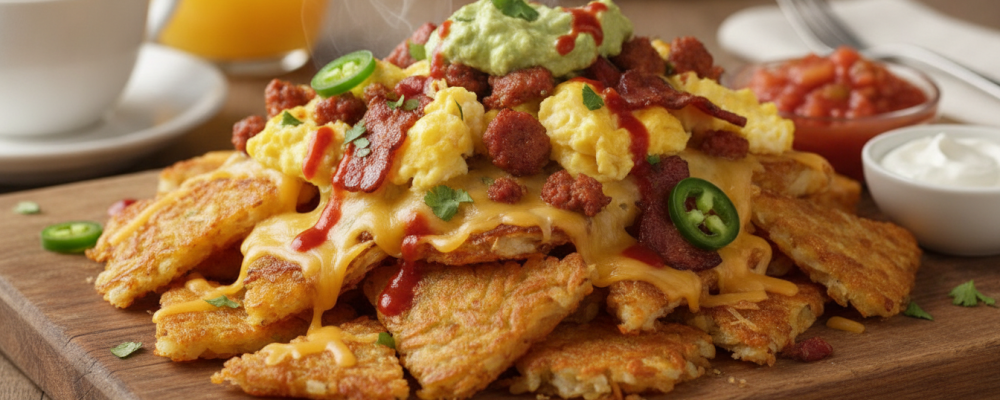

Breakfast nachos represent a straightforward application of sound culinary logic: take a format that works—nachos, with their combination of crispy base, melted cheese, contrasting toppings—and adapt it to breakfast ingredients. The concept isn’t about novelty for its own sake. It’s about recognizing that the structural and flavor principles that make nachos satisfying translate directly to morning food. Crispy base? Hashbrowns do this better than tortilla chips for breakfast contexts. Melted cheese? Universal. Savory protein? Bacon. Cool, rich garnishes? Sour cream and avocado. The logic is airtight.
What makes this recipe work isn’t the concept—it’s the execution. Specifically, it’s the sequencing: hashbrowns must achieve genuine crispness before any toppings are added. This requires honest oven heat (400°F), proper spacing on the baking sheet, and patience through that initial 15-minute bake. Shortcuts here—insufficient temperature, crowded pans, cutting the bake short—result in soft, steam-cooked hashbrowns that collapse under toppings and create a soggy, structurally compromised final dish. The difference between good breakfast nachos and great ones is almost entirely about that initial crisping phase.
I appreciate this recipe for what it reveals about cooking principles. The nacho format exists because humans solved a specific problem: how do you create a shareable dish where every component—crispy, melted, fresh—arrives together in each bite? The hashbrown version inherits that solution entirely. By understanding why nachos work, you understand exactly how to make this breakfast adaptation work. Technique serves concept, and the result is something genuinely better than either component would be separately.
─────────
The Inspiration Behind This Recipe
This recipe emerged from analyzing what makes nachos so universally satisfying and identifying whether those same principles could function in a breakfast context. Traditional nachos succeed because they solve a fundamental eating challenge: they deliver multiple textures and temperatures simultaneously—crispy, melted, cool, creamy—in a format where every bite is self-contained and complete. The question was whether hashbrowns could serve the structural role that tortilla chips play, and the answer, when properly executed, is decisively yes.
The specific topping selection wasn’t arbitrary. Each component was chosen for both flavor contribution and functional role. Cheddar melts reliably and provides sharp, familiar flavor that works at any meal. Bacon’s smokiness and crunch add protein and textural contrast—neither of which sour cream or avocado provides. The cool toppings—sour cream and avocado—go on after baking specifically because their value is in temperature and texture contrast against the hot cheese and hashbrowns. Green onions add aromatic freshness and color. Nothing is decorative; everything contributes.
What I wanted to demonstrate with this recipe is that breakfast food doesn’t need to be constrained by breakfast conventions. The formats and flavor combinations that work at other meals often work equally well in morning contexts, particularly when the underlying technique is sound. Breakfast nachos aren’t a gimmick—they’re a logical application of proven culinary structure to morning ingredients, executed with the same attention to technique that any good nacho preparation deserves.
─────────
A Brief History of Nachos
Nachos were invented in 1943 by Ignacio “Nacho” Anaya, a maître d’ at a restaurant in Piedras Negras, Mexico, who improvised a snack for a group of American military wives using what he had available: tortilla chips, cheese, and jalapeños. The dish spread rapidly through Texas and the American Southwest, reaching mainstream American consciousness in the 1970s when they were introduced at a Dallas Cowboys stadium. That stadium introduction proved crucial—nachos became permanently associated with shared, communal eating and sporting events.
The dish’s structure—crispy base supporting melted cheese and varied toppings—proved remarkably adaptable. Restaurant chefs began creating “loaded” versions with increasingly elaborate topping combinations throughout the 1980s and 90s. The format’s versatility meant it could accommodate virtually any cuisine’s flavors while maintaining its fundamental character. Korean nachos, Mediterranean nachos, barbecue nachos—the concept absorbed different culinary traditions while remaining structurally consistent.
The breakfast nacho emerged from the broader trend of meal-time boundary dissolution that characterized early 21st century American food culture. As brunch became firmly established as a legitimate meal category, chefs and home cooks began experimenting with applying dinner and snack formats to breakfast ingredients. Hashbrown nachos represent a particularly successful adaptation because potatoes are genuinely superior to tortilla chips as a breakfast base—more substantial, more flavorful in the morning context, and capable of supporting the bold toppings that make nachos satisfying.
─────────
Why This Cooking Method Works
The 400°F oven temperature and the initial 15-minute solo bake are the foundation everything else depends on. At this temperature, the hashbrowns’ surface moisture evaporates quickly, allowing the exterior to crisp and develop the Maillard reaction browning that creates flavor and texture. Lower temperatures steam the hashbrowns rather than crisping them, producing soft, pale results that won’t support toppings. The olive oil coating is essential—it conducts heat to the hashbrown surface more efficiently than a dry bake, ensuring uniform crisping across the entire sheet.
Adding toppings in two stages—cheese and bacon first, then fresh garnishes after—reflects the different heat requirements of each component. Cheese and bacon need oven heat to melt and integrate; avocado, sour cream, and green onions would be destroyed by it. The brief second bake (5-7 minutes) is calibrated to melt the cheese completely without overcooking the already-crispy hashbrowns. This sequencing ensures every component arrives at the table in its optimal state—no wilted avocado, no unmelted cheese, no soggy hashbrowns.
Serving immediately after adding the cold garnishes is non-negotiable. Unlike regular nachos where tortilla chips have some tolerance for sitting under warm toppings, hashbrowns lose their crispness faster when moisture from toppings begins penetrating the surface. The contrast between the hot, crispy base and the cool garnishes is central to the dish’s appeal—that temperature differential diminishes rapidly. The instruction to serve immediately isn’t a suggestion; it’s a technical requirement for achieving the dish as designed.
─────────
Flavor Profile: What to Expect
These breakfast nachos deliver bold, satisfying flavors with essential textural contrast:
- Crispy hashbrown base – Golden, slightly salty potato with concentrated starchy flavor and genuine crunch
- Sharp cheddar melt – Pronounced cheese flavor that becomes slightly caramelized at the edges
- Smoky bacon crumble – Concentrated pork flavor with crispy texture throughout
- Cool sour cream – Tangy, creamy contrast that tempers the heat and richness
- Buttery avocado – Mild, creamy richness that adds healthy fat and textural contrast
- Fresh green onion – Bright, sharp aromatics that cut through the richness
- Black pepper warmth – Subtle spice woven throughout from the initial seasoning
The overall experience is deeply satisfying in the way that properly executed comfort food always is—each component contributing something specific, the whole being greater than its parts. The critical moment is when you get all elements in one bite: hot crispy hashbrown, melted cheese, smoky bacon, cool sour cream, and creamy avocado together. That combination of temperatures and textures is what makes nachos—in any form—such an enduring format for satisfying eating.
─────────
Tips for Making the Best Crispy Hashbrown Breakfast Nachos
Thaw frozen hashbrowns completely and press them firmly between paper towels to remove excess moisture—this single step makes the difference between genuinely crispy and disappointingly soft results.
- Don’t crowd the baking sheet – Use two pans if necessary; crowding creates steam that prevents crisping
- Press hashbrowns flat – An even layer crisp more uniformly than uneven piles
- Flip halfway through first bake – Ensures both sides develop color and crispness
- Use sharp cheddar – Mild cheese lacks the flavor intensity needed to stand up to the other components
- Drain bacon thoroughly – Excess bacon fat makes hashbrowns soggy; blot well with paper towels
- Dice avocado just before serving – Prevents browning and maintains clean, fresh appearance
- Season at every stage – Season hashbrowns before baking and taste garnishes before adding
- Work quickly after second bake – Get cold toppings on and dish to the table fast
For additional heat, add sliced pickled jalapeños with the cheese and bacon, or serve with hot sauce on the side. A fried or poached egg placed on top just before serving adds protein and creates a natural sauce when the yolk breaks over everything.
─────────
Serving Suggestions and Side Pairings
These breakfast nachos are substantial enough to be a complete meal, particularly when served to a group from the center of the table for communal eating. For a more complete brunch spread, lighter accompaniments work best—fresh fruit provides sweet contrast and palate cleansing, while a simple green salad with vinaigrette adds freshness and acidity that cuts through the richness. For a more elaborate setup, add small bowls of pico de gallo, hot sauce, and extra sour cream for customization.
Presentation is naturally excellent with this dish—the layered colors of golden hashbrowns, melted orange cheese, white sour cream, green avocado and onions create visual appeal without any styling effort. Serve directly from the baking sheet for maximum casual charm, or transfer carefully to a large platter if presentation demands it. Either way, work quickly—this dish’s appeal is partly in its temperature contrast, which fades faster than you want it to.
These nachos excel at casual weekend brunches, game day breakfasts, hangover recovery mornings, or any occasion where you want something bold, satisfying, and fun without formality. The communal eating format encourages sharing and conversation, making it particularly good for group gatherings where interactive food creates natural social energy.
─────────
Storage, Reheating, and Make-Ahead Tips
- Cook bacon ahead: Prepare and crumble up to 2 days ahead; refrigerate until needed
- Don’t assemble ahead: This dish requires fresh assembly immediately before serving
- Store components separately: Keep cooked hashbrowns, bacon, and cheese separate if preparing in stages
- Reheat hashbrowns properly: Re-crisp in a 400°F oven for 5-7 minutes before adding toppings
- Leftovers don’t store well: The structure degrades rapidly once assembled; plan to eat immediately
- Batch for crowds: This recipe scales easily—use multiple baking sheets for larger groups
- Keep garnishes cold: Refrigerate avocado (with pit, wrapped), sour cream, and green onions until the moment of serving
- Prep avocado last: Dice immediately before serving and toss with a squeeze of lemon to prevent browning
This is genuinely a “make and eat immediately” recipe where advance preparation offers little benefit for the assembled dish. The good news is that the preparation itself is fast—with bacon cooked ahead, the entire dish comes together in under 25 minutes, making it more practical than most impressive brunch options.
─────────
Why This Recipe Deserves a Spot in Your Rotation
This recipe earns its place because it solves a specific brunch problem: how do you feed a group something exciting, satisfying, and interactive without spending significant time in the kitchen or requiring complex technique? The answer is applying a proven format—nachos—to breakfast ingredients with proper attention to technique. The result feeds multiple people from one pan, requires no specialized skills, and delivers the kind of bold, complete flavors that make people genuinely enthusiastic about what they’re eating.
Beyond practicality, this recipe expands your understanding of how culinary formats transfer across meal contexts. Once you see that nacho structure works with hashbrowns, you start recognizing other format transfers that could work just as well. That kind of lateral thinking—applying what works in one context to solve problems in another—is how cooking repertoires genuinely expand. This dish teaches that lesson while being legitimately delicious, which makes it valuable on multiple levels simultaneously.
─────────
Recommended Drink Pairing
The bold, savory flavors and rich toppings of these breakfast nachos demand beverages with sufficient character to provide balance rather than getting lost against the cheese and bacon. Strong black coffee is the reliable foundation—dark roast with enough body to stand up to the richness, its bitterness providing essential counterpoint to the melted cheese and fatty bacon. Cold brew concentrate over ice adds similar intensity with refreshing temperature contrast that works particularly well with the hot-cold nature of the dish itself.
For brunch cocktails, Bloody Marys are the obvious and genuinely excellent choice—the tomato base, savory spices, and vegetable garnishes create flavor harmony with the breakfast nacho profile while the vodka’s heat adds its own dimension. Micheladas bring similar savory depth with Mexican beer tradition that honors the dish’s Tex-Mex inspiration. A simple cold Mexican lager—particularly with lime—provides refreshing, palate-cleansing contrast without competing flavors.
For non-alcoholic options, fresh-squeezed orange juice provides bright citrus acidity that cuts through the cheese and bacon fat effectively. Sparkling water with lime performs similarly while adding effervescence that refreshes between bites. Tomato juice brings savory umami depth that complements rather than contrasts, creating flavor harmony particularly good if you’ve added jalapeños or hot sauce. Cold milk works for those wanting something neutral and cooling, particularly effective against any heat from pepper seasoning. Whatever you choose, prioritize something with acidity, bitterness, or effervescence—the richness of melted cheese, bacon fat, and sour cream benefits from a beverage that cuts through and resets your palate rather than adding more richness to an already indulgent dish.
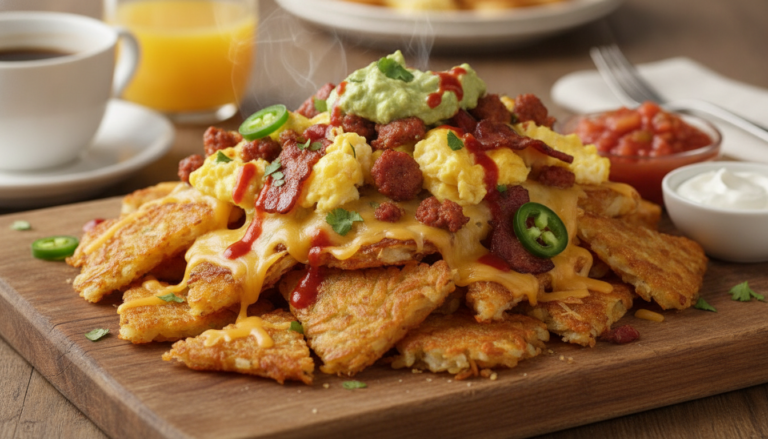
Crispy Hashbrown Breakfast Nachos
These Crispy Hashbrown Breakfast Nachos replace tortilla chips with golden, oven-crisped hashbrowns then load them with melted cheddar, crispy bacon, fresh avocado, and cool sour cream for the most satisfying breakfast mashup you’ll make all year.
4
servings15
minutes25
minutes500
kcal40
minutesIngredients
4 cups frozen hashbrowns
1 cup shredded cheddar cheese
4 slices bacon
2 tablespoons chopped green onions
2 tablespoons sour cream
1 tablespoon olive oil
1 half avocado, diced
1 pinch salt
1 pinch black pepper
Directions
- Preheat oven to 400°F (200°C).
- Spread hashbrowns evenly on a baking sheet.
- Drizzle olive oil over hashbrowns and season with salt and pepper.
- Bake hashbrowns for 15 minutes until crispy.
- Cook bacon in a skillet until crisp, then crumble.
- Sprinkle cheese and crumbled bacon over the crispy hashbrowns.
- Bake for an additional 5-7 minutes until cheese is melted.
- Top with green onions, avocado, and sour cream.
- Serve immediately.
Nutrition Facts
- Total number of serves: 4
- Calories: 500kcal
- Cholesterol: 0mg
- Potassium: 400mg
- Sugar: 8g
- Protein: 6g
- Calcium: 60mg
- Iron: 2mg
About This Author

Benjamin Brown
Recipe Developer
Benjamin is our flavor engineer. A classically trained chef turned recipe developer, he’s obsessed with balancing taste, texture, and creativity. He ensures that every recipe we publish is not only delicious but also reliable, approachable, and repeatable — even for beginners.
Favorite dish: Slow-braised short ribs with red wine reduction.
Kitchen motto: “Cooking is part science, part soul.”