
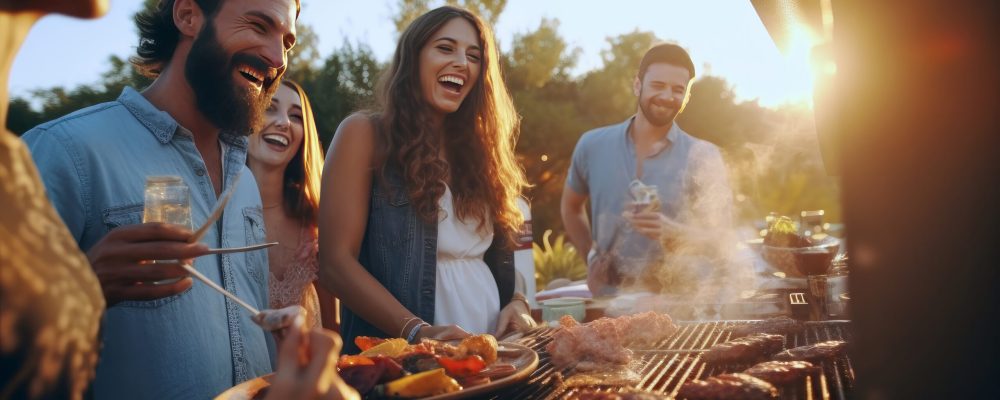

There is a cooking that happens outside that is unlike any cooking that happens in a kitchen.
Not because the techniques are fundamentally different — though some of them are. Not because the ingredients are different — though the outdoor cook often reaches for different things than the indoor one. But because the context is different in a way that changes everything about the experience of both cooking and eating.
The outdoor meal is not simply the indoor meal relocated. It is a different kind of occasion — one that operates by different social rules, that produces a different quality of ease between the people sharing it, that invites a different relationship between the cook and the guests and between everyone present and the food.
The backyard cook — the person who has developed the specific skills and habits of producing excellent food in an outdoor setting — understands something that the purely indoor cook doesn’t: that the context of eating is as much an ingredient as anything in the pan, and that the specific context of the outdoor meal produces a quality of pleasure that the indoor meal, however excellent, cannot fully replicate.
The Specific Pleasure of Outdoor Cooking
The specific pleasure of cooking outdoors is not primarily about the food — though outdoor cooking at its best produces food that is specifically suited to and specifically enhanced by the outdoor context.
It is about the quality of presence that outdoor cooking produces in the cook.
The indoor kitchen is an enclosed space where the cook’s attention is necessarily interior — focused on the stove, on the timing, on the multiple preparations happening simultaneously in a contained environment that requires management and organization. The outdoor kitchen — the grill, the fire, the outdoor cooking setup that ranges from the simplest charcoal kettle to the elaborate outdoor kitchen — is an open space where the cook’s attention expands outward. The smoke rises into open air. The sound of the fire is present. The light is the actual light of the actual time of day rather than the artificial light of an indoor space.
This openness produces a specific quality of presence in the outdoor cook that the indoor kitchen rarely allows — a quality of being fully in the environment rather than managing an environment. The outdoor cook is not just cooking. They are outside, in the summer air, with the specific sensory richness of an August evening surrounding the cooking activity rather than being excluded from it.
This is not a trivial difference. The cook who is genuinely present in the outdoor cooking experience produces food that carries the specific quality of that presence — food that tastes like it was made by someone who was enjoying the making as much as the guests will enjoy the eating.
The Grill as a Communal Tool
The grill’s social function — its role as the gathering point of the outdoor occasion, the place where people congregate while the cooking is happening — has been noted in these pages before. But it deserves examination in more depth, because the specific way the grill functions as a communal tool is one of the most significant things that distinguishes outdoor cooking from indoor cooking.
The indoor cook is separated from their guests by the kitchen door. The outdoor cook is separated from their guests by — nothing. The grill is in the middle of the occasion. The cooking is visible. The process is transparent. The guests who gather around the grill are not waiting for food to arrive from a separate space. They are watching food being made, participating in the occasion of making it, and contributing through their presence and their conversation to the specific atmosphere that the outdoor cooking creates.
This transparency changes the social dynamic of the meal in significant ways. The guests who can see the cooking — who can ask questions about what is happening, who can observe the specific techniques being applied, who can smell the food before it arrives on their plates — are more engaged with the meal as a process rather than simply as a result. They arrive at the table having already been part of the occasion in a way that guests who waited in another room were not.
And the cook who is cooking in the presence of their guests — who is making food while also participating in the social occasion of the evening — is a different kind of host than the cook who disappears into the kitchen and re-emerges with finished dishes. They are simultaneously the cook and the host, present for both roles without being sequestered in either.
What the Outdoor Kitchen Requires
The outdoor cooking setup — whatever form it takes — requires a different approach to mise en place and preparation than the indoor kitchen. Understanding what the outdoor environment lacks, and preparing accordingly, is the difference between an outdoor meal that flows smoothly and one that requires the cook to make constant trips back inside for things that should have been brought out in advance.
The most common failure of the outdoor cooking setup is inadequate surface space. The indoor kitchen has counters — designated spaces for the preparation and holding of food at every stage of the cooking. The outdoor kitchen typically has the grill and whatever table or cart or flat surface the cook has arranged around it. The grill surface itself is occupied by the cooking. The table needs to hold the raw ingredients ready to be cooked, the seasoning and the brushes and the tools, the serving platters that will receive the finished food, and the various drinks and glasses that inevitably migrate to the cooking area.
This is more than most outdoor setups accommodate without deliberate planning — and the cook who arrives at the outdoor kitchen without having thought through the surface space situation spends the meal in a constant logistical scramble that prevents them from being fully present in either the cooking or the social occasion.
The solution is simple but requires advance thought: a dedicated outdoor prep table, set up before the cooking begins, with everything that will be needed arranged in the order it will be used. The same mise en place discipline that the professional kitchen applies indoors applies outdoors — but it requires more deliberate setup because the surfaces are not built into the environment the way kitchen counters are.
The Foods That Belong Outside
Not every food is equally well suited to outdoor cooking — and the outdoor cook who has developed a repertoire of preparations specifically suited to the outdoor context produces consistently better outdoor meals than the one who simply moves the indoor menu outside.
The foods that most specifically belong to outdoor cooking are the ones that benefit from or are only achievable through the specific conditions of outdoor heat — the direct flame, the smoke, the specific char that the grill produces.
Proteins cooked over direct flame — the steak, the fish, the chicken thigh, the lamb chop — develop a crust and a char character that indoor cooking only approximates. The specific combination of Maillard reaction compounds and smoke compounds that open-flame cooking produces is unique to this cooking method — and the outdoor cook who has learned to manage the fire well enough to produce this result consistently has a specific culinary tool that no indoor equipment replicates.
Vegetables that benefit from direct high heat — the corn in the husk, the halved bell pepper, the thick-sliced eggplant, the scallion, the asparagus — are often better on the grill than in any indoor preparation. The specific char and the specific concentration of flavor that the grill’s dry, intense heat produces from these vegetables is not achievable in an oven or on a stovetop.
And the large-format whole animal preparations — the whole fish, the bone-in leg of lamb, the spatchcocked chicken — that require sustained heat over a longer period are ideally suited to the grill’s two-zone setup, where the direct heat produces the crust and the indirect heat finishes the cooking through without burning the exterior.
The Condiment Table That Makes It Communal
One of the most effective tools in the outdoor cook’s repertoire is the condiment table — the arrangement of sauces, pickles, herbs, and finishing elements that allows each guest to customize their plate and that transforms the outdoor meal from a served occasion into a communal one.
The condiment table is not complicated. It requires only the deliberate assembly, in advance, of the finishing elements that the outdoor meal’s primary preparations benefit from — and the arrangement of these elements in a way that makes them accessible to every guest without requiring the cook to apply them individually to each plate.
The herb plate — a large plate or board with torn fresh herbs, sliced scallions, and whatever other fresh aromatics complement the meal — is the simplest and most broadly applicable component of the outdoor condiment table. It costs almost nothing, requires almost no preparation, and transforms the outdoor meal’s finishing from something the cook applies to something each guest applies according to their own preference.
The sauce array — the specific hot sauces and the specific vinaigrettes and the specific herb-oil preparations that complement what is being grilled — gives each guest the ability to calibrate the seasoning of their plate to their own taste, which both reduces the cook’s finishing obligations and produces a more individually tailored eating experience for each guest.
And the pickle element — the quick-pickled cucumber or the fermented hot pepper or the preserved lemon that provides the acid counterpoint to the richness of grilled food — is the component that most specifically completes the outdoor meal’s flavor profile, cutting through the fat and the smoke in the way that a fresh, bright acid element always does.
The Outdoor Meal After Dark
The outdoor meal that continues after the light has gone — that persists through the transition from evening to night, with candles or string lights providing the illumination and the warm August air still present and the conversation still going — is one of the specific pleasures of the August outdoor dining experience.
The transition to outdoor evening dining produces a specific quality of occasion that the indoor meal after dark doesn’t have. The outdoor dark is a different environment from the indoor dark — it is ambient and open rather than enclosed and artificial, and the specific quality of being outside in the warm dark of an August night adds a dimension to the eating and the conversation that the indoor equivalent doesn’t provide.
The food that belongs to this transition is simple — the cheese that appears after the grilling is done, the fruit that comes from the bowl on the table, the small dessert that requires no further cooking and no return to the kitchen. The outdoor meal that continues into the night is a meal that has already been fed — that has moved from the cooking occasion to the conversation occasion — and the food that serves this transition is the food that sustains the staying rather than the eating.
This is the outdoor meal at its best: the occasion that the cooking created and then transcended, the table that kept people longer than the food alone would have kept them, the specific August evening that extended itself past the meal and became something worth remembering for reasons that have very little to do with what was grilled.
The Takeaway
The backyard cook who has developed the specific skills of outdoor cooking — the grill management, the outdoor mise en place, the selection of foods that most specifically belong to the outdoor context, the condiment table that makes the meal communal — produces outdoor meals that are specifically and significantly different from indoor meals relocated to an outdoor setting.
They are occasions rather than meals. They are social experiences organized around food rather than food experiences with social accompaniments. They are the specific expression of August outdoor life at its best — the long evening, the warm air, the fire and the smoke and the specific pleasure of food made in the open air and eaten in the company of people who stayed longer than they planned.
Set up the outdoor kitchen. Bring everything out in advance. Light the grill early. Put the condiment table together. And then cook outside in August while the August evenings are still here to cook in.
The indoor kitchen will be there in October.
The backyard is available right now.














