
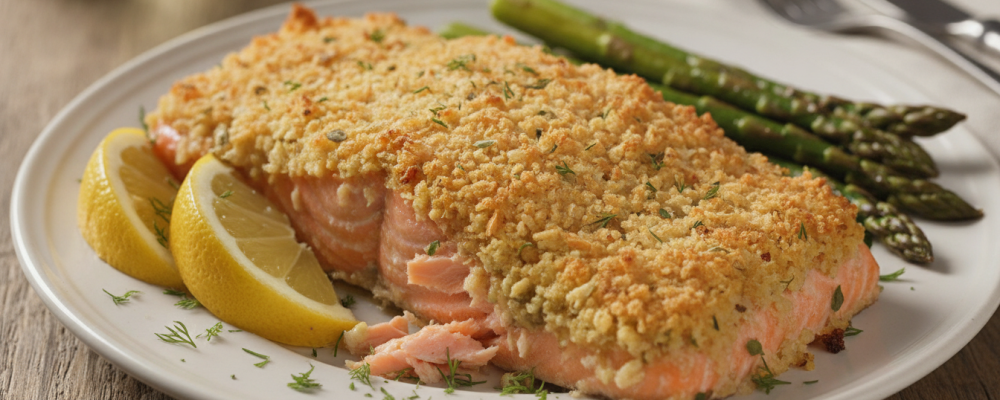

There are baked salmon recipes that produce reliably cooked fish, and there are the ones that produce something genuinely exceptional—where the technique applied to the exterior creates a result that makes the finished plate look and taste restaurant-worthy. Crispy Parmesan Crusted Baked Salmon is the second kind. Parmesan and panko combined with olive oil and lemon zest, pressed onto each fillet and baked at 400°F until the crust is golden and audibly crispy and the salmon beneath it is perfectly cooked—juicy, flaking cleanly, and carrying the lemon and Parmesan fragrance through every bite. It is one of the most efficient high-impact techniques in seafood cooking, and it takes under five minutes of prep.
The crust is where the recipe earns its name, and every ingredient in it is doing specific work. The Parmesan caramelizes under the oven’s dry heat, developing the nutty, slightly bitter, concentrated dairy flavor that makes aged cheese so compelling when toasted. The panko—coarser and airier than standard breadcrumbs—creates a lighter, more open structure that traps more air during baking, producing a crust that is genuinely shatteringly crispy rather than densely packed. The olive oil binds the two together and conducts heat into the crust from within, ensuring even browning across the entire surface. And the lemon zest, distributed through the mixture, blooms under the oven’s heat into something fragrant and citrusy that perfumes the crust and the salmon beneath it simultaneously.
The result is a salmon fillet with a crust that shatters cleanly under a fork, revealing perfectly cooked, moist salmon beneath it—a textural contrast that is deeply satisfying and that sets this preparation apart from any plain baked or pan-seared fillet.
The Inspiration Behind This Recipe
This recipe draws from the Italian-American tradition of Parmesan-crusted proteins—the technique applied to chicken cutlets, veal, and fish throughout Italian-American restaurant cooking—and adapts it specifically for salmon in a format that is practical, weeknight-accessible, and produces a result that requires no frying and no special equipment. The lemon zest addition is a deliberate nod to the Mediterranean tradition of pairing citrus with baked fish, where it provides the brightness that makes a rich, Parmesan-crusted preparation taste vibrant rather than heavy.
Why 400°F Is the Right Temperature for This Crust
Temperature management is the most important technical decision in this recipe, and 400°F is the specific sweet spot for a Parmesan-panko crust on salmon. At lower temperatures, the crust takes too long to develop color, which risks overcooking the salmon before the Parmesan has had time to caramelize. At higher temperatures, the Parmesan burns at the edges before the salmon is cooked through—producing a bitter crust and dry fish simultaneously. At 400°F, the fifteen-to-twenty-minute bake window allows the salmon to cook to a perfect medium while the crust develops deep golden color and the Parmesan’s natural sugars caramelize into something nutty and complex.
Flavor Profile: What to Expect
- Shatteringly crispy Parmesan-panko crust that caramelizes into something golden, nutty, and deeply savory
- Fragrant lemon zest distributed through the crust that blooms under heat into citrusy brightness
- Juicy, perfectly cooked salmon beneath the crust that flakes cleanly and carries the Parmesan fragrance into every bite
- Fruity olive oil that binds the crust and conducts heat evenly across its surface
- Fresh parsley that adds herbal brightness and visual appeal at the finish
Tips for Making the Best Parmesan Crusted Salmon
- Press the crust firmly onto each fillet: The mixture needs direct contact with the salmon surface to adhere properly and develop an even, cohesive crust rather than patchy coverage.
- Use freshly grated Parmesan: Pre-grated Parmesan contains anti-caking agents that prevent proper caramelization. A freshly grated block produces a noticeably crispier, more flavorful crust.
- Pat salmon dry before crusting: Surface moisture prevents the crust from adhering properly and can cause steaming rather than crisping at the crust base.
- Don’t flip the salmon: The crust is applied only to the top—flipping destroys it. Let the oven’s surrounding heat cook the underside through the baking time.
- Check at 15 minutes: Salmon fillet thickness varies significantly. A thinner fillet may be done at 15 minutes; a thicker one may need the full 20. Use a fork to test for clean flaking.
Serving Suggestions and Side Pairings
- Over orzo or pasta with lemon and olive oil for a complete Italian-inspired dinner
- Alongside roasted asparagus or broccolini for a clean, complementary vegetable side
- With a simple arugula salad and lemon vinaigrette to echo the citrus in the crust
- Over creamy risotto for a more indulgent, restaurant-worthy presentation
Storage and Make-Ahead Tips
- Bake and serve fresh: The crust loses its crispness quickly after baking. This recipe is best assembled and cooked just before eating.
- Prepare the crust mixture up to 24 hours in advance and refrigerate—press onto the salmon just before baking.
- Refrigerate leftovers for up to 2 days. Reheat on a wire rack in a 375°F oven to restore some crispness.
Why This Recipe Deserves a Spot in Your Rotation
Crispy Parmesan Crusted Baked Salmon earns its place as the weeknight seafood dinner that looks and tastes like a chef prepared it. The crust technique is simple, the ingredients are pantry-accessible, and the result is consistently impressive—a salmon fillet that is genuinely worth making for guests and practical enough to make for two on a Tuesday. Once this crust technique is in your hands, it becomes your default approach to baked salmon.
Recommended Drink Pairing
The nutty, citrusy Parmesan crust and rich salmon call for a wine with enough acidity and body to complement both. A Vermentino or a lightly oaked Chardonnay is the natural companion—coastal, slightly mineral, and structured enough to stand alongside a preparation this richly flavored. For cocktails, The Perfect French 75 brings sparkling citrus elegance that echoes the lemon zest in the crust beautifully.
For non-alcoholic options, sparkling water with lemon and fresh herbs or a cold Italian-style lemon soda keeps the palate refreshed throughout the meal.
Crispy Parmesan Crusted Baked Salmon
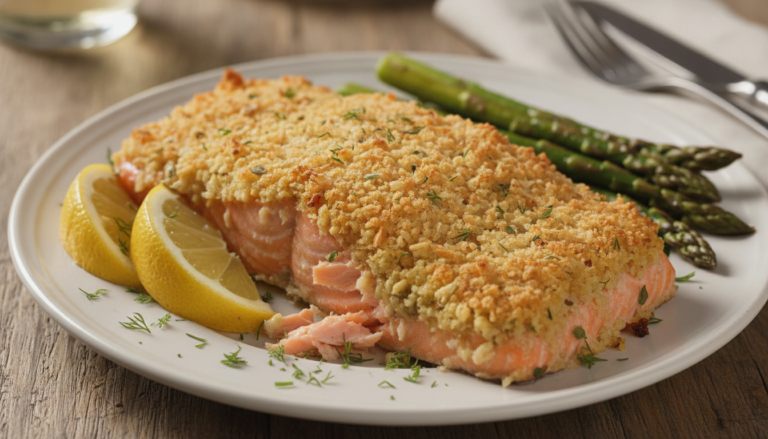
Crispy Parmesan Crusted Baked Salmon presses a golden Parmesan, panko, and lemon zest crust onto salmon fillets and bakes them at 400°F until the crust is shatteringly crispy and the salmon is perfectly cooked—a restaurant-quality seafood dinner ready in under 25 minutes.
4
servings10
minutes20
minutes400
kcal30
minutesIngredients
4 fillets salmon
1 cup grated parmesan cheese
0.5 cup panko breadcrumbs
2 tablespoons olive oil
1 teaspoon lemon zest
0.5 teaspoon salt
0.25 teaspoon black pepper
1 tablespoon fresh parsley, chopped
Directions
- Preheat the oven to 400°F (200°C).
- Line a baking sheet with parchment paper.
- In a bowl, mix parmesan, panko, olive oil, lemon zest, salt, and pepper.
- Place salmon fillets on the baking sheet.
- Press the parmesan mixture onto the top of each fillet.
- Bake for 15-20 minutes until salmon is cooked through.
- Garnish with chopped parsley before serving.
Nutrition Facts
- Total number of serves: 4
- Calories: 400kcal
- Cholesterol: 0mg
- Potassium: 400mg
- Sugar: 8g
- Protein: 6g
- Calcium: 60mg
- Iron: 2mg
About This Author

Benjamin Brown
Recipe Developer
Benjamin is our flavor engineer. A classically trained chef turned recipe developer, he’s obsessed with balancing taste, texture, and creativity. He ensures that every recipe we publish is not only delicious but also reliable, approachable, and repeatable — even for beginners.
Favorite dish: Slow-braised short ribs with red wine reduction.
Kitchen motto: “Cooking is part science, part soul.”















