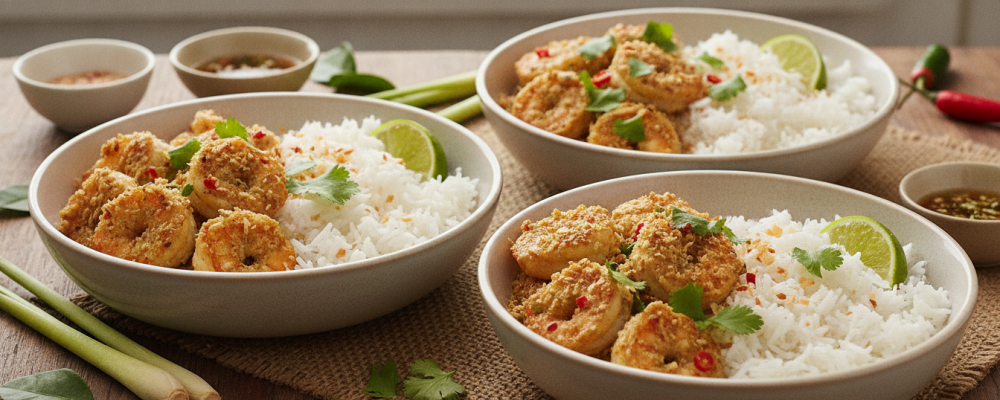

Most aromatics used in cooking deliver their flavor compounds through one primary pathway: heat extraction. Garlic minced and added to hot oil releases its allicin compounds; ginger grated into a sauce contributes its gingerols; dried spices bloom their terpenes and essential oils when exposed to fat and heat. Lemongrass operates differently, and understanding how it works is what explains why this bowl tastes the way it does and why the marinating step—ten minutes, while the rice cooks—is the most important technique decision in the recipe.
Lemongrass contains its primary aromatic compound, citral, in specialized oil cells distributed throughout the stalk’s fibrous tissue. Citral—the molecule responsible for lemongrass’s distinctive lemon-meets-ginger-meets-floral character—is highly volatile at cooking temperatures, which means that lemongrass added to a hot pan loses most of its aromatic complexity within the first sixty seconds as the heat drives off the volatile compounds before they can transfer to the surrounding food. Lemongrass in a cold marinade, by contrast, releases its citral compounds slowly through the mechanical disruption of mincing and the mild acid environment created by the lime juice, allowing those aromatics to transfer to the shrimp’s surface without heat-driven volatilization. The shrimp that enters the pan is already lemongrass-infused; the cooking simply sets that flavor into the protein rather than building it during the sauté.
This is the functional argument for marinating the shrimp before cooking rather than adding lemongrass directly to the hot skillet. It is also the reason the marinade should be applied to the shrimp at room temperature—cold shrimp don’t absorb marinade compounds efficiently because the protein’s surface pores are tighter at refrigerator temperatures. Ten minutes at room temperature is the correct marination window: long enough for meaningful citral transfer, short enough to remain within the food safety parameters for raw shellfish.
─────────────────────────────────────────
The Inspiration Behind This Recipe
The design objective for this bowl was to solve a specific challenge: producing a Southeast Asian-inspired meal prep bowl whose defining aromatic—lemongrass—survived the meal prep process with its character intact. Most lemongrass-forward preparations are best eaten immediately after cooking, when the volatile citral compounds are still present in their full concentration. After refrigeration and reheating, that character diminishes significantly, and what was a vivid, transporting bowl on day one becomes a merely pleasant one by day three.
The marinade-first approach addresses this challenge by front-loading the lemongrass’s flavor transfer to the shrimp rather than to the cooking oil. Shrimp that have absorbed citral compounds through direct contact in the marinade retain those compounds within their surface protein more durably than shrimp simply cooked with lemongrass in the pan, because the compounds are bound to the protein matrix rather than dispersed in the cooking fat. The result is a shrimp that carries lemongrass flavor through refrigeration and brief reheating in a way that pan-sautéed lemongrass shrimp typically does not.
The coconut milk rice was the second key decision in the recipe’s architecture. Rice cooked in coconut milk rather than water absorbs the coconut fat phase into its starch structure during cooking, which produces a grain that is creamier, more fragrant, and more structurally stable in storage than water-cooked jasmine rice. The coconut fat also acts as a flavor carrier—when the lemongrass-marinated shrimp is served over the coconut rice, the rice’s fat phase picks up the residual citral from the shrimp’s surface, distributing the lemongrass character through the entire bowl rather than concentrating it only in the protein.
─────────────────────────────────────────
A Brief History of Southeast Asian Lemongrass Cooking
Lemongrass—Cymbopogon citratus—is native to South and Southeast Asia, where it has been cultivated and used in cooking and traditional medicine for thousands of years. Its culinary use is particularly central to Thai, Vietnamese, Indonesian, and Malaysian cuisines, where it appears as a foundational aromatic in curry pastes, soups, marinades, and stir-fry preparations that define those regional cooking traditions. The specific combination of lemongrass with fish sauce, lime juice, garlic, and sugar that appears in this recipe’s marinade reflects the Thai flavor-balancing framework—the rôt chàat or “taste adjustment” principle that guides the proportioning of sour, salty, sweet, and aromatic elements in Thai cooking to produce a preparation where no single flavor dominates.
Fish sauce—nam pla in Thai, nước mắm in Vietnamese—is the fermented liquid produced from salt-cured fish and is one of the most ancient condiments in human culinary history, with production methods traceable to ancient Roman garum preparations and continuous use in Southeast Asian cooking for at least two thousand years. Its role in this marinade goes beyond simple saltiness: fish sauce contains a complex array of amino acids and nucleotides that produce umami depth significantly more complex than salt alone, and its fermented character contributes a subtle funk that rounds the lemongrass’s brightness and the lime’s sharpness into a more cohesive flavor profile.
Jasmine rice cooked in coconut milk is a specific preparation with deep roots in Thai cuisine—khao man and related preparations have been central to Thai cooking for centuries, where the coconut palm’s abundance made coconut milk a natural cooking liquid for rice in coastal and tropical regions. The combination of jasmine rice’s inherent floral aroma with coconut milk’s sweet, tropical richness produces a flavor combination that is greater than the sum of its parts and one of the most successful grain-and-liquid pairings in any culinary tradition.
─────────────────────────────────────────
Why This Cooking Method Works for Meal Prep
Cooking the jasmine rice in a combination of coconut milk and water—rather than full coconut milk—is a practical calibration that addresses coconut milk’s fat content and its behavior during refrigeration. Full coconut milk rice absorbs a very high fat concentration during cooking, which produces a rich, creamy result when warm but a dense, slightly congealed mass when cold and refrigerated. The one-to-one coconut milk and water ratio produces a rice that is fragrant and creamy when warm, holds its individual grain structure when cooled, and loosens back to its intended texture with a small amount of added liquid when reheated—the optimal balance for a meal prep grain base.
Rinsing the jasmine rice before cooking is especially important in a coconut milk preparation. Jasmine rice’s surface starch, if not rinsed, gelatinizes with the coconut fat during cooking and produces a sticky, cohesive mass rather than the separated grains that allow the bowl’s components to distribute evenly at serving. Rinsed jasmine rice cooked in coconut milk produces grains that are individually coated with the coconut fat rather than bound together by it—a textural distinction that is perceptible in every forkful of the assembled bowl.
Cooking the cherry tomatoes in the same skillet after the shrimp is removed—in the residual marinade and shrimp fat—is the technique decision that extracts the maximum flavor from the pan without requiring any additional ingredients or steps. The tomatoes soften and release their juice into the caramelized shrimp and marinade residue on the pan’s surface, creating a briefly concentrated tomato-and-lemongrass mixture that is far more complex than plain softened cherry tomatoes would be. Those tomatoes, served over the assembled bowl, carry the pan’s accumulated flavor into every portion as a bright, slightly sweet, deeply savory finishing element.
─────────────────────────────────────────
Flavor Profile: What to Expect
This bowl is aromatic, light, and layered—a flavor profile that feels simultaneously vibrant and composed:
- Citral-forward lemongrass brightness – The defining aromatic of the bowl: vivid, citrusy, faintly floral, and slightly ginger-adjacent—present in the shrimp’s surface and distributed through the coconut rice below through the bowl’s fat phase
- Fermented umami depth from fish sauce – The marinade’s savory foundation: more complex than soy sauce alone, with a subtle funk that rounds and deepens every other flavor it accompanies
- Bright, clean lime acidity – The marinade’s acid component, which activates the lemongrass’s citral release and provides the vivid, palate-refreshing brightness that keeps the bowl tasting light despite its aromatic richness
- Sweet, balanced sugar – The small amount of sugar in the marinade rounds the fish sauce’s saltiness and the lime’s sharpness into a balanced whole—present as a harmonizing element rather than a perceptible sweetness
- Creamy, fragrant coconut rice – The base’s subtle tropical richness and the jasmine’s natural floral aroma combine into a grain that carries the bowl’s other flavors and contributes its own quiet, sweet depth
- Sweet, concentrated cherry tomato – Softened in the shrimp pan’s caramelized residue, the tomatoes are considerably more complex and savory than plain cooked tomatoes—a bright, slightly jammy contrast to the seafood and grain
- Fresh cilantro finish – The garnish introduces a clean, citrusy-herbal brightness at the surface that mirrors and amplifies the lemongrass’s aromatic character
The lemongrass character is most vivid on day one and remains clearly present through day three—longer than most volatile aromatic preparations in the collection, due to the marinade-transfer approach that binds the citral to the shrimp protein rather than dispersing it in the cooking fat.
─────────────────────────────────────────
Tips for Making the Best Lemongrass Coconut Shrimp & Jasmine Rice Bowls
Several technique decisions significantly affect the bowl’s quality across the storage window:
- Use only the tender inner stalk of lemongrass – The outer layers of a lemongrass stalk are fibrous and woody, containing little citral relative to the tender, pale inner stalk. Peel away the outer two or three layers and mince only the soft, fragrant interior portion—approximately the bottom four to five inches of the stalk. Outer-stalk lemongrass minced into the marinade contributes fiber without flavor.
- Mince lemongrass very finely – The citral compounds release more effectively from finely minced lemongrass than from coarsely chopped pieces, because mincing disrupts more oil cells and creates more surface area for compound transfer. A paste-like mince produces the most flavorful marinade.
- Marinate at room temperature, not in the refrigerator – Cold temperatures slow the protein relaxation that allows marinade compounds to penetrate the shrimp surface. Ten minutes at room temperature achieves meaningfully more flavor transfer than thirty minutes in the refrigerator.
- Don’t overcook the shrimp – Shrimp proteins coagulate quickly, and overcooked shrimp become rubbery through refrigerator storage in a way that properly cooked shrimp do not. Three to four minutes over medium heat, until just pink and opaque, is the correct endpoint—slightly underdone shrimp reheats better than perfectly cooked shrimp.
- Rinse rice until the water runs clear – In a coconut milk preparation specifically, residual surface starch produces clumping that is more pronounced than in water-cooked rice because the fat phase binds the starch more aggressively. A thorough rinse prevents this.
- Store shrimp and rice separately – Rice stored with the shrimp absorbs the shrimp’s moisture and the marinade’s sodium during refrigeration, arriving at day three with a different texture and saltiness than intended. Stored separately, both components maintain their intended character independently.
Optional: A teaspoon of fish sauce added to the coconut rice cooking liquid along with the water deepens the rice’s savory foundation and creates a flavor bridge between the grain base and the shrimp marinade—a small addition that makes the assembled bowl taste more unified without being detectable as a distinct ingredient in the finished dish.
─────────────────────────────────────────
Portioning and Container Suggestions
This recipe produces four generous bowls from a single batch—one per day across a four-day lunch or dinner rotation. A three-container system works best per serving: coconut rice in one flat, wide container; lemongrass shrimp in a second container; and cherry tomatoes stored separately in a small third container or alongside the shrimp, since their concentrated flavor compounds continue to infuse the shrimp storage container to beneficial effect rather than degrading either component.
Jasmine rice cooked in coconut milk has a tendency to compact into a dense block in a deep storage container due to the coconut fat binding the grains together at refrigerator temperatures. A wide, shallow container that allows the rice to rest in a single generous layer rather than compressing under its own weight preserves the grain’s individual structure and makes reheating more even—flat rice reheats from all surfaces simultaneously where compacted rice heats only at the edges.
Fresh cilantro stored separately in a small sealed bag and added at serving maintains its aromatic character and bright green color far better than cilantro stored on the assembled bowl. The citral compounds in the lemongrass and the lime’s acids both accelerate chlorophyll degradation in stored cilantro; keeping it separate is not simply a presentation decision but a flavor preservation one.
─────────────────────────────────────────
Storage, Reheating, and Shelf Life Tips
- Lemongrass shrimp storage: Keeps in an airtight container for up to 3 days in the refrigerator. Beyond day three, shrimp texture begins to degrade and the lemongrass character diminishes. For a five-day rotation, consider a mid-week second sauté from a second marinated batch.
- Coconut rice storage: Keeps for 4–5 days refrigerated. Add 1–2 tablespoons of water or additional coconut milk before reheating to restore the rice’s creamy, slightly loose texture that the refrigerator compacts.
- Cherry tomatoes: Keep for 3–4 days refrigerated alongside the shrimp or in a small separate container.
- Freezer storage: Shrimp freezes well for up to 2 months—freeze in a single layer before transferring to a bag. Coconut rice freezes adequately for up to 1 month, though some texture change upon thawing is expected. Thaw both overnight in the refrigerator before reheating.
- Reheating shrimp: Microwave at 50% power for 45–60 seconds only. Shrimp reheat extremely quickly and become rubbery at high microwave power. Low power and a short time produces a result close to the original sauté in texture. Alternatively, warm briefly in a lightly oiled skillet over low heat for 1–2 minutes.
- Reheating rice: Add liquid, cover loosely, and microwave at full power for 90 seconds, stirring halfway through. The added liquid is non-negotiable for coconut rice—without it, the fat-bound grain dries unevenly under microwave heat.
- Cilantro: Always add fresh at serving. Never store on assembled bowls.
─────────────────────────────────────────
Why This Recipe Deserves a Spot in Your Meal Prep Rotation
The practical case for this bowl rests on a combination of qualities that are individually common and collectively rare: a protein that cooks in four minutes, a grain base that cooks itself while the shrimp marinates, a sauce whose flavor is transferred to the protein before cooking rather than built during it, and a finished bowl that holds its defining aromatic character through three days of refrigeration rather than fading to a generic seasoned-shrimp result by day two. Each of these qualities is the result of a deliberate technique decision, and together they produce a meal prep bowl that performs significantly above its apparent complexity level.
The deeper case is the experiential one. Lemongrass is a specific and genuinely transporting aromatic—one of the few spices whose presence in a bowl produces a sensory experience that is difficult to place geographically but immediately, unmistakably pleasant. A lunch that smells of lemongrass and coconut on a Wednesday in the middle of a demanding week is not simply a meal. It is a brief and specific form of relief. That quality—the capacity of a well-built aromatic bowl to shift the experience of an ordinary moment—is one of the most undervalued outcomes a meal prep recipe can deliver. This bowl delivers it reliably, specifically, and for four consecutive lunches from a single Sunday session. That is a return on investment worth planning around.
─────────────────────────────────────────
Meal Prep Pairing Suggestions
Lemongrass Coconut Shrimp & Jasmine Rice Bowls pair most naturally with other seafood or rice bowl formats that offer genuine protein and flavor contrast across the week. Our Teriyaki Salmon Rice Bowls are the natural rotation partner—both are sauce-marinated seafood preparations over jasmine rice, but the teriyaki bowl’s sweet, soy-forward Japanese glaze and the salmon’s rich, fatty character are completely distinct in flavor and texture from the lemongrass bowl’s aromatic lightness and shrimp’s delicate crunch. Alternating between them across the week delivers two genuinely different seafood bowl experiences that share no flavor overlap.
For a complete three-bowl weekly spread, our Cilantro Lime Shrimp Rice Bowls round out the rotation with a third shrimp preparation that covers the same protein in a Latin-inspired, citrus-forward direction—allowing a week of varied lunch experiences built around the same protein species without any sense of repetition. Three seafood bowls covering Southeast Asian, Japanese, and Latin-American seasoning traditions, all assembled from a single Sunday session: a rotation that demonstrates how much flavor range a single protein can deliver when the technique decisions—and specifically the marinades that precede the cooking—are made with genuine intention.
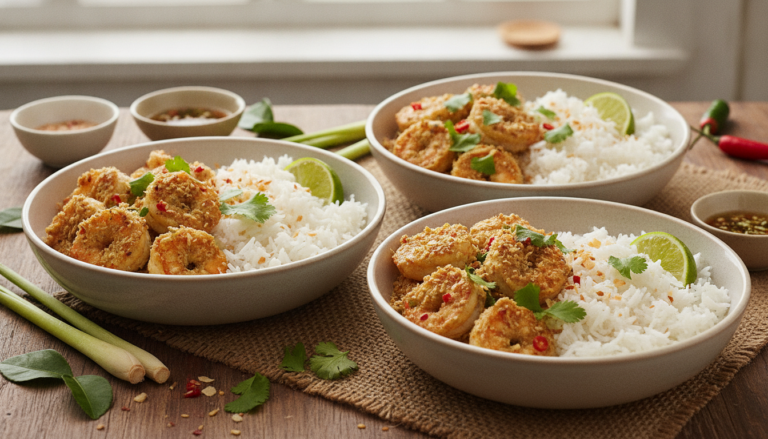
Lemongrass Coconut Shrimp & Jasmine Rice Bowls
These Lemongrass Coconut Shrimp & Jasmine Rice Bowls are a fragrant, Southeast Asian-inspired meal prep bowl built on a lemongrass-fish sauce-lime marinade and coconut milk jasmine rice—a bowl whose aromatic complexity makes every lunch feel genuinely transporting.
4
servings20
minutes30
minutes450
kcal50
minutesIngredients
1 cup jasmine rice
1 cup coconut milk
1.5 pounds shrimp, peeled and deveined
2 stalks lemongrass, minced
2 tablespoons fish sauce
1 tablespoon soy sauce
2 tablespoons lime juice
3 cloves garlic, minced
2 tablespoons vegetable oil
1 cup cherry tomatoes, halved
2 tablespoons cilantro, chopped
1 teaspoon sugar
0.25 teaspoon black pepper
Directions
- Rinse the jasmine rice under cold water and drain.
- In a saucepan, combine the rice and coconut milk with 1 cup of water. Bring to a boil.
- Reduce the heat, cover, and simmer for 15 minutes until liquid is absorbed.
- In a bowl, mix lemongrass, fish sauce, soy sauce, lime juice, garlic, and sugar.
- Add shrimp to the bowl, mix well, and marinate for 10 minutes.
- Heat oil in a skillet over medium heat. Sauté the shrimp for 3-4 minutes until pink.
- Remove shrimp from the skillet. Add cherry tomatoes and cook until softened.
- Serve shrimp over cooked jasmine rice, top with tomatoes and chopped cilantro.
Nutrition Facts
- Total number of serves: 4
- Calories: 450kcal
- Cholesterol: 0mg
- Potassium: 400mg
- Sugar: 8g
- Protein: 6g
- Calcium: 60mg
- Iron: 2mg
About This Author

Benjamin Brown
Recipe Developer
Benjamin is our flavor engineer. A classically trained chef turned recipe developer, he’s obsessed with balancing taste, texture, and creativity. He ensures that every recipe we publish is not only delicious but also reliable, approachable, and repeatable — even for beginners.
Favorite dish: Slow-braised short ribs with red wine reduction.
Kitchen motto: “Cooking is part science, part soul.”