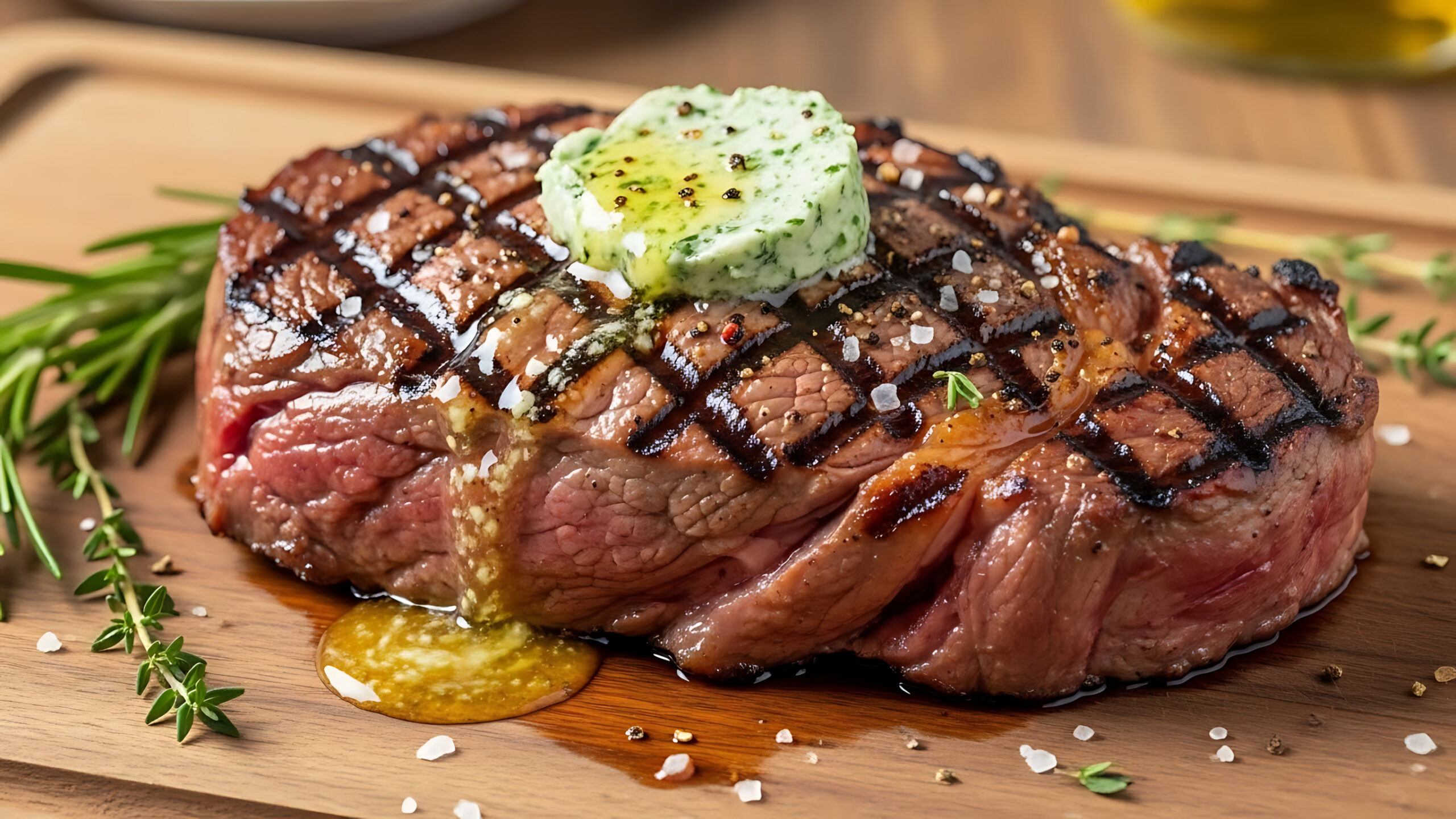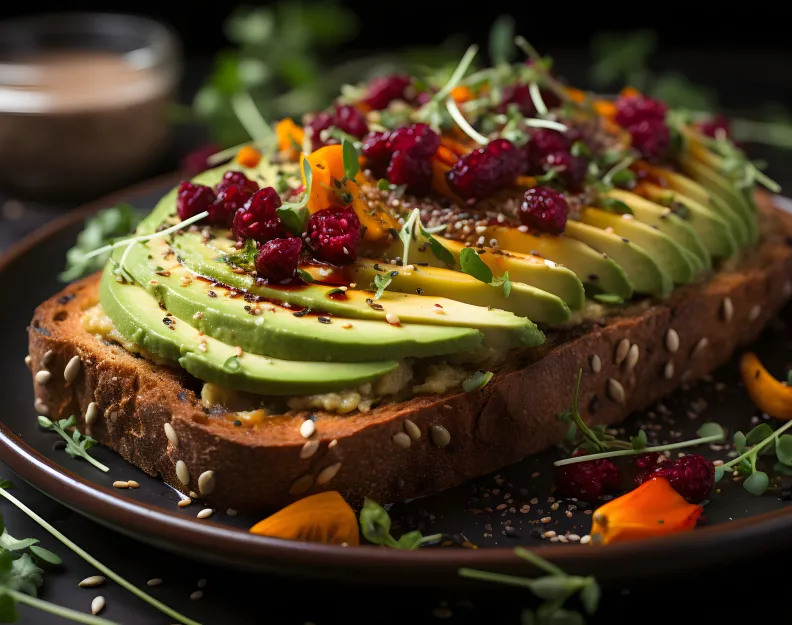

There is a specific kind of cooking anxiety that is unlike any other.
Not the anxiety of the difficult recipe — the fear that the soufflé will fall or the pastry will be tough or the sauce will break. That anxiety is technical, addressable by knowledge and practice, ultimately about the cook’s relationship with a specific preparation.
The anxiety of cooking for a crowd is different in kind. It is logistical. It is temporal. It is social in a way that technical anxiety is not — because the crowd is present, has expectations, and represents relationships that matter in ways that a fallen soufflé does not.
The cook who is attempting to produce food for twenty people has a problem that is not simply the problem of producing food for two people multiplied by ten. It is a different kind of problem — one that requires a different kind of thinking, a different set of preparations, and a fundamentally different approach to the relationship between cooking and hosting.
The cooks who do this well — who produce excellent food for large groups while remaining present at their own tables rather than trapped in their own kitchens — have developed a specific body of knowledge that most occasional crowd cookers never acquire.
This knowledge is worth having before the next occasion that requires it.
The Fundamental Misunderstanding About Scaling
The most common mistake in crowd cooking is treating it as a scaling problem — as if feeding twenty people is simply a matter of multiplying a recipe for four by five and proceeding accordingly.
This understanding produces specific and predictable failures.
A recipe scaled from four to twenty requires roughly five times the ingredients — but it does not require five times the cooking time, and it does not always produce a result that is five times as good. Some preparations scale gracefully. Others become logistically impossible or qualitatively different at large scale in ways that the arithmetic of multiplication doesn’t reveal.
A pasta dish for four, prepared à la minute — cooked to order, sauced in the pan, plated immediately — is not scalable to twenty in any practical sense. The logistics of producing twenty individual portions of properly cooked pasta, each in its own pan, each sauced and plated at the right moment, require a level of kitchen infrastructure and staffing that no home kitchen possesses. The scaled version of this dish either involves one enormous batch of pasta that sits and becomes gluey while waiting to be served, or a series of frantic last-minute operations that guarantee the cook spends the entire meal in the kitchen.
The solution is not to scale the pasta dish. The solution is to recognize that this category of dish — the à la minute preparation that depends on immediate assembly — is not crowd cooking at all. It is individual cooking performed multiple times simultaneously, and it belongs in a professional kitchen with a brigade to execute it, not in a home kitchen where a single cook is attempting to be a host at the same time.
Crowd cooking requires dishes that are specifically suited to crowd cooking — preparations that are made in advance, that improve or at least hold without quality loss during the period between completion and serving, and that can be distributed to twenty people without a sequence of last-minute individual operations.
The Categories That Work at Scale
Within the broad range of cooking preparations, a specific subset scales gracefully to crowd-sized quantities and produces results that are as good for twenty as for four — sometimes better, because the larger quantity provides a more favorable ratio of surface area to volume in braises and stews that improves the cooking.
Braises and stews are perhaps the most crowd-friendly preparations in any cook’s repertoire. They are made in advance — ideally the day before, which improves them. They hold beautifully at temperature without quality loss. They can be reheated without degradation. They require no last-minute assembly. And the flavor of a properly made braise is as good served from a large pot to twenty people as it is served from a small Dutch oven to four.
The specific advantage of the braise for crowd cooking goes beyond logistics. A braise that serves twenty from a single large vessel requires less total active cooking time than twenty individual preparations — because the cooking is concentrated in the initial setup and the long passive cooking period rather than distributed across twenty separate moments of attention.
Grain salads and composed cold salads are the other paradigmatic crowd cooking category — preparations that are made in advance, that hold in the refrigerator, that are served at room temperature or cool rather than at a specific hot temperature that requires precise timing, and that improve with the time they spend in the refrigerator as the flavors integrate and the grain absorbs the dressing.
Whole roasted things — a leg of lamb, a pork shoulder, a whole side of salmon — are crowd cooking’s most dramatically impressive category. They require relatively little active preparation, they cook unattended, and they produce a visual impact when brought to the table that is difficult to achieve with individual portions. The serving is informal and communal — the meat is pulled or sliced at the table, distributed according to preference — which transforms the service from a logistical challenge into a social occasion.
The Plan That Makes Everything Else Possible
The cook who produces excellent food for twenty without losing their mind has almost always made a specific plan — written down, with timing worked backward from the moment of service — before any cooking begins.
This plan is not a detailed minute-by-minute schedule. It is a map of what needs to happen and in what order, with specific attention to the critical timing dependencies that crowd cooking produces.
What must be done the day before? What can be done the morning of? What can be done in the afternoon? What must happen in the last thirty minutes before service? And — crucially — what can absolutely not be left for the last thirty minutes before service?
The cook who answers these questions in advance, who has thought through the sequencing of the entire menu before opening a single jar of stock, is a cook who will be at the table when the guests arrive rather than in the kitchen explaining why everything will be ready in just a few more minutes.
The specific discipline of identifying the things that cannot be left for the last thirty minutes and ensuring that none of them are is the most important planning discipline in crowd cooking. The last thirty minutes before service should contain nothing that requires active attention — only the final heating of things that have been made, the final dressing of salads that have been prepped, the final placement of things that have been arranged.
The guests who arrive at a dinner party and find their host relaxed and present rather than visibly stressed and kitchen-bound have been the beneficiaries of this planning, even if they are entirely unaware of it.
The Menu That Serves the Cook as Much as the Guests
The menu for a crowd is not simply a list of dishes the cook wants to make or that seem impressive or that correspond to the occasion. It is a logistical document — a set of preparations that work together in terms of oven use, refrigerator space, cooking timing, and the overall complexity of what the cook will be managing on the day of the event.
The menu that uses the oven at three different temperatures simultaneously is not a viable crowd cooking menu unless there are three ovens. The menu that requires five different preparations to be ready at the same moment, each requiring different timing and different active attention, is a menu for a professional brigade rather than a single home cook.
The well-designed crowd menu has a single oven temperature or a temperature sequence that allows one thing to finish as another begins. It has a clear division between what was made yesterday and what is being finished today. It has no preparation that requires the cook’s undivided attention at the same time any other preparation requires attention. And it has, ideally, at least one element that requires absolutely nothing from the cook on the day of the event — the make-ahead dish that is simply reheated, the cold preparation that is simply brought from the refrigerator and plated.
The specific combinations that satisfy these constraints without sacrificing quality or interest are worth identifying in advance of any large cooking occasion — and they are worth keeping once identified, because the menu that worked brilliantly for fifteen people this year will work brilliantly for fifteen people next year without requiring the planning to begin from scratch.
The Equipment That Changes What Is Possible
Crowd cooking reveals the limitations of equipment that are invisible in ordinary cooking — the pot that holds four quarts that cannot hold the twelve quarts needed for twenty servings, the oven that produces consistent results for a single roast that becomes unpredictable when multiple large items are competing for heat distribution.
The investment in specific equipment for crowd cooking is one that pays consistent dividends across every subsequent large gathering — because the equipment that enables crowd cooking changes what is logistically possible rather than just making the existing logistics easier.
The large stock pot or braising vessel — the eight to twelve quart Dutch oven or the restaurant-supply stockpot that holds quantities that home cooking cookware cannot — is the most fundamental piece of crowd cooking equipment. A braise for twenty people requires a vessel that can contain it; the alternative is two smaller batches, which defeats the logistical efficiency that the braise is supposed to provide.
The large sheet pans — the half-sheet pans that are standard in professional kitchens and that allow more efficient oven use than the quarter-sheet pans that fit in most home ovens — enable the roasting and the vegetable cooking that crowd cooking requires at a scale that the home oven can accommodate.
And the large serving vessels — the platters and the bowls and the serving dishes that communicate abundance and generosity rather than the precise portion control of the individual plate — are the serving equipment that crowd cooking most specifically requires.
The Service That Makes Cooking for a Crowd Worth Doing
The specific format of service for crowd cooking is worth thinking about as carefully as the menu — because the format determines whether the cook is present at the table or not, and the cook’s presence at their own gathering is the point.
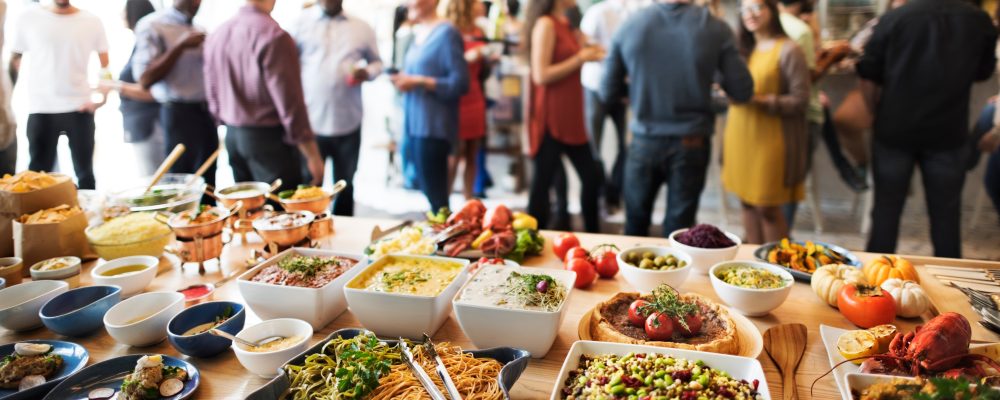
The buffet — the arrangement of food that allows guests to serve themselves — is the most logistically simple format for crowd cooking and the one that most effectively frees the cook from kitchen obligations during the meal. The dishes are arranged, the plates are at one end, and the guests move through and serve themselves. The cook’s active role ends when the last dish is placed on the table.
The limitations of the buffet are real — food served buffet-style cools faster than food served at the table, the presentation is less controlled, and certain preparations (the perfectly seared piece of fish, the dish that requires assembly at the moment of service) are impossible. But for most crowd cooking — braises and grains and roasted vegetables and composed salads — the buffet format is not a compromise. It is the appropriate service for the food being served.
Family style — the arrangement of dishes at the center of the table for guests to serve themselves from their seats — is the format that most preserves the communal quality of the shared meal while maintaining the logistical simplicity of self-service. It is the format most consistent with the kinds of food that crowd cooking produces — the braise that is brought to the table in its pot, the roasted thing that is sliced at the table, the salad that is passed around and served by whoever receives it first.
The Takeaway
Feeding a crowd without losing your mind is a skill that is entirely learnable — but it is a different skill from the cooking itself, and it requires different thinking.
Choose preparations that scale gracefully. Make the plan in advance and work backward from service. Design the menu for the cook as much as for the guests. Invest in the equipment that enables crowd-scale cooking. Choose a service format that allows the cook to be at the table.
And then — having done all of this planning and preparation — be at the table.
The guests came to spend time with the person who invited them.
The best gift the crowd cook can give their guests is not the most impressive food.
It is their own presence at the occasion they created.