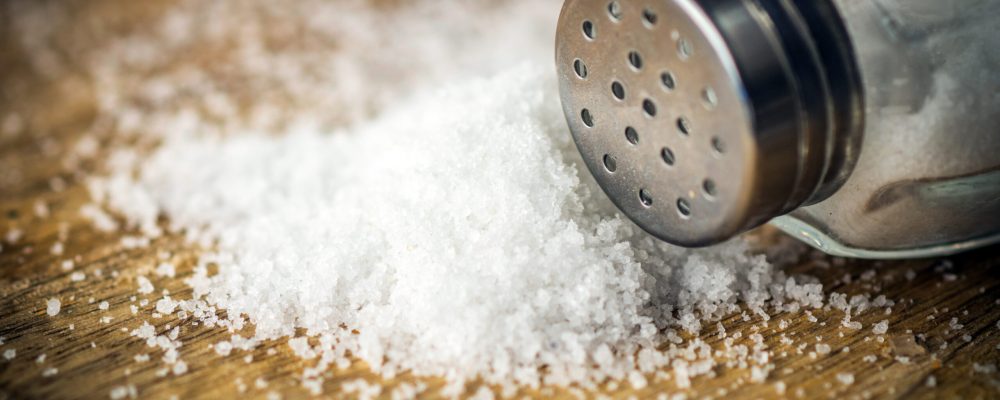

There is a substance that has been used by humans for so long that its history predates writing.
Not metaphorically — literally predates the existence of written records, which means that the earliest chapters of salt’s relationship with human civilization are lost to time, preserved only in the archaeological evidence of ancient salt works and the linguistic traces that salt has left in the languages it traveled through.
The word salary comes from salt — from the Latin salarium, the allowance given to Roman soldiers to purchase salt, or possibly from the salt itself that was used as payment. The word salad comes from salt — from the practice of salting raw vegetables, the salted thing. The word sauce comes from salt. The word sausage comes from salt. The preserved, the seasoned, the salted — these concepts are so fundamental to the history of food that the word for the mineral that made them possible is embedded in the language of food itself.
Salt is not just an ingredient. It is the ingredient — the one without which the history of human civilization would be unrecognizable, the one that enabled the preservation that allowed communities to survive winter and armies to travel and trade routes to develop and cuisines to emerge from the specific combination of what grew in a place and what could be preserved to supplement it.
Understanding salt — not just as a seasoning but as the geological, historical, chemical, and culinary phenomenon it actually is — changes the relationship with the small container on the kitchen counter in ways that make the cooking that uses it more thoughtful and more informed.
What Salt Actually Is
Salt is sodium chloride — a simple ionic compound formed from the elements sodium and chlorine, two substances that are dramatically different in their elemental form (sodium is a soft metal that explodes in contact with water; chlorine is a toxic gas) and that combine to produce something that is not only safe but essential for human life.
The human body cannot survive without sodium. It is required for nerve signal transmission, for muscle contraction including the heart muscle, for the regulation of blood pressure and fluid balance, and for the absorption of certain nutrients in the small intestine. The body’s sodium is regulated tightly by the kidneys — excess is excreted, deficiency triggers specific hormonal responses that prioritize retention — which is why the human body has developed a specific taste receptor for salt and a specific craving mechanism that motivates sodium-seeking behavior.
This biological need is what made salt so valuable throughout human history. The body requires it. The body signals its need for it. And in the periods before industrial salt production made it universally available and inexpensive, obtaining sufficient salt was a genuine challenge that organized significant human activity around its solution.
The specific forms in which salt occurs in nature reflect the different geological processes that produced them. Sea salt is the residue of evaporated seawater — collected in salt pans, dried by sun and wind, and harvested in forms that range from fine crystals to large, irregular flakes depending on the specific evaporation conditions. Rock salt is the mineral halite — ancient sea salt that was buried and compressed by geological processes over millions of years, now mined from underground deposits that exist across the world. And certain salt springs produce brine that is boiled or evaporated to produce the crystalline product.
The Geography of Salt
Every significant salt deposit in the world has a history that reflects the specific way that salt shaped the civilization nearest to it.
The Wieliczka salt mine in southern Poland has been continuously mined since the thirteenth century and now extends over three hundred kilometers of underground galleries. Its chambers contain salt sculpture, salt chandeliers, and a full underground church carved from the salt itself — a testament to the centuries of human activity organized around the extraction of this specific deposit. The Polish economy of the medieval period was organized significantly around the salt trade that this mine enabled.
The salt flats of Bolivia — the Salar de Uyuni, the largest salt flat in the world at over ten thousand square kilometers — are the dried residue of ancient lakes that covered the area during prehistoric times. Their specific geology, with salt deposits extending meters deep across an enormous area, is one of the largest salt reserves on earth and produces a landscape so flat and so reflective that it is used to calibrate satellite altimeters.
The salt of Maldon, on the Essex coast of England, has been produced using the same basic method for over a thousand years — brine from the estuary of the Blackwater River evaporated slowly in large pans until the specific flaky crystals that make Maldon sea salt distinctive form at the surface and are harvested by hand. The specific character of these crystals — hollow pyramidal shapes that dissolve on the tongue differently from any other salt — is the product of the specific mineral content of the local brine and the specific evaporation method that has been maintained in this specific place for this specific salt.
The pink salt of the Himalayan deposits — rock salt mined from the Khewra salt mine in Pakistan, the second largest salt mine in the world — gets its distinctive color from trace amounts of iron oxide. The specific mineral content of these ancient sea deposits, laid down when the area was an ancient sea before the Himalayan uplift, gives the salt a flavor character that its proponents describe as more complex than standard salt and that skeptics note is difficult to detect at the quantities used in cooking.
The Chemistry of What Salt Does
The reason salt is so fundamental to cooking is not simply that it makes food taste salty. Salt does something more profound and more chemically specific than adding a single flavor note.
At sub-threshold concentrations — amounts too small to register as distinctly salty on the palate — sodium ions suppress bitterness by blocking bitter taste receptors more effectively than they activate salt receptors. This is why a small amount of salt added to coffee reduces perceived bitterness without making the coffee taste salty. It is why salt is added to sweet baked goods — not to make them taste salty but to reduce the bitterness of cocoa and to make the sweetness more vivid by contrast.
At higher concentrations, salt amplifies flavor across all the other taste categories — making sweet things taste sweeter, sour things taste more vivid, umami more present. The mechanism involves the interaction of sodium ions with the taste receptor cells and with the saliva that distributes flavor compounds across the palate, but the experiential result is simply that properly salted food tastes more fully like itself — more completely what it is — than the same food without salt.
And at the level of the ingredient itself, salt does specific chemical work that affects texture and structure as much as flavor. Salt draws moisture from vegetables through osmosis — which is why salted cucumbers for a salad or salted zucchini for a fritter release water that would otherwise make the finished dish soggy. Salt changes the protein structure of meat — which is why dry-brining produces meat that is seasoned throughout its structure and retains moisture better during cooking. Salt strengthens gluten networks in bread dough — which is why salt is added to bread not just for flavor but for the structural improvement it produces in the dough.
The Flavors of Specific Salts
The culinary discussion of different salt varieties is complicated by the fact that the primary flavor of all salts is sodium chloride — the same compound regardless of its source — and that the meaningful differences between salts are in their texture, their mineral content, and the specific context in which they are used rather than in fundamentally different flavor profiles.
This does not mean that all salts are interchangeable. It means that the differences that matter are specific and worth understanding.
The grain size of a salt determines how quickly it dissolves and how it interacts with the food it is applied to. Fine-grained table salt dissolves almost instantaneously — which makes it effective for baking, where complete dissolution is required, and difficult to use for finishing, where a detectable crunch or burst of salinity is the point. Coarse-grained kosher salt dissolves more slowly and provides more control in seasoning — the cook can feel how much is being applied and adjust before it is too late. Flaky finishing salts like Maldon dissolve in layers as they are eaten — the specific structure of the hollow pyramid flake producing a textural experience that no other salt provides.
The mineral content of specialty salts contributes trace flavors that are real but subtle. The iron in Himalayan pink salt produces a faint mineral quality. The mineral content of specific sea salts reflects the specific ocean water from which they were evaporated — which is why Hawaiian black salt (activated charcoal added to sea salt) and Hawaiian red salt (red alae clay added to sea salt) have distinct appearances and slight flavor variations from standard sea salt.
But the most important distinction between salts for practical cooking purposes is not flavor — it is density. Different salts have different crystal structures that produce different densities when measured by volume. A teaspoon of table salt contains significantly more sodium than a teaspoon of Diamond Crystal kosher salt, which contains more than a teaspoon of Morton kosher salt, which contains more than a teaspoon of Maldon sea salt. Recipes that specify salt by volume without specifying the type are asking for a measurement that will produce different results with different salts.
This is why weight measurement — using a scale rather than measuring spoons — is more reliable for salt in baking, and why the cook who switches salt brands should do so with awareness that the same volume measure will produce different seasoning results.
Salt and the Body
The relationship between salt consumption and human health is one of the most studied and most contested questions in nutritional science — producing a body of research that is simultaneously robust in certain specific findings and genuinely uncertain in its broader implications.
The specific finding that is most robust: high salt intake is associated with elevated blood pressure in salt-sensitive individuals — a subset of the population that is disproportionately represented among people with hypertension, kidney disease, and certain cardiovascular conditions. For these individuals, sodium restriction produces meaningful reductions in blood pressure and associated health improvements.
The finding that is more contested: whether the general population — the majority of people without these specific conditions — benefits meaningfully from sodium restriction, and whether the specific sodium targets recommended by public health guidelines (typically under 2,300 milligrams per day for adults) are based on sufficient evidence to justify the broad recommendations they have generated.
The most recent large-scale nutritional research on this question has produced findings that are more nuanced than the simple “salt is bad” message that dominated nutritional guidance for decades. Studies tracking actual sodium intake across large populations have found a U-shaped relationship between sodium and cardiovascular outcomes — with elevated risk at both very low and very high intake, and the lowest risk at moderate intake levels that are higher than the levels recommended by most current guidelines.
The practical implication for most healthy people: salt used in cooking, at amounts that produce well-seasoned rather than oversalted food, is not a significant health concern. The sodium that is genuinely problematic in the contemporary diet is the sodium in processed and packaged food — where it is used in quantities that have no relationship to flavor enhancement and everything to do with preservation, palatability engineering, and the specific food science of making processed products more compelling.
The Takeaway
Salt is not simply a seasoning. It is one of the most consequential substances in the history of human civilization — the mineral that enabled preservation and trade and the specific development of cuisines that depended on what could be kept as well as what could be grown.
In the kitchen, it is the most fundamental flavoring tool available — not because it makes food salty but because of the specific chemical work it does to suppress bitterness, amplify other flavors, and change the structure of proteins and starches in ways that improve texture as much as taste.
Use it thoughtfully. Use enough of it. Use the right type for the right application — kosher for cooking, finishing salt for the table, fine salt for baking. And understand that the salt in the small container on the kitchen counter is connected to one of the longest and most consequential relationships between a mineral and a civilization that human history contains.
That is worth a moment’s consideration before the next pinch.