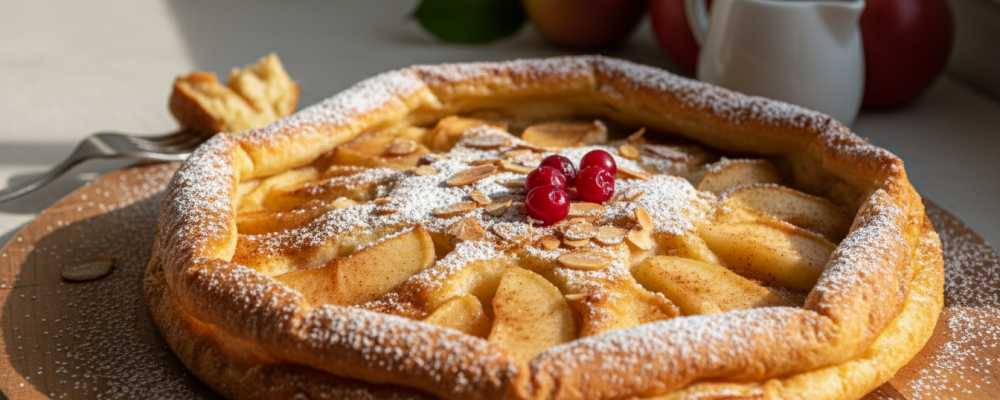

Some recipes stop you in your tracks—the kind where you pull something from the oven and just stand there for a moment, genuinely delighted by what you’ve created. This German Apple Pancake is absolutely one of those recipes. It emerges from the oven puffed and golden, those cinnamon apples nestled into the custardy batter like they were always meant to be there, the whole thing filling your kitchen with an aroma so warm and inviting that everyone comes to investigate. It’s the kind of breakfast that feels like a special occasion even when you make it on a perfectly ordinary Sunday morning.
What I love most about this recipe is how it transforms the simplest ingredients into something truly extraordinary. You’re working with apples, butter, eggs, and flour—nothing exotic or expensive—yet the result looks like something that took real skill and planning. The magic is in the technique: cooking the apples directly in the skillet before pouring the batter over them means they caramelize slightly in the butter, developing deeper, richer flavor than you’d get from simply mixing them into batter. Then the oven does its spectacular work, puffing the batter up around the softened apples into something that’s part pancake, part custard, part theater.
This is the recipe I reach for when I want breakfast to create a moment—when I want people to gather around the table not just because they’re hungry but because something beautiful is coming out of the oven. Good food does that, I think. It calls people together and gives them something to share and exclaim over. This German Apple Pancake does that beautifully, every single time.
─────────
The Inspiration Behind This Recipe
My love affair with German Apple Pancake began at a small German restaurant in a midwestern town, where I ordered it on a whim and was completely transported by that first bite. It was nothing like what I expected—not a stack of pancakes with apple topping, but this gorgeous, custardy, puffed creation with caramelized apples baked right in. I asked the owner about it and she laughed, saying it was the simplest thing in her repertoire but the dish that made everyone happiest.
That description stayed with me: the simplest thing that makes everyone happiest. I spent years trying to recreate it at home, testing different batter ratios and oven temperatures, experimenting with apple varieties and cooking times. The key revelation was that cooking the apples in the skillet first—rather than adding them raw—made all the difference. Those five minutes of stovetop cooking allow the apples to soften slightly and the butter to begin caramelizing, creating a foundation of flavor that the batter absorbs and builds on during baking.
This recipe represents that happy discovery: a dish where patience and attention to a single preparatory step transforms something ordinary into something memorable. It’s become one of my most-made brunch recipes, the one I turn to when I want something that feels genuinely special without requiring elaborate preparation. Sometimes the recipes that stay with us longest are the ones that deliver extraordinary results through honest, simple technique—and this German Apple Pancake does exactly that.
─────────
A Brief History of German Apple Pancakes
German Apple Pancake belongs to a family of baked pancakes that includes Dutch Baby and French clafoutis—all variations on the same fundamental concept of egg-rich batter baked at high heat. The German version, known as Apfelpfannkuchen, has deep roots in German and Austrian home cooking, where similar preparations appear in various regional forms. The dish reflects the Central European tradition of combining fruit (particularly apples, which grow abundantly in Germany) with egg-based batters for simple, satisfying meals.
The preparation traveled to America with German immigrants throughout the 19th century, particularly in the Midwest where large German communities established their own culinary traditions. In German-American communities, apple pancakes became a beloved breakfast and dessert hybrid—substantial enough for morning, sweet enough for after dinner. The dish maintained popularity because it works with pantry staples and seasonal fruit, requiring no specialized equipment beyond an oven-safe skillet.
The German Apple Pancake is closely related to the Dutch Baby (itself a likely derivative of German Pfannkuchen), though the inclusion of fruit baked directly into the base distinguishes it. While Dutch Babies are typically finished with toppings after baking, German Apple Pancakes incorporate the fruit into the cooking process itself, creating a more integrated final result. This approach reflects German cooking’s practical wisdom: building layers of flavor through cooking technique rather than assembly.
─────────
Why This Cooking Method Works
Cooking the apple slices in butter before adding the batter is the single most important step in this recipe. Those five minutes transform the apples from raw, crisp fruit into slightly softened, butter-coated slices that have begun developing caramelized notes. The butter infuses the apples with richness while the heat breaks down their cellular structure slightly, making them tender throughout baking. This preliminary cooking also seasons the pan evenly with butter and apple juices, creating a natural non-stick surface that prevents sticking and adds flavor to the batter’s underside.
Pouring the batter directly over the cooked apples (rather than mixing the apples into the batter) creates distinct layers in the finished pancake. The apples stay anchored at the bottom and sides of the skillet while the batter rises around them, creating a dish where every slice includes both the custardy pancake and the caramelized fruit. If you mixed everything together, the apples would distribute randomly and the batter would absorb their moisture before cooking, creating a denser, less dramatic result.
The high 425°F oven temperature creates the same dramatic puffing effect found in Dutch Babies and popovers—rapid steam production from the eggs and milk causes the batter to rise dramatically, particularly around the edges where direct skillet heat provides additional boost. The apples’ weight and moisture prevent the center from rising as dramatically, creating a naturally beautiful presentation where the edges puff high and golden while the fruit-laden center stays lower and custardy. This variation in texture—crispy puffy edges, tender custardy center, soft caramelized apples—is exactly what makes the dish so satisfying.
─────────
Flavor Profile: What to Expect
This pancake delivers warm, comforting flavors with beautiful textural contrast:
- Caramelized apple – Butter-cooked fruit with concentrated sweetness and subtle tartness
- Warm cinnamon – Aromatic spice woven throughout both apples and batter
- Custardy egg richness – Tender, creamy interior reminiscent of French toast or clafoutis
- Buttery depth – Present throughout from both cooking fat and batter
- Crispy puffed edges – Golden, slightly crunchy borders with caramelized flavor
- Vanilla warmth – Subtle aromatic sweetness that ties all elements together
- Natural fruit sweetness – Apple sugars concentrate during cooking
The overall experience is one of warm, cozy comfort—this tastes like everything good about apple desserts and egg-based breakfasts combined into one beautiful creation. The textural contrasts keep each bite interesting: you might get a crispy puffed edge one moment and a soft, custardy apple-studded center the next. It’s sweet enough to feel special but not so sweet that it crosses into dessert territory. Finished with powdered sugar and perhaps a squeeze of lemon, it achieves that perfect balance between indulgent and elegant.
─────────
Tips for Making the Best German Apple Pancake
Use a 10-inch cast iron skillet for the best heat retention, most dramatic puff, and easiest transition from stovetop to oven.
- Choose the right apples – Firm, slightly tart varieties like Granny Smith or Braeburn hold shape and provide flavor contrast
- Slice apples evenly – Consistent thickness ensures even cooking; aim for ¼-inch slices
- Don’t skip stovetop cooking – Those 5 minutes of apple cooking are essential for proper flavor development
- Keep batter smooth – Whisk until completely lump-free for the best rise and texture
- Work quickly – Pour batter over apples while skillet is still hot for maximum puff
- Resist opening the oven – Temperature drops prevent proper puffing; wait until at least 18 minutes
- Serve immediately – Like a Dutch Baby, this deflates quickly; gather everyone before removing from oven
- Add toppings at the table – Powdered sugar, maple syrup, or lemon juice added fresh preserve texture
For extra indulgence, add a tablespoon of brown sugar to the apples while they cook on the stovetop—it creates a light caramel sauce that mingles with the batter during baking for even richer flavor.
─────────
Serving Suggestions and Side Pairings
This pancake is visually stunning and substantial enough to be the centerpiece of your brunch spread. Bring it directly to the table in the skillet—the rustic presentation adds to its charm and keeps it warm longer. Provide small bowls of powdered sugar, maple syrup, and fresh lemon wedges so guests can customize their portions. A dollop of crème fraîche or Greek yogurt alongside adds tangy richness that complements the sweet, caramelized apples beautifully.
For a more complete brunch, pair with savory sides that provide balance: crispy bacon or breakfast sausage, a simple green salad, or scrambled eggs for additional protein. The pancake’s sweetness means savory accompaniments create welcome contrast without competing. Fresh fruit salad—particularly berries—adds color and freshness to the plate.
This dish shines at leisurely weekend brunches, holiday breakfasts, or any morning when you want to create a moment of genuine delight. It’s particularly well-suited for intimate gatherings where everyone can gather around and watch it emerge from the oven—the drama of the first reveal is part of what makes it special. It’s also excellent for showcasing cast iron cookery at its most impressive.
─────────
Storage, Reheating, and Make-Ahead Tips
- Mix batter ahead: Whisk together up to 1 hour before cooking; store covered at room temperature
- Slice apples early: Peel and slice up to 2 hours ahead; toss with lemon juice to prevent browning
- Not ideal for leftovers: Like Dutch Babies, this loses its dramatic puffed texture quickly
- Store if necessary: Cover and refrigerate for up to 2 days, though texture changes significantly
- Reheat gently: Warm leftovers in a 300°F oven for 10 minutes; accept the texture change
- Microwave works in a pinch: 30-45 seconds per slice restores warmth if not texture
- Best approach: Make and serve immediately; this is genuinely a fresh-from-the-oven dish
This recipe is designed for immediate consumption at peak impressiveness. While leftovers are edible, the custardy texture and puffed edges that make it special are best experienced fresh from the oven. Plan to make it when you’re ready to eat—the preparation is fast enough that advance cooking offers little practical benefit.
─────────
Why This Recipe Deserves a Spot in Your Rotation
This recipe earns its place because it delivers spectacular results through genuinely simple technique. You’re making one batter, cooking one pan of apples, combining them, and letting your oven create the magic. The ingredient list couldn’t be more basic—butter, apples, eggs, flour, milk, spices. Yet the result looks and tastes like something that required real skill and planning. That impressive-to-effort ratio is what makes certain recipes irreplaceable, and this German Apple Pancake exemplifies it perfectly.
Beyond the practical appeal, this pancake creates genuine joy and connection. There’s something about that dramatic reveal—opening the oven to find this golden, puffed, apple-studded beauty—that makes everyone smile and gather close. Food that creates moments, that gives people something to exclaim over and share, has value beyond pure nutrition or even pure flavor. This recipe does all of that while being approachable enough to make on any weekend morning when you want breakfast to feel extraordinary.
─────────
Recommended Drink Pairing
The warm cinnamon-apple flavors and buttery richness of this pancake call for beverages that complement the cozy warmth or provide refreshing contrast. Coffee is essential—a medium roast with caramel or chocolate notes echoes the caramelized apple flavors while the bitterness balances the sweetness. A cinnamon latte or spiced cappuccino doubles down on the warming spice theme, creating a thoroughly cozy pairing that feels intentional and harmonious.
Hot tea provides an equally satisfying alternative—chai brings complementary cinnamon and cardamom that mirror the pancake’s spices, while English Breakfast or Assam offers tannins that cut through the buttery richness and reset your palate between bites. Apple cider (hot or cold) creates perfect thematic harmony, amplifying the fruit flavors while adding its own warming sweetness.
For celebratory brunches, sparkling apple cider or a crisp prosecco adds festive bubbles and acidity that lift the rich dish without competing with its delicate flavors. Fresh-squeezed orange juice provides bright citrus contrast that cuts through the butter and eggs while complementing the fruit elements. Cold milk remains the most comforting pairing—classic, simple, and perfect for those who want the pancake’s flavors to shine without distraction. Whatever you choose, pour it before the pancake comes out of the oven—this is a dish that demands to be eaten immediately, and you won’t want anything slowing you down once that golden, puffed beauty lands on the table.
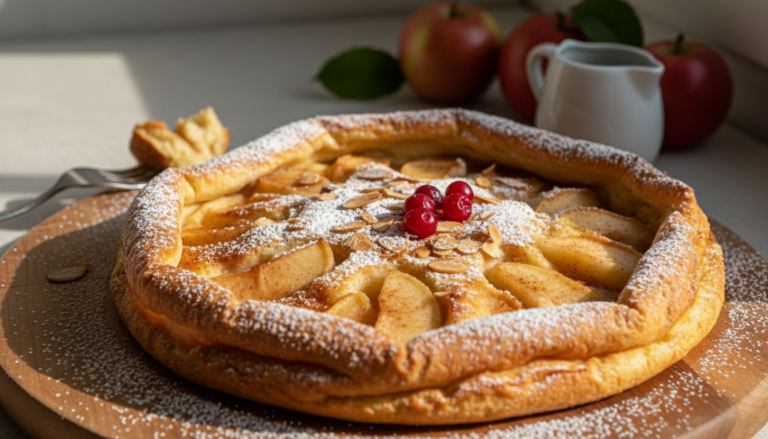
German Apple Pancake
This German Apple Pancake bakes buttery, cinnamon-spiced apples directly into a puffy, golden Dutch Baby-style batter—creating a dramatic, impressive breakfast that comes together in one skillet with minimal effort.
4
servings20
minutes25
minutes300
kcal45
minutesIngredients
3 tablespoons butter
2 large apples
1 cup all-purpose flour
1 cup milk
4 large eggs
2 tablespoons sugar
1 teaspoon vanilla extract
0.5 teaspoon cinnamon
0.25 teaspoon salt
Directions
- Preheat the oven to 425°F (220°C).
- Melt the butter in a 10-inch oven-safe skillet over medium heat.
- Peel, core, and slice the apples, then add to the skillet.
- Cook apples until they start to soften, about 5 minutes.
- In a mixing bowl, whisk together flour, milk, eggs, sugar, vanilla, cinnamon, and salt.
- Pour the batter over the apples in the skillet.
- Transfer the skillet to the oven and bake for 20-25 minutes until puffed and golden brown.
- Remove from oven, let cool slightly, slice and serve.
Nutrition Facts
- Total number of serves: 4
- Calories: 300kcal
- Cholesterol: 0mg
- Sodium: 620mg
- Potassium: 400mg
- Sugar: 8g
- Protein: 6g
- Calcium: 60mg
- Iron: 2mg
About This Author

Amelia Grace
Editor-in-Chief & Culinary Director
The heart and guiding voice of Daily Dish, Amelia leads our editorial vision and recipe development. With a background in food journalism and over a decade spent in professional kitchens, she has a knack for blending gourmet technique with real-world accessibility. Her goal? To make every reader feel like a confident cook, one dish at a time.
Favorite dish: Creamy lemon risotto with a sprinkle of fresh thyme.
Kitchen motto: “Good food doesn’t have to be complicated — it just has to be made with heart.”