
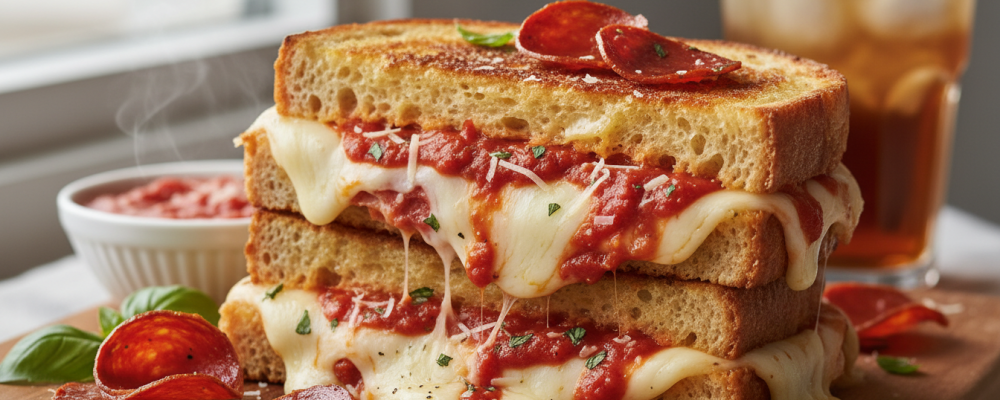

There are certain recipe ideas that sound almost too obvious—and then you make them and wonder how you ever lived without them. Pizza Grilled Cheese is that recipe. It takes the two most universally beloved comfort foods in American cooking, recognizes that they are made of almost identical ingredients, and combines them into something that is simultaneously the best version of both. Buttery, golden-toasted bread. Stretchy, molten mozzarella. Tangy pizza sauce. Crispy-edged pepperoni. It is as simple and as satisfying as food gets, and it comes together in under fifteen minutes from a single skillet.
I reach for this recipe on the nights when I want something that feels genuinely indulgent without requiring any real effort—the kind of dinner that makes everyone happy regardless of age, mood, or appetite. What I love most about it is the layering: pizza sauce spread directly onto the bread before the cheese and pepperoni go on means the sauce heats and caramelizes slightly against the skillet, developing a deeper, slightly sweeter flavor than it would have cold. The mozzarella melts into something stretchy and glossy. The pepperoni crisps at the edges from the skillet heat and develops exactly the kind of concentrated, savory richness that makes it the perfect pizza topping in any format.
This is the kind of recipe that becomes a household staple after the first time you make it—the answer to rainy afternoons, easy weeknight dinners, and any moment when you want food that feels like a genuine treat without any fuss.
The Inspiration Behind This Recipe
This recipe was inspired by the same instinct that produced the Parmesan Garlic Bacon Cheeseburger Lasagna and the Taco Sloppy Joes in this collection—the understanding that two beloved American comfort food formats often share so much flavor DNA that combining them doesn’t require creativity so much as recognition. Pizza and grilled cheese are both built on buttered, toasted bread and melted cheese. The only question was which pizza elements translated most naturally to the grilled cheese format, and the answer—pizza sauce and pepperoni—was immediately obvious.
The simplicity of this recipe is a feature, not a limitation. It doesn’t need more ingredients to be good. It needs the right five.
A Brief History of Grilled Cheese and Pizza in American Comfort Food
Grilled cheese sandwiches became a staple of American home cooking during the Great Depression, when processed cheese slices and sliced bread were affordable and widely available. The combination—butter, bread, melted cheese—has remained one of the most universally beloved comfort foods in American cooking for nearly a century, prized for its simplicity, speed, and the deeply satisfying quality of golden, buttery bread encasing molten cheese.
Pizza arrived in American mainstream culture through the Italian immigrant communities of New York and Chicago in the early 20th century and became one of the most consumed foods in the country by the latter half of the century. The combination of tomato sauce, mozzarella, and pepperoni—the classic American pizza triumvirate—has been a fixture of American food culture for decades and is as recognizable a flavor combination as any in the country’s culinary identity. Bringing these two comfort food traditions together in a single skillet preparation is less invention than inevitability.
Why the Skillet Method Produces the Best Results
The skillet is the ideal cooking vessel for this recipe, and understanding why makes you a better grilled cheese cook across all preparations. Direct contact between the buttered bread and the hot skillet surface produces even, controlled browning through conduction—the same consistent heat applied across the entire surface of the bread simultaneously. This produces the uniform golden color and slightly crisped texture that defines a great grilled cheese, as opposed to the uneven browning that can result from oven or broiler methods.
The key temperature management detail is medium heat rather than high. High heat browns the exterior before the cheese has had time to fully melt; medium heat gives the mozzarella time to become completely molten and stretchy while the bread develops its characteristic golden crust at a pace that allows both to finish correctly at the same moment.
Flavor Profile: What to Expect
Every element of this sandwich delivers exactly what it promises:
- Golden, buttery bread with a slightly crisped exterior and soft interior that provides the perfect toasted vehicle for the pizza fillings
- Tangy, slightly caramelized pizza sauce that heats and develops deeper flavor against the skillet, adding a rich, slightly sweet tomato note throughout
- Stretchy, molten mozzarella that melts into glossy, cohesive pulls with every bite—the essential textural experience of both great pizza and great grilled cheese
- Crispy-edged pepperoni that develops concentrated, slightly caramelized savory richness from the skillet heat
- Rich, nutty butter that caramelizes on the bread exterior and provides the deeply satisfying toasted flavor that defines a perfect grilled cheese
The overall effect is rich, savory, slightly tangy, and deeply comforting—two beloved comfort foods in every single bite.
Tips for Making the Best Pizza Grilled Cheese
A few details make a meaningful difference:
- Use room-temperature butter: Cold butter tears the bread when spreading and applies unevenly. Softened butter spreads in a thin, even layer that produces uniform browning.
- Don’t rush the cook: Medium heat and patience are the keys to a golden exterior and fully melted interior. High heat produces burnt bread and undermelted cheese.
- Spread sauce all the way to the edges: Sauce that stops short of the edges leaves those bites dry and unbalanced. Get it to within a quarter inch of each edge.
- Press gently with a spatula: A light press after flipping encourages even contact between the bread and skillet for more uniform browning on the second side.
- Let it rest for one minute before cutting: The molten cheese needs a brief moment to set slightly, which makes cutting cleaner and prevents all the filling from squeezing out on the first bite.
- Cover with a lid for the first side: A lid traps heat above the sandwich and helps the cheese begin melting before the flip, ensuring it’s fully molten by the time the second side is done.
Serving Suggestions and Side Pairings
Pizza Grilled Cheese is as versatile as any comfort food classic:
- With a cup of tomato soup for the most satisfying possible dipping experience
- Alongside a simple green salad for a complete, balanced casual lunch or dinner
- With extra pizza sauce on the side for dipping
- Cut into quarters as a party appetizer or kid-friendly snack platter
- Alongside a bowl of Tomato Basil Parmesan Soup for a cozy, elevated comfort food dinner
Storage, Reheating, and Make-Ahead Tips
This sandwich is best eaten immediately, but a few practical notes:
- Serve immediately: Grilled cheese is at its peak the moment it comes off the skillet. The bread softens and the butter flavor fades quickly.
- Reheat in a skillet over medium-low heat with a small knob of butter for 2–3 minutes per side to restore the crisp exterior. Avoid the microwave entirely.
- Prep ahead by having all ingredients assembled and ready to go—the actual cooking time is only ten minutes, making this ideal for quick-assembly dinners.
Why This Recipe Deserves a Spot in Your Rotation
Pizza Grilled Cheese earns its rotation spot by being the fastest, most crowd-pleasing comfort food mashup in the collection. It requires five ingredients, one skillet, and fifteen minutes—and produces a sandwich that makes everyone at the table genuinely happy. Whether it’s a quick weeknight dinner, a lazy weekend lunch, or the most popular item on a casual party spread, this recipe delivers every single time without ever asking anything of you in return.
Recommended Drink Pairing
The rich, buttery, tomato-sauced sandwich calls for something cold and refreshing that can cut through the cheese while complementing the pizza flavors. A Cranberry Mule brings ginger brightness and tart acidity that plays beautifully against the mozzarella and pepperoni richness. A cold Italian soda—blood orange or lemon—is the thematic and equally refreshing non-cocktail companion.
For non-alcoholic options, sparkling water with lemon or a cold, lightly sweetened iced tea with basil keeps the palate clean and refreshed between bites of something this satisfying.
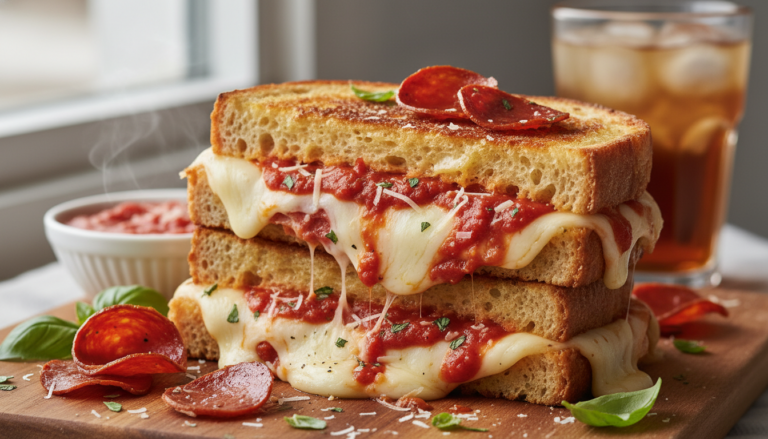
Pizza Grilled Cheese
Pizza Grilled Cheese layers tangy pizza sauce, stretchy mozzarella, and crispy-edged pepperoni between buttery golden-toasted bread for the ultimate comfort food mashup that’s ready in under 15 minutes.
4
servings10
minutes10
minutes350
kcal20
minutesIngredients
8 slices bread
1 cup pizza sauce
1 cup mozzarella cheese, shredded
8 slices pepperoni
2 tablespoons butter
Directions
- Spread butter on one side of each bread slice.
- Place four slices, buttered side down, on a skillet over medium heat.
- Spread pizza sauce over the unbuttered side of each bread slice in the skillet.
- Sprinkle mozzarella cheese evenly over the sauce.
- Add two slices of pepperoni on top of the cheese on each bread slice.
- Top with the remaining slices of bread, buttered side up.
- Cook until the bread is golden brown and the cheese is melted, about 4-5 minutes per side.
- Serve hot and enjoy your pizza grilled cheese.
Nutrition Facts
- Total number of serves: 4
- Calories: 350kcal
- Cholesterol: 0mg
- Sodium: 620mg
- Potassium: 400mg
- Sugar: 8g
- Protein: 6g
- Calcium: 60mg
- Iron: 2mg
About This Author

Amelia Grace
Editor-in-Chief & Culinary Director
The heart and guiding voice of Daily Dish, Amelia leads our editorial vision and recipe development. With a background in food journalism and over a decade spent in professional kitchens, she has a knack for blending gourmet technique with real-world accessibility. Her goal? To make every reader feel like a confident cook, one dish at a time.
Favorite dish: Creamy lemon risotto with a sprinkle of fresh thyme.
Kitchen motto: “Good food doesn’t have to be complicated — it just has to be made with heart.”















