
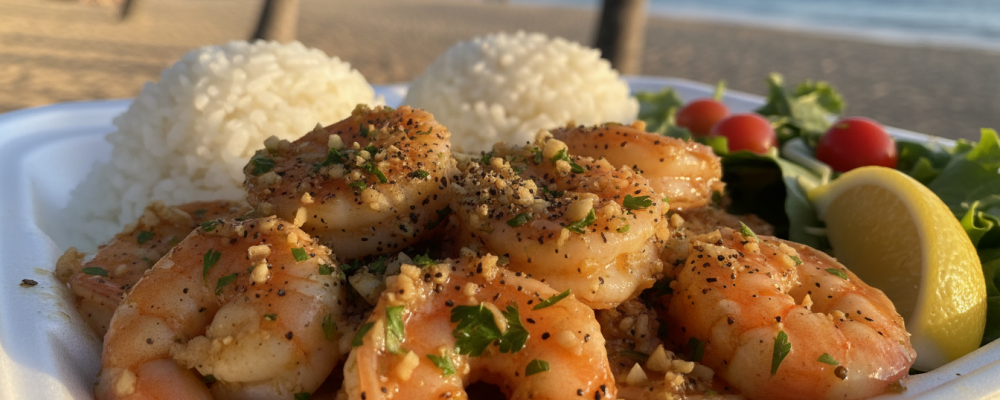

There is a category of dish that achieves greatness through relentless focus on a single ingredient—and garlic shrimp from Hawaii’s North Shore food trucks is exactly that kind of dish. Famously, obsessively garlicky, with a butter-olive oil base that caramelizes the chopped garlic into something golden, fragrant, and deeply sweet before the dredged shrimp cook through and absorb every drop of it—this is one of the most satisfying fifteen-minute dinners I’ve ever developed. The lemon and parsley at the finish are the brightness that makes the richness work, and the flour dredge is the technique detail that sets this recipe apart from every plain sautéed shrimp preparation you’ve had before.
The flour dredge is the step that most people skip and most people shouldn’t. A light coating of seasoned flour on each shrimp does three things in a hot pan: it creates a very thin, slightly crisped exterior that gives the shrimp textural interest beyond simply poached-in-butter; it helps the shrimp develop better color and more caramelization in a shorter time; and it thickens the garlic butter sauce slightly as the starch from the coating mixes into the pan fat, creating a cohesive, slightly glossy sauce that clings to every shrimp rather than pooling underneath them. That last quality—the sauce that clings rather than pools—is what makes a Hawaiian garlic shrimp plate genuinely exceptional rather than simply buttery.
The garlic quantity is non-negotiable. This dish is built around the flavor of garlic that has been cooked in butter and olive oil until golden and slightly toasted—fragrant, sweet, and without any of the raw sharpness that makes garlic intimidating at high volumes. Don’t be shy. The finished dish should taste unmistakably, memorably of garlic in the best possible way.
The Inspiration Behind This Recipe
Hawaiian garlic shrimp was born on the North Shore of Oahu, Hawaii, where shrimp farms along Kamehameha Highway gave rise to the food truck culture that has been serving heaping plates of garlic shrimp over rice since the 1990s. Giovanni’s Shrimp Truck, established in 1993, is widely credited with defining the dish as it’s known today—an enormous quantity of butter, an even more enormous quantity of garlic, and shrimp cooked with the shells on for maximum flavor, served over white rice with lemon wedges.
This recipe adapts that tradition for a home kitchen preparation, using peeled and deveined shrimp for ease of eating and a flour dredge to add the slight textural interest and sauce-thickening quality that elevates the dish beyond pure butter application. The spirit of the original—that gastronomically bold, garlic-forward richness—is completely intact.
A Brief History of Hawaiian Shrimp Farming and Garlic Shrimp
The aquaculture shrimp farms that supply Hawaii’s North Shore food trucks were established in the 1970s and 1980s as part of a broader effort to develop sustainable seafood industries on the islands. The Kahuku region of Oahu’s North Shore became particularly known for its shrimp farms, which produce the sweet, fresh shrimp that the area’s food trucks showcase in their garlic preparations. The proximity of farm to kitchen—sometimes measured in yards rather than miles—is part of what gives North Shore garlic shrimp its legendary quality.
The garlic shrimp preparation itself draws from Hawaiian-American fusion cooking culture, where the influences of Japanese, Filipino, Chinese, Korean, and American continental cooking have merged into a distinctly Hawaiian food identity. The generous garlic-butter application echoes both the French-American butter sauce tradition and the Asian practice of cooking proteins in aromatic-infused oil, creating something that belongs entirely to Hawaii despite drawing from multiple culinary traditions.
Why the Dredge and Butter-Oil Combination Work Together
The combination of a flour dredge and a butter-olive oil cooking medium is one of the most effective technique pairings in pan-cooking seafood, and understanding why makes you a better cook of this and every similar recipe. The butter provides flavor—its milk solids caramelize and contribute the nutty, rich character that pure olive oil lacks. The olive oil raises the smoke point enough to prevent the butter from burning before the shrimp are done cooking. Together they create an ideal fat medium that is stable enough to sauté garlic until golden and cook dredged shrimp to a perfect sear without scorching.
The flour dredge, light enough that you shake off the excess, creates a coating that sets almost immediately in the hot fat—providing the crisped exterior and sauce-thickening quality described above without making the shrimp feel breaded. It’s the difference between a shrimp that floats in garlic butter and a shrimp that wears it.
Flavor Profile: What to Expect
These shrimp deliver a bold, focused, deeply satisfying flavor experience:
- Golden, caramelized garlic that is the undisputed star—sweet, fragrant, and deeply savory after its time in the butter-oil blend
- Lightly crisped, flour-dredged shrimp with a barely-there exterior texture that gives each bite more interest than plain sautéed shrimp
- Rich, slightly thickened garlic butter sauce that clings to every shrimp and is the part of the plate everyone tries to scoop up with extra rice
- Paprika from the dredge that adds warm, slightly smoky color and depth to the coating
- Bright lemon juice added off heat that cuts through the butter richness and prevents the sauce from feeling too heavy
- Fresh parsley that adds herbal brightness and a clean green finish that lifts the entire dish
The overall effect is rich, boldly garlicky, bright, and deeply satisfying—a dish that is unapologetically about its primary flavor and entirely confident in that choice.
Tips for Making the Best Hawaiian Garlic Shrimp
These details will produce a consistently exceptional result:
- Use large or jumbo shrimp: Larger shrimp have more surface area for the dredge to adhere to and more interior moisture to stay juicy through the cook. Small shrimp overcook too quickly for this preparation.
- Pat shrimp dry before dredging: Any surface moisture will cause the flour to clump rather than coat evenly and will steam the shrimp in the pan rather than searing them.
- Shake off excess flour thoroughly: A thin, even coating is the goal—too much flour creates a thick, doughy exterior and a gummy sauce. Shake over the bowl until only a light dusting remains.
- Toast the garlic before the shrimp go in: The garlic needs one to two minutes in the butter-oil blend before any shrimp are added—long enough to turn fragrant and golden, not long enough to burn. Keep the heat at medium and watch it closely.
- Don’t crowd the pan: Cook in batches if needed. Crowded shrimp steam rather than sear and the dredge won’t develop its characteristic crisp texture.
- Add lemon and parsley off heat: Both lose their brightness quickly when exposed to direct high heat. Remove the skillet from the burner before adding for maximum freshness and color.
Serving Suggestions and Side Pairings
Hawaiian garlic shrimp is most authentically served in a specific and satisfying way:
- Over a generous mound of steamed white rice—the essential vehicle for the garlic butter sauce
- With macaroni salad for the full North Shore plate experience
- Alongside grilled pineapple and a simple green salad for a complete Hawaiian-inspired meal
- Over jasmine or garlic fried rice for an extra-indulgent preparation
- With warm crusty bread for mopping the garlic butter sauce if rice isn’t available
Storage, Reheating, and Make-Ahead Tips
Shrimp is best eaten immediately, but a few practical notes:
- Refrigerate cooked shrimp for up to 2 days. Store with the garlic butter sauce to keep them moist.
- Reheat gently in a skillet over low heat with a small knob of fresh butter. Avoid high heat and the microwave—both make shrimp rubbery.
- Prep ahead by dredging the shrimp and refrigerating on a parchment-lined sheet for up to 2 hours before cooking—the flour coating sets slightly and adheres better after a rest.
- The garlic butter sauce can be made ahead and refrigerated for up to 3 days—reheat gently and toss with freshly cooked shrimp at serving.
Why This Recipe Deserves a Spot in Your Rotation
Hawaiian Garlic Shrimp earns its rotation spot as the fastest, most flavorful weeknight shrimp dinner in the collection. It’s bold, unapologetically garlicky, and produces a plate that consistently generates the kind of enthusiastic response that makes you want to make it again immediately. Whether you’re chasing the memory of a North Shore food truck or simply want dinner to taste extraordinary in fifteen minutes, this recipe delivers every single time.
Recommended Drink Pairing
A dish this rich and garlicky calls for something cold, bright, and tropical. An Aloha Rum Punch is a natural match—its tropical fruit and rum character echoes the Hawaiian spirit of the dish while the citrus cuts through the butter richness beautifully. A cold, crisp lager or a sparkling lemonade is the effortless, crowd-friendly companion that works every time alongside garlic shrimp this bold.
For non-alcoholic options, a cold sparkling pineapple juice or a lightly sweetened passion fruit agua fresca brings a tropical brightness that complements the garlic and lemon flavors without competing with them.
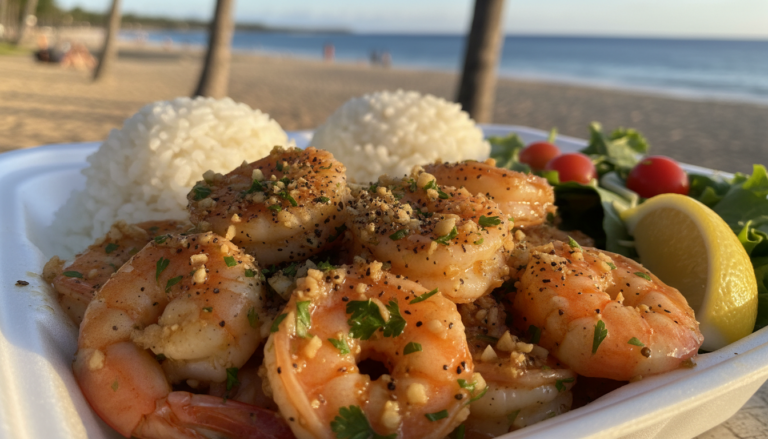
Hawaiian Garlic Shrimp
Hawaiian Garlic Shrimp dredges large shrimp in seasoned flour, sautés them in golden garlic butter, and finishes with lemon juice and fresh parsley for a boldly flavored, 15-minute dinner that tastes exactly like the legendary North Shore food truck original.
4
servings15
minutes10
minutes350
kcal25
minutesIngredients
1 pound large shrimp, deveined
0.25 cup all-purpose flour
0.25 teaspoon paprika
0.5 teaspoon salt
0.25 teaspoon black pepper
2 tablespoons butter
2 tablespoons olive oil
8 cloves garlic, finely chopped
1 tablespoon lemon juice
1 tablespoon chopped parsley
Directions
- In a bowl, combine flour, paprika, salt, and black pepper.
- Dredge shrimp in the flour mixture, shaking off excess.
- Heat butter and olive oil in a skillet over medium heat.
- Add garlic to the skillet and sauté until fragrant.
- Add shrimp to the skillet and cook until pink, about 2-3 minutes per side.
- Remove skillet from heat and add lemon juice and parsley.
- Toss the shrimp to coat them well with the garlic butter sauce.
- Serve immediately with your choice of side dishes.
Nutrition Facts
- Total number of serves: 4
- Calories: 350kcal
- Cholesterol: 0mg
- Sodium: 620mg
- Potassium: 400mg
- Sugar: 8g
- Protein: 6g
- Calcium: 60mg
- Iron: 2mg
About This Author

Benjamin Brown
Recipe Developer
Benjamin is our flavor engineer. A classically trained chef turned recipe developer, he’s obsessed with balancing taste, texture, and creativity. He ensures that every recipe we publish is not only delicious but also reliable, approachable, and repeatable — even for beginners.
Favorite dish: Slow-braised short ribs with red wine reduction.
Kitchen motto: “Cooking is part science, part soul.”















