
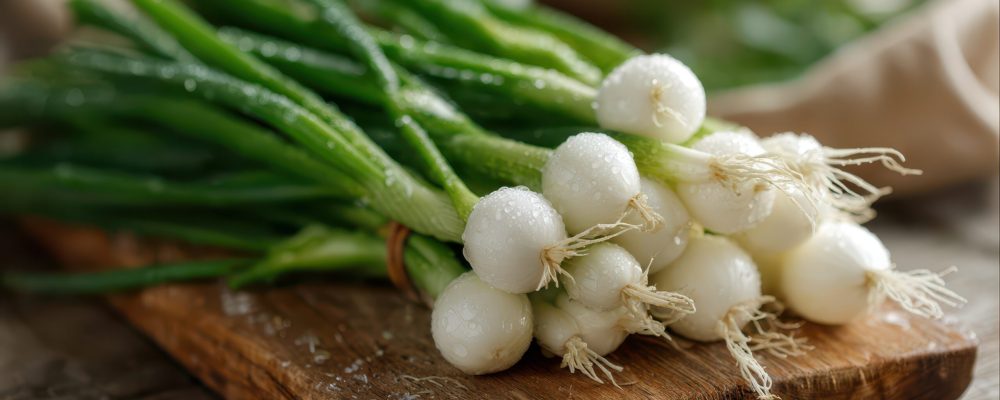

There is an ingredient in every professional kitchen that receives almost no attention in food writing, almost no celebration in culinary culture, and almost no consideration in the conversations about what makes restaurant food taste the way it does.
It is not a luxury ingredient. It is not seasonal or regional or difficult to source. It is not the product of a specific terroir or a specific producer or a specific technique of extraordinary refinement.
It is the onion.
The allium family — onions, shallots, garlic, leeks, chives, scallions — is the foundational aromatic base of virtually every cuisine in the world. There is almost no savory cooking tradition on earth that does not begin, in some form, with a member of this family softened in fat as the first step of building flavor.
And yet the onion is almost never the thing anyone is thinking about. It is the background. The infrastructure. The thing that makes everything else possible without ever appearing on the menu as the reason anyone came.
This invisibility is, in its own way, the highest form of culinary achievement.
What the Allium Family Actually Does
The flavor compounds in alliums — the sulfur-containing molecules responsible for their characteristic pungency — are among the most chemically complex and most culinarily significant in any ingredient category.
Raw alliums are sharp, aggressive, and volatile. The same compounds that make a raw onion make your eyes water — propanethial S-oxide, released when the onion’s cell walls are broken by cutting — are flavor compounds that, in their raw state, announce themselves with an intensity that overwhelms rather than supports.
Heat transforms them. This is the most important thing to understand about the allium family, and the thing that makes the difference between a cook who uses onions and a cook who understands them.
When alliums are cooked in fat — gently, with patience, over low to medium heat — the sharp, volatile sulfur compounds break down and convert into a completely different set of flavor compounds. The pungency disappears. What remains is a deep, rounded sweetness with a savory complexity that is the aromatic foundation of more dishes than any other single preparation.
This transformation is not incidental. It is the entire point. The caramelized onion, the softened shallot, the slowly sweated leek — these are not onions with their flavor reduced. They are onions with their flavor transformed into something that could not have been predicted from the raw ingredient.
The Spectrum From Raw to Caramelized
The allium family offers a complete spectrum of flavor states, each with its own culinary applications and its own specific role in the kitchen.
Raw onion — used in salsas, salads, and as a finishing element — delivers sharpness, heat, and a distinctive volatile aromatics that cooked onion cannot provide. The bite of a raw shallot in a vinaigrette, the heat of raw garlic in a dressing, the punch of raw scallion scattered over a finished bowl — these are flavors that exist only in the uncooked state and that disappear the moment heat is applied.
Briefly sweated onion — cooked in fat over medium heat until softened but not colored, perhaps five to seven minutes — has lost its sharpness without yet developing the sweetness of longer cooking. It provides a rounded, mild savory base that is present in the dish without dominating it. This is the starting point for most braises, soups, and sauces — the foundation that carries the flavors added on top of it.
Deeply sweated onion — cooked low and slow until completely soft and translucent, perhaps fifteen to twenty minutes — begins to develop sweetness as the cellular structure breaks down and the sugars become more accessible. This is the soffritto of Italian cooking, the base of the French mirepoix taken slightly further — the point at which the onion has given its full foundational flavor to the dish.
Caramelized onion — cooked over very low heat for forty-five minutes to an hour, until deeply golden and reduced to a fraction of its original volume — has undergone a complete transformation. The sugars have caramelized. The Maillard reaction has produced complex flavor compounds that exist nowhere in the raw ingredient. What remains is something intensely sweet, deeply savory, and extraordinarily complex — the most concentrated expression of what an onion can be.
And there is a stage beyond caramelization that is rarely discussed but that professional kitchens use regularly: the deeply charred allium — the halved onion placed cut-side down on a dry, screaming hot pan or directly on a gas flame until blackened — which produces bitter, smoky compounds that add depth to stocks and broths in ways that no other technique replicates.
Each of these states is a different ingredient with a different role. The cook who understands the spectrum uses the right state for the right purpose rather than treating all cooked onion as interchangeable.
Garlic: The Most Versatile Member of the Family
Within the allium family, garlic occupies a position of particular importance — and particular misunderstanding.
Garlic is one of the most flavor-variable ingredients in the kitchen. The same clove of garlic, prepared differently, produces flavor compounds so distinct from each other that they function as completely different ingredients.
Raw garlic — grated on a Microplane into a dressing or a sauce — is sharp, pungent, and intensely aromatic. Its flavor is front and center, immediately identifiable, and diminishes only slightly with time. This is the garlic of aioli, of a raw tomato sauce, of a salad dressing where garlic flavor is a primary rather than a background note.
Garlic cooked briefly in oil over moderate heat — until golden but not browned, perhaps sixty to ninety seconds — loses its sharpness and develops a sweet, roasted quality that is completely different from the raw version. This is the garlic of most sautéed dishes — present and distinct but integrated rather than aggressive.
Garlic cooked slowly in fat over very low heat until completely soft and golden — fifteen to twenty minutes — becomes almost jammy, intensely sweet and savory in a way that loses virtually all of its characteristic sharpness. This is the garlic of a confit preparation, of a slow-cooked braise, of dishes where garlic flavor should be pervasive and deep rather than identifiable.
Roasted garlic — a whole head with the top sliced off, drizzled with oil, wrapped in foil, and roasted until completely soft — produces perhaps the most transformed version of the ingredient. The result is a sweet, nutty, almost caramel-like paste that can be squeezed from the skins and used as a spread, a sauce component, or a flavoring that bears almost no resemblance to the raw clove.
And burned garlic — a deliberately charred version used in certain Japanese and other culinary traditions — adds bitter, smoky complexity that is an intentional flavor element rather than a mistake.
Understanding garlic as a spectrum — rather than as a single ingredient with a single flavor — multiplies the culinary possibilities it offers in ways that most home cooks have never explored.
The Shallot: The Most Underused Allium
Of all the members of the allium family available in most grocery stores, the shallot is the most consistently underused and the most worth using more.
The shallot occupies a position between the onion and the garlic — it has more complexity than a standard onion, with a slight garlic character that onions don’t possess, but it is milder and more nuanced than garlic and can be used in larger quantities without overwhelming a dish.
Its particular value is in preparations where a refined onion flavor is needed — in vinaigrettes, in pan sauces, in compound butters, in raw applications where the onion’s intensity would be excessive and garlic’s punch would be misplaced.
The shallot macerated in vinegar — minced finely and left to sit in the acid for fifteen to thirty minutes before the oil is added to a vinaigrette — softens from a sharp, pungent bite into something mellow and deeply savory that distributes through the dressing with a nuance that neither raw onion nor garlic achieves.
The shallot in a pan sauce — minced finely and sweated in the butter and fond after a protein is seared — adds a delicacy to the sauce that onion, which can taste harsh in quick preparations, and garlic, which can dominate, don’t provide.
Professional kitchens reach for shallots constantly, in part because of their refined flavor and in part because their relatively small size and regular shape make them easy to mince finely — a practical advantage when a fine mince is what the application requires.
Leeks: The Allium That Deserves More Credit
The leek — the largest and mildest member of the allium family commonly available in Western markets — has a flavor that is gentle, sweet, and slightly grassy in ways that the sharper members of the family don’t offer.
Its particular value is in preparations where a background sweetness and body are needed without the assertiveness of onion or the punch of garlic. Leeks cooked gently in butter until completely soft — the classic French preparation called fondue de poireaux — become almost silky, deeply sweet, and extraordinarily mild. They can be used as a base for soups, as a filling for tarts and quiches, as a bed for braised fish or chicken, or as a simple side dish with nothing more than butter and salt.
The leek’s length and its particular structure — concentric layers of leaf wrapped around a central core — also make it useful in preparations where the onion family is used structurally rather than just aromatically. The braised leek, served whole and dressed with vinaigrette, is a dish unto itself — the leek as subject rather than background, its mild sweetness and silky texture given the full attention they deserve.
The leek is also one of the better stocks and broth alliums — its mild, sweet flavor contributing body and depth without the intensity that onion can add in long-cooked applications. The green tops of leeks, which are too fibrous to eat comfortably, are among the most flavor-rich parts of the plant and belong in the stock pot rather than the compost bin.
The Takeaway
The allium family is the foundational aromatic infrastructure of virtually all savory cooking — the ingredient category that makes everything else possible, that provides the base upon which every other flavor is built, and that produces a flavor spectrum so wide and so varied that it functions as multiple distinct ingredients depending on how it is used.
Understanding this spectrum — raw to caramelized, sharp to sweet, aggressive to delicate — gives the cook one of the most powerful and most versatile tools available in any kitchen.
The onion is not glamorous. It is not celebrated. It does not appear on menus as the reason anyone came.
It is the reason the food tastes the way it does.
And that is exactly enough.














