

Some of the most beloved foods in the world exist because something went wrong.
Not slightly wrong. Catastrophically, irreversibly, disastrously wrong — in ways that should have ended with the food being thrown out, the experiment abandoned, and the mistake forgotten. Instead, through a combination of curiosity, necessity, and the particular human reluctance to waste something that cost time and resources to produce, the mistake got tasted.
And the mistake was extraordinary.
The history of food is, to a surprising degree, a history of productive failure. Of cheese that wasn’t supposed to be blue. Of bread that wasn’t supposed to be sour. Of a drink that wasn’t supposed to ferment. Of a preservation technique that turned out to produce something more interesting than the original ingredient it was trying to save.
These are not quaint origin stories. They are evidence of something important about the nature of food and the nature of discovery — that the most interesting flavors often come not from intention but from the willingness to pay attention when things go unexpectedly right.
The Cheese That Got Left in a Cave
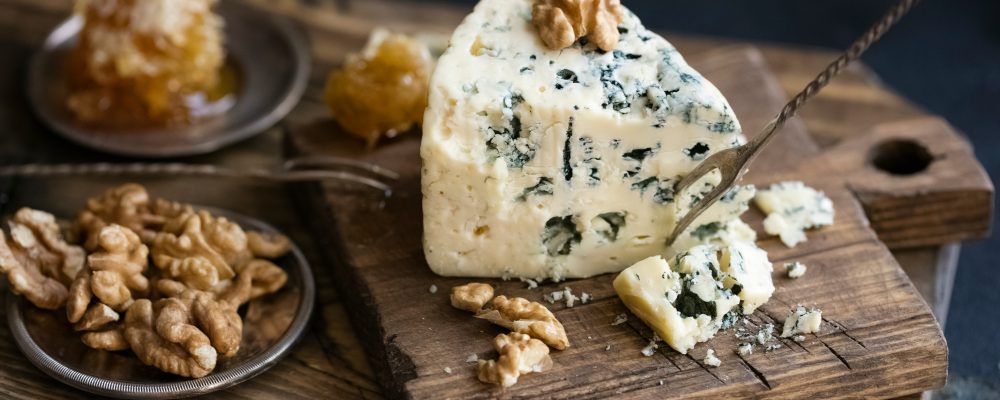
Roquefort — one of the world’s most celebrated blue cheeses, produced exclusively in the caves of Combalou in southern France — has an origin story that begins with a shepherd who abandoned his lunch.
The legend, which has circulated for centuries in various forms, involves a young shepherd who left his meal of bread and fresh cheese in a cave when a beautiful girl distracted him from his lunch. When he returned — weeks or months later, depending on the version — the cheese had transformed. The dark, cool, humid environment of the cave, combined with the specific mold present in the bread he had left with it, had produced something that bore no resemblance to the fresh cheese he had abandoned.
The mold — Penicillium roqueforti, which occurs naturally in the caves of Combalou and was present in the moldy bread left alongside the cheese — had colonized the curd, producing the characteristic blue-green veining, the pungent aroma, and the complex, salty, sharp flavor that would eventually make Roquefort one of the most prized cheeses in European culinary history.
Whether the shepherd story is literally true is beside the point. What is true is that blue cheese — in all its forms, from Roquefort to Gorgonzola to Stilton — is the product of deliberate mold introduction that began as an accidental discovery of what happens when cheese is left in conditions that allow specific molds to grow. Every blue cheese in the world exists because someone, at some point, tasted something that had gone wrong and found it had gone right.
The Bread That Saved Itself
Sourdough bread — the oldest form of leavened bread in the world, predating commercial yeast by thousands of years — is the result of an accident that happened so long ago and so universally that it almost certainly happened independently in multiple places at once.
At some point in human history, a mixture of ground grain and water was left out longer than intended. Wild yeast and lactic acid bacteria — present naturally in the grain, in the flour, and in the environment — colonized the mixture and began fermenting it. The resulting dough, when baked, was lighter than the flatbread that preceded it, with a complex, slightly sour flavor produced by the lactic and acetic acids generated by the bacterial fermentation.
This accident became a technology — one that sustained human civilization for thousands of years before Louis Pasteur’s work on yeast made commercial leavening possible in the nineteenth century. Every sourdough loaf baked today, including the ones produced by the most sophisticated bakeries in the world using carefully maintained starters of documented lineage, is a direct descendant of that forgotten mixture left out too long on a surface somewhere in ancient history.
The sourness that makes sourdough distinctive — the flavor profile that has driven its modern revival and made it one of the most sought-after bread styles in contemporary food culture — is entirely the product of bacterial byproducts that no one intended to introduce.
The Wine That Kept Getting Better
The transformation of grape juice into wine is itself an accident of sorts — wild yeast present on grape skins begins fermenting the juice the moment the skin is broken, a process that would occur without any human intervention whatsoever. But within the history of winemaking, there are specific accidents that produced discoveries that changed how wine is made and understood.
The discovery of late harvest wines — some of the most celebrated dessert wines in the world — came from grapes that were left on the vine too long. In several instances throughout European wine history, harvests were delayed — by wars, by administrative failures, by missed communications — and the grapes, left past their usual harvest window, developed botrytis cinerea, a mold that in the right conditions produces what winemakers now call noble rot.
Noble rot dehydrates the grape, concentrating its sugars and acids while adding its own complex flavor compounds — honey, apricot, ginger, a distinctive petrichor quality — that produce wines of extraordinary complexity and sweetness. The wines of Sauternes, Tokaji Aszú, and German Trockenbeerenauslese — among the most expensive and celebrated wines in the world — owe their existence to grapes that a timely harvest would have saved from the mold that made them exceptional.
The Preservation That Became a Delicacy
Many of the world’s most celebrated cured and fermented foods began as preservation techniques — ways of extending the life of perishable ingredients before refrigeration made the problem largely obsolete. But in several cases, the preservation method produced something so much more interesting than the original ingredient that the delicacy outlived the necessity that created it.
Prosciutto — the dry-cured Italian ham that has been produced in the Parma region for at least two thousand years — began as a method of preserving pork legs through salting and air-drying. The specific microclimate of the Parma region, with its particular combination of mountain air, temperature, and humidity, turned out to produce conditions for a curing and aging process that generated flavor complexity far beyond what simple preservation required. The fat oxidizes slowly during the long aging process, developing nutty, sweet notes. Enzymatic activity breaks down proteins into amino acids that produce the distinctive savory depth. The result is something that exists on its own terms as a culinary achievement — not a preserved ingredient but a transformed one.
The same logic applies to aged cheese, to miso, to fish sauce, to soy sauce, to vinegar itself — all of which began as methods of extending the life of ingredients and all of which produced fermented or aged results so much more interesting than the original that the process became valued for the transformation rather than the preservation.
The Mistake That Became a Classic Dessert
The tarte Tatin — one of the most beloved pastries in French cuisine — was allegedly created by accident at the Hotel Tatin in Lamotte-Beuvron, France, in the late nineteenth century.
The story goes that Stéphanie Tatin, one of the sisters who ran the hotel, was making a traditional apple tart when she left the apples cooking in butter and sugar on the stove too long. Facing caramelized, slightly overcooked apples and a pastry crisis, she placed the pastry on top of the apples still in the pan and finished the tart in the oven — intending to flip it out once baked into something approximating a conventional tart.
What came out of the oven when inverted was not a failed tart. It was something better than a conventional tart — the apples, having cooked in caramelized butter and sugar, were deeply flavored and tender in a way that conventionally arranged apples in a shell are not. The caramel that had formed on the bottom of the pan became the glossy, rich topping of the finished dessert. The pastry, baked on top rather than beneath, was flaky and crisp in a way that a bottom crust often isn’t.
The accident produced a structure that the intention never would have reached. The tarte Tatin has been on menus across France and the world ever since.
What These Accidents Have in Common
The foods that were saved by accident share a characteristic that is more instructive than any individual origin story.
In each case, someone tasted something that had gone wrong before deciding it was ruined.
The shepherd tasted the moldy cheese. The baker baked the over-fermented dough. The winemaker pressed the rotted grapes. Stéphanie Tatin flipped the overcooked tart. In each case, the willingness to engage with an unexpected result — rather than discarding it — was the decision that produced the discovery.
This is not luck. It is a disposition toward food that treats unexpected results as information rather than failure. The taster who approaches something that has changed unexpectedly with curiosity rather than revulsion is the taster who discovers that noble rot makes better wine than perfect grapes, that mold makes more interesting cheese than the fresh curd it colonized, that fermentation makes more complex bread than the unleavened alternative.
The history of food is full of these moments. The ones we know about are the ones where someone chose to taste.
The Takeaway
The foods we reach for most instinctively — the sourdough bread, the aged cheese, the cured meats, the complex wines — have their origins in moments that, at the time, looked like failures.
They are a reminder that the most interesting developments in food have rarely come from executing a plan perfectly. They have come from paying attention when something went unexpectedly right.
The accidents aren’t interruptions in the story of food. In many cases, they are the story.














