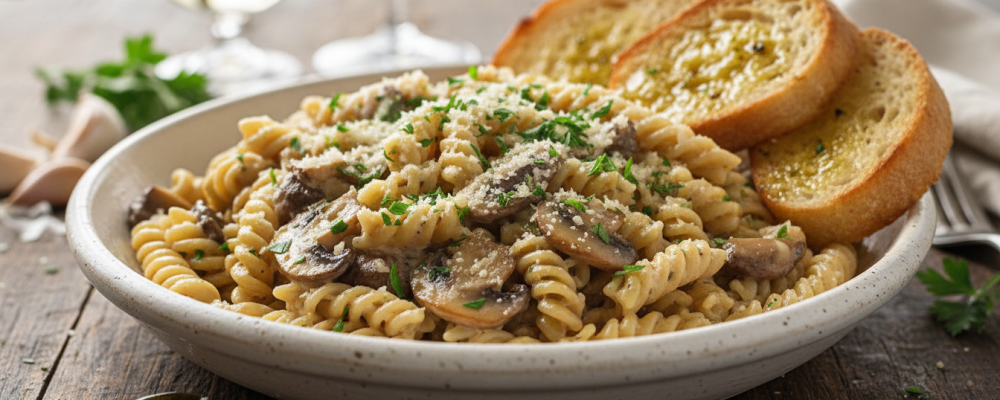

Some recipes earn their place in your rotation through sheer spectacle—elaborate techniques, long ingredient lists, the kind of dish that makes people lean in when you describe it. And then there are recipes like this Garlic Mushroom Pasta, which earn their place through something quieter and ultimately more durable: they are simply, consistently, deeply satisfying every single time. Silky cream sauce, deeply browned mushrooms, fragrant garlic, and salty Parmesan tossed through perfectly cooked spaghetti—this is the weeknight dinner I reach for when I want to feel taken care of without taking on a project.
I’ve been making versions of this pasta for as long as I’ve been cooking. It’s the kind of recipe that exists in almost every serious home cook’s repertoire, usually developed without a recipe at all—built from instinct, from the ingredients that happen to be in the kitchen, from the understanding that mushrooms and garlic and cream and pasta simply belong together. My version prioritizes one thing above all others: properly browned mushrooms. Not steamed, not just softened—browned. Golden at the edges, slightly crisped on their undersides, with that concentrated, almost meaty depth that only comes from letting them sit undisturbed in a hot pan. That step, and only that step, is what elevates this pasta from good to genuinely excellent.
What I love most about this dish is how it manages to feel luxurious without being heavy. The cream sauce is rich but not cloying, the Parmesan adds salt and depth without overwhelming, and the parsley at the end brings a freshness that keeps the whole thing balanced. It’s restaurant-quality comfort food that comes together in about twenty minutes, and that combination of ease and excellence is exactly what a great weeknight recipe should be.
The Inspiration Behind This Recipe
This pasta was inspired by the Italian philosophy of letting a single, exceptional ingredient do the work. In this case, that ingredient is the mushroom—an ingredient that, when handled correctly, develops a flavor complexity that can anchor an entire dish without any meat required. Italian pasta preparations like pasta ai funghi have been built on this principle for centuries, and there’s a reason the combination has endured: it works with a simplicity and elegance that no amount of added ingredients can improve on.
My goal with this recipe was to take that classical foundation and make it as accessible and weeknight-friendly as possible without cutting any of the corners that actually matter. The result is a pasta that feels deeply considered without being complicated—proof that the best cooking is often about restraint as much as creativity.
A Brief History of Mushroom Pasta
Pasta ai funghi—pasta with mushrooms—is one of the most time-honored preparations in Italian cooking, with regional variations spanning from Tuscany to Umbria to the forests of northern Italy, where wild mushrooms like porcini, chanterelle, and ovoli have been foraged and paired with pasta for generations. In those traditional preparations, the mushroom is the star: deeply flavored, minimally manipulated, served with just enough fat and starch to carry its earthiness forward.
The cream-enriched version that has become popular in Italian-American cooking is a slightly more indulgent interpretation, trading the lean simplicity of an aglio e olio-style preparation for a silkier, richer sauce that still honors the mushroom’s primacy. This recipe sits comfortably in that tradition—a little more generous with the cream than a Roman purist might prefer, but deeply respectful of the ingredient at its center.
Why Properly Browning Mushrooms Is Everything
Mushrooms are made of approximately 90 percent water, which means the biggest obstacle between you and a great mushroom pasta is evaporation. Add too many to a pan at once and they steam in their own moisture, turning gray and soft instead of developing the golden, caramelized exterior that produces real flavor. This is why the single most important instruction in this recipe is also the simplest: don’t crowd the pan, and don’t stir too often.
Give mushrooms space and time, and the Maillard reaction takes over—the same chemical process that browns a steak or caramelizes an onion—producing dozens of flavor compounds that turn a mild, earthy vegetable into something complex, almost savory-meaty, and deeply satisfying. Once the mushrooms are properly browned, the garlic, cream, and Parmesan have a flavor foundation that does the rest of the work for them.
Flavor Profile: What to Expect
This pasta delivers a beautifully layered, deeply comforting flavor experience:
- Deep, earthy savoriness from the properly browned mushrooms that anchors every bite with genuine substance
- Warm, aromatic garlic that perfumes the cream and carries through the entire sauce
- Rich, silky creaminess that coats every strand of spaghetti and brings the dish together into something cohesive and luxurious
- Sharp, salty Parmesan that melts into the sauce and adds a nutty, concentrated depth
- Clean, herbal freshness from the parsley garnish that cuts through the richness and brightens the finished plate
The overall effect is warm, rich, and deeply satisfying—a pasta that earns the word “comforting” in its truest sense.
Tips for Making the Best Garlic Mushroom Pasta
A few careful details will take this recipe from good to exceptional:
- Brown the mushrooms in batches if needed: Crowding the pan is the most common mistake in mushroom cooking. Work in batches with a hot pan and enough oil to get proper browning on every piece.
- Don’t stir constantly: Let the mushrooms sit undisturbed for two to three minutes per side to develop a proper crust before moving them.
- Add garlic after the mushrooms are browned: Garlic burns quickly in a hot pan. Adding it after the mushrooms are done and the heat is slightly reduced gives it time to bloom without going bitter.
- Reserve pasta water: A splash of starchy pasta cooking water emulsifies the cream sauce and helps it cling to the spaghetti more evenly. Keep a cup on hand before draining.
- Add Parmesan off the heat: Direct heat can cause the cheese to clump rather than melt smoothly. Remove the pan from the burner before stirring in the Parmesan for the silkiest result.
- Serve immediately: Cream-based pasta sauces thicken as they sit. Have everything ready and serve the moment the pasta is tossed and coated.
Serving Suggestions and Side Pairings
This pasta is a complete, satisfying meal on its own, but a few well-chosen sides elevate the experience:
- Warm garlic bread or focaccia to scoop up the cream sauce left in the bowl
- A simple arugula salad with shaved Parmesan and lemon vinaigrette to cut through the richness
- Roasted broccolini or asparagus for a fresh, slightly bitter vegetable contrast
- A classic Caesar salad if you want something more substantial alongside
- Extra Parmesan and cracked black pepper at the table for finishing as you like
Storage, Reheating, and Make-Ahead Tips
Cream-based pasta is best eaten fresh, but it reheats reasonably well with the right approach:
- Refrigerate leftovers in an airtight container for up to 3 days. The sauce will thicken considerably as it chills.
- Reheat gently in a skillet over low heat with a generous splash of cream or milk stirred in to loosen the sauce back to its original consistency. Avoid the microwave if possible—it heats unevenly and can dry out the pasta.
- The mushrooms can be browned ahead of time and refrigerated for up to two days—finish the sauce fresh when ready to serve for the best result.
Why This Recipe Deserves a Spot in Your Rotation
Garlic Mushroom Pasta is the kind of recipe that answers the question “what should I make tonight?” more often than almost any other. It’s vegetarian-friendly, endlessly adaptable, built almost entirely from pantry staples, and delivers a finished dish that tastes like genuine effort without requiring any. It’s the pasta you make when you’re tired, when you’re hungry, when you want to impress someone without telling them how little you did—and it always, without exception, delivers.
Once it’s in your repertoire, you’ll find yourself returning to it again and again, the way you return to any recipe that simply never lets you down.
Recommended Drink Pairing
A creamy, mushroom-forward pasta calls for a white wine with enough body to match the sauce and enough acidity to cut through the richness. A lightly oaked Chardonnay is the classic companion—its buttery notes mirror the cream while its acidity keeps every sip refreshing. A white Burgundy or a Pinot Blanc are equally elegant choices if you want something more delicate.
For cocktails, The Perfect French 75 brings sparkling brightness and citrus lift that plays beautifully against a rich, creamy pasta without overpowering the subtle earthiness of the mushrooms. For non-alcoholic options, sparkling water with lemon or a lightly herbed cucumber soda keeps the palate clean and refreshed between bites.
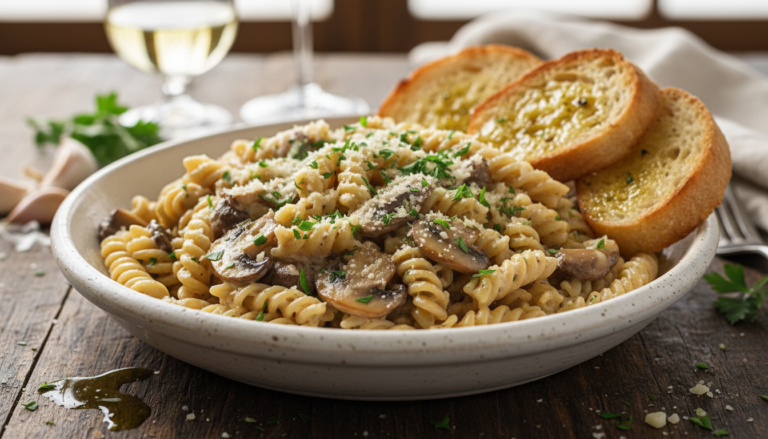
Garlic Mushroom Pasta
Garlic Mushroom Pasta wraps perfectly cooked spaghetti in a silky cream and Parmesan sauce loaded with deeply browned mushrooms and fragrant garlic—rich, satisfying, and on the table in under 30 minutes.
4
servings10
minutes20
minutes450
kcal30
minutesIngredients
200 g spaghetti
300 g mushrooms
3 cloves garlic
2 tbsp olive oil
100 ml cream
50 g Parmesan cheese
1 tsp salt
0.5 tsp black pepper
1 tbsp chopped parsley
Directions
- Boil spaghetti in salted water until al dente, then drain.
- Slice mushrooms and mince garlic.
- Heat olive oil in a pan, add mushrooms, and cook until browned.
- Add garlic to the pan and cook for 1 minute.
- Pour cream into the pan, stir, and let it simmer for 5 minutes.
- Add Parmesan cheese, salt, and black pepper, stirring until melted.
- Mix in drained spaghetti and toss to coat evenly with sauce.
- Garnish with chopped parsley before serving.
Nutrition Facts
- Total number of serves: 4
- Calories: 450kcal
- Cholesterol: 0mg
- Sodium: 620mg
- Potassium: 400mg
- Sugar: 8g
- Protein: 6g
- Calcium: 60mg
- Iron: 2mg
About This Author

Amelia Grace
Editor-in-Chief & Culinary Director
The heart and guiding voice of Daily Dish, Amelia leads our editorial vision and recipe development. With a background in food journalism and over a decade spent in professional kitchens, she has a knack for blending gourmet technique with real-world accessibility. Her goal? To make every reader feel like a confident cook, one dish at a time.
Favorite dish: Creamy lemon risotto with a sprinkle of fresh thyme.
Kitchen motto: “Good food doesn’t have to be complicated — it just has to be made with heart.”