
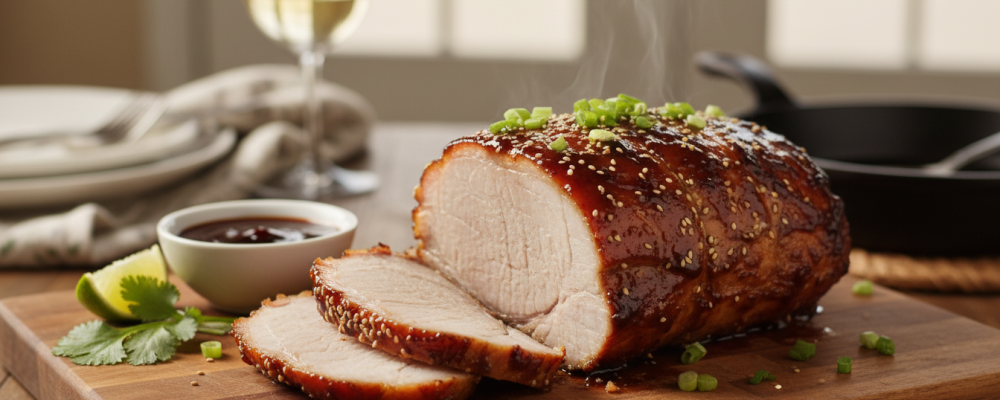

There’s something deeply satisfying about watching a simple pork roast transform into something spectacular through the magic of a well-crafted glaze. Pork Roast with a Tangy Hoisin Glaze demonstrates how Asian pantry staples—hoisin sauce, soy sauce, rice vinegar, fresh ginger—can create layers of complex flavor that rival any French sauce. The beauty lies in the balance: sweet honey against tangy vinegar, savory hoisin against aromatic ginger, all working together to create a glaze that caramelizes beautifully while keeping the lean pork loin moist and tender.
What makes this dish particularly interesting from a culinary perspective is how the glaze functions on multiple levels. The hoisin sauce provides a fermented, umami-rich base with subtle five-spice notes. Soy sauce adds saltiness and additional umami depth. Rice vinegar contributes acidity that brightens and balances sweetness, while honey provides both sweetness and the sugars necessary for caramelization. Garlic and ginger deliver aromatic complexity, and sesame oil adds nutty richness. Together, they create a glaze that’s greater than the sum of its parts.
The roasting technique here is straightforward but crucial. Cooking at a moderate temperature (375°F) allows the pork to cook through gently without drying out, while periodic basting builds up layers of glaze that caramelize into a beautiful, lacquered coating. The key is pulling the roast at exactly 145°F internal temperature—modern food safety standards have lowered the recommended temperature, meaning pork can now be served with a slight blush of pink in the center, yielding much more tender, juicy results than the overcooked pork of previous generations.
From a wine pairing standpoint, this dish presents an engaging challenge. The sweetness from honey and hoisin suggests wines with residual sugar, but the soy sauce’s saltiness and the dish’s overall savoriness demand wines with structure. The ginger adds a spicy, aromatic element that certain wines can echo beautifully. The solution lies in wines that balance fruit sweetness with acidity and body—off-dry Rieslings, fruit-forward Pinot Noirs, or even aromatic Gewürztraminers that can stand up to the bold Asian flavors.
─────────
The Inspiration Behind This Recipe
This recipe draws inspiration from Chinese char siu (barbecued pork) and other Asian glazed meat preparations where sweet-savory sauces create caramelized, lacquered coatings. Hoisin sauce itself is a cornerstone of Cantonese cuisine, traditionally made from fermented soybeans, garlic, vinegar, and spices. The technique of glazing pork with hoisin-based sauces has been adapted throughout Asian cooking and fusion cuisine, representing how traditional flavors can be applied to Western cuts and cooking methods. This version simplifies the process for home ovens while maintaining the essential balance of flavors that makes Asian-glazed pork so universally appealing.
─────────
A Brief History of Hoisin Sauce and Glazed Pork
Hoisin sauce originated in Southern China, particularly in Cantonese cuisine, where it’s used as both a cooking ingredient and a table condiment. The name “hoisin” translates roughly to “seafood,” though ironically the sauce contains no seafood—the name likely refers to its common use with seafood dishes. The tradition of glazing pork with sweet-savory sauces dates back centuries in Chinese cooking, with char siu (Cantonese roast pork) being perhaps the most famous example. These preparations typically featured honey or maltose combined with soy sauce, five-spice powder, and red fermented bean curd to create the characteristic mahogany color and sticky-sweet coating. As Chinese immigrants brought their culinary traditions worldwide, these techniques were adapted to local ingredients and cooking methods, creating the fusion approach we see in modern Asian-inspired American cooking.
─────────
Why This Cooking Method Works
The science behind the technique:
- Sesame oil rub: Creates a base layer that prevents the glaze from sliding off while adding nutty flavor and promoting browning
- Sugar caramelization: Honey and hoisin’s sugars caramelize during roasting, creating complex flavors and attractive color
- Moderate oven temperature (375°F): Cooks pork gently and evenly, preventing the exterior from burning while the interior reaches temperature
- Rack roasting: Elevating pork allows heat circulation on all sides and prevents the bottom from steaming in drippings
- Periodic basting: Builds layers of glaze that create increasingly concentrated flavor and deeper caramelization
- 145°F target temperature: Modern safe temperature for pork that keeps meat tender and slightly pink rather than dry and overcooked
- Resting period: Allows juices to redistribute throughout the meat, preventing moisture loss when slicing
- Rice vinegar acidity: Balances sweetness and helps tenderize the meat’s surface proteins
- Ginger and garlic enzymes: Contribute subtle tenderizing effects while providing aromatic complexity
─────────
Flavor Profile: What to Expect
Sweet • Savory • Tangy • Aromatic • Umami-Rich
This pork delivers bold, complex Asian flavors with beautiful balance. The hoisin glaze creates a sticky-sweet, caramelized coating with deep umami character and subtle five-spice notes. Fresh ginger provides bright, aromatic heat without burning spiciness, while garlic adds savory depth. The rice vinegar’s tanginess cuts through sweetness, preventing the glaze from becoming cloying. Soy sauce contributes saltiness and additional umami, while honey adds golden sweetness and helps achieve that gorgeous lacquered appearance. The pork itself remains tender and juicy with a mild flavor that allows the glaze to shine. Sesame oil and green onions add finishing touches—nutty richness and fresh, sharp bite that brighten the entire dish.
─────────
Tips for Making the Best Pork Roast with a Tangy Hoisin Glaze
Selecting and preparing the pork:
- Choose a center-cut pork loin roast, 2-3 pounds, for even cooking
- Look for meat with some marbling—a little fat keeps it moist
- Trim excess fat but leave a thin layer for flavor and moisture
- Bring pork to room temperature (30-45 minutes) before roasting for even cooking
- Pat completely dry before applying sesame oil—moisture prevents browning
Glaze preparation and application:
- Mix glaze thoroughly—hoisin can be thick and needs good incorporation
- Taste the glaze before applying—adjust honey for sweetness or vinegar for tang
- Reserve about 1/3 of the glaze for basting during cooking
- Don’t apply all glaze at once—build layers through basting for best results
- Fresh ginger is essential—ground ginger won’t provide the same bright, aromatic punch
Roasting technique:
- Use a roasting rack to elevate pork—this is crucial for even cooking and preventing steaming
- Place a pan with a little water underneath to catch drippings and prevent smoking
- Baste every 15-20 minutes, rotating the roast for even color
- Watch the glaze carefully in the final 15 minutes—it can burn if too thick
- If glaze is browning too quickly, tent loosely with foil
Temperature and doneness:
- Use a meat thermometer—visual cues alone are unreliable
- Insert thermometer into the thickest part, avoiding fat
- Remove at 140-145°F (it will rise 5° during resting to reach 145-150°F)
- Don’t overcook—145°F is safe and yields tender, juicy pork with a slight pink center
- Let rest 10-15 minutes before slicing—this is non-negotiable for juicy results
Slicing and serving:
- Use a sharp knife to cut clean slices about ½-inch thick
- Slice against the grain for maximum tenderness
- Drizzle pan juices over sliced pork for extra flavor and moisture
- Garnish generously with fresh green onions for color and sharp contrast
─────────
Wine Pairing Guide
Perfect pairings for Pork Roast with a Tangy Hoisin Glaze:
Riesling (Off-Dry/Kabinett) ★ Best Match German Riesling with slight sweetness balances the hoisin glaze’s sweet-savory character while its vibrant acidity cuts through richness and complements the rice vinegar. The wine’s stone fruit flavors and aromatic profile echo the ginger and honey, while its light to medium body won’t overpower the pork. The sweetness tames any heat from ginger while the acidity refreshes between bites.
Pinot Noir (Fruit-Forward) Lighter-bodied red with bright cherry and strawberry flavors that complement pork beautifully. The wine’s soft tannins won’t clash with the sweet glaze, while its subtle earthy notes add complexity. Choose New World Pinot Noirs (California, Oregon, New Zealand) with riper fruit that can stand up to bold Asian flavors.
Gewürztraminer (Off-Dry) Aromatic white with lychee, rose petal, and spice notes that echo the ginger and five-spice character in hoisin sauce. The wine’s slight sweetness matches the glaze, while its full body and exotic aromatics create an intriguing pairing that feels distinctly Asian-inspired.
Rosé (Fruity, Off-Dry) Versatile middle-ground option with enough fruit sweetness to complement the glaze and enough acidity to cut through richness. The wine’s refreshing character and berry notes make it widely appealing and food-friendly.
Beaujolais (Cru) Light-bodied red with juicy fruit, low tannins, and bright acidity. The wine’s red berry flavors and silky texture complement pork without competing with the bold glaze, while its refreshing quality keeps the pairing lively.
Alternative pairing: For those who prefer fuller-bodied reds, a Malbec with its plush fruit and soft tannins can work, though lighter styles are preferred to avoid overwhelming the dish.
─────────
Serving Suggestions and Side Pairings
Beautiful presentations:
- Asian-inspired plating: Arrange sliced pork on a platter, drizzle with pan juices, garnish with green onions and sesame seeds
- Individual plates: Fan 3-4 slices, add side of steamed rice or noodles, vegetable garnish
- Family-style: Present whole roast at the table for carving, serve glaze on the side for drizzling
Ideal side dishes:
- Steamed jasmine rice: Classic pairing that soaks up the delicious glaze
- Stir-fried vegetables: Bok choy, snap peas, or broccoli with garlic add color and crunch
- Asian slaw: Cabbage, carrots, and cilantro with rice vinegar dressing provide refreshing contrast
- Spinach Mushroom Orzo: Fusion side that bridges Eastern flavors with Western comfort
- Roasted Brussels sprouts: Caramelized sprouts complement the sweet-savory glaze surprisingly well
For a complete Wine Wednesday spread: Create an Asian-fusion feast: start with dumplings or spring rolls, serve the pork as the centerpiece with rice and stir-fried vegetables, and finish with fresh fruit or mochi ice cream. Offer both Riesling and Pinot Noir to let guests explore different pairing approaches. Add Chipotle Honey Chicken Thighs to the menu for a sweet-savory glaze comparison that showcases how different cultural traditions approach similar flavor profiles.
─────────
Storage, Reheating, and Make-Ahead Tips
Storage:
- Refrigerate sliced or whole pork in an airtight container for up to 4 days
- Store glaze separately if you have extra
- Pork actually tastes great cold or at room temperature—perfect for sandwiches
Reheating:
- Oven (best method): Reheat slices at 325°F covered with foil, adding a splash of broth or water to prevent drying, 15-20 minutes
- Microwave: Heat in 30-second intervals at 70% power, covering to retain moisture
- Stovetop: Warm slices gently in a covered skillet with a bit of glaze or broth
- Don’t overheat—pork can dry out quickly when reheated
Make-ahead strategies:
- Make glaze up to 3 days ahead; store refrigerated and bring to room temperature before using
- Season and sear pork up to 1 day ahead, then roast when ready to serve
- Fully cook pork up to 2 days ahead; slice and reheat gently before serving
- This pork is excellent served at room temperature, making it perfect for entertaining
Leftover ideas:
- Asian pork sandwiches: Slice thin, serve on buns with coleslaw and extra hoisin
- Fried rice: Dice pork and add to fried rice with vegetables
- Ramen topping: Slice thin and add to ramen bowls
- Pork and vegetable stir-fry: Dice and quickly stir-fry with vegetables and rice
─────────
Why This Recipe Deserves a Spot in Your Wine Wednesday Rotation
Pork Roast with a Tangy Hoisin Glaze proves that Wine Wednesday doesn’t have to mean sticking to European flavor profiles. This dish demonstrates how Asian-inspired cooking can pair beautifully with wine when you understand the interplay between sweet, savory, acidic, and aromatic elements. The hoisin glaze creates a bridge between the pork and wine, with its complex layers of flavor providing multiple touch points for pairing.
What makes this particularly perfect for midweek entertaining is the impressive presentation relative to the actual effort required. The glaze comes together in minutes, the pork roasts largely unattended aside from periodic basting, and the results look and taste like you spent hours perfecting every detail. It’s the kind of dish that makes you feel like a competent, confident cook—exactly what Wine Wednesday should deliver.
The wine pairing aspect is where this dish becomes truly interesting. An off-dry Riesling creates one of those magical pairings where wine and food elevate each other—the sweetness echoes the glaze, the acidity cuts through richness, and the aromatic quality complements the ginger and garlic beautifully. For those who prefer red wine with pork, a fruit-forward Pinot Noir offers enough body to stand up to the flavors while maintaining the elegance and drinkability that midweek wine should provide.
Most importantly, this recipe expands your Wine Wednesday repertoire beyond the expected. It shows that celebration doesn’t require defaulting to familiar European classics, and that bold Asian flavors can create just as compelling a wine pairing experience as French sauces or Italian preparations. It’s cooking that respects tradition while embracing fusion, that honors technique while remaining accessible, and that delivers restaurant-quality results from your home oven.
So embrace the ginger and hoisin, trust the glaze-building process, and pour yourself something that bridges sweet and savory with grace. Let Wine Wednesday remind you that great food and wine pairings exist across all culinary traditions, and that sometimes the most memorable meals come from stepping outside the expected and trying something bold and new.
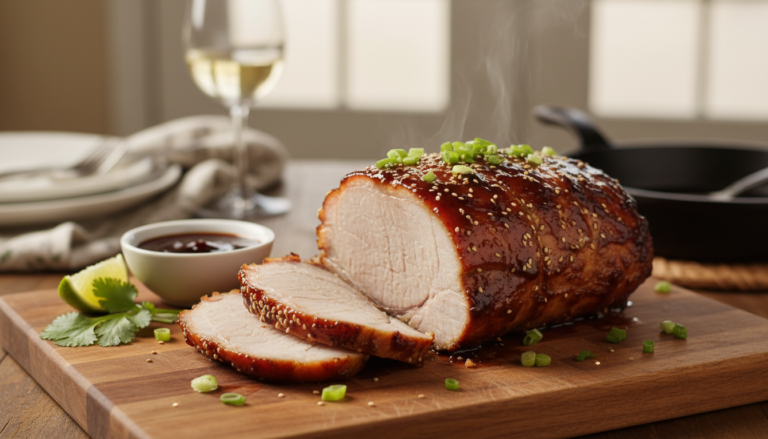
Pork Roast with a Tangy Hoisin Glaze
Succulent pork loin roasted to perfection with a sticky hoisin-ginger glaze—elegant Asian-inspired comfort that pairs beautifully with wine.
6
servings20
minutes1
hour450
kcal1
hour20
minutesIngredients
3 lb pork loin roast
0.5 cup hoisin sauce
2 tbsp soy sauce
2 tbsp rice vinegar
1 tbsp honey
3 cloves garlic, minced
1 tsp ginger, grated
0.5 tsp black pepper
1 tbsp sesame oil
2 tbsp green onions, chopped
Directions
- Preheat oven to 375°F (190°C).
- In a bowl, mix hoisin sauce, soy sauce, rice vinegar, honey, garlic, ginger, and black pepper.
- Rub pork loin with sesame oil, then coat with sauce mixture.
- Place the pork on a rack in a roasting pan.
- Roast for 60 minutes, basting occasionally with remaining sauce.
- Ensure internal temperature reaches 145°F (63°C).
- Let pork rest for 10 minutes before slicing.
- Garnish with green onions before serving.
Nutrition Facts
- Total number of serves: 4
- Calories: 450kcal
- Cholesterol: 0mg
- Sodium: 620mg
- Potassium: 400mg
- Sugar: 8g
- Protein: 6g
- Calcium: 60mg
- Iron: 2mg
About This Author

Benjamin Brown
Recipe Developer & Wine Enthusiast
Benjamin is our flavor engineer. A classically trained chef turned recipe developer, he’s obsessed with balancing taste, texture, and creativity. He ensures that every recipe we publish is not only delicious but also reliable, approachable, and repeatable — even for beginners.
Favorite dish: Slow-braised short ribs with red wine reduction.
Kitchen motto: “Cooking is part science, part soul.”















