
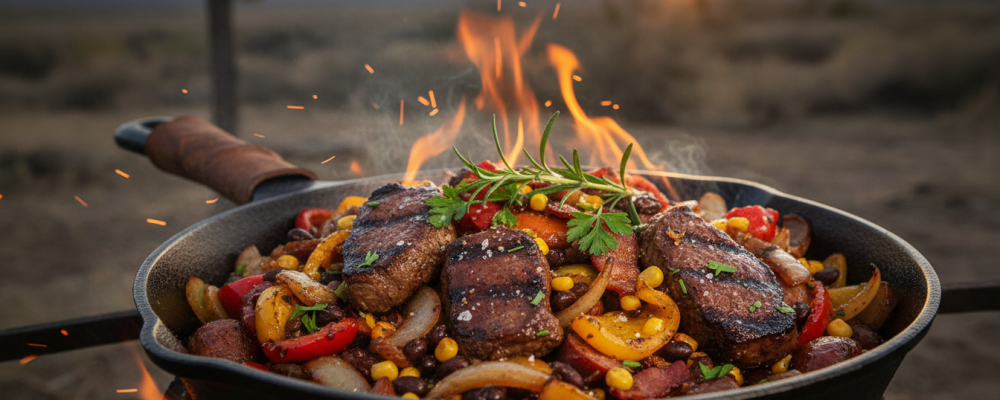

There are recipes that feel like they were invented at the intersection of two great culinary traditions, and Cowboy Stir Fry is exactly that kind of dish. It takes the speed and technique of a classic stir fry and applies it to the bold, smoky, Southwestern flavors that define cowboy cooking—seared beef sirloin, charred bell peppers, sweet corn, hearty black beans, and a soy-lime sauce spiked with chili powder and cumin that brings the whole thing together in one deeply satisfying skillet. It’s fast, it’s bold, and it delivers a flavor experience that’s genuinely unlike anything else in a typical weeknight rotation.
From a recipe development standpoint, what I find most compelling about this dish is how confidently it straddles two flavor traditions without feeling confused or forced. The stir fry technique—high heat, fast cooking, quick assembly—is the ideal method for keeping the beef tender and the vegetables vibrant while developing the slight char and caramelization that makes this dish so exciting. The Southwestern flavor profile—cumin, chili powder, lime, black beans, corn—gives it an identity that’s bold, familiar, and deeply satisfying in the way that only great cowboy-inspired cooking can be.
The soy sauce is the detail that surprises people the first time they see the ingredient list, and it’s the detail I’m most proud of from a development perspective. It adds a savory umami depth to the Southwestern spices that rounds out the sauce and makes the whole dish taste more complex and intentional than its simple ingredient list suggests.
The Inspiration Behind This Recipe
This recipe was born from a fascination with culinary fusion at its most honest and practical—not fusion for the sake of novelty, but fusion that happens naturally when two great cooking traditions share common ground. Southwestern American cooking and Asian stir fry technique are more closely aligned than they might initially appear: both prize high heat, bold seasoning, and fast cooking that preserves the natural character of good ingredients. Bringing them together in a single skillet felt less like a creative experiment and more like an obvious, overdue reunion.
The cowboy cooking tradition has always fascinated me as a recipe developer for its directness and confidence. This is cooking born from necessity and practicality—big flavors, simple technique, and ingredients that fuel hard work and long days. Translating that spirit into a stir fry format that’s equally direct, equally bold, and equally satisfying felt like a natural and respectful evolution of the tradition.
The result is a dish that feels simultaneously familiar and exciting—the kind of weeknight dinner that makes people look up from their plates and say something genuinely appreciative.
A Brief History of Cowboy Cooking and Southwestern Flavors
Cowboy cooking has deep roots in the cattle drive era of the American West, where chuck wagon cooks fed large crews of working cowboys across the vast open ranges of Texas, Kansas, and the broader Southwest throughout the second half of the nineteenth century. The constraints of outdoor cooking over open fire with limited supplies produced a practical, bold culinary tradition built around beans, beef, corn, and the warm spices—cumin, chili powder, and dried peppers—that reflected the strong Mexican culinary influence throughout the Southwest.
The combination of black beans and corn, in particular, speaks to the deep Mexican and Native American culinary roots that shaped Southwestern cooking long before the cattle drive era. These ingredients were staples of indigenous cooking throughout the Americas for centuries, and their integration into the broader Southwestern culinary tradition represents one of the most significant and enduring culinary exchanges in North American food history.
This recipe honors that tradition while applying a modern, globally-inspired stir fry technique that gives those beloved Southwestern flavors a new and exciting format.
Why the Stir Fry Method Works Here
High-heat stir fry technique is the perfect cooking method for this recipe because it achieves something that slower, gentler methods cannot: real caramelization and char on both the beef and the vegetables without sacrificing their texture or freshness. Sirloin, sliced thin and cooked quickly over medium-high heat, stays tender and juicy while developing a deeply browned exterior that adds enormous flavor. Vegetables cooked in that same hot skillet get slightly charred edges that amplify their natural sweetness and add a smoky depth that ties perfectly to the Southwestern flavor profile.
The two-stage cooking process—beef first, then vegetables, then combined—is essential to achieving the right texture in every component. Cooking the beef separately prevents it from steaming in the vegetable moisture and ensures proper browning. Returning it to the skillet only at the end, when the vegetables are perfectly cooked, means everything reaches the table at exactly the right texture simultaneously.
The sauce—soy, lime, chili powder, and cumin—added in the final minutes is deliberately simple and fast-acting, designed to coat everything evenly and build a glaze on the hot ingredients rather than simmer into a thick sauce, keeping the dish light, bright, and vibrantly flavored.
Flavor Profile: What to Expect
Every element of this dish contributes to a bold, vibrant, deeply satisfying flavor experience:
Deeply browned, tender beef sirloin with a slight char that adds savory richness and meaty depth to every bite
Sweet, slightly caramelized bell pepper and corn that provide natural sweetness and a gentle char that echoes the cowboy cooking tradition
Hearty, earthy black beans that add substance, protein, and a creamy contrast to the crisp vegetables and seared beef
Warm, smoky cumin and chili powder that form the Southwestern backbone of the dish and build a deeply aromatic, spiced character throughout
Savory soy sauce that adds umami depth and a slight saltiness that amplifies and rounds out every other flavor in the skillet
Bright lime juice that cuts through the richness of the beef and the smokiness of the spices with a clean, citrusy finish that keeps the dish feeling vibrant and alive
Fresh cilantro that adds a clean, herbal brightness and an aromatic freshness that lifts the entire dish at the very end
The overall effect is bold, balanced, and deeply satisfying—a skillet dinner that delivers maximum flavor with minimum effort.
Tips for Making the Best Cowboy Stir Fry
A few key techniques produce consistently outstanding results with this recipe:
Slice the beef against the grain: Cutting perpendicular to the muscle fibers shortens them significantly, producing noticeably more tender slices in the finished dish.
Partially freeze the sirloin before slicing: Twenty to thirty minutes in the freezer firms the beef just enough to make thin, even slicing significantly easier and more precise.
Get the skillet properly hot: Medium-high heat is essential for the char and caramelization that defines this dish. A skillet that isn’t hot enough will steam rather than sear the beef and vegetables.
Don’t overcrowd the pan: Cook the beef in a single layer, in batches if necessary. Overcrowding drops the pan temperature and causes steaming rather than browning.
Add lime juice off the heat if possible: Lime juice added to a very hot pan loses its brightness quickly. Adding it in the final thirty seconds of cooking preserves its fresh, citrusy character in the finished dish.
Taste before adding salt: Soy sauce contributes significant saltiness to the sauce. Always taste the finished dish before seasoning with additional salt to avoid over-salting.
Serving Suggestions and Side Pairings
This stir fry is hearty and complete on its own but pairs beautifully with a range of Southwestern and Asian-inspired accompaniments:
Steamed white or cilantro lime rice as a neutral, fluffy base that soaks up the soy-lime sauce beautifully
Warm flour tortillas alongside for a build-your-own taco format that leans into the Southwestern character of the dish
A simple avocado or guacamole on the side for a cool, creamy contrast to the warm, spiced stir fry
Crispy tortilla strips scattered over the top for an extra layer of crunch and a Tex-Mex inspired finishing touch
A fresh corn and tomato salsa spooned alongside for a bright, acidic accompaniment that echoes the flavors already in the dish
Storage, Reheating, and Make-Ahead Tips
This stir fry holds up well through storage and reheats with excellent results, making it a smart weeknight meal prep option.
Refrigerate in an airtight container for up to 3 days—the flavors continue to develop and the spices deepen nicely overnight.
Reheat in a hot skillet over medium-high heat for 2 to 3 minutes, stirring frequently, to restore the char and keep the vegetables from becoming soggy. A splash of soy sauce or lime juice refreshes the flavors beautifully during reheating.
Avoid microwaving if possible—it steams the vegetables and makes the beef tough rather than preserving the stir fry’s characteristic texture.
The beef can be sliced and seasoned up to 24 hours in advance and refrigerated, making weeknight assembly significantly faster.
Why This Recipe Deserves a Spot in Your Rotation
Cowboy Stir Fry earns its place in regular rotation by delivering one of the most exciting, flavor-packed weeknight dinners achievable in under thirty minutes. It’s the kind of dish that makes people genuinely excited about what’s for dinner—bold enough to feel special, fast enough for any weeknight, and built on ingredients that are affordable, widely available, and deeply satisfying. Whether you serve it over rice, wrap it in tortillas, or eat it straight from the skillet, this dish consistently delivers the kind of loud, satisfied response at the table that every cook loves to hear.
Once you’ve made it, the Cowboy Stir Fry becomes the recipe you reach for every time you need something fast, bold, and completely unforgettable.
Recommended Drink Pairing
The bold, smoky, spiced character of this dish calls for a drink with enough character and refreshment to stand alongside the chili powder, cumin, and soy-lime sauce confidently. A cold Mexican lager like Modelo Especial or Pacifico is the effortless, crowd-pleasing choice—light, crisp, and perfectly suited to the Southwestern flavor profile. For wine lovers, a bold Zinfandel or a Malbec delivers the fruit-forward richness and spice notes that complement the beef and Southwestern seasonings beautifully.
For non-alcoholic options, a sparkling agua fresca with lime and chili salt on the rim, a chilled hibiscus tea with citrus, or a fresh limeade with a pinch of tajín all pair wonderfully with the bright, spiced, Southwestern character of this skillet dinner.
Cowboy Stir Fry
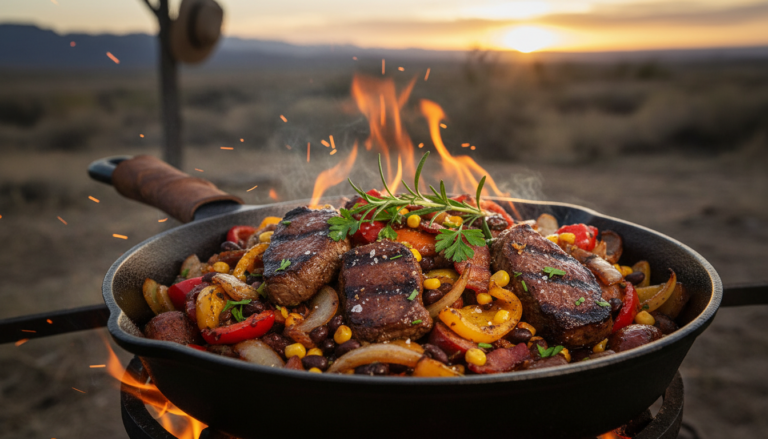
Seared sirloin, sweet corn, black beans, and bell pepper tossed in a smoky soy-lime sauce with chili and cumin—Southwestern stir fry at its boldest.
4
servings15
minutes25
minutes450
kcal40
minutesIngredients
500 grams beef sirloin
2 tablespoons olive oil
1 medium onion, sliced
2 cloves garlic, minced
1 large bell pepper, sliced
1 cup corn kernels
1 cup black beans, drained and rinsed
2 tablespoons soy sauce
1 tablespoon lime juice
1 teaspoon chili powder
0.5 teaspoon cumin
0.5 teaspoon black pepper
to taste salt
2 tablespoons fresh cilantro, chopped
Directions
- Slice the beef into thin strips.
- Heat olive oil in a large skillet over medium-high heat.
- Add beef strips to the skillet and cook until browned, about 5-7 minutes.
- Remove beef from skillet and set aside.
- In the same skillet, add onions and garlic, sauté until onions are translucent.
- Add bell pepper, corn, and black beans, and cook for another 5 minutes.
- Return the beef to the skillet.
- Stir in soy sauce, lime juice, chili powder, cumin, and black pepper.
- Cook and stir for 3 minutes or until everything is well mixed and heated through.
- Adjust salt to taste.
- Garnish with fresh cilantro before serving.
Nutrition Facts
- Total number of serves: 4
- Calories: 450kcal
- Cholesterol: 0mg
- Sodium: 620mg
- Potassium: 400mg
- Sugar: 8g
- Protein: 6g
- Calcium: 60mg
- Iron: 2mg
About This Author

Benjamin Brown
Recipe Developer
Benjamin is our flavor engineer. A classically trained chef turned recipe developer, he’s obsessed with balancing taste, texture, and creativity. He ensures that every recipe we publish is not only delicious but also reliable, approachable, and repeatable — even for beginners.
Favorite dish: Slow-braised short ribs with red wine reduction.
Kitchen motto: “Cooking is part science, part soul.”















