
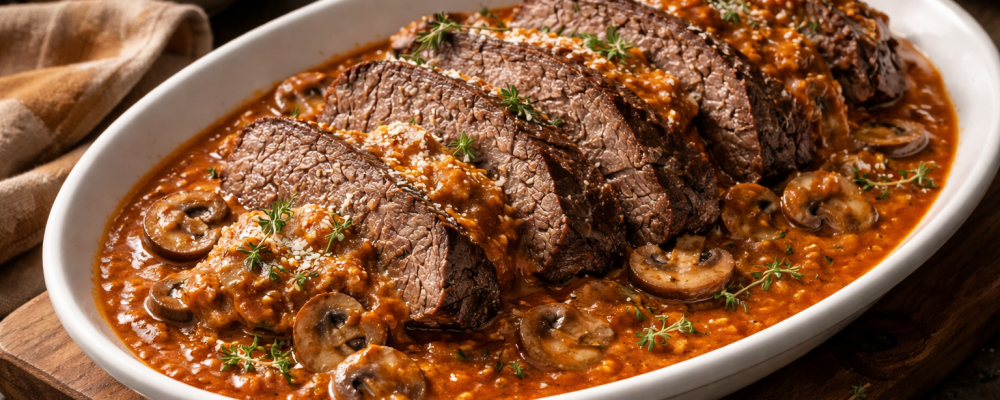

There are recipes that announce themselves the moment the lid goes on the pot—and Creamy Italian Pot Roast is one of them. Within the first hour of simmering, the kitchen fills with the kind of deep, slow-cooked aroma that makes everyone in the house wander in and ask what’s for dinner. This is serious comfort food built on a foundation of patient, low-and-slow technique, and the result is something genuinely extraordinary: a pot roast so tender it yields to a fork, bathed in a creamy, marinara-spiked sauce that manages to be both bold and luxuriously silky at the same time.
From a recipe development perspective, what makes this dish so compelling is the sauce. The combination of beef broth, heavy cream, and marinara is unexpected but inspired—the acidity of the marinara cutting through the richness of the cream while the broth provides the savory backbone that ties everything together. Mushrooms and onion dissolve slowly into the braising liquid over four hours, contributing a depth of flavor that you’d struggle to achieve in any shorter amount of time. This is the kind of sauce that makes you want to find an excuse to pour it over everything.
The browning step at the beginning is the detail I feel most strongly about in this recipe. Taking the time to develop a deep, mahogany crust on all sides of the roast before the liquid goes in is the single most impactful technique in the entire process—creating a layer of concentrated, caramelized flavor that the braising liquid absorbs and amplifies over the long, slow cook.
The Inspiration Behind This Recipe
This recipe was born from an admiration for the Italian braised beef tradition—dishes like brasato al Barolo from Piedmont, where beef is slowly cooked in wine and aromatics until it reaches a state of fork-tender perfection that no other cooking method can quite replicate. Translating that technique into a more accessible, pantry-friendly format using marinara sauce and heavy cream rather than a full bottle of Barolo felt like an exciting creative challenge—one that produces results that honor the spirit of the original while making it achievable on any weekend without a special trip to a wine shop.
The addition of heavy cream to the braising liquid was the creative decision that sets this recipe apart from a more straightforward Italian pot roast. That cream transforms the reduced braising liquid from a simple pan sauce into something genuinely luxurious—a silky, rich, deeply flavored sauce that clings to every slice of beef and makes the whole dish feel like something you’d find on a white-tablecloth restaurant menu.
It’s a recipe rooted in respect for the Italian slow-cooking tradition and a belief that with the right ingredients and enough patience, humble chuck roast can become something truly magnificent.
A Brief History of Italian Braised Beef
Braised beef dishes have deep roots in northern Italian regional cooking, where the cold winters and working cattle of the Po Valley created both the need and the ideal ingredients for long, slow, warming meat preparations. The tradition of braising tough but flavorful cuts like chuck and brisket in wine, broth, and aromatics until fall-apart tender dates back centuries in regions like Piedmont, Lombardy, and Emilia-Romagna.
Brasato al Barolo—beef braised in the celebrated red wine of Piedmont—is perhaps the most famous expression of this tradition, but equally beloved regional variations exist throughout northern Italy using local wines, seasonal vegetables, and the aromatic herbs characteristic of each area. These dishes share a common philosophy: that patience, quality ingredients, and gentle heat can transform an economical cut of beef into something worthy of a celebration.
This recipe draws on that storied tradition while incorporating the tomato-forward marinara sauce more associated with southern Italian cooking, creating a north-meets-south hybrid that captures the best of both regional traditions in a single, deeply satisfying dish.
Why Low and Slow Braising Works
Chuck roast is a cut defined by its connective tissue—rich in collagen that makes it tough and chewy under quick, high heat but absolutely transformative when given the time it needs to break down properly. At a low, sustained simmer over four hours, that collagen converts into gelatin, giving the meat a silky, pull-apart texture while simultaneously enriching the braising liquid with a body and depth that no quick-cooked sauce can replicate.
The sear before braising is a non-negotiable step that accomplishes something the braising liquid alone cannot: the Maillard reaction. Those deep brown, caramelized surfaces on the roast contribute hundreds of complex flavor compounds that dissolve into the sauce over the long cook, fundamentally transforming its character from simple to deeply complex.
The cream and marinara braising liquid provides an ideal environment for this process—the acidity of the tomatoes helps break down the meat fibers while the fat in the cream protects the exterior from drying out, creating the ideal conditions for a perfectly tender, deeply flavorful result.
Flavor Profile: What to Expect
Every element of this dish contributes to a layered, deeply satisfying flavor experience:
Rich, deeply savory chuck roast that develops extraordinary tenderness over four hours and absorbs the flavors of the braising liquid into every fiber
Bold marinara that provides tomato acidity, herbaceous depth, and a distinctly Italian character that sets this pot roast apart from every other version
Silky heavy cream that transforms the reduced braising liquid into a luxurious sauce that’s simultaneously rich and bright
Earthy, concentrated mushrooms and sweet softened onion that dissolve into the sauce and contribute an invisible but essential savory depth
Fragrant garlic and Italian seasoning that build an aromatic foundation woven through every element of the finished dish
The overall effect is bold, indulgent, and deeply comforting—a pot roast that tastes like the very best version of Italian Sunday cooking.
Tips for Making the Best Creamy Italian Pot Roast
Patience and technique are the two defining qualities of a great braise:
Sear thoroughly and without rushing: Every surface of the roast should be deeply browned before the liquid goes in. This takes 3 to 4 minutes per side over medium-high heat and is the single most important step in the recipe.
Keep the simmer low and gentle: The liquid should barely bubble throughout the four-hour cook. Aggressive boiling toughens the meat and evaporates the liquid too quickly. Low and slow is everything here.
Don’t skip the mushrooms and onion sauté: Cooking these aromatics in the same pot after searing the beef means they pick up all of the caramelized fond from the bottom of the pan—capturing and incorporating that concentrated flavor into the sauce from the very beginning.
Thicken the sauce if desired: After removing the beef, a brief simmer over medium heat will reduce the braising liquid to a thicker, more concentrated sauce. A tablespoon of cornstarch whisked with cold water can accelerate this if time is short.
Rest before slicing: Allow the beef to rest for 10 minutes after removing it from the pot before slicing. This allows the juices to redistribute for cleaner, more flavorful slices.
Make it a day ahead: Like all great braises, this pot roast is noticeably better the next day. Plan ahead whenever possible.
Serving Suggestions and Side Pairings
This pot roast is rich and sauce-forward, which makes it ideal for pairing with sides that can soak up every drop of that incredible creamy Italian sauce:
Creamy polenta as the most authentic, Italian-leaning accompaniment—its mild, buttery character is the perfect canvas for the bold, creamy sauce
Creamy mashed potatoes for a more classic, crowd-pleasing pairing that absorbs the sauce beautifully
Pappardelle or a wide egg pasta tossed directly in the sauce for a stunning first course before serving the sliced beef
Crusty Italian bread for mopping the sauce from the plate—an absolute requirement at the table
Roasted broccolini or sautéed greens for a fresh, slightly bitter vegetable contrast that balances the richness of the dish
Storage, Reheating, and Make-Ahead Tips
This is one of the great make-ahead recipes in slow-cooked cooking and improves significantly with an overnight rest.
Refrigerate the beef and sauce together in an airtight container for up to 4 days—the fat will solidify on the surface overnight and can be skimmed before reheating for a cleaner, more refined sauce.
Freeze sliced beef with sauce for up to 3 months. Thaw overnight in the refrigerator before reheating.
Reheat gently in a covered pot over low heat with a splash of beef broth to loosen the sauce. Avoid high heat, which can toughen the already-tender beef.
Making this dish on a Sunday and refrigerating overnight for a Monday dinner is one of the most rewarding meal prep decisions a home cook can make.
Why This Recipe Deserves a Spot in Your Rotation
Creamy Italian Pot Roast deserves a permanent place in your recipe collection because it represents slow-cooked cooking at its most rewarding—a dish where time and patience produce results that are genuinely extraordinary and impossible to rush. It’s the kind of recipe that impresses every single time it’s served, whether at a casual family dinner or as the centerpiece of a special occasion meal. Deeply flavorful, luxuriously sauced, and built on timeless Italian braising technique, this is the pot roast that changes how you think about what a pot roast can be.
Once you’ve made it, it becomes the dish you instinctively reach for every time the weekend stretches ahead and the kitchen calls for something truly special.
Recommended Drink Pairing
A braise this rich, this deeply flavored, and this rooted in Italian cooking tradition deserves a wine with genuine structure and character. A full-bodied Tuscan red—Chianti Classico Riserva, Brunello di Montalcino, or a Super Tuscan blend—is the ideal pairing, its bold tannins and bright acidity cutting through the cream while its earthy, savory notes echo the mushrooms and Italian seasoning in the sauce. For something slightly more accessible, a Montepulciano d’Abruzzo or a Barbera d’Asti delivers the right combination of depth and acidity without requiring a special occasion price point.
For non-alcoholic options, a rich sparkling grape juice, a dark cherry and pomegranate spritzer, or a warm rosemary and black tea infusion all complement the bold, Italian-inspired character of this extraordinary braised pot roast beautifully.
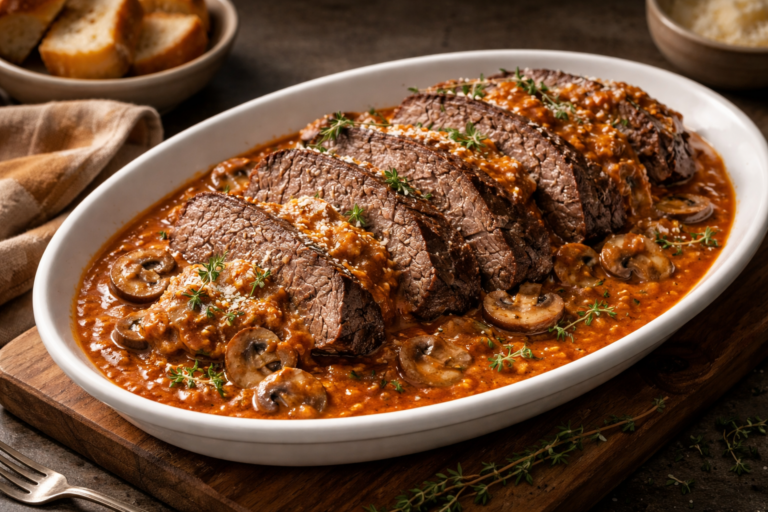
Creamy Italian Pot Roast
Fork-tender chuck roast slow-braised in a rich, creamy blend of marinara, beef broth, and heavy cream—Italian comfort food at its most indulgent.
4
servings30
minutes40
minutes300
kcal1
hour10
minutesIngredients
3 pounds beef chuck roast
2 tablespoons olive oil
1 teaspoon salt
0.5 teaspoon black pepper
1 cup beef broth
1 cup heavy cream
1 cup marinara sauce
3 cloves garlic, minced
1 teaspoon dried Italian seasoning
1 cup mushrooms, sliced
1 small onion, chopped
Directions
- Season the beef with salt and black pepper.
- Heat olive oil in a large pot over medium-high heat.
- Brown the roast on all sides, then remove it from the pot.
- Add garlic, onion, and mushrooms to the pot, sautéing until soft.
- Return the beef to the pot. Add beef broth, heavy cream, marinara sauce, and Italian seasoning.
- Cover and simmer on low for 4 hours, or until the beef is tender.
- Remove the beef, thicken the sauce if desired.
- Slice the pot roast and serve with the creamy sauce.
Nutrition Facts
- Total number of serves: 4
- Calories: 620kcal
- Cholesterol: 0mg
- Sodium: 620mg
- Potassium: 400mg
- Sugar: 8g
- Protein: 6g
- Calcium: 60mg
- Iron: 2mg
About This Author

Benjamin Brown
Recipe Developer
Benjamin is our flavor engineer. A classically trained chef turned recipe developer, he’s obsessed with balancing taste, texture, and creativity. He ensures that every recipe we publish is not only delicious but also reliable, approachable, and repeatable — even for beginners.
Favorite dish: Slow-braised short ribs with red wine reduction.
Kitchen motto: “Cooking is part science, part soul.”















