
No-cook assembly recipes represent the intersection of maximum efficiency and minimum skill requirement—ideal candidates for meal prep adoption provided they solve the fundamental challenge of maintaining quality over extended storage. Most fresh assemblies fail within 24-48 hours due to moisture migration, oxidation, or component degradation. Caprese skewers, when constructed with understanding of ingredient stability and strategic timing, circumvent these problems through deliberate component selection and assembly methodology.
The skewer format delivers specific advantages beyond mere visual appeal. Threading ingredients onto bamboo or metal creates portion control through defined servings—each skewer contains predictable components and calories, eliminating the estimation required with loose preparations. The linear arrangement exposes all components visually, creating immediate recognition of freshness and quality. Most importantly, the individual skewer format allows selective consumption—take two skewers for a light snack, four for more substantial hunger—without disturbing remaining portions or requiring serving utensils.
What makes Caprese specifically suited to meal prep is the inherent stability of its three primary components. Cherry tomatoes maintain structural integrity far better than sliced varieties—their thick skin creates a protective barrier preventing moisture loss and crushing damage. Fresh mozzarella balls (bocconcini or ciliegine) are preserved products designed for extended shelf life; the brine solution they’re packed in provides both moisture retention and antimicrobial protection. Fresh basil, while delicate compared to dried herbs, maintains adequate quality for 3-4 days when handled properly and kept cold.
The assembly sequence and timing matter tremendously. Premature assembly (more than 24 hours before consumption) allows basil to oxidize and tomatoes to release moisture. Delayed assembly (threading components the morning you plan to eat them) maximizes freshness but requires morning effort. The optimal approach balances convenience against quality degradation, acknowledging that slight freshness loss is acceptable when it eliminates daily preparation burden.
─────────
The Inspiration Behind This Recipe
This recipe emerged from observing that the most successful meal prep foods share common characteristics: they’re naturally portion-controlled, require minimal preparation relative to yield, maintain quality over multiple days, and serve dual purposes (casual eating plus entertaining). Caprese skewers check every box while offering the additional advantage of universal appeal—even people who claim not to like “healthy food” enjoy fresh mozzarella and tomatoes.
The skewer format itself deserves credit for solving multiple practical problems simultaneously. Traditional Caprese salad requires serving bowls, utensils, and plates—incompatible with grab-and-go snacking or desk eating. Skewers eliminate all equipment requirements while creating inherent portion control. Each skewer is a complete serving requiring no additional decision-making about quantity. For meal prep purposes, this self-contained format means you can take exactly what you need without exposing remaining portions to handling or temperature fluctuation.
I developed this specific approach after testing various assembly and storage methods. Early attempts involved threading all components immediately after purchase, storing for a full week. Results were disappointing—by day 5, basil had oxidized to brown, tomatoes had released moisture that pooled in storage containers, and mozzarella had dried out despite refrigeration. The breakthrough came from understanding that different components have different optimal preparation timings.
Current methodology involves purchasing and refrigerating components Sunday, then employing a two-phase approach: thread tomatoes and mozzarella on skewers Sunday evening (these components remain stable), then add fresh basil leaves 1-2 hours before eating. This hybrid approach maintains the convenience of pre-threaded skewers while preserving basil’s bright green color and fresh flavor. The 30 seconds required to add basil to prepared skewers is manageable; threading entire skewers from scratch each morning is not.
─────────
A Brief History of Caprese and Skewered Appetizers
Caprese salad (insalata Caprese) originated on the Italian island of Capri, where the combination of local tomatoes, buffalo mozzarella, and basil became a regional specialty showcasing simple, quality ingredients. The red-white-green color scheme mirrors the Italian flag, making the dish symbolically as well as gastronomically significant. Traditional preparation involves sliced tomatoes and mozzarella arranged on a plate with whole basil leaves, dressed with olive oil and sometimes balsamic vinegar.
The evolution from plated salad to skewered format reflects broader changes in American eating patterns and entertaining culture. Skewered foods gained popularity in the late 20th century as “finger foods” and “appetizers” became distinct culinary categories. The format solved practical problems for both hosts (no utensils or plates required, easy portion control) and guests (one-handed eating, clear serving sizes, ability to selectively consume).
The miniaturization of Caprese specifically—using cherry tomatoes and small mozzarella balls (bocconcini) rather than sliced full-sized versions—emerged as these smaller formats became commercially available and affordable. Cherry tomatoes and bocconcini were originally specialty items; their mainstream adoption in the 1990s-2000s made recipes like this accessible to home cooks without requiring specialty grocery shopping or significant expense.
What makes skewered Caprese particularly suited to contemporary meal prep culture is how it bridges multiple uses: casual snacking, packed lunches, entertaining, and even children’s lunchboxes. This versatility means you’re not preparing food for a single narrow purpose but creating flexible components that adapt to various eating occasions throughout the week.
─────────
Why This Assembly Method Works for Meal Prep
The success of Caprese skewers for meal prep storage depends on understanding the specific vulnerabilities of each component and implementing protective measures. Cherry tomatoes’ primary degradation pathway is moisture loss through their skin and stem scar (where they were attached to the vine). Refrigeration slows this process but doesn’t eliminate it. Whole cherry tomatoes maintain integrity far better than halved ones—cutting exposes interior tissues that release juice and soften rapidly. Using whole tomatoes on skewers preserves that protective skin barrier.
Fresh mozzarella’s stability comes from its preservation method—these balls are stored in brine or whey that maintains moisture and provides mild antimicrobial effects. When removed from liquid, mozzarella begins drying within hours, developing tough exteriors. The solution for meal prep involves maintaining moisture through either: (a) storing assembled skewers in containers with small amounts of the brine, (b) drizzling olive oil over skewers to create a protective lipid coating, or (c) keeping mozzarella balls in their original brine and adding them to skewers only 1-2 hours before eating. Each approach has tradeoffs between convenience and optimal texture.
Fresh basil presents the greatest storage challenge. Basil leaves contain enzymes (polyphenol oxidase) that cause browning when cells are damaged—the same process that makes cut apples turn brown. Refrigeration slows but doesn’t prevent this oxidation. Basil also wilts rapidly when deprived of moisture. For meal prep purposes, basil has two viable approaches: (1) store whole sprigs with stems in water (like cut flowers) in the refrigerator and add individual leaves to skewers before eating, or (2) thread basil onto skewers during initial assembly, accepting that by day 3-4 leaves will show some browning around edges but remain flavorful and safe.
The balsamic glaze and olive oil serve purposes beyond flavoring. The viscous glaze adheres to components, providing flavor while creating a slight protective coating. Olive oil’s fats coat ingredients, reducing moisture loss and oxidation. Both should be applied immediately before eating rather than during initial assembly—pre-dressed components soften and release moisture during storage, creating soggy rather than fresh results.
The bamboo skewers themselves require consideration. Wooden skewers absorb moisture from tomatoes and mozzarella, potentially introducing undesirable woody flavor after extended storage. Soaking skewers in water for 10 minutes before threading reduces their absorbency. Alternatively, food-safe metal or plastic picks eliminate absorption concerns entirely, though they require washing rather than being disposable.
─────────
Flavor Profile: What to Expect
These Caprese skewers deliver classic Italian flavors with perfect simplicity:
- Sweet and slightly acidic from cherry tomatoes that burst with concentrated tomato flavor and natural sugars
- Creamy and mild from fresh mozzarella that provides rich dairy notes without overwhelming
- Fresh and aromatic from basil leaves that contribute peppery, slightly sweet herb flavor
- Sweet and tangy from balsamic glaze that adds complexity with concentrated, syrupy sweetness
- Rich and fruity from quality olive oil that contributes peppery notes and smooth mouthfeel
- Well-seasoned from salt and black pepper that enhance natural flavors without masking them
The overall composition creates that coveted “simple but perfect” quality where each ingredient tastes distinctly like itself while contributing to a harmonious whole. The sweetness of tomatoes and balsamic plays against the mild creaminess of mozzarella, while basil adds freshness that prevents the combination from tasting flat or one-dimensional. The olive oil and salt tie everything together, creating integration rather than just juxtaposition.
Unlike many meal prep foods where flavors integrate over time, these skewers maintain distinct component flavors throughout storage. The tomatoes continue tasting like tomatoes, the mozzarella like mozzarella, the basil like basil. This consistency means day-four skewers taste nearly identical to day-one skewers—not better through marination, not worse through degradation, just consistently fresh and simple. That predictability eliminates the common meal prep problem where food deteriorates progressively, making you less excited to eat what you prepared as the week advances.
─────────
Tips for Making the Best Caprese Skewers
Precision in component selection and assembly timing creates significantly better results:
- Choose quality ingredients: This recipe depends entirely on ingredient quality since there’s no cooking to develop flavors. Buy the ripest, sweetest cherry tomatoes available. Select fresh mozzarella that’s soft and springy, not rubbery. Choose basil with vibrant green leaves, no brown spots or wilting.
- Bring mozzarella to room temperature before eating: Cold mozzarella tastes muted and rubbery. Remove from refrigerator 20-30 minutes before serving so it softens and flavors bloom. This applies whether eating or entertaining.
- Don’t halve cherry tomatoes: Whole tomatoes maintain structure and prevent juice leakage. Halving creates mess and compromised texture within 24 hours.
- Add basil strategically: For maximum freshness, thread tomatoes and mozzarella on skewers during prep, but add basil leaves just before eating. This 30-second addition preserves that vibrant green color and fresh flavor.
- Thread carefully to prevent splitting: Insert skewer through tomatoes at their equator (widest point) rather than from stem to bottom. This prevents splitting and creates stable threading.
- Use 6-inch skewers for optimal portion size: Shorter skewers (3-4 inches) hold only 1-2 components and seem sparse. Longer skewers (8-10 inches) are unwieldy. Six-inch length accommodates 3-4 components comfortably.
- Apply dressing immediately before eating: Store balsamic glaze and olive oil separately, drizzling over skewers just before serving. Pre-dressed skewers become soggy and release moisture.
- Pat ingredients dry: Use paper towels to remove surface moisture from tomatoes and mozzarella after rinsing/draining. This prevents water pooling in storage containers.
- Use flaky sea salt for finishing: Regular table salt works, but flaky finishing salt (Maldon, fleur de sel) provides both seasoning and pleasant textural contrast. Add just before eating for maximum impact.
- Store in single layers: Don’t stack skewers—this creates pressure that can crush tomatoes and compress mozzarella. Use shallow containers that accommodate skewers in a single layer.
The most critical factors are ingredient quality (there’s nowhere to hide inferior ingredients) and timing of basil addition and dressing application (these determine whether skewers taste fresh or look tired).
─────────
Portioning and Container Suggestions
This recipe yields approximately 12-16 skewers depending on component sizes and desired threading density (typically 3-4 components per skewer). This quantity divides into 6-8 snack servings (2 skewers each) or 3-4 appetizer servings (4 skewers each) or serves 8-12 people as party appetizers. Each skewer provides roughly 40-60 calories—substantial enough to curb hunger but light enough not to interfere with upcoming meals.
For meal prep storage, shallow rectangular containers work ideally. Arrange skewers in a single layer with minimal stacking—this prevents crushing and maintains visual appeal. Glass containers showcase the beautiful red-white-green color combination, making you more likely to eat what you’ve prepped rather than letting it languish forgotten in the refrigerator. Containers approximately 9×13 inches accommodate a full batch comfortably.
For grab-and-go convenience, consider portioning skewers into individual containers or small zip-top bags—2 skewers per portion for light snacks, 4 skewers for more substantial hunger. This pre-portioning eliminates decision-making when you’re hungry and improves portion control by creating defined servings. Small 2-cup containers work well for individual portions, or use snack-size bags for maximum portability.
The visual presentation deserves attention even in meal prep contexts. Arrange skewers parallel to each other rather than haphazardly—this takes an extra 10 seconds but makes your container look intentional rather than thrown-together. Alternate red tomato and white mozzarella positioning for visual rhythm. When your meal prep looks this appealing, you’re far more likely to choose it over less healthy alternatives when hunger strikes.
─────────
Storage, Reheating, and Shelf Life Tips
- Refrigerator storage: Store assembled skewers (without basil or dressing) for 3-4 days in airtight containers. Components maintain good quality throughout this period with minimal degradation.
- Component storage alternative: Store tomatoes, mozzarella in brine, and basil separately, assembling skewers fresh each morning. This maximizes quality but requires daily 2-3 minute assembly.
- Basil preservation: Store basil stems in a small jar of water in the refrigerator, covered loosely with a plastic bag. This maintains freshness for 4-5 days, allowing you to add leaves to skewers throughout the week.
- Mozzarella moisture: Keep mozzarella balls in their original brine until threading onto skewers. If storing assembled skewers, drizzle with olive oil to prevent drying.
- No reheating necessary: These are designed to be eaten cold or at room temperature. Room temperature actually enhances mozzarella’s creamy texture and tomatoes’ sweetness.
- Temperature timing: Remove from refrigerator 15-20 minutes before eating to allow flavors to bloom. Cold temperatures mute flavors significantly.
- Freezing not recommended: Mozzarella’s texture becomes grainy when frozen and thawed. Tomatoes turn mushy. These are refrigerator-only preparations.
- Dressing storage: Keep balsamic glaze and olive oil in separate small containers or bottles. Apply immediately before eating, using approximately 1/2-1 teaspoon of each per skewer.
- Quality indicators: Fresh tomatoes are firm with smooth, unblemished skin. Mozzarella should be white (not yellowing), soft, and have a fresh dairy smell. Basil should be green without brown edges or wilting.
- Optimal eating window: While safe for 3-4 days, peak quality occurs within first 2 days. By day 3-4, basil may show oxidation and tomatoes may soften slightly, though they remain perfectly edible.
- Transport considerations: Pack with small ice packs in insulated bags for food safety. Room temperature exposure beyond 2 hours risks bacterial growth with dairy products.
─────────
Why This Recipe Deserves a Spot in Your Meal Prep Rotation
From an efficiency analysis perspective, Caprese skewers represent optimal return on time investment in meal prep. Total active time—rinsing tomatoes, draining mozzarella, threading onto skewers—runs approximately 5-10 minutes for 12-16 skewers. This generates 6-8 snack servings, working out to roughly 1 minute per serving. Compare this to purchasing pre-made appetizers ($6-10 per comparable quantity) or preparing snacks daily (5-10 minutes each time), and both the time efficiency and economic advantages become irrefutable.
The economic calculation strengthens the case further. Twelve to sixteen skewers cost approximately $8-12 to prepare using quality ingredients—roughly $0.60-0.90 per skewer or $1.20-3.60 per 2-4 skewer serving. Restaurant or prepared grocery store Caprese costs $8-15 per comparable portion. Specialty cheese shops charge $15-20 for similar quantities presented as “artisanal appetizers.” You’re saving $5-12 per serving by assembling these at home—savings that compound to hundreds of dollars over months of regular preparation.
The nutritional architecture delivers benefits beyond basic macronutrients. Fresh mozzarella provides high-quality dairy protein (approximately 6-8 grams per serving) plus significant calcium for bone health. Tomatoes contribute lycopene (an antioxidant associated with cardiovascular benefits), vitamin C, and potassium. Basil contains volatile oils with anti-inflammatory and antimicrobial properties. Olive oil delivers monounsaturated fats that support heart health. These aren’t empty calories—they’re nutrient-dense foods that actively support wellness while tasting indulgent.
But perhaps most valuable is the versatility these skewers provide across multiple contexts. They function equally well as afternoon desk snacks (no utensils required), packed lunch sides (complement any main course), pre-dinner appetizers (elegant enough for guests), post-workout refueling (protein plus carbs from tomatoes), or children’s lunchbox additions (appealing format, nutritious ingredients). This multi-context functionality means one meal prep session serves multiple purposes throughout your week rather than being restricted to a single narrow application.
─────────
Meal Prep Pairing Suggestions
Caprese skewers function optimally within a comprehensive snacking strategy that provides variety across different flavor profiles and hunger levels. Pair them with Dark Chocolate Energy Bites or Almond Butter Balls for sweet-and-savory rotation—some afternoons call for fresh, light skewers, other times something sweet and substantial sounds more appealing. Having both categories prepped ensures you’re never stuck eating something that doesn’t match your current craving or energy needs.
For those requiring more protein-forward snacks, these skewers pair excellently with Stuffed Mini Peppers or Turkey & Hummus Pinwheels as complementary options. Mix and match throughout the week—maybe Monday and Wednesday get Caprese skewers for lighter snacking, while Tuesday and Thursday get stuffed peppers for more substantial hunger. This variety prevents palate fatigue while maintaining consistent healthy snacking habits.
From a lunch strategy perspective, these skewers work beautifully as sides accompanying main courses. Add 2-3 skewers to containers with Greek Chicken Wraps, Mason Jar Salads, or Lemon Herb Salmon Bowls for more complete, satisfying lunches without preparing entirely separate recipes. The skewers add fresh vegetable and dairy components that round out protein-heavy main courses, creating more balanced nutrition and preventing meal monotony.
For entertaining crossover, having a batch of these skewers in your refrigerator means you’re always prepared for unexpected guests or last-minute gatherings. Pull them from the fridge, arrange on a platter, drizzle with glaze and oil, and suddenly you’re serving elegant appetizers that look like you planned ahead when really you were just meal prepping for yourself. This dual functionality—practical snacking plus entertaining-ready—maximizes the value from a single preparation session.
The strategic advantage of having multiple no-cook options (Caprese skewers, energy bites, pinwheels, cucumber bites) in your regular rotation deserves emphasis. These recipes create meal prep accessibility during life’s most demanding periods. When you’re traveling frequently, working extended hours, or simply exhausted, you can still execute complete meal prep using only assembly-based recipes requiring zero cooking. Make skewers, pinwheels, energy bites, and parfaits—four complete meal prep recipes accomplished in under 30 minutes total with zero oven time and minimal cleanup. This flexibility ensures meal prep remains sustainable even during your most challenging weeks, preventing the all-or-nothing thinking that often leads to complete abandonment of healthy eating habits when circumstances become difficult. Meal prep should support your life rather than adding stress, and these Caprese skewers exemplify that accessible, adaptable approach that works when you need it most.
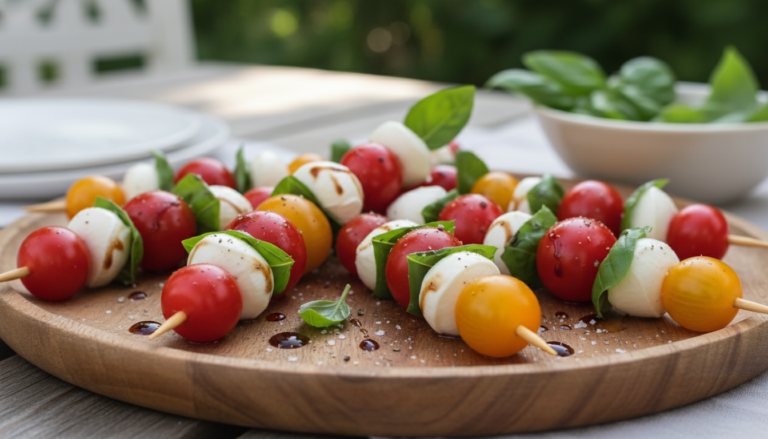
Caprese Skewers
This Caprese skewers recipe transforms Italian classics into perfectly portioned, grab-and-go snacks that require zero cooking and look impressive enough for unexpected guests.
4
servings30
minutes40
minutes300
kcal1
hour10
minutesIngredients
18 pieces cherry tomatoes
18 pieces fresh mozzarella balls
18 leaves fresh basil
3 tablespoons balsamic glaze
3 tablespoons olive oil
0.25 teaspoon salt
0.25 teaspoon black pepper
18 pieces bamboo skewers
Directions
- Rinse and pat dry the cherry tomatoes and fresh basil leaves.
- Drain the fresh mozzarella balls and set them aside.
- Thread one cherry tomato onto a skewer.
- Follow with one fresh basil leaf and then one mozzarella ball.
- Repeat the process with the remaining skewers.
- Drizzle the balsamic glaze and olive oil over the skewers.
- Season with salt and black pepper to taste.
- Serve immediately or refrigerate until ready to serve.
Nutrition Facts
- Total number of serves: 4
- Calories: 150kcal
- Cholesterol: 0mg
- Sodium: 620mg
- Potassium: 400mg
- Sugar: 8g
- Protein: 6g
- Calcium: 60mg
- Iron: 2mg
About This Author

Benjamin Brown
Recipe Developer
Benjamin is our flavor engineer. A classically trained chef turned recipe developer, he’s obsessed with balancing taste, texture, and creativity. He ensures that every recipe we publish is not only delicious but also reliable, approachable, and repeatable — even for beginners.
Favorite dish: Slow-braised short ribs with red wine reduction.
Kitchen motto: “Cooking is part science, part soul.”