
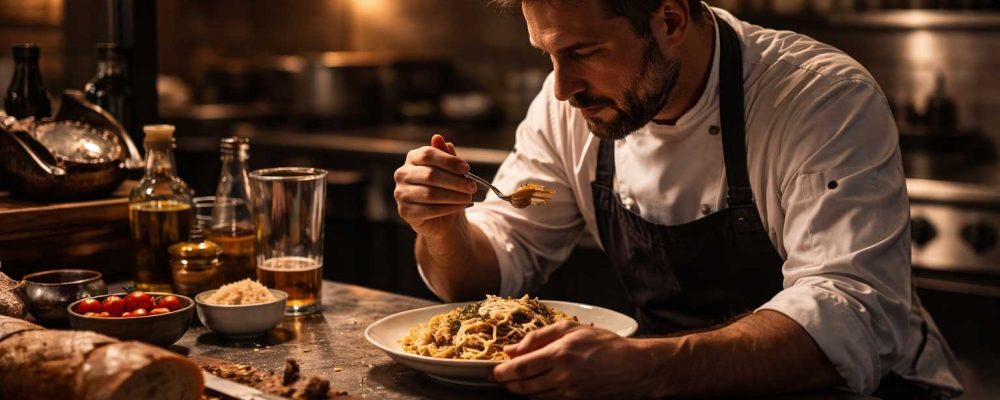

It usually happens late.
The kitchen is mostly clean. The burners are off. There’s a single plate left—something imperfect, something no one ordered. Maybe it’s over-sauced. Maybe it’s under-seasoned. Maybe it’s just leftovers arranged with a little more care than necessary.
This is the moment most people never see.
For chefs, it’s one of the most familiar parts of the job.
The Food No One Is Judging
During service, everything is performance.
Tickets fire. Plates go out. Timing matters. Perfection matters. Someone is always watching—even if you can’t see them.
But after service, the food changes.
The last bite eaten standing up over a trash can. The pasta made with whatever’s left. The sandwich that would never make the menu but somehow tastes better than everything that did.
This is when chefs actually eat.
Not for Instagram. Not for critics. Not for guests.
Just to refuel.
Why Chefs Rarely Cook “Fancy” at Home
Ask a chef what they cook on their day off and the answer is almost never what you expect.
It’s not tweezers and foam. It’s not a five-hour sauce. It’s often:
- Eggs
- Pasta
- Rice with something on top
- A sandwich they’ve perfected over years
After cooking all day for other people, the last thing most chefs want is complexity. What they crave is control and comfort—food that asks very little and gives exactly what it promises.
There’s a lesson in that.
The Myth of the Always-Passionate Cook
We love the idea that chefs are endlessly inspired by food. The truth is more human.
Chefs love food—but they also get tired of it. They burn out. They lose creativity. They have nights where nothing feels right.
That doesn’t make them bad at their job. It makes them honest.
Some of the best food comes after a period of frustration, when a chef stops trying to impress and starts trying to feel something again.
The Dish That Changes Everything
Almost every chef can name a dish that shifted their entire perspective.
Not the most expensive one. Not the fanciest one. The one that made them stop and think, “Oh. This is what food can do.”
Sometimes it’s a street food dish eaten on a break. Sometimes it’s something cooked by a relative who never worked in a restaurant a day in their life.
Those moments don’t just influence menus—they shape careers.
What Home Cooks Can Learn From This
You don’t need a professional kitchen to understand this mindset.
The best meals aren’t always the ones you plan the most. They’re often the ones you cook when:
- You stop overthinking
- You trust your instincts
- You cook for yourself, not an audience
That’s where confidence grows—not from perfection, but from repetition and curiosity.
Food as a Conversation, Not a Performance
One of the quiet truths of cooking is that it works best when it’s not trying too hard.
The chefs who last the longest are the ones who learn when to push and when to simplify. The home cooks who enjoy it most are the ones who stop measuring their success against unrealistic standards.
Food isn’t a test.
It’s a conversation.
The Takeaway
Behind every polished plate is a human moment no one sees—a tired cook, a messy kitchen, a dish made without pressure.
Those moments matter just as much as the ones served under bright lights.
And whether you’re cooking professionally or just trying to get dinner on the table, that’s worth remembering.
Because the best food doesn’t always come from chasing perfection.
Sometimes it comes from the quiet moment after everything else is done.














