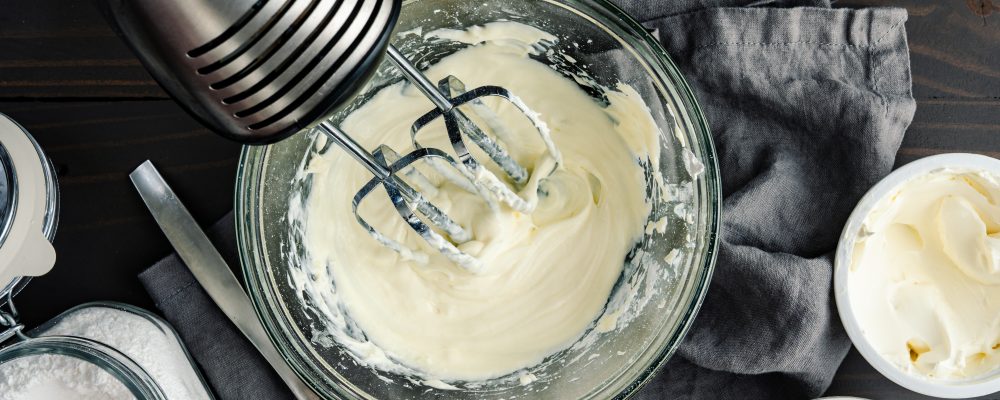

You try to make whipped cream.
Pour heavy cream into a bowl. Start whipping with your mixer or whisk.
Ten minutes later, it’s still liquid. Or it’s slightly thicker but won’t form peaks. Or it suddenly turns into butter.
You followed the recipe. You used heavy cream. You whipped it long enough.
So why won’t it thicken properly?
Restaurant kitchens make perfect whipped cream every time. It thickens in minutes, forms stiff peaks, and holds its shape for hours.
You assumed they have better equipment or professional-grade cream.
Sometimes equipment helps. But usually, whipped cream that won’t thicken is the result of temperature problems or using the wrong cream—issues that are completely fixable once you understand what makes cream whip properly.
The Cream Isn’t Cold Enough
This is the most common problem and the most important to fix.
Whipped cream depends on fat molecules surrounding and trapping air bubbles. Cold fat is solid and can hold structure. Warm fat is liquid and can’t.
Cream that’s too warm won’t whip properly no matter how long you beat it. The fat stays liquid. Air bubbles can’t be trapped. The cream just sloshes around.
Chefs keep cream refrigerated until the moment they whip it. Often they chill the bowl and whisk attachment as well.
Cold equipment helps keep the cream cold during whipping.
Home cooks often use cream that’s been sitting at room temperature or use a bowl that’s not chilled. The cream never gets cold enough to whip properly.
Refrigerate cream until ready to use. Chill your bowl and whisk in the freezer for 10 to 15 minutes before whipping.
This single adjustment fixes most whipped cream problems.
You’re Using the Wrong Cream
Not all cream whips equally well.
Heavy cream (36% to 40% fat) whips beautifully into stable peaks.
Whipping cream (30% to 35% fat) whips but less reliably. The lower fat content means less structure.
Light cream, half-and-half, or anything below 30% fat won’t whip at all. There’s insufficient fat to create stable foam.
Chefs use heavy cream exclusively for whipped cream. They know the higher fat content produces the most reliable results.
Home cooks sometimes use whipping cream or even light cream, not realizing the fat content determines whether it will whip.
Check the label. Look for “heavy cream” or “heavy whipping cream” with at least 36% fat.
Lower fat content means the cream either won’t whip or will produce weak, unstable foam.
The Bowl or Whisk Is Greasy
Even trace amounts of fat on your equipment can prevent cream from whipping.
The fat interferes with the structure formation. Air bubbles can’t form properly.
This is especially true with plastic bowls, which retain oils from previous use.
Chefs use completely clean, grease-free bowls—often metal or glass that don’t retain oils.
They wash and dry everything thoroughly before whipping cream.
Home cooks sometimes use equipment that isn’t completely clean or that has residual oil from previous use.
Use a metal or glass bowl. Wash it thoroughly. Dry it completely. Any residual grease will prevent proper whipping.
Some chefs even wipe the bowl with a bit of lemon juice or vinegar to cut any remaining oils.
You’re Adding Sugar Too Early
Sugar attracts water. When added at the beginning of whipping, it dissolves and creates a syrup-like consistency that makes whipping more difficult.
The cream takes longer to thicken and may never reach stiff peaks.
Chefs add sugar after soft peaks form. Once the structure is mostly developed, sugar can be incorporated without interfering.
Home cooks often add sugar at the beginning because the recipe says “add sugar and whip.” The cream struggles to thicken.
Start whipping plain cream. When it reaches soft peaks, add sugar gradually while continuing to whip.
The cream will thicken faster and more reliably.
You’re Overwhipping
There’s a narrow window between perfectly whipped cream and butter.
Keep whipping past stiff peaks and the fat molecules bond together, squeezing out the liquid. You get butter and buttermilk, not whipped cream.
Once cream separates into butter, you can’t go back. You have to start over.
Chefs watch cream carefully. They stop whipping the moment it reaches the desired consistency—soft peaks for folding into other mixtures, stiff peaks for piping or topping desserts.
Home cooks often keep whipping, thinking more is better. The cream breaks and separates.
Watch closely. Stop at soft peaks if you’re folding the cream into something. Stop at stiff peaks if you need firm structure.
The moment peaks hold their shape, stop. Don’t keep going.
The Cream Is Ultra-Pasteurized
Ultra-pasteurized cream has been heated to very high temperatures to extend shelf life.
This process damages some of the proteins that help create stable foam structure.
Ultra-pasteurized cream will eventually whip, but it takes much longer and produces less stable results than regular pasteurized cream.
Chefs prefer regular pasteurized cream when possible. It whips faster and creates more stable foam.
Home cooks often buy ultra-pasteurized cream without checking because it’s what’s available. The cream whips poorly or takes twice as long.
Check the label. Look for “pasteurized” not “ultra-pasteurized.”
If ultra-pasteurized is all that’s available, it will work—but expect it to take longer and be less stable.
You’re Not Whipping Fast Enough
Whipped cream requires vigorous, continuous motion to incorporate air and create foam.
Gentle stirring or slow beating doesn’t create the mechanical action needed.
Chefs use stand mixers on high speed or whip vigorously by hand. The rapid motion is what creates air bubbles and develops structure.
Home cooks sometimes use medium speed or whip lazily by hand. The cream thickens slowly or not at all.
Use high speed on a mixer. If whisking by hand, whip vigorously and continuously. Don’t stop or slow down.
The mechanical energy is what creates whipped cream. Without it, you just have liquid cream.
The Bowl Is Too Small
Cream needs room to expand as air is incorporated. It can quadruple in volume.
A bowl that’s too small means cream splashes everywhere during whipping. Or there’s not enough room for proper air incorporation.
Chefs use bowls that are at least 3 times the volume of the cream they’re whipping.
This gives cream room to expand and allows proper whipping motion.
Home cooks sometimes use bowls that barely hold the liquid cream. There’s no room for expansion.
Use a larger bowl than you think you need. The cream needs space to increase in volume.
You’re Adding Too Much Sugar
Excessive sugar weighs down the foam and makes it difficult for peaks to form.
The sugar syrup coats the fat globules, interfering with structure formation.
The standard ratio is 1 to 2 tablespoons of sugar per cup of cream. More than this and the cream becomes difficult to whip.
Chefs measure sugar carefully. They know too much interferes with structure.
Home cooks sometimes add sugar to taste, adding several tablespoons. The cream never properly stiffens.
Use minimal sugar. Add it gradually after soft peaks form. You can always add more after whipping is complete if you want it sweeter.
The Cream Has Stabilizers That Interfere
Some cream brands contain added stabilizers or thickeners meant to improve shelf life.
These additives can actually make whipping more difficult. They interfere with natural structure formation.
Pure cream with no additives whips most reliably.
Chefs choose cream brands with minimal ingredients—just cream, nothing else.
Home cooks sometimes buy cream with multiple ingredients listed. Those additives can affect whipping performance.
Read the ingredient list. Look for cream that lists only “cream” and possibly “milk” or “skim milk.” Avoid cream with multiple stabilizers and additives.
You’re Whipping in a Warm Kitchen
Even if the cream starts cold, a warm kitchen warms it up during whipping.
The longer you whip in a warm room, the more the cream temperature rises. Eventually it’s too warm to hold structure.
Chefs often whip cream in air-conditioned kitchens or prep it in walk-in coolers during hot weather.
Home cooks whip cream in kitchens that may be 75°F or warmer in summer. The cream warms up. Whipping becomes difficult or impossible.
Work in the coolest area of your kitchen. If it’s very warm, work quickly. Or set your bowl in a larger bowl of ice water while whipping.
Keep everything as cold as possible throughout the process.
What You Should Do This Weekend
Chill your bowl and whisk attachment in the freezer for 15 minutes. Keep heavy cream (not ultra-pasteurized) refrigerated until ready.
Pour cold cream into the cold bowl. Start whipping on high speed.
When cream reaches soft peaks, add sugar gradually while continuing to whip.
Stop the moment stiff peaks form—peaks that hold their shape but the tips curl slightly.
Use immediately or refrigerate. Don’t overwhip.
That process produces perfect whipped cream in 3 to 5 minutes.
The Takeaway
Whipped cream that won’t thicken isn’t about bad luck or defective cream.
It’s about temperature, fat content, or overwhipping.
Cold cream whips. Warm cream doesn’t. High-fat cream whips reliably. Low-fat cream doesn’t. Cream whipped to stiff peaks is perfect. Cream whipped past that point becomes butter.
Restaurants make perfect whipped cream because they use cold, high-fat cream, cold equipment, and stop whipping at exactly the right moment.
Home cooks often use room-temperature cream, inadequate fat content, or keep whipping past the point of perfect peaks.
But now you know what makes cream whip properly.
Cold cream. Cold bowl. Heavy cream with high fat content. Add sugar after soft peaks. Stop at stiff peaks. Don’t overwhip.
Do that and your cream thickens reliably into stable, fluffy peaks.
Not butter. Not liquid. Perfect whipped cream.
The way it should be.