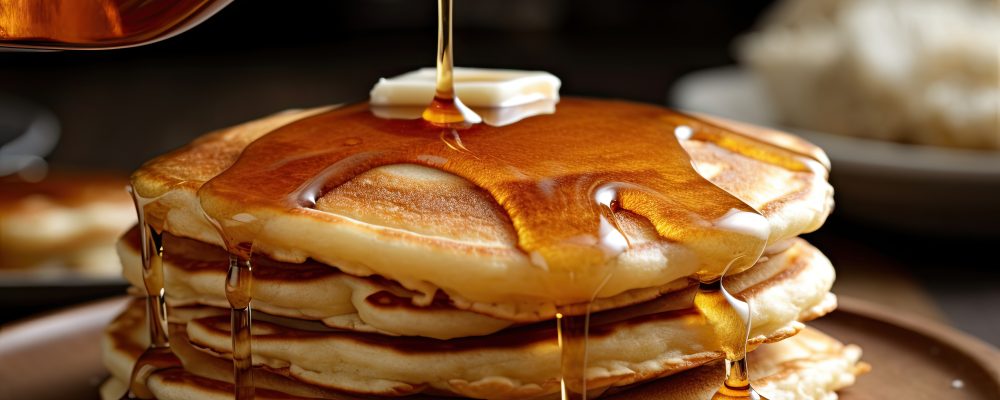

You make pancakes for breakfast.
Follow the recipe. Mix the batter. Pour it on the griddle.
They come out flat. Dense. More like thick crepes than actual pancakes.
You assumed the recipe was bad. Or that fluffy pancakes require some special technique you don’t know.
But the recipe is probably fine. And the technique isn’t complicated.
The problem is usually one or two specific mistakes that seem insignificant but completely destroy the structure pancakes need to rise and stay fluffy.
Fix these and your pancakes will finally have the height and lightness they’re supposed to have.
You’re Overmixing the Batter
This is the most common mistake and the easiest to fix.
Pancake batter should be lumpy. Visibly lumpy, with streaks of flour still visible. It should look undermixed.
When you mix until smooth, you’re developing gluten. That gluten creates a dense, tough structure instead of a light, tender one.
The more you mix, the more gluten forms. The more gluten forms, the flatter and tougher your pancakes become.
Chefs mix pancake batter just until the dry ingredients are moistened. They stop while it still looks rough and lumpy.
Those lumps disappear during cooking. But if you mix them out beforehand, you’ve already ruined the texture.
Home cooks often keep mixing, thinking smooth batter is better batter. It’s not. Smooth batter is overdeveloped batter.
Mix until you don’t see dry flour anymore. Then stop. Even if it looks wrong. Especially if it looks wrong.
The Leavening Is Old
Baking powder and baking soda lose potency over time.
Old leavening doesn’t produce enough gas to lift pancakes properly. You get flat, dense pancakes even if everything else is correct.
Chefs replace leavening regularly—often every three to six months. They know that old leavening is one of the most common reasons baked goods fail.
Home cooks often use baking powder or baking soda that’s been in the pantry for years. It looks fine. It measures the same. But it doesn’t work anymore.
Test your baking powder: add a teaspoon to hot water. It should fizz vigorously. If it doesn’t, throw it out and buy new.
Test baking soda: add a teaspoon to vinegar. It should bubble immediately. If the reaction is weak, it’s too old.
If your leavening is expired, no amount of technique will make your pancakes fluffy.
The Batter Is Too Thin
Pancake batter should be thick—thick enough that it doesn’t spread much when poured onto the griddle.
Thin batter spreads wide and cooks flat. There’s not enough structure to support height.
Chefs aim for batter that’s thick but still pourable. It should flow slowly off the spoon, not run off quickly.
Home cooks often add too much liquid, thinking thinner batter will create lighter pancakes. The opposite is true.
If your batter is too thin, add a little more flour—a tablespoon at a time—until it reaches the right consistency.
You want thick, fluffy pancakes. That requires thick batter.
The Griddle Is Too Hot or Too Cold
Pancakes need moderate heat—not scorching, not tepid.
Too hot and the outside burns before the inside cooks through. The pancakes don’t have time to rise properly.
Too cold and the batter spreads before it sets. The pancakes cook slowly and never develop the structure they need.
The ideal temperature is around 350°F. On a stovetop, that’s medium to medium-low heat.
Chefs test griddle temperature by dropping a small amount of batter. It should sizzle gently—not aggressively, not quietly.
Home cooks often use high heat, thinking it’s faster. The pancakes burn on the outside while staying raw inside.
Or they use low heat and the pancakes spread too much and cook too slowly.
Medium heat. Patient cooking. That’s what creates fluffy pancakes.
You’re Pressing Them Down
Some people press pancakes with the spatula while they cook, thinking they’re helping them cook evenly.
You’re actually squeezing out the air bubbles that create fluffiness. The pancakes deflate and become dense.
Chefs never press pancakes. They pour the batter and leave it completely alone until it’s ready to flip.
Those air bubbles forming in the batter are the leavening at work. They’re what makes pancakes rise. Pressing destroys them.
Leave your pancakes alone. Don’t poke, press, or flatten them. Let them rise on their own.
You’re Flipping Too Early or Too Late
Pancakes should be flipped when bubbles form on the surface and the edges look set—slightly dry and matte rather than shiny and wet.
Flip too early and the structure hasn’t set. The pancake collapses. The inside stays gummy.
Flip too late and the first side overcooks. The pancake doesn’t rise as well because the leavening has already exhausted itself.
Chefs watch for visual cues. When bubbles form across most of the surface and the edges look dry, it’s time.
Home cooks often flip based on time rather than appearance. Every pancake is slightly different. Trust your eyes, not the clock.
The Batter Is Sitting Too Long
Once liquid hits leavening, a chemical reaction starts immediately.
The longer batter sits, the more that reaction exhausts itself. After 20 or 30 minutes, much of the leavening power is gone.
Pancakes made from fresh batter rise beautifully. Pancakes made from batter that’s been sitting for an hour are flat.
Chefs mix batter right before cooking. If making a large batch, they work quickly so the batter doesn’t sit long before being used.
Home cooks often mix batter, then do other things—set the table, make coffee, check their phone—before cooking. By the time they start, the batter has lost much of its rising power.
Mix your batter and cook immediately. Don’t let it sit. Every minute that passes is leavening power wasted.
The Baking Powder Is Single-Acting
Double-acting baking powder releases gas twice: once when mixed with liquid, once when exposed to heat.
Single-acting baking powder only releases gas once when mixed with liquid. If the batter sits even briefly, much of that gas escapes before cooking.
Most commercial baking powder is double-acting, but some is single-acting. Check the label.
Chefs use double-acting baking powder for pancakes because it provides insurance. Even if batter sits a few minutes, there’s still leavening action during cooking.
If you’re using single-acting baking powder, that’s why your pancakes are flat. Switch to double-acting.
The Buttermilk or Acid Is Missing
Baking soda requires acid to activate. Without it, baking soda does nothing.
Many pancake recipes call for buttermilk, yogurt, or another acidic ingredient specifically to activate baking soda.
If you substitute regular milk for buttermilk without adjusting the leavening, the baking soda won’t work properly. Your pancakes will be flat.
Chefs understand the chemistry. They know which leaveners need acid and ensure recipes include it.
Home cooks sometimes substitute ingredients without understanding why certain things are in the recipe. The pancakes fail and they don’t know why.
If using baking soda, make sure there’s an acidic ingredient. If using only baking powder, acid isn’t necessary.
The Eggs Aren’t Separated
Most pancake recipes use whole eggs mixed directly into the batter.
But some recipes—especially those aiming for extra-fluffy pancakes—separate eggs. Yolks go into the batter. Whites are beaten to soft peaks and folded in.
This incorporates air directly into the batter, creating exceptionally light, fluffy pancakes.
It’s extra work. But if you want the fluffiest possible pancakes, it makes a noticeable difference.
Chefs use this technique for Japanese-style soufflé pancakes or when they want maximum height.
Home cooks rarely separate eggs for pancakes because it seems unnecessary. It’s not required—but it does produce fluffier results.
The First Pancake Is Always a Test
The first pancake from any batch rarely turns out perfect.
It’s how you calibrate heat, timing, and batter consistency.
Chefs expect this. The first pancake tells them if the griddle is too hot, too cold, or just right. If the batter needs adjusting. If their timing is correct.
They make adjustments based on what the first pancake does, then the rest turn out great.
Home cooks often get discouraged when the first pancake isn’t perfect. They assume the whole batch is doomed.
It’s not. The first one is supposed to be imperfect. Use it to learn what adjustments you need to make for the rest.
What You Should Do Next Weekend
Check that your baking powder is fresh. If it’s more than six months old, buy new.
Mix your batter just until the dry ingredients are moistened. Stop while it’s still lumpy.
Let the batter sit for 5 minutes—but no longer—while the griddle heats.
Heat your griddle or pan to medium heat. Test with a drop of water—it should sizzle gently.
Pour batter and don’t touch it. Watch for bubbles across the surface and set edges.
Flip once. Don’t press. Let the second side cook undisturbed.
Those steps—especially minimal mixing and proper heat—will transform your pancakes from flat and dense to fluffy and light.
The Takeaway
Flat pancakes aren’t about bad recipes or missing talent.
They’re the result of specific, preventable mistakes: overmixing batter, using old leavening, cooking at wrong temperatures, or pressing pancakes while they cook.
Every one of these problems has a simple solution.
Restaurants serve fluffy pancakes because they understand these principles. They mix minimally. They use fresh leavening. They control heat carefully. They don’t press or flip too early.
Home cooks often ignore these details, thinking pancakes are simple and don’t require precision.
Pancakes are simple. But simple doesn’t mean thoughtless.
Get the basics right—minimal mixing, fresh leavening, proper heat, hands-off cooking—and your pancakes will be fluffy every single time.
Not occasionally. Every time.
Because fluffy pancakes aren’t luck. They’re just avoiding the mistakes that make them flat.
Do that, and breakfast finally looks and tastes the way it should.