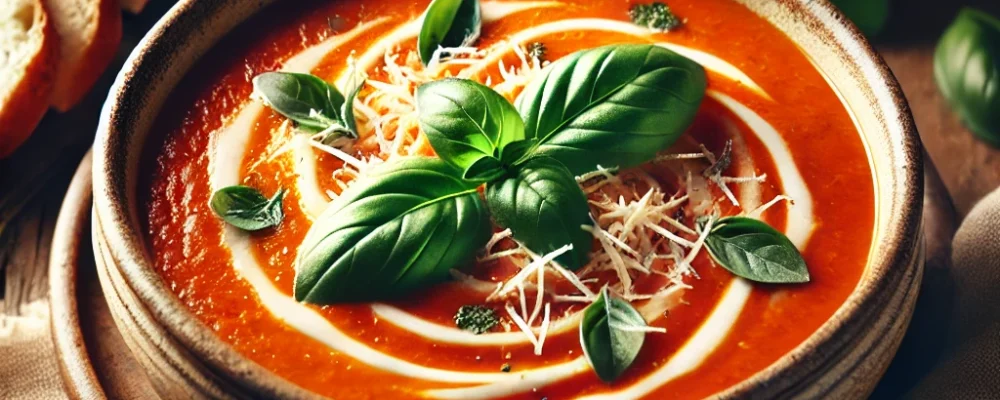
tomatobasilparmesansoup

Tomato Basil Parmesan Soup

Healthy Fact of the Day

Tomato Basil Parmesan Soup is rich in lycopene, an antioxidant found in tomatoes that supports heart health and may reduce cancer risk. Using chicken broth adds protein, while fresh basil contributes vitamins A and K. Swap heavy cream for Greek yogurt or coconut milk for a lighter version. Opt for low-sodium broth to control salt content. Pair with a whole-grain bread or salad for a balanced meal.

Ingredients

  • 2 tbsp olive oil
  • 1 medium onion, diced
  • 4 garlic cloves, minced
  • 2 (14.5 oz) cans diced tomatoes
  • 1 cup tomato sauce
  • 3 cups chicken or vegetable broth
  • 1/2 cup heavy cream
  • 1/4 cup grated Parmesan cheese (plus extra for garnish)
  • 2 tsp dried basil
  • 1 tsp dried oregano
  • 1/2 tsp red pepper flakes (optional, for heat)
  • 1 tsp sugar
  • Salt and pepper to taste
  • 1/4 cup chopped fresh basil (for garnish)

Instructions

  1. Heat olive oil in a large pot over medium heat.

  2. Add onion and garlic, sautéing until softened and fragrant (about 5 minutes).

  3. Stir in diced tomatoes, tomato sauce, and chicken or vegetable broth.

  4. Add dried basil, oregano, red pepper flakes (if using), sugar, salt, and pepper.

  5. Bring to a boil, then reduce heat and simmer for 15-20 minutes.

  6. Using an immersion blender, puree the soup until smooth, or transfer to a blender in batches and blend carefully.

  7. Stir in heavy cream and Parmesan cheese, allowing it to melt and combine.

  8. Simmer for another 5 minutes to thicken slightly.

  9. Serve hot, garnished with fresh basil and extra Parmesan cheese.

    Warm up with a bowl of creamy, comforting Tomato Basil Parmesan Soup! This hearty classic brings together the tangy sweetness of tomatoes, the fragrant allure of basil, and the indulgent touch of Parmesan. Whether you’re serving it with crusty bread or enjoying it solo, this soup is a cozy hug in a bowl that transforms simple ingredients into a soul-soothing masterpiece. Perfect for chilly days or when you need a burst of flavor to brighten your table!

Recent Recipes

The Trader Joe’s Frozen Appetizers Worth Building

  • May 9, 2026
  • 3 min read

Lemon Ricotta Pancakes

  • May 9, 2026
  • 11 min read

The Strange and Brilliant Science of Why

  • May 9, 2026
  • 8 min read

Mini Taco Cups

  • May 9, 2026
  • 8 min read

Sam’s Club Just Added a Chipotle-Style Chicken

  • May 8, 2026
  • 3 min read

How to Shop Like You Actually Know

  • May 8, 2026
  • 9 min read

Greek Chicken Casserole

  • May 8, 2026
  • 8 min read

Check Your Pantry and Freezer: Three More

  • May 7, 2026
  • 5 min read

Long Island Iced Coffee

  • May 7, 2026
  • 11 min read

What a Chef Learns in the First

  • May 7, 2026
  • 8 min read

Tip of the Day

“Always let your meat rest before slicing.”

Whether you're roasting a chicken, grilling steak, or baking pork tenderloin, letting cooked meat rest for 5–10 minutes before slicing allows the juices to redistribute evenly. This simple step keeps your meat juicy and tender, ensuring every bite is flavorful and moist. Bonus: It gives you a moment to plate your sides or garnish for a perfect presentation!

Our Latest Recipes

Blog
Daily Disher

The Trader Joe’s Frozen Appetizers Worth Building a Party Around

Frozen appetizers aren’t traditionally health food, but Trader Joe’s does offer some lighter options worth knowing about. The Vegetable Bird’s Nests and Cauliflower Bites are solid lower-calorie picks that still feel substantial on a spread. Rounding out the table with a fresh crudité platter or a store-bought hummus gives guests a lighter option and stretches your spread further without much extra effort.

Read More »
Breakfast
Aurora Wright

Lemon Ricotta Pancakes

Ricotta cheese provides high-quality protein and calcium while adding moisture that keeps these pancakes tender—making them more nutritious than standard pancakes without sacrificing any indulgence.

Read More »
Blog
Daily Disher

The Strange and Brilliant Science of Why Food Browns

While the Maillard reaction produces hundreds of desirable flavor compounds, it also produces small amounts of acrylamide — a compound that forms when starchy foods are cooked at high temperatures and that has been flagged in ongoing research for potential health considerations. Keeping browning controlled — achieving a deep golden color rather than a dark brown or black exterior on starchy foods like bread, potatoes, and cereals — significantly reduces acrylamide formation while preserving the flavor benefits of the reaction. The practical guidance is simple: golden, not dark.

Read More »

Get your daily dose of delicious!

Skip to content