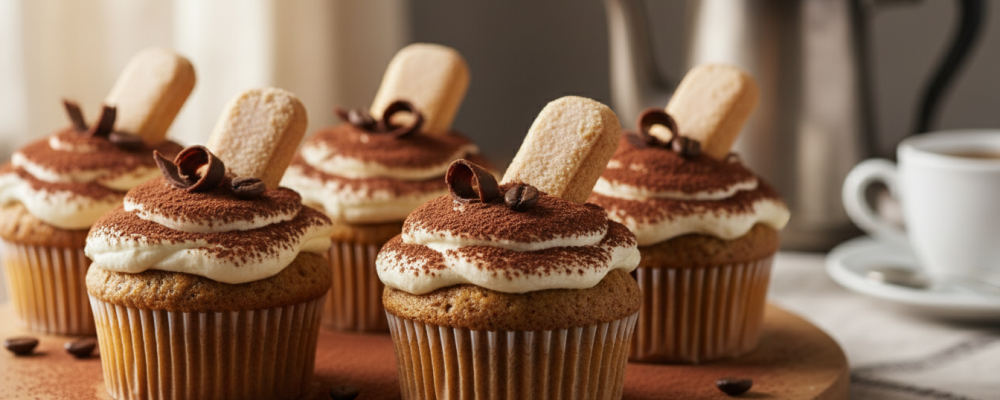

Tiramisu is one of those desserts that intimidates home bakers unnecessarily. The traditional version—with its ladyfingers, espresso soak, raw egg mascarpone cream, and delicate layering—feels like it requires pastry school training and steady hands. But here’s the secret: the flavors of tiramisu are what make it special, not the format. Tiramisu Cupcakes prove that you can capture everything magical about the Italian classic—coffee, cream, cocoa, mascarpone—in a format that’s infinitely more approachable and practical for everyday baking.
What I love most about these cupcakes from a technical standpoint is how they solve tiramisu’s biggest challenges. Traditional tiramisu requires raw or minimally cooked eggs in the mascarpone cream, which makes some people nervous. These cupcakes use stabilized whipped cream with mascarpone instead—equally delicious, completely safe, and actually easier to pipe for beautiful presentation. Traditional tiramisu can be messy to serve, with layers potentially sliding or the cream weeping. Individual cupcakes eliminate that problem entirely—each serving is self-contained and pristine.
The coffee-soaking technique is where these cupcakes really shine. By poking holes in the baked cupcakes and brushing them with strong coffee, you infuse that essential espresso flavor throughout without making them soggy or falling apart. The cupcakes absorb just enough coffee to taste authentic while maintaining their structure. Top that with mascarpone cream and a generous dusting of cocoa, and you have something that tastes unmistakably like tiramisu but in a form that’s easier to make, easier to serve, and easier to transport. It’s smart pastry work that honors tradition while embracing practicality.
─────────
The Inspiration Behind This Recipe
I developed these cupcakes after making traditional tiramisu for a dinner party and spending the entire dessert course answering questions about how to serve it properly—how much to scoop, whether to include all the layers, if the runny cream was intentional. I realized that while tiramisu is beloved for its flavors, the format creates serving challenges that detract from the enjoyment. Individual cupcakes solved that problem elegantly while maintaining flavor authenticity.
The challenge was figuring out how to get enough coffee flavor into a cupcake without making it soggy. Traditional tiramisu’s ladyfingers are designed to absorb liquid—they’re dry and porous, meant to soak up espresso. Cupcakes are more delicate and can become mushy if over-soaked. The solution came from poke cake techniques: using a fork to create channels in the cupcake, then brushing (not dunking) with coffee. This allows controlled absorption—enough to infuse flavor, not enough to compromise structure.
The mascarpone cream was inspired by my desire to create something that was both authentic to tiramisu and practical for home bakers. Traditional tiramisu cream uses raw egg yolks whipped with sugar, then folded with mascarpone and sometimes whipped cream. I wanted to eliminate the raw egg concern while maintaining that signature rich, creamy texture. By whipping heavy cream with powdered sugar until stable, then folding in mascarpone, I created a cream that’s safe, delicious, and pipe-able—perfect for topping cupcakes with professional-looking swirls.
─────────
A Brief History of Tiramisu & Coffee Desserts
Tiramisu, which translates to “pick me up” or “cheer me up” in Italian, is a relatively modern dessert despite feeling like a timeless classic. While its exact origins are disputed, most food historians agree it was created in the Veneto region of Italy, likely in Treviso, sometime in the 1960s or 1970s. The most widely accepted story credits restaurateur Ado Campeol and pastry chef Roberto Linguanotto at Le Beccherie restaurant with its invention in 1969.
The dessert consists of coffee-soaked savoiardi (ladyfinger cookies) layered with a cream made from mascarpone cheese, eggs, and sugar, topped with cocoa powder. The name references both the caffeine from coffee and espresso (which “picks you up”) and the rich, indulgent nature of the dessert (which “cheers you up”). Tiramisu gained international fame in the 1980s and exploded in popularity throughout the 1990s, becoming a staple on Italian restaurant menus worldwide.
Coffee-flavored desserts have a long tradition in European baking, particularly in Italy where coffee culture is deeply ingrained. From affogato (ice cream “drowned” in espresso) to coffee-flavored pastries and cakes, Italians have long understood that coffee’s bitter notes provide perfect contrast to sweet desserts. The combination of coffee and mascarpone specifically became iconic through tiramisu, inspiring countless variations.
Cupcakes, meanwhile, are thoroughly American, dating back to the 19th century when they were literally cakes baked in cups. The modern cupcake renaissance began in the early 2000s, with bakeries creating gourmet versions and home bakers experimenting with creative flavors. Combining Italian tiramisu flavors with American cupcake format represents the kind of creative fusion that defines contemporary baking—respecting tradition while embracing innovation.
─────────
Why This Recipe Works So Well
The cupcake base is intentionally simple. This is a basic vanilla butter cupcake—tender, moist, and slightly sweet. It’s purposely not chocolate or heavily flavored because it needs to be a neutral canvas for the coffee soak and mascarpone cream. The simple base also means the cupcakes have enough structure to absorb coffee without falling apart, unlike more delicate cake formulas that might become soggy.
The alternating method creates tender crumb. By adding the dry ingredients and milk alternately to the butter mixture (beginning and ending with dry), you minimize gluten development and create a fine, tender crumb. This technique also ensures even distribution of ingredients without overmixing, which would create tough, dense cupcakes.
Coffee-soaking requires controlled absorption. Poking holes with a fork creates channels that allow coffee to penetrate without saturating the entire cupcake. Brushing rather than soaking ensures you can control exactly how much liquid each cupcake receives. The coffee should be strong and cooled slightly—hot coffee can partially steam the cupcake and affect texture, while weak coffee won’t provide enough flavor.
Mascarpone cream uses whipped cream as stabilizer. By whipping heavy cream with powdered sugar first, then folding in mascarpone, you create a stable, pipe-able cream that holds its shape beautifully. The whipped cream provides structure and lightness, while mascarpone adds richness and that characteristic slightly tangy, creamy flavor. This method is more stable than traditional tiramisu cream and doesn’t require raw eggs.
Powdered sugar prevents graininess. Powdered sugar dissolves completely into the whipped cream, creating smooth texture without any sugar crystals. It also contains a small amount of cornstarch, which helps stabilize the whipped cream and prevents weeping.
Cocoa powder finishing is essential. The unsweetened cocoa powder dusted on top isn’t just decorative—it adds a bitter note that balances the sweet cream and provides that essential tiramisu appearance. Use high-quality cocoa for best flavor (Dutch-process creates the darkest, most dramatic look).
Chilling improves flavor and texture. While these cupcakes can be served immediately, refrigerating them for 1-2 hours allows the coffee flavor to fully permeate the cake and the mascarpone cream to firm up slightly. The cold temperature also makes them more refreshing and enhances the tiramisu experience.
─────────
Flavor Profile: What to Expect
Coffee flavor is prominent and authentic—you taste it immediately when you bite into the cupcake. The coffee-soaked cake delivers that essential espresso punch that defines tiramisu. It’s bold but not bitter, coffee-forward but balanced by sweetness. If you don’t like coffee, you won’t like these cupcakes—but if you love coffee, you’ll adore them.
Sweet, creamy mascarpone provides richness and that signature tiramisu taste. Mascarpone has a delicate flavor—slightly tangy like cream cheese but milder and sweeter, with an almost buttery quality. Combined with whipped cream, it becomes cloud-like and luxurious, providing cooling contrast to the coffee-soaked cake.
Vanilla cake base offers subtle sweetness and tender texture. The cake itself is purposely not competing for attention—it’s there to provide structure and a gentle sweet backdrop that allows the coffee and mascarpone to shine.
Bitter cocoa powder on top adds essential balance and that final tiramisu touch. The unsweetened cocoa provides a moment of bitterness that cuts through all the cream and sugar, preventing palate fatigue and making you want another bite.
The overall experience is sophisticated and balanced. These cupcakes taste unmistakably like tiramisu—the coffee-cream-cocoa trilogy is intact and authentic. They’re sweet but not cloying, rich but not heavy, complex but not complicated. Each element plays its role perfectly, creating something greater than the sum of its parts.
─────────
Tips for Making the Best Tiramisu Cupcakes
Baking Perfect Cupcakes:
- Room temperature ingredients are essential—butter, eggs, and milk should all be at room temperature for proper emulsification and even mixing.
- Cream butter thoroughly before adding eggs—beat for 2-3 minutes until light and fluffy.
- Don’t overfill the liners—two-thirds full is the sweet spot. Overfilled cupcakes dome too much and can overflow.
- Rotate the pan halfway through baking for even browning and rise.
- Test for doneness with a toothpick inserted in the center—it should come out clean or with just a few moist crumbs.
- Cool completely before adding coffee or frosting—warm cupcakes will absorb too much coffee and the mascarpone cream will melt.
Coffee-Soaking Technique:
- Brew strong coffee—you want concentrated flavor. Espresso is traditional and ideal, but strong brewed coffee works well too. Aim for about 1 cup of coffee for 12 cupcakes.
- Cool the coffee to lukewarm—hot coffee can partially cook the cupcake and affect texture.
- Poke holes strategically using a fork—make about 8-10 holes per cupcake, spacing them evenly and going about halfway down.
- Brush, don’t dunk—use a pastry brush to apply coffee to the top of each cupcake, allowing it to soak into the holes. Apply 2-3 brushfuls per cupcake.
- Optional: add liqueur—for adult versions, add 1-2 tablespoons of coffee liqueur, rum, or Marsala to the coffee for authentic tiramisu boozy element.
Mascarpone Cream Success:
- Use high-quality mascarpone—cheap mascarpone can be grainy or separated. Italian brands like BelGioioso are excellent.
- Mascarpone should be cold but not ice-cold—remove from refrigerator 10 minutes before using.
- Chill your bowl and beaters in the freezer for 10 minutes before whipping cream for better volume.
- Whip cream to stiff peaks before adding mascarpone—this ensures maximum stability.
- Fold mascarpone gently into the whipped cream—don’t beat it in or you’ll deflate the cream.
- Use immediately or refrigerate—the cream is most stable when freshly made, but it holds well refrigerated for several hours.
Piping and Finishing:
- Use a large star tip (like Wilton 1M) for classic bakery-style swirls, or a large round tip for simple domes.
- Fill your piping bag halfway—overfilling makes it hard to control and messy.
- Pipe generous swirls—don’t be stingy with the mascarpone cream. Tiramisu is about that rich cream layer.
- Dust cocoa generously—use a fine-mesh sieve to dust unsweetened cocoa powder over each cupcake. The cocoa should be visible and dramatic.
- Dust just before serving if possible—cocoa can absorb moisture and darken/clump if applied too far in advance.
Make-Ahead Tips:
- Bake cupcakes 1-2 days ahead and store airtight at room temperature until ready to soak and frost.
- Apply coffee soak several hours ahead—this actually improves flavor as the coffee fully permeates the cake.
- Pipe mascarpone cream up to 4 hours ahead and refrigerate—dust with cocoa just before serving.
─────────
Serving Suggestions and Presentation Ideas
Classic Italian Elegance: Arrange cupcakes on a white cake stand or tiered platter with generous cocoa powder dusting. Add coffee beans scattered around the base for visual interest and to signal the coffee flavor. Serve with espresso or cappuccino for the full Italian café experience.
Individual Plated Dessert: Place each cupcake on a small white dessert plate with a drizzle of chocolate or coffee sauce on the plate. Add a chocolate-covered espresso bean on top of each cupcake and a small mint sprig for color. This presentation elevates cupcakes to fine-dining status.
Casual Gathering: Display cupcakes in their paper liners on a simple platter for easy grab-and-go serving. The liners make them portable and prevent messy fingers. Provide cocktail napkins for casual service at parties, showers, or office gatherings.
Gift Presentation: Package individual cupcakes in clear cupcake boxes tied with ribbon for gifts or party favors. The cocoa-dusted tops look beautiful through clear packaging. These make impressive hostess gifts or thank-you treats.
Coffee Bar Pairing: Set up a coffee station alongside the cupcakes with espresso, coffee drinks, and flavor syrups. Encourage guests to enjoy a cupcake with their beverage of choice. This interactive setup works beautifully for brunch, afternoon gatherings, or coffee-themed events.
Special Occasion Upgrade: For weddings or formal events, place each cupcake in a gold or silver foil liner and arrange on elegant tiered stands. Add gold leaf or chocolate shavings on top of the cocoa for extra glamour. Create place cards with each guest’s name on a toothpick inserted in their cupcake.
─────────
Storage, Reheating, and Make-Ahead Tips
Storage:
- Refrigerator: Store in an airtight container in the refrigerator for up to 3 days. The mascarpone cream requires refrigeration.
- Freezer: Freeze unfrosted cupcakes for up to 2 months wrapped tightly. Thaw at room temperature, then soak with coffee and frost before serving. Do not freeze frosted cupcakes—the cream doesn’t freeze well.
- Important: These cupcakes must be refrigerated once frosted due to the dairy-based mascarpone cream.
Make-Ahead Strategy: These cupcakes are excellent for advance preparation:
- Bake cupcakes 1-2 days ahead and store covered at room temperature
- Apply coffee soak the day before serving—the flavor actually improves as it sits
- Make mascarpone cream and frost 4-8 hours before serving—refrigerate until needed
- Dust with cocoa just before serving for the freshest appearance
This timeline allows you to spread the work over multiple days with minimal last-minute effort.
Serving Temperature: These cupcakes are best served cold or at cool room temperature—the chilled temperature enhances the refreshing quality and keeps the mascarpone cream stable. Remove from refrigerator 15-30 minutes before serving if you prefer them less cold, but don’t let them sit out too long or the cream will soften.
Flavor Development: The flavor improves significantly after the coffee soak sits for a few hours. The coffee fully penetrates the cake and the flavors meld beautifully. Make these in the morning for an evening event, or the night before for the next day—the extra time only makes them better.
Cocoa Dusting: If dusted too far in advance, cocoa powder can:
- Absorb moisture from the cream and become darker/clumpy
- Lose its fresh appearance and look dull
For best results, dust with cocoa 1-2 hours before serving (or right before if possible). If transporting, bring cocoa and a sieve to dust on-site.
─────────
Why This Recipe Deserves a Spot in Your Rotation
Tiramisu Cupcakes represent the perfect marriage of Italian sophistication and American practicality. They take one of the world’s most beloved desserts and make it accessible, portable, and foolproof while maintaining complete flavor authenticity. This is smart pastry work that respects tradition while acknowledging that sometimes format matters as much as flavor.
What makes these cupcakes genuinely special is how they solve real problems. Traditional tiramisu requires serving dishes, spoons, potential mess, and careful portion control. These cupcakes eliminate all of that—each serving is perfectly portioned, self-contained, and gorgeous. You can make them ahead, transport them easily, and serve them without any last-minute plating stress. For anyone who entertains regularly or brings desserts to gatherings, this kind of practical elegance is invaluable.
The flavor profile has sophisticated appeal that works for adults without being too intense for younger palates (though kids who don’t like coffee won’t enjoy them). Coffee lovers absolutely rave about these cupcakes because the flavor is bold and authentic. They’re the kind of dessert you serve at dinner parties when you want to impress, at showers when you want something elegant, or at coffee-themed events when you want perfect thematic fit.
From a technical perspective, these cupcakes teach valuable skills: proper cupcake baking, controlled liquid absorption techniques, stabilized whipped cream preparation, and professional piping. Every time you make them, you’re reinforcing fundamental pastry skills that translate to countless other recipes.
The make-ahead nature is a genuine advantage. Unlike many frosted cupcakes that decline in quality after a day, these actually improve as the coffee soak fully penetrates and the flavors meld. You can prepare them completely one or two days before your event, which means less stress and more time to focus on other aspects of your meal or gathering.
If you’re looking for a cupcake that’s more sophisticated than birthday cake but just as crowd-pleasing, that captures authentic Italian flavors in American format, that’s practical enough for weeknight baking but elegant enough for special occasions—this is it. Tiramisu Cupcakes prove that the best recipes are often the ones that honor tradition while embracing innovation, creating something that’s both familiar and excitingly new.
─────────
Recommended Drink Pairing
Espresso or Cappuccino: The obvious and perfect pairing—serve each cupcake with a shot of espresso or a frothy cappuccino for the full Italian café experience. The coffee-on-coffee situation amplifies the flavors and creates a cohesive tasting experience. This is how tiramisu was meant to be enjoyed.
Coffee Liqueur – Kahlúa or Baileys: For adults, Kahlúa on the rocks or Baileys Irish Cream with ice creates a decadent pairing that enhances the coffee flavors while adding boozy warmth. Espresso martinis work beautifully too—they’re essentially liquid tiramisu in cocktail form.
Vin Santo or Sweet Marsala: For an authentic Italian pairing, serve with Vin Santo (Tuscan dessert wine) or sweet Marsala—both are traditional tiramisu ingredients and complement the dessert beautifully. The wine’s nutty, caramel notes harmonize with the mascarpone cream while the sweetness balances the coffee’s bitterness.
Hot Chocolate: Rich Italian-style hot chocolate (thick and almost pudding-like) provides warming contrast to the cold cupcakes while adding another layer of indulgence. The chocolate echoes the cocoa powder topping and creates a luxurious, cozy pairing perfect for cooler weather.
Sparkling Water – Plain or Lemon: For a non-alcoholic option that cleanses the palate, sparkling water provides refreshing effervescence that cuts through the richness. Lemon sparkling water adds brightness that complements the creamy dessert. This pairing keeps the focus on the cupcakes while providing palate-cleansing refreshment between bites.
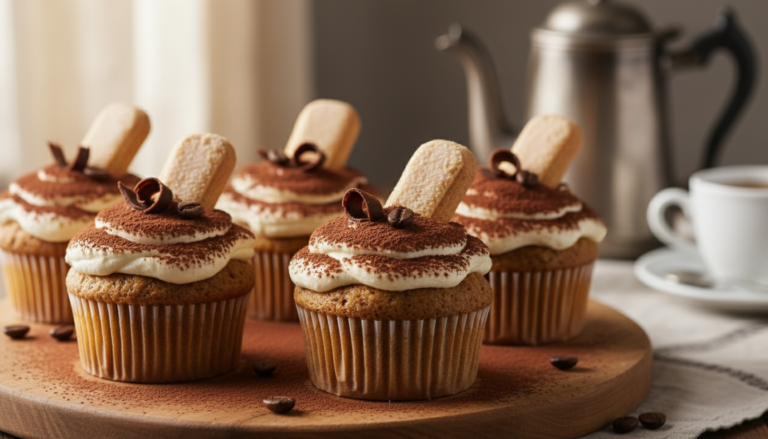
Tiramisu Cupcakes
Tiramisu Cupcakes capture the beloved flavors of the iconic Italian dessert in individual, portable form—tender vanilla cupcakes soaked with espresso, topped with silky mascarpone cream, and dusted with cocoa for an elegant treat that’s easier to serve than traditional tiramisu.
12
servings30
minutes20
minutes295
kcal50
minutesIngredients
1.5 cups all-purpose flour
1 cup granulated sugar
1.5 teaspoons baking powder
0.5 teaspoon baking soda
0.5 teaspoon salt
0.5 cup unsalted butter
2 large eggs
1 teaspoon vanilla extract
0.75 cup whole milk
0.5 cup brewed coffee
0.25 cup mascarpone cheese
0.25 cup heavy cream
0.25 cup powdered sugar
1 tablespoon unsweetened cocoa powder
Directions
- Preheat oven to 350°F (175°C) and line a muffin tin with cupcake liners.
- Whisk together flour, sugar, baking powder, baking soda, and salt in a bowl.
- In another bowl, beat butter until creamy. Add eggs and vanilla, mix well.
- Alternately add dry ingredients and milk to the butter mixture, beginning and ending with dry ingredients.
- Fill cupcake liners two-thirds full and bake for 18-20 minutes. Let cool completely.
- Brew coffee and allow to cool slightly. Use a fork to prick holes in each cupcake, then brush with coffee.
- Beat mascarpone, heavy cream, and powdered sugar until smooth. Pipe onto cooled cupcakes.
- Dust with cocoa powder before serving.
Nutrition Facts
- Total number of serves: 4
- Calories: 295kcal
- Cholesterol: 0mg
- Sodium: 620mg
- Potassium: 400mg
- Sugar: 8g
- Protein: 6g
- Calcium: 60mg
- Iron: 2mg
About This Author

Aurora Wright
Pastry Chef & Dessert Editor
Aurora is the sweet side of Daily Dish. A trained pastry chef and dessert stylist, she’s responsible for our mouth-watering cakes, cookies, and confections. She brings precision, artistry, and a touch of whimsy to every recipe she creates — and taste-tests more chocolate than she’ll admit.
Favorite dish: Flourless dark chocolate torte.
Kitchen motto: “Life’s too short to skip dessert.”