
You follow a sauce recipe exactly.
The right ingredients. The correct proportions. You simmer it for the suggested time.
Then you taste it and something’s missing.
It’s not bad. It’s just flat. One-dimensional. It doesn’t have the depth or complexity you were expecting.
Meanwhile, restaurant sauces taste layered. Rich. Like multiple things are happening at once.
The difference isn’t complicated ingredients or secret techniques. It’s a fundamental approach to building flavor that most home cooks never learn.
They Build Flavor in Layers
Most people make sauce by combining all the ingredients and heating them together.
Chefs build sauces in stages, adding ingredients at specific times for specific reasons.
Aromatics get cooked in fat first until they’re soft and fragrant. Tomato paste gets added and cooked until it darkens. Wine goes in and reduces. Stock gets added gradually, not all at once.
Each ingredient gets its moment. Each step develops flavor that wouldn’t exist if everything just went in together.
This layering creates complexity. Instead of tasting like the sum of ingredients, the sauce tastes like something new—something more than its parts.
Deglazing Captures Concentrated Flavor
After sautéing vegetables or searing meat, you’re left with browned bits stuck to the pan.
Most home cooks see this as a mess to clean up.
Chefs see it as liquid gold.
Those browned bits—called fond—are pure concentrated flavor. They’re the result of proteins and sugars caramelizing against the hot surface.
Adding liquid and scraping up that fond transforms a decent sauce into an exceptional one. All that flavor dissolves into the sauce instead of being washed down the drain.
Wine, stock, even water works for deglazing. The liquid doesn’t matter as much as the act of capturing what’s stuck to the pan.
Reduction Concentrates Everything
Thin, watery sauce tastes weak no matter what’s in it.
Chefs reduce sauces—simmering them until liquid evaporates and flavors concentrate.
This isn’t just about thickness. As water evaporates, the ratio of flavorful compounds to liquid increases. Everything tastes more intense. More itself.
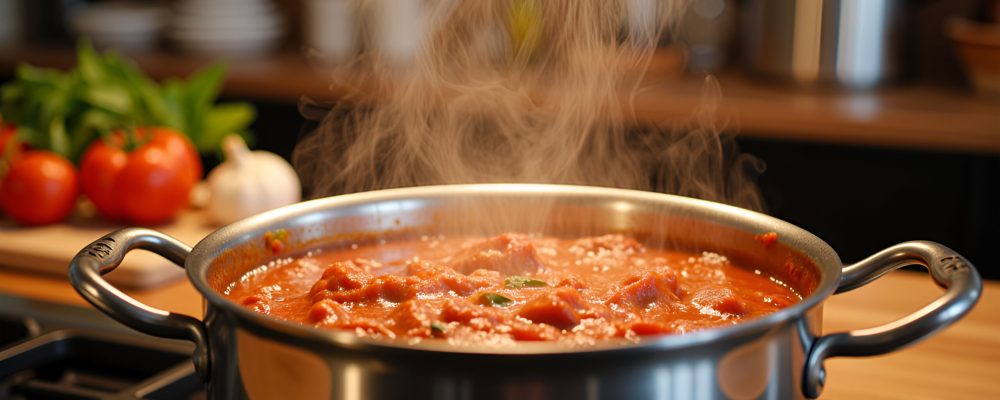
A tomato sauce that simmers for ten minutes tastes like tomatoes and water. The same sauce simmered for forty minutes tastes like pure tomato essence.
Patience during reduction is what separates bold, flavorful sauces from bland, watery ones.
Home cooks often stop reducing too early because they’re worried about burning it or they’re in a hurry. But that’s where the flavor lives.
They Finish With Fat
A sauce might taste good after cooking. But restaurant sauces have a richness and glossy appearance that homemade versions often lack.
That’s because chefs finish sauces with fat at the very end.
A pat of cold butter whisked in right before serving. A drizzle of good olive oil. Sometimes cream, but more often just butter.
Fat emulsifies with the sauce, creating a silky texture. It carries flavor and coats your palate. It makes the sauce feel luxurious instead of just wet.
This step happens off the heat, right before serving. It’s the final touch that transforms a good sauce into a great one.
Seasoning Happens Throughout
Most people add salt at the beginning or the end.
Chefs season at multiple stages as the sauce develops.
Salt the aromatics while they cook. Taste and adjust after adding liquid. Season again after reduction. Final adjustment right before serving.
Each addition serves a different purpose. Early salt helps ingredients release moisture and develop flavor. Later salt adjusts the overall balance as flavors concentrate.
One addition of salt can’t replicate what happens when you season thoughtfully throughout the process.
Acid Is Almost Always Missing
When sauce tastes dull or heavy, the problem is usually a lack of acid.
A squeeze of lemon. A splash of vinegar. A spoonful of wine reduced earlier in the process.
Acid brightens flavors. It cuts through richness. It makes everything more vivid and defined.
Most home cooks don’t think to add acid to savory sauces. They associate acid with salad dressing or finishing dishes, not with sauce construction.
But chefs add acid almost automatically. They know a sauce that tastes flat often just needs brightness, not more salt or more ingredients.
Temperature Matters for Emulsification
Some sauces—like butter-based pan sauces or vinaigrettes—depend on emulsification to stay smooth and cohesive.
Too hot and the emulsion breaks. The fat separates. The sauce looks greasy and broken instead of creamy.
Chefs control temperature carefully when adding fat. They often pull the pan off the heat entirely, whisk in butter, then gently warm it again if needed.
Home cooks often try to incorporate butter over high heat. It melts too fast, doesn’t emulsify, and the sauce never comes together properly.
The fix is simple: lower heat, or no heat at all, when adding finishing fats.
Stock Quality Determines Sauce Quality
A sauce is only as good as the liquid it’s built on.
Watery, under-seasoned stock produces watery, under-seasoned sauce. No amount of reduction or technique can fix a weak foundation.
Restaurants either make their own stock or buy high-quality bases. They taste their stock before using it and adjust seasoning accordingly.
Home cooks often grab whatever’s on sale or what’s been sitting in the pantry for months. Then they wonder why the sauce doesn’t taste rich.
If your sauce consistently tastes weak, the problem might not be your technique—it might be your stock.
They Strain for Smoothness
Chunky sauces have their place. But when smoothness is the goal, chefs strain.
Passing sauce through a fine-mesh strainer removes bits of aromatics, seeds, skins—anything that interrupts the silky texture.
This is especially important for pan sauces and reductions where you’ve built flavor with vegetables that you don’t necessarily want in the final product.
Home cooks often skip this because it seems fussy or creates an extra dish to clean.
But the texture difference is significant. Strained sauce feels refined. Unstrained sauce, even if it tastes good, can feel unfinished.
Thickening Happens in Multiple Ways
Not all sauces need a roux or cornstarch slurry.
Some sauces thicken through reduction—simmering until the liquid evaporates and natural starches and gelatin concentrate.
Some use the starch from pasta water to create body without adding thickeners.
Some rely on pureed vegetables—onions, tomatoes, peppers—that break down into the sauce and give it body.
Chefs choose their thickening method based on what they want the final texture to be. They don’t default to cornstarch just because the sauce looks thin.
Understanding your options gives you more control over the final result.
Fresh Herbs Go In Late
Dried herbs can simmer for an hour. Fresh herbs can’t.
Most delicate fresh herbs—parsley, basil, cilantro, dill—lose their brightness when cooked too long. They turn muddy and dull.
Chefs add fresh herbs near the end of cooking, sometimes just before serving. This preserves their fresh, vibrant flavor.
Home cooks often add fresh herbs early, treating them like dried herbs. By the time the sauce is done, the herbs have cooked to death and contribute almost nothing.
Timing matters. Add delicate herbs too early and you waste them.
Balance Is More Important Than Boldness
A sauce doesn’t need to punch you in the face with flavor to be good.
Sometimes restraint is what makes a sauce work.
Chefs taste constantly and adjust for balance. Is it too acidic? Add a pinch of sugar or more fat. Too rich? Add acid. Too salty? Add liquid or a starch to dilute.
The goal isn’t maximum intensity. It’s harmony. Every element should support the others without overwhelming them.
Home cooks often try to make sauces as bold as possible, adding more and more until it tastes aggressive instead of balanced.
What You Can Do Next Time
Start with aromatics in fat. Cook them until soft.
If there’s tomato paste, add it now and cook until it darkens.
Deglaze with wine or stock. Scrape up anything stuck to the pan.
Add your liquid gradually. Let it reduce by at least a third.
Taste and adjust seasoning. Add a squeeze of lemon or splash of vinegar if it tastes flat.
Finish with a pat of butter off the heat.
That process—in that order—will transform how your sauces taste.
The Takeaway
Flat-tasting sauce isn’t a failure of ingredients. It’s a failure of process.
Building flavor in stages. Deglazing. Reducing. Finishing with fat. Adding acid. Seasoning throughout.
These steps create depth and complexity that you can’t achieve by dumping everything together and hoping for the best.
Restaurants follow this process for every sauce they make. It’s not optional or advanced. It’s foundational.
And once you start building sauces this way—layer by layer, tasting and adjusting—you’ll never go back to the old method.
Because the difference isn’t subtle.
It’s the difference between sauce that’s just okay and sauce that makes the entire dish.