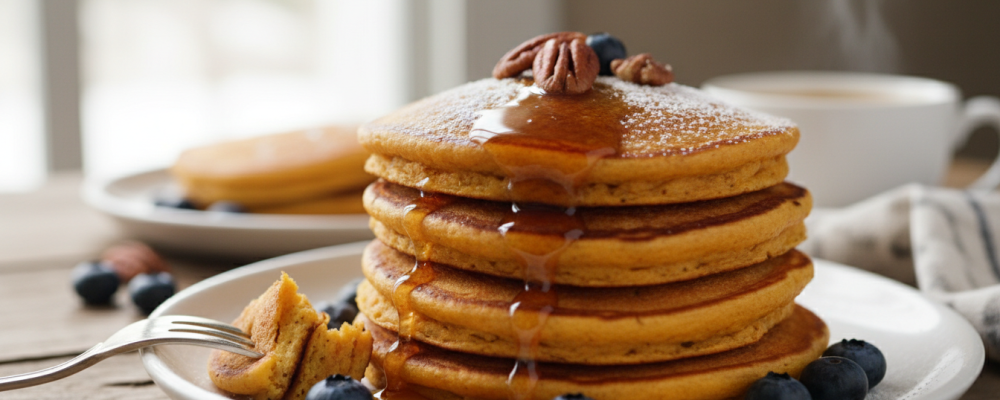

There’s something about pancakes that just feels like love, isn’t there? Maybe it’s because they’re what people make on lazy Saturday mornings when there’s time to stand at the stove and flip each one with care. Maybe it’s the smell of butter and cinnamon that fills the kitchen, or the way they arrive at the table in a stack, warm and golden and promising. Whatever it is, pancakes carry an emotional weight that goes beyond nutrition or convenience—they represent comfort, care, and the kind of morning where you actually have time to enjoy breakfast instead of just surviving it.
These sweet potato pancakes bring that weekend pancake magic into your weekday reality through the simple miracle of freezer meal prep. I know what you’re thinking—frozen pancakes sound sad, like something you’d buy in a box and tolerate rather than enjoy. But here’s what I’ve learned: properly made, properly frozen pancakes are revelatory. They reheat in two minutes and taste so close to freshly made that you’ll find yourself making excuses to eat breakfast at home instead of grabbing something on the way out the door.
What makes these particular pancakes special is the sweet potato element, which contributes far more than just flavor. The sweet potato’s natural moisture keeps these pancakes tender even after freezing and reheating—they never get that dry, cardboard texture that plagues lesser pancake recipes. The subtle sweetness means you need less added sugar, and that gorgeous golden-orange color makes every breakfast feel a little more special, a little more intentional. They’re beautiful on the plate, satisfying in your stomach, and secretly packed with vitamin A and fiber that your body will thank you for.
I started making these during a particularly chaotic period when weekday mornings felt like survival mode but I was desperate for something that felt like actual breakfast rather than just fuel. The first time I pulled a stack from the freezer, reheated them, and sat down to eat pancakes on a Tuesday morning, it genuinely changed my entire day. Something about starting with warm, comforting food instead of cold yogurt or a protein bar on the run shifted my whole mindset. These pancakes became my way of taking care of future-me, of ensuring that even on the hardest mornings, I had something waiting that felt like a hug.
─────────
The Inspiration Behind This Recipe
This recipe was born from a simple question: why do we accept that weekday breakfast has to be fundamentally different from weekend breakfast? Why does “meal prep breakfast” automatically mean cold overnight oats or reheated eggs, when what many of us actually crave is something warm and comforting that tastes like someone took time to make it? I wanted to bridge that gap—to create pancakes that could be made in advance without sacrificing the texture and satisfaction that makes pancakes worth eating in the first place.
The sweet potato component came from experimenting with ways to add both nutrition and moisture to pancakes that would be frozen and reheated. Plain flour-based pancakes can become dry and tough after freezing because there’s nothing protecting them from moisture loss. Sweet potato purée changes the equation entirely—the vegetable’s natural starches and moisture create a buffer against freezer damage, while adding nutritional density that transforms these from simple carbs into something that actually sustains you until lunch.
I tested countless variations before landing on this ratio. Too much sweet potato and the pancakes became dense and gummy, losing that essential fluffiness. Too little and they were just regular pancakes with a faint orange tint. This balance creates pancakes that are distinctly sweet potato in flavor and color but maintain the light, airy texture you want from a really good pancake. The cinnamon and vanilla aren’t just flavor additions—they enhance the sweet potato’s natural sweetness and create that warm, cozy aroma that makes breakfast feel like an occasion rather than just another meal to check off the list.
─────────
A Brief History of Pancakes and Sweet Potato in American Cooking
Pancakes represent one of humanity’s oldest prepared foods, with evidence of flatcakes cooked on hot stones dating back thousands of years across multiple cultures. American-style fluffy pancakes—leavened with baking powder rather than yeast—emerged in the 19th century when chemical leavening agents became commercially available. These lighter, taller pancakes became a breakfast staple, associated with weekend mornings, diners, and the kind of comfort food that crosses all regional and cultural boundaries.
Sweet potatoes have been cultivated in the Americas for thousands of years, serving as a dietary staple long before European contact. In American cooking, sweet potatoes have traditionally occupied the space between vegetable and dessert—they appear in savory dishes and holiday casseroles but also in pies and sweet preparations. The modern trend of incorporating sweet potatoes into traditionally sweet breakfast foods reflects growing interest in “hidden vegetables” and nutritional density—finding ways to increase the nutritional value of beloved foods without sacrificing the pleasure they bring.
What makes sweet potato pancakes particularly suited to contemporary meal prep culture is how they bridge multiple desires simultaneously: they deliver comfort and satisfaction while providing genuine nutrition, they freeze beautifully while maintaining quality, and they feel special enough to make breakfast something you look forward to rather than simply endure. The combination represents the evolution of meal prep from merely functional to genuinely enjoyable—food that supports your goals without requiring you to give up the eating experiences that bring joy.
─────────
Why This Cooking Method Works for Meal Prep
The success of these pancakes for freezing and reheating hinges on understanding how pancake structure forms and what happens during the freeze-thaw cycle. When you mix pancake batter and cook it, several transformations occur: the flour’s starch granules absorb liquid and swell, the egg proteins coagulate to create structure, and the baking powder’s leavening creates air pockets that make pancakes fluffy. This network of gelatinized starch, set proteins, and trapped air creates the tender-but-structured texture we recognize as a good pancake.
Freezing poses specific challenges to this structure. Ice crystal formation can rupture cell walls and protein networks, causing moisture loss and textural changes when thawed. Many pancakes emerge from the freezer dry and tough because the freezing process damaged their internal structure. Sweet potato purée provides protection through multiple mechanisms: its high moisture content and dense starch matrix distribute water more evenly throughout the batter, preventing large ice crystal formation. The vegetable’s fiber creates a protective network that maintains structure during freezing. The natural sugars in sweet potato lower the freezing point slightly, creating smaller ice crystals that cause less structural damage.
The cooking method—medium heat, allowing bubbles to form before flipping—ensures pancakes cook through evenly without burning. Undercooked pancakes have gummy interiors that worsen with freezing. Overcooked pancakes are already dry before freezing, becoming cardboard-like after thawing. The golden-brown surface that develops at proper cooking temperature indicates Maillard reaction products that contribute flavor complexity and also create a slight exterior crust that helps retain interior moisture during storage.
The cooling process before freezing matters tremendously. Stacking hot pancakes creates steam that makes them soggy. Allowing complete cooling on wire racks (which permit air circulation on both sides) prevents condensation accumulation. Once cooled, the pancakes’ structure has fully set—proteins have finished bonding, starches have completed gelatinization, and moisture has distributed evenly. Freezing from this stable state preserves quality far better than freezing pancakes that are still undergoing internal changes.
─────────
Flavor Profile: What to Expect
These sweet potato pancakes deliver warmth and comfort with sophisticated, naturally sweet flavors:
- Subtly sweet and earthy from mashed sweet potatoes that provide natural sweetness without being cloying
- Warm and cozy from ground cinnamon that creates that signature breakfast spice note
- Rich and comforting from butter that adds richness and creates those golden-brown edges
- Aromatic and rounded from vanilla extract that enhances the sweet potato’s sweetness
- Fluffy and tender from proper batter consistency and baking powder leavening
- Slightly caramelized from butter-crisped exteriors that develop during pan-cooking
The overall experience is distinctly pancake—fluffy, satisfying, craveable—but with the added dimension of sweet potato that makes them feel more substantial and nourishing than plain pancakes. The sweet potato flavor is present but not overwhelming, reading more as “particularly good pancakes” rather than “vegetable disguised as breakfast.” The cinnamon ties everything together, creating that breakfast-spice warmth that makes you want to linger at the table rather than eating standing at the counter.
After freezing and reheating, these pancakes maintain remarkable flavor integrity. The sweet potato’s starches and natural sugars actually protect flavor compounds during freezing, preventing the staleness that often develops in frozen baked goods. The cinnamon and vanilla notes remain pronounced, and the butter flavor stays rich rather than fading. Week-four pancakes taste nearly identical to freshly made ones—a rare achievement in frozen breakfast foods that speaks to the protective properties of the sweet potato base.
─────────
Tips for Making the Best Sweet Potato Pancakes
Small refinements create significantly better results and longer freezer life:
- Use smooth sweet potato purée: Mash thoroughly or blend until completely smooth. Lumps create dense spots in pancakes and uneven texture. Canned sweet potato purée works excellently if you want to skip the roasting step.
- Don’t overmix the batter: Stir just until dry ingredients are incorporated. Overmixing develops gluten in flour, creating tough, chewy pancakes instead of tender ones. A few small lumps in the batter are fine and will cook out.
- Let batter rest 5 minutes: This allows flour to fully hydrate and baking powder to begin its leavening work. Rested batter produces taller, fluffier pancakes.
- Use medium heat, not high: High heat burns exteriors before interiors cook through. Medium heat (about 325°F if using an electric griddle) cooks evenly, creating golden-brown surfaces and fully cooked centers.
- Wait for bubbles before flipping: When surface bubbles form and edges look set (about 2-3 minutes), flip once. Flipping too early creates uneven pancakes; flipping multiple times makes them tough.
- Make uniform sizes: Use a 1/4-cup measuring cup to portion batter consistently. Uniform sizes ensure even cooking and make stacking/storing easier.
- Cool completely on wire racks: Stack pancakes on cooling racks with space between layers for air circulation. This prevents steam accumulation that would make them soggy.
- Freeze individually before stacking: Place cooled pancakes on a baking sheet in a single layer, freeze for 1 hour until solid, then stack and bag. This prevents them from freezing together in a solid block.
- Use quality freezer storage: Place parchment paper between every 2-3 pancakes before storing in freezer bags. Remove as much air as possible to prevent freezer burn.
- Label with date: Even though these last well, knowing when you made them helps you rotate stock and use older batches first.
The most important factors are sweet potato smoothness (prevents lumps), proper cooking temperature (ensures even doneness), and complete cooling before freezing (prevents sogginess). These three elements determine whether your pancakes are genuinely excellent or merely adequate.
─────────
Portioning and Container Suggestions
This recipe yields approximately 12-16 pancakes depending on size (using 1/4 cup batter creates standard 4-inch pancakes). This quantity divides conveniently into 6-8 breakfast servings of 2 pancakes each, or 12-16 single-pancake snacks for kids or lighter appetites. Two pancakes provide approximately 8-10 grams of protein along with significant fiber and complex carbohydrates—enough to satisfy most people until mid-morning without feeling overly full.
For freezer storage, I recommend the parchment-and-bag method: place a small square of parchment paper between every 2-3 pancakes (creating small stacks), then place all stacks in a large freezer-safe zip-top bag. Remove as much air as possible before sealing—this prevents freezer burn and allows you to remove just the number of pancakes you need without thawing the entire batch. Gallon-size freezer bags accommodate a full batch comfortably.
For families or those who want maximum convenience, consider pre-portioning into individual breakfast servings. Place 2 pancakes with parchment between them in small sandwich-size bags, then place all individual portions in a large freezer bag. This creates grab-and-go portions—just pull one bag, reheat, and eat without counting or portioning in the morning.
If you’re making these regularly and want to maintain a rotating stock, consider dedicating specific freezer space to pancake storage. A shallow bin or designated freezer shelf section keeps pancakes organized and visible, preventing them from getting lost behind other items. Label each batch with the date so you use older pancakes first, though honestly these maintain quality so well that even month-old pancakes taste excellent.
─────────
Storage, Reheating, and Shelf Life Tips
- Refrigerator storage: Store unfrozen pancakes in airtight containers for 3-4 days. Stack with parchment paper between layers to prevent sticking.
- Freezer storage: Freeze for up to 1 month with excellent quality retention, or up to 3 months with minimal quality loss. Proper wrapping (parchment between layers, airtight freezer bags) is essential for preventing freezer burn.
- Prevent freezer burn: Remove as much air as possible from storage bags, and use heavy-duty freezer bags rather than regular storage bags. Double-bagging provides extra protection for extended storage.
- Reheating from frozen – microwave: Place 2 pancakes on a microwave-safe plate, cover with a damp paper towel, and microwave for 45-60 seconds until heated through. The damp towel creates steam that prevents drying.
- Reheating from frozen – toaster: Use the lowest setting and toast twice if needed. This creates crispier edges than microwaving, which some people prefer. Watch carefully to prevent burning.
- Reheating from frozen – oven: Place pancakes on a baking sheet at 350°F for 8-10 minutes. This method works best for reheating multiple servings simultaneously and creates the most “freshly made” texture.
- Reheating from frozen – skillet: Heat a lightly buttered skillet over medium-low heat, add frozen pancakes, cover, and cook for 2-3 minutes per side. This method recreates the fresh-cooked experience most closely but requires more time.
- No thawing necessary: All reheating methods work directly from frozen. Thawing creates excess moisture that can make pancakes soggy.
- Serving suggestions: Top with butter, maple syrup, fresh fruit, Greek yogurt, nut butter, or a dusting of powdered sugar. The sweet potato provides enough flavor that they’re also delicious eaten plain.
- Portable breakfast: These reheat well in office microwaves, making them excellent for eating at your desk. Pack with a small container of maple syrup or nut butter for a complete breakfast.
- Quality indicators: Properly stored pancakes maintain their golden color and don’t show ice crystals or freezer burn. If pancakes develop an off odor or show signs of freezer burn (dry, discolored patches), quality may be compromised though they’re still safe to eat.
─────────
Why This Recipe Deserves a Spot in Your Meal Prep Rotation
These sweet potato pancakes have fundamentally changed how I think about breakfast meal prep because they proved that warm, comforting, weekend-style breakfast doesn’t have to be reserved for actual weekends. There’s real psychological value in starting your Tuesday or Wednesday with pancakes—food that feels special and indulgent despite being genuinely nutritious and meticulously prepared in advance. When breakfast feels like a treat rather than just fuel, it changes your relationship with morning, making you more likely to actually eat breakfast instead of skipping it or grabbing something less nourishing because you lack better options.
The time efficiency is remarkable when you think beyond a single breakfast. Yes, making pancakes takes 30-40 minutes including cooking time—that’s not quick by meal prep standards. But that 40 minutes generates 12-16 pancakes, enough for 6-8 complete breakfasts. Amortized across those servings, you’re investing just 5 minutes per breakfast. And because they freeze for a month, you can make double or triple batches in a single session, creating 20-30 breakfasts from one hour of work. That’s 2-3 minutes per breakfast when you batch properly—less time than it takes to stop at a drive-through, and the result is infinitely better.
From a nutritional perspective, these pancakes deliver far more than typical pancake preparations. The sweet potato contributes significant vitamin A (more than 100% of your daily need in two pancakes), fiber for digestive health, complex carbohydrates for sustained energy, and potassium for blood pressure regulation. The whole wheat flour option (you can substitute half the all-purpose flour) adds additional fiber and B vitamins. The egg provides complete protein. You’re not just eating pancakes—you’re eating nutrient-dense food that happens to be shaped like pancakes and taste like weekend breakfast.
But what I value most is how these pancakes remove the false choice between convenience and quality, between healthy and satisfying, between meal prep and food that brings joy. For too long, meal prep has been positioned as something you endure for results—the bland chicken and vegetables, the sad salads, the protein shakes you force down. These pancakes prove that you can meal prep food that genuinely excites you, that makes you happy to sit down and eat, that supports your health goals while also supporting your need for breakfast to feel like more than just an obligation. When meal prep includes things you actually look forward to eating, it stops being discipline and becomes something closer to self-care.
─────────
Meal Prep Pairing Suggestions
While these sweet potato pancakes work beautifully as standalone breakfast, pairing them with complementary meal prep recipes creates a comprehensive morning strategy that prevents breakfast boredom. Alternate between these warm, sweet pancakes and the Egg & Veggie Muffin Cups or Breakfast Burritos for a week of varied breakfast options—some mornings call for something sweet and comforting, other mornings something savory and protein-forward sounds more appealing. Having multiple options prepped means you can choose based on mood, hunger level, or simply what sounds good when you open the freezer.
For those who want lighter breakfast or need afternoon snacks, these pancakes pair excellently with Greek Yogurt Parfaits or Baked Oatmeal Cups. Keep the pancakes for substantial breakfast mornings, and use parfaits or oatmeal cups for days when you want something less filling or need portable breakfast you can eat while commuting. This variety ensures you always have appropriate options regardless of your schedule or appetite on any given day.
These pancakes also function wonderfully beyond traditional breakfast. They make excellent afternoon snacks for kids (or adults) needing something substantial between school and dinner. They work as pre-workout fuel when eaten 60-90 minutes before training—the complex carbohydrates provide sustained energy without digestive distress. Some people even use them as dessert, serving them warm with vanilla Greek yogurt and fresh berries for a sweet ending to dinner that feels indulgent but remains nutritious.
For a complete weekly meal prep strategy covering all eating occasions, combine these sweet potato pancakes (breakfast variety) with Greek Chicken Wraps or Mason Jar Salads (lunch), Sheet Pan Chicken with Vegetables (dinner), and Dark Chocolate Energy Bites or Turkey & Hummus Pinwheels (snacks). This comprehensive system means Sunday preparation covers every meal Monday through Friday—no decisions, no morning panic, no skipped breakfasts because you ran out of time. The pancakes anchor your mornings with something warm and satisfying that makes getting out of bed slightly easier, setting a positive tone that often carries through the rest of your day. When you start from a place of being nourished and satisfied rather than rushed and hungry, everything else just tends to go better.
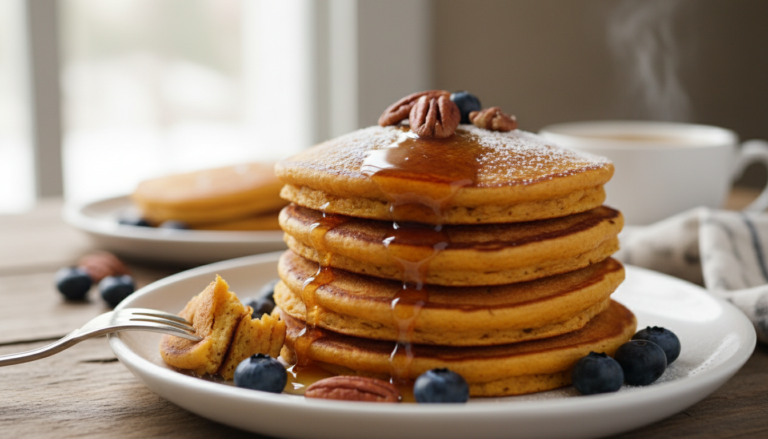
Sweet Potato Pancakes
This sweet potato pancakes recipe transforms nutritious sweet potatoes into fluffy, freezer-friendly breakfast that reheats in minutes for warm, comforting mornings all month long.
4
servings15
minutes15
minutes250
kcal30
minutesIngredients
1 cup mashed sweet potatoes
1 cup all-purpose flour
1 cup milk
1 large egg
1 tbsp sugar
1 tsp baking powder
0.5 tsp salt
0.5 tsp ground cinnamon
1 tbsp butter
1 tsp vanilla extract
– – butter or oil for cooking
Directions
- In a bowl, mix mashed sweet potatoes, milk, egg, sugar, and vanilla extract until well blended.
- In another bowl, combine flour, baking powder, salt, and cinnamon.
- Gradually add the dry ingredients to the wet ingredients, stirring just until combined.
- Heat butter or oil in a skillet over medium heat.
- Pour 1/4 cup of batter for each pancake onto the skillet.
- Cook until bubbles form on the surface, then flip and cook until golden brown on both sides.
- Serve warm with toppings of your choice.
Nutrition Facts
- Total number of serves: 4
- Calories: 250kcal
- Cholesterol: 0mg
- Sodium: 620mg
- Potassium: 400mg
- Sugar: 8g
- Protein: 6g
- Calcium: 60mg
- Iron: 2mg
About This Author

Amelia Grace
Editor-in-Chief & Culinary Director
The heart and guiding voice of Daily Dish, Amelia leads our editorial vision and recipe development. With a background in food journalism and over a decade spent in professional kitchens, she has a knack for blending gourmet technique with real-world accessibility. Her goal? To make every reader feel like a confident cook, one dish at a time.
Favorite dish: Creamy lemon risotto with a sprinkle of fresh thyme.
Kitchen motto: “Good food doesn’t have to be complicated — it just has to be made with heart.”