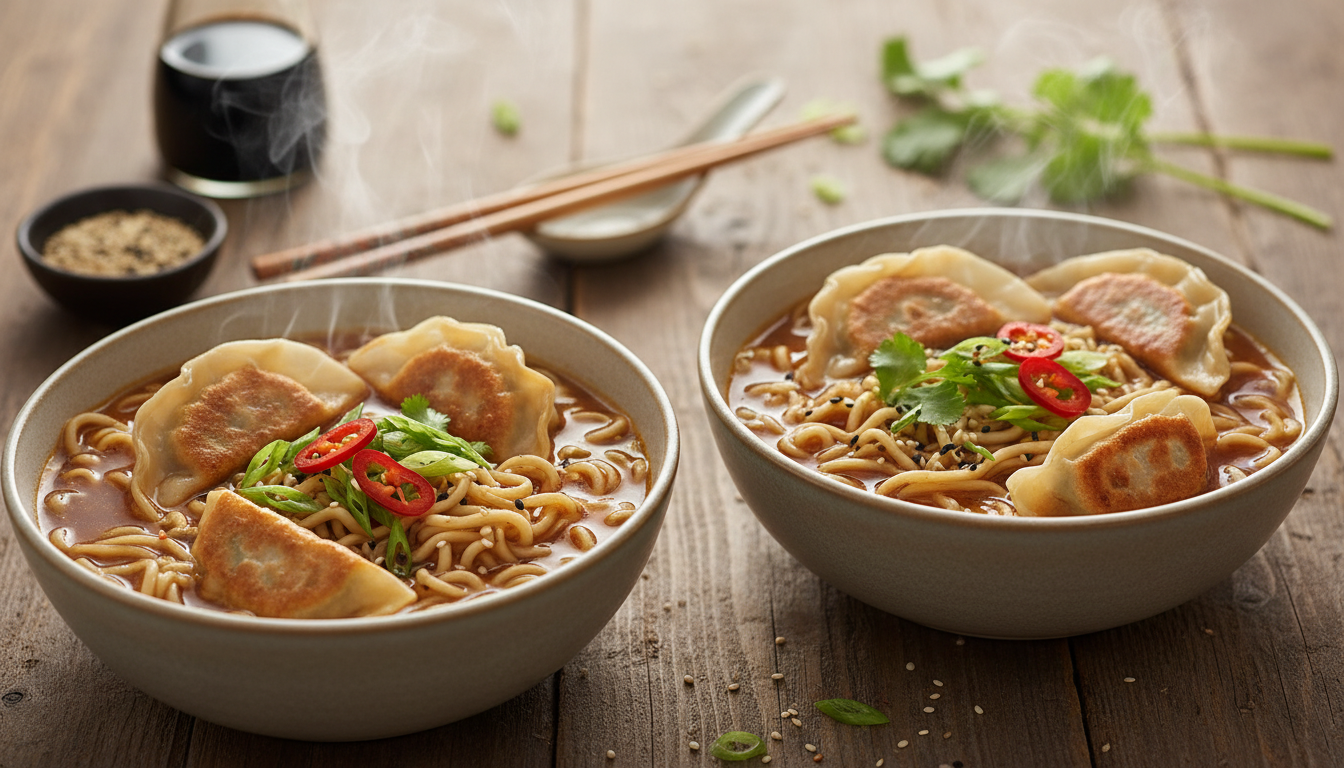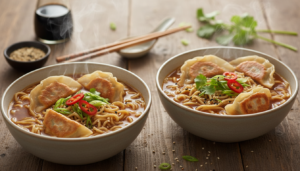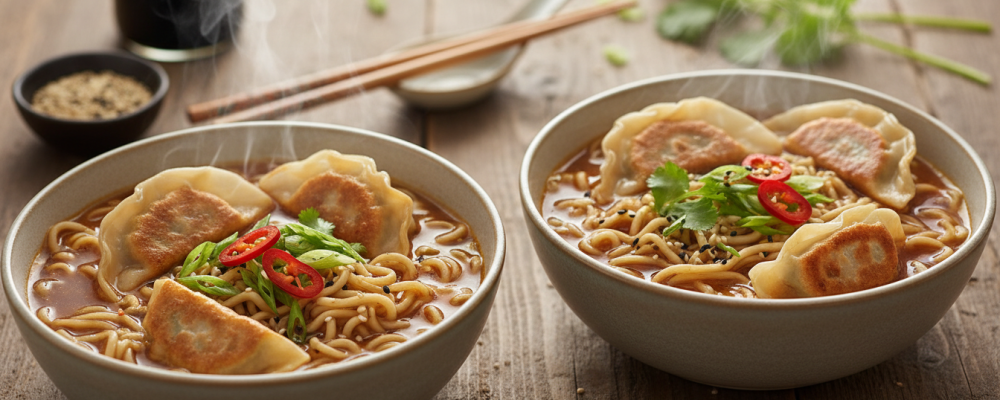

There are dishes that hit every note you want from a weeknight dinner—fast, deeply flavorful, satisfying without being heavy, and interesting enough to actually look forward to making—and Potsticker Noodle Bowls check every single one of those boxes. This is essentially everything you love about a classic pork and cabbage potsticker, deconstructed and tossed with noodles in a glossy, umami-rich sauce that comes together in one pan in under thirty minutes. It’s the kind of recipe that makes you wonder why you ever bothered with takeout.
From a development standpoint, this dish is a genuinely clever format. Potstickers are beloved for a reason—the combination of seasoned ground pork, tender cabbage, fragrant ginger and garlic, and that savory dipping sauce is one of the great flavor combinations in Asian cooking. But making dumplings from scratch is a project. This recipe captures every single one of those flavors and textures in a format that requires no folding, no pleating, and no specialized technique—just one pan, good ingredients, and about twenty-five minutes of active cooking.
The hoisin and rice vinegar sauce that ties everything together is the element I find most satisfying from a technical perspective. It’s balanced, glossy, and complex in a way that tastes far more involved than the few minutes it takes to whisk together.
The Inspiration Behind This Recipe
The inspiration here is straightforward and delicious: potstickers. Specifically, the moment after you’ve eaten the last one and found yourself wishing the whole experience could be faster, easier, and scaled up enough to constitute an actual dinner rather than an appetizer. Deconstructed dumpling dishes have become increasingly popular in home cooking for exactly that reason—all the flavor, none of the labor—and this noodle bowl format is one of the most satisfying executions of that concept I’ve come across.
There’s also a broader inspiration rooted in the Chinese-American cooking tradition of building deeply savory, one-pan noodle dishes that are both economical and genuinely exciting to eat. Dishes like dan dan noodles, lo mein, and zha jiang mian all operate on the same principle—seasoned ground meat, aromatics, a bold sauce, and noodles—and this recipe fits comfortably and deliciously within that tradition.
It’s a dish that feels simultaneously familiar and fresh, which is exactly the kind of cooking I find most rewarding to develop.
A Brief History of Potstickers and Dumpling Culture
Potstickers—known in Mandarin as guotie—are one of the most iconic foods in Chinese culinary tradition, with a history stretching back over a thousand years. Legend holds that the dumpling was accidentally invented when a cook forgot a batch of boiled dumplings on the stove, causing them to fry against the pan and develop that characteristic crispy bottom that defines the potsticker format. Whether or not the story is true, the result was one of the great accidental discoveries in culinary history.
Dumplings hold deep cultural significance in Chinese cuisine, particularly during Lunar New Year celebrations where their shape—said to resemble ancient gold ingots—makes them a symbol of wealth and good fortune. The filling combination of pork and cabbage is among the most traditional and beloved, and it’s precisely that pairing that forms the flavor foundation of this noodle bowl.
As Chinese culinary traditions spread globally, the potsticker became one of the most widely recognized and beloved expressions of Chinese cooking—a gateway dish for many diners and a template for countless creative adaptations, including this one.
Why This Cooking Method Works
The one-pan approach used in this recipe is both practical and flavor-forward. Browning the ground pork directly in the pan first develops a deeply savory, slightly caramelized fond that becomes the flavor base for everything that follows. Adding the cabbage, carrot, garlic, and ginger directly to that same pan means the vegetables cook in the rendered pork fat and absorb all of those concentrated flavors from the very beginning of their cook time.
The sauce—hoisin, soy, rice vinegar, sesame oil, and a cornstarch slurry—is added while everything is hot and active in the pan, allowing it to coat the pork and vegetables immediately and thicken into a glossy, cohesive glaze that clings to every noodle beautifully. Tossing the cooked noodles directly into the pan rather than combining everything in a bowl ensures maximum sauce contact and even flavor distribution throughout the finished dish.
It’s an efficient, intentional method that produces restaurant-quality results with home kitchen simplicity.
Flavor Profile: What to Expect
Every element of this dish contributes to a bold, layered, deeply satisfying flavor experience:
Savory, slightly caramelized ground pork that anchors the dish with rich, meaty depth and seasons everything around it
Warm, aromatic ginger and garlic that form the fragrant backbone of the entire flavor profile
Tender shredded cabbage and julienned carrot that add gentle sweetness, texture, and a fresh contrast to the richness of the pork
Deep, complex hoisin that brings sweetness, spice, and that distinctly Asian flavor character to the sauce
Bright rice vinegar that cuts through the richness and adds just enough acidity to keep every bite feeling balanced and alive
Nutty sesame oil that ties the whole dish together with its unmistakable toasty aroma
Silky, sauce-coated noodles that carry every layer of flavor from the first bite to the last
The overall effect is bold, comforting, and deeply craveable—exactly what a great noodle bowl should deliver.
Tips for Making the Best Potsticker Noodle Bowls
A few key techniques make a significant difference in the finished dish:
Don’t rush the pork: Let the ground pork cook undisturbed for the first couple of minutes to develop real browning and caramelization. This is where the deepest flavor in the dish comes from.
Shred the cabbage finely: Thinner shreds cook more quickly and integrate more seamlessly into the noodle bowl, echoing the texture of potsticker filling more closely.
Whisk the sauce thoroughly before adding: Make sure the cornstarch is fully dissolved before the sauce hits the hot pan to avoid lumps and ensure even thickening.
Use noodles with texture: Lo mein, udon, or thick ramen noodles work beautifully here because their texture holds up to the sauce and provides satisfying chew. Thin rice noodles can work but tend to get lost in the sauce.
Don’t overcook the vegetables: Three to four minutes of stir-frying is enough to soften the cabbage and carrot while preserving some bite. Overcooked vegetables lose the textural contrast that makes this dish so satisfying.
Taste and adjust before serving: Hoisin and soy sauce brands vary in saltiness and sweetness. Always taste the finished dish and adjust with a splash more rice vinegar for brightness or a touch of soy for depth as needed.
Serving Suggestions and Side Pairings
These noodle bowls are hearty and complete as a standalone meal, but a few well-chosen additions can round out the experience beautifully:
Steamed or pan-fried potstickers on the side for a fun, meta pairing that leans into the dish’s inspiration
A simple cucumber salad dressed with rice vinegar and sesame oil for a cool, refreshing contrast
Crispy wonton strips or chili oil drizzled over the top for extra texture and heat
Soft-boiled eggs halved and placed on top for additional richness and a striking visual presentation
A side of hot and sour soup or a light miso soup to start the meal before the noodle bowls take center stage
Storage, Reheating, and Make-Ahead Tips
This dish holds up well through storage and reheats with great results, making it an excellent meal prep candidate.
Refrigerate leftovers in an airtight container for up to 3 days—the sauce continues to absorb into the noodles overnight, deepening the flavor.
Reheat in a skillet over medium heat with a splash of water or soy sauce to loosen the noodles and restore the glossy sauce consistency.
The pork and vegetable mixture can be made up to 2 days in advance and refrigerated separately, with noodles cooked fresh at serving time for the best texture.
Avoid freezing the assembled dish, as noodles tend to become mushy after thawing—though the pork and sauce base freezes well on its own for up to 2 months.
Why This Recipe Deserves a Spot in Your Rotation
Potsticker Noodle Bowls earn their place in the weeknight rotation by delivering one of the most satisfying flavor-to-effort ratios in home cooking. This is a dish that genuinely excites people—the concept is clever, the flavors are bold and familiar, and the execution is well within reach of any home cook on any night of the week. It’s economical, endlessly adaptable, and produces the kind of deeply satisfying dinner that makes the whole house smell incredible while it cooks.
Once you’ve made it, it tends to become the noodle dish you reach for whenever you need something fast, delicious, and just a little bit different from the usual weeknight lineup.
Recommended Drink Pairing
The bold, savory-sweet hoisin sauce and fragrant ginger and garlic in this dish pair beautifully with drinks that offer refreshing contrast without competing with the complex Asian flavors. A cold Japanese or Chinese lager is the effortless, crowd-pleasing choice—light, crisp, and perfectly suited to cutting through the richness of the pork and sesame. For something with more character, a dry sake or a lightly chilled Pinot Gris works wonderfully, its subtle fruit and mineral notes complementing the ginger and hoisin beautifully.
For non-alcoholic options, a chilled jasmine green tea, a ginger lemonade with a splash of soy-honey syrup, or a sparkling water with citrus and fresh mint all pair naturally with the bold, aromatic flavors of this dish.
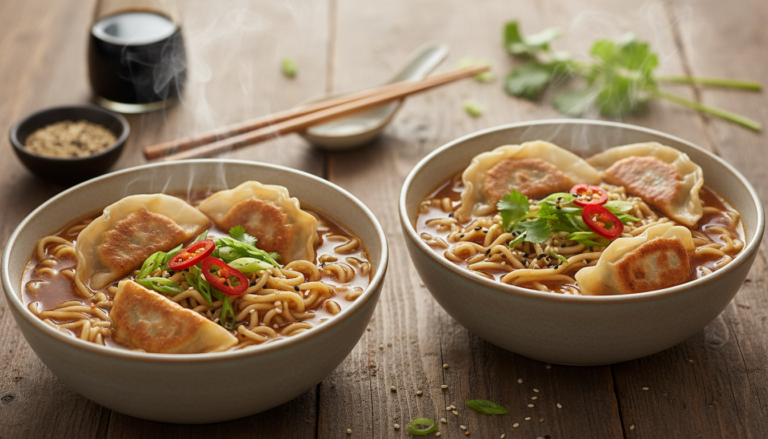
Potsticker Noodle Bowls
All the bold, savory flavors of pork and cabbage potstickers deconstructed into a saucy, satisfying noodle bowl ready in under thirty minutes.
4
servings30
minutes40
minutes300
kcal1
hour10
minutesIngredients
8 oz noodles
1 lb ground pork
2 tbsp soy sauce
1 tbsp sesame oil
2 cloves garlic, minced
1 cup cabbage, shredded
1 carrot, julienned
4 green onions, sliced
1 tbsp ginger, grated
2 tbsp rice vinegar
1 tbsp hoisin sauce
2 tbsp water
1 tbsp cornstarch
Directions
- Cook the noodles according to package instructions, drain and set aside.
- In a large pan, cook the ground pork until browned, about 5 minutes.
- Add soy sauce, sesame oil, garlic, ginger, cabbage, and carrot to the pork. Stir-fry for an additional 3-4 minutes.
- Whisk together rice vinegar, hoisin sauce, water, and cornstarch. Pour into the pan and stir until thickened.
- Add cooked noodles to the pan and toss until well combined.
- Garnish with sliced green onions before serving.
Nutrition Facts
- Total number of serves: 4
- Calories: 450kcal
- Cholesterol: 0mg
- Sodium: 620mg
- Potassium: 400mg
- Sugar: 8g
- Protein: 6g
- Calcium: 60mg
- Iron: 2mg
About This Author

Benjamin Brown
Recipe Developer
Benjamin is our flavor engineer. A classically trained chef turned recipe developer, he’s obsessed with balancing taste, texture, and creativity. He ensures that every recipe we publish is not only delicious but also reliable, approachable, and repeatable — even for beginners.
Favorite dish: Slow-braised short ribs with red wine reduction.
Kitchen motto: “Cooking is part science, part soul.”