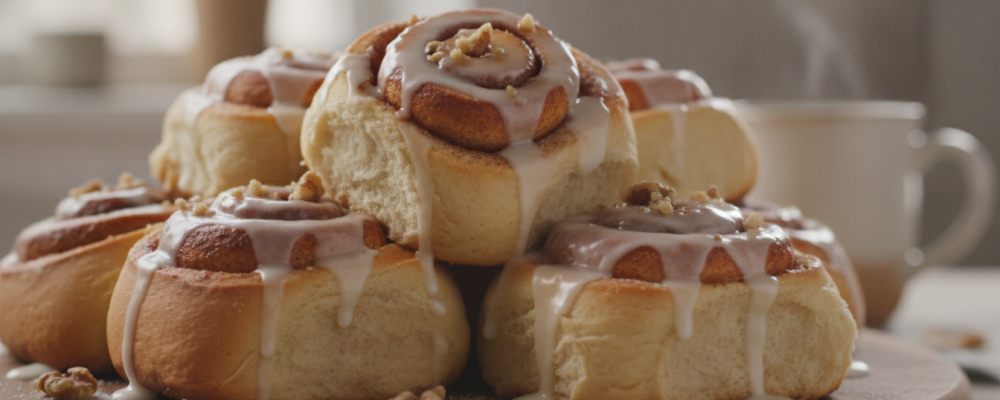

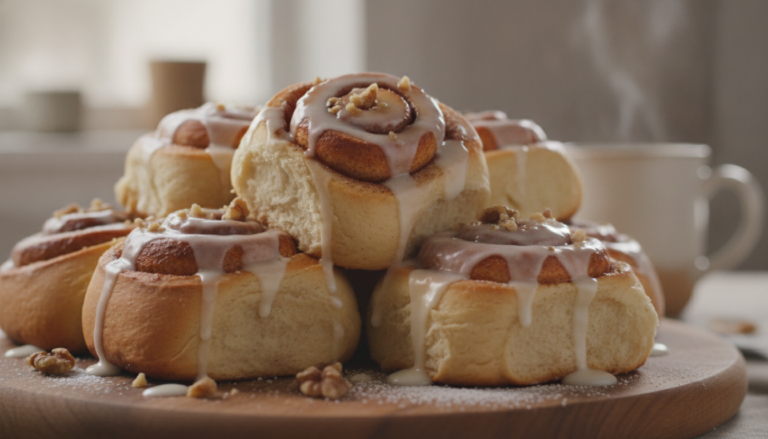
I want to talk about patience in baking, because these Overnight Cinnamon Rolls are the most beautiful argument for it that I know. There’s a version of cinnamon roll making that happens in a single morning—active dry yeast, warm rise, roll, cut, bake—and that version is perfectly lovely. And then there’s this version, where you make the dough the night before, tuck it into the refrigerator, and let time do something that speed simply cannot replicate. The cold, slow overnight fermentation develops flavor compounds in the dough that make it taste somehow more itself—more complex, more nuanced, more deeply satisfying than any quick-rise roll could ever be. When I pull these from the oven on a Saturday morning and the smell hits the kitchen, I feel completely vindicated in the wait.
What I love most about this recipe from a pastry perspective is how it inverts the usual effort timeline of impressive baking. The real work—making the dough, rolling, filling, cutting, arranging—happens the night before when you’re presumably in a relaxed, unhurried state. Come morning, all you’ve done is slept, and the oven does the rest. The rolls come out golden and puffed and magnificent, and you get to be the person who made this happen with what feels like almost no morning effort. It’s baking that works with your life rather than demanding that your life rearrange itself for it.
And then there’s the glaze. Powdered sugar, milk, vanilla—three ingredients that somehow create the perfect finishing touch for these rolls, seeping into every crevice while the rolls are still warm, pooling in the spiral centers, setting into a sweet, vanilla-scented coat that makes every photograph look spectacular and every bite taste like pure celebration. These are not modest, understated rolls. They are an occasion. They deserve to be made for people you love, eaten slowly, preferably with very good coffee and nowhere particular to be. That’s the cinnamon roll dream, and this recipe delivers it completely.
─────────
The Inspiration Behind This Recipe
My obsession with overnight cinnamon rolls began when I understood, really understood, what cold fermentation does to yeasted dough. In pastry school we learned that yeast produces not just carbon dioxide (which leavens) but also a cascade of flavor compounds—organic acids, alcohols, esters—that develop over time and create the complex taste we associate with good bread. Slow, cold fermentation extends this flavor development dramatically. The rolls that go into the refrigerator as good dough come out as extraordinary dough, and that distinction is entirely about time.
I wanted to create a recipe that honored this principle while being genuinely achievable for home bakers who aren’t professional pastry chefs. The technique needed to be forgiving enough that variations in refrigerator temperature and overnight timing wouldn’t catastrophically affect results, and the morning process needed to be simple enough that someone still half-asleep could execute it successfully. This recipe achieves both—the cold retard is flexible enough to accommodate real-life timing variations, and the morning process is essentially just “wait, then bake.”
The filling ratio—butter, brown sugar, cinnamon—was refined through extensive testing to find the proportion that creates maximum filling without the rolls becoming soggy or the filling leaking excessively during baking. The brown sugar’s molasses content caramelizes slightly during baking, creating that characteristic sticky, toffee-like quality in the filling that distinguishes great cinnamon rolls from merely good ones. This combination, inside dough that’s had a full night to develop its flavor, creates something that justifies every moment of the process.
─────────
A Brief History of Cinnamon Rolls
Cinnamon rolls trace their earliest roots to Sweden, where kanelbullar—yeasted buns spiced with cinnamon and cardamom—have been a beloved tradition since at least the early 20th century, though sweet spiced breads existed in Swedish baking long before. The Swedes take their kanelbullar seriously enough to have established October 4th as official Cinnamon Bun Day, a cultural commitment to the form that deserves respect. The buns traveled with Scandinavian immigrants to America, where they encountered different baking traditions and ingredient availabilities that shaped their evolution.
The American cinnamon roll diverged significantly from its Swedish ancestor—larger, sweeter, more generously filled, and typically finished with cream cheese frosting or vanilla glaze rather than the pearl sugar that tops traditional kanelbullar. This evolution reflects American baking’s tendency toward abundance and indulgence, and the result, while quite different from the original, developed its own devoted following. By the mid-20th century, cinnamon rolls were firmly embedded in American breakfast culture, appearing in homes, diners, and eventually the mall food courts where certain chains made them synonymous with warm, indulgent comfort.
The overnight method represents home bakers applying professional bread-baking knowledge to a beloved recipe—understanding that cold fermentation improves yeast breads and adapting that knowledge to create more convenient timing for home kitchens. This democratization of professional technique, where home cooks access the same methods that produce superior results in professional bakeries, represents one of the most exciting developments in contemporary home baking culture.
─────────
Why This Cooking Method Works
The initial rest after adding the first two cups of flour—one full hour before adding the remaining flour—is a technique called an autolyse, though this recipe uses it slightly differently than traditional bread baking. During this rest, the yeast activates fully in an environment of lower flour concentration, becoming extremely vigorous. The partial flour incorporation also allows initial gluten development to begin gently. When the remaining flour is added after this rest, it incorporates into already-active dough, producing a more developed, extensible gluten network than adding all flour at once would achieve.
The overnight cold retard is where this recipe’s superiority over same-day methods becomes concrete. At refrigerator temperatures (35-40°F), yeast activity slows dramatically but doesn’t stop entirely. Over eight or more hours, the yeast continues producing carbon dioxide (very slowly leavening the dough) while also generating the full spectrum of flavor compounds that require time to develop. The cold temperature also firms the butter in the dough, making the rolls easier to cut cleanly and preventing the filling from liquefying before baking begins. The dough is simultaneously rising, developing flavor, and becoming physically easier to work with.
The thirty-minute room temperature rest before baking is essential and non-negotiable. Cold dough placed directly into a hot oven doesn’t rise properly before the exterior sets—the temperature differential is too great for even heat penetration. Thirty minutes allows the dough to relax, the yeast to reactivate, and the rolls to begin their final proof before the oven’s heat converts that yeast activity into the spectacular rise that produces light, airy rolls. Applying glaze immediately while rolls are warm allows it to seep into the spiral structure rather than sitting only on the surface—creating that characteristic cinnamon roll moistness throughout every layer.
─────────
Flavor Profile: What to Expect
These rolls deliver layered sweetness and warmth with extraordinary depth:
- Complex yeasted dough – Overnight fermentation creates subtle tang and depth impossible in quick-rise versions
- Caramelized brown sugar filling – Molasses-rich sweetness that becomes slightly sticky and toffee-like during baking
- Warm cinnamon – Fragrant, aromatic spice woven through every spiral layer
- Buttery richness – Present in both the dough and filling, adding luxury throughout
- Vanilla glaze sweetness – Pure, aromatic sweetness that seeps into warm rolls and sets into a beautiful coat
- Golden caramelized edges – Where rolls meet the pan, caramelization creates deeper, more complex flavor
- Pillowy, tender crumb – The overnight rise creates exceptionally light, airy texture
The overall experience is one of complete, unhurried indulgence—these taste like the platonic ideal of what a cinnamon roll should be. The overnight fermentation creates a dough that tastes genuinely interesting rather than just sweet and bready. The filling caramelizes into something more complex than sugar and spice. The glaze adds a final layer of sweetness that makes everything taste finished and intentional. These are rolls that reward the patience they required.
─────────
Tips for Making the Best Overnight Cinnamon Rolls
Use milk warmed to around 110°F—warm enough to activate yeast but not so hot it kills it; if it’s comfortable on your wrist, it’s the right temperature.
- Check yeast is active – The mixture must be genuinely foamy before proceeding; dead yeast produces dense, flat rolls
- Don’t skip the initial hour rest – This builds yeast vigor that makes everything else work better
- Roll dough evenly – Consistent thickness ensures all rolls are the same size and bake uniformly
- Spread butter to the edges – Incomplete butter coverage means dry filling in those areas
- Roll tightly – A loose log produces rolls that unwind during baking and lose their spiral
- Use unflavored dental floss to cut – Slide under the log, cross over top, pull—creates clean cuts without compressing the dough
- Don’t skip the 30-minute rest – Cold rolls placed directly in the oven won’t rise properly
- Glaze while warm, not hot – Five minutes cooling allows glaze to absorb rather than run completely off
For an extra-decadent version, replace the vanilla glaze with cream cheese frosting—beat softened cream cheese with powdered sugar, a splash of milk, and vanilla until smooth and spreadable. Applied warm, it melts slightly into the rolls in the most extraordinary way.
─────────
Serving Suggestions and Side Pairings
These cinnamon rolls are magnificent enough to be the entire brunch conversation, but they love simple accompaniments that balance their sweetness. Crispy bacon or breakfast sausage provides salty, savory contrast that makes the sweet rolls taste even better by comparison—the sweet-savory dynamic at breakfast is genuinely one of the great flavor principles. Fresh fruit salad with citrus and berries adds brightness and acidity that refreshes the palate between bites of rich, glazed roll.
Presentation is effortless with these beauties—bring the entire baking dish to the table and let people serve themselves. There’s something wonderfully communal about a pan of cinnamon rolls at the center of a table, the glaze still slightly warm, the kitchen smelling incredible. Provide a small pitcher of extra glaze for devoted enthusiasts. Individual rolls can be plated and garnished with a light dusting of cinnamon for a more formal presentation if the occasion demands it.
These rolls are made for special mornings: Christmas and holiday breakfasts, birthday celebrations, weekend houseguest mornings, or any occasion when you want the first impression of the day to be genuinely extraordinary. The overnight preparation means you can be relaxed and present rather than flour-dusted and stressed, which is exactly how the host of any memorable brunch should feel.
─────────
Storage, Reheating, and Make-Ahead Tips
- Refrigerate overnight: The essential step—8 to 16 hours produces excellent results
- Extend the cold hold: Rolls can stay refrigerated up to 24 hours if needed; timing is flexible
- Store baked rolls: Cover tightly at room temperature for up to 2 days
- Refrigerate for longer: Up to 5 days refrigerated; the overnight fermentation keeps them moist longer than standard rolls
- Reheat individually: Microwave single rolls for 20-30 seconds to restore warmth and softness
- Reheat the pan: Cover with foil and warm at 300°F for 15 minutes for serving a group
- Freeze unbaked: After cutting and placing in dish, cover tightly and freeze up to 1 month; thaw overnight in fridge then proceed
- Freeze baked rolls: Wrap individually (unglazed) and freeze up to 2 months; glaze after reheating
The overnight fermentation that makes these rolls taste extraordinary also makes them stay moist and fresh longer than standard cinnamon rolls—the developed organic acids act as natural preservatives. Day-two rolls warmed briefly are remarkably good, making this an excellent recipe for making ahead and enjoying across a weekend.
─────────
Why This Recipe Deserves a Spot in Your Rotation
This recipe earns its permanent place because it represents the highest expression of something you probably already make or love—and experiencing that elevation changes your understanding of what’s possible. Once you’ve tasted overnight cinnamon rolls with their extraordinary depth of flavor and pillowy texture, same-day versions feel like a rough draft. That’s not a criticism of same-day rolls; it’s a testament to what time does to yeasted dough when you give it the chance to fully develop.
Beyond the superior result, this recipe fits beautifully into real life. The work happens the night before when you’re already in the kitchen after dinner, relaxed and unhurried. The morning is easy. The results are spectacular. Food that produces extraordinary outcomes through good planning rather than exhausting morning effort is exactly what makes certain recipes genuinely sustainable for regular use rather than just special occasions. These overnight cinnamon rolls are special-occasion quality that fits into everyday life—and that combination, in my experience, is the most valuable thing a recipe can offer.
─────────
Recommended Drink Pairing
The warm cinnamon, caramelized brown sugar, and vanilla glaze of these extraordinary rolls deserve beverages that rise to meet them. My absolute first recommendation is a properly made café latte—the espresso’s intensity and slight bitterness provide essential counterbalance to the glaze’s sweetness, while the steamed milk’s creaminess creates a pairing that feels completely cohesive and considered. A cinnamon dolce latte or brown sugar oat milk latte doubles down on the rolls’ signature flavors in the most indulgent, intentional way.
For tea lovers, chai is the obvious and genuinely excellent choice—its cinnamon, cardamom, and ginger profile creates beautiful flavor harmony with the rolls’ spice while the black tea base provides tannins that balance the sweetness. A well-brewed English Breakfast with a splash of milk is simpler and equally satisfying, its robust character standing up to the rolls’ richness without competing. Rooibos with honey offers caffeine-free warmth and natural sweetness that complements without overpowering.
Hot apple cider—particularly with a cinnamon stick—creates gorgeous thematic resonance with the cinnamon filling and feels appropriately cozy and celebratory. Fresh-squeezed orange juice provides bright citrus acidity that cuts through butter and glaze and refreshes the palate in the most welcome way. Cold milk remains the timeless, correct answer for anyone who wants the rolls’ flavors to be the entire conversation—cooling, creamy, and perfectly calibrated to make every warm, glazed, caramelized bite taste exactly like the extraordinary thing it is. Whatever you pour, make it something you love, pour it generously, and drink it slowly. These rolls were made for exactly that kind of morning.
Overnight Cinnamon Rolls
These Overnight Cinnamon Rolls use a slow, cold overnight rise that develops extraordinary flavor and pillowy texture—meaning the hardest part of making the best cinnamon rolls of your life happens while you’re fast asleep.
12
servings25
minutes30
minutes400
kcal55
minutesIngredients
4 cups all-purpose flour
1 cup milk
1/3 cup sugar
1/4 cup vegetable oil
2 1/4 teaspoons active dry yeast
1 teaspoon salt
1/2 cup butter, softened
1/2 cup brown sugar
1 tablespoon ground cinnamon
1 cup powdered sugar
2 tablespoons milk
1 teaspoon vanilla extract
Directions
- In a small saucepan, warm milk, sugar, and oil until just warm. Do not boil.
- Pour the milk mixture into a large bowl. Add yeast and let sit until foamy.
- Add 2 cups of flour to the yeast mixture, stirring until combined. Let rest for 1 hour.
- Stir in the salt and remaining flour until you have a soft dough.
- Turn the dough out onto a floured surface and knead until smooth.
- Roll dough into a large rectangle, spread butter, then sprinkle with brown sugar and cinnamon.
- Roll the dough tightly into a log and cut into 12 equal pieces.
- Place rolls in a greased baking dish. Cover with plastic wrap and refrigerate overnight.
- Preheat oven to 350°F (175°C). Remove the rolls from the fridge and let sit at room temperature for 30 minutes.
- Bake rolls for 25-30 minutes until golden brown.
- Mix powdered sugar, milk, and vanilla extract for glaze. Drizzle over warm rolls.
Nutrition Facts
- Total number of serves: 4
- Calories: 400kcal
- Cholesterol: 0mg
- Sodium: 620mg
- Potassium: 400mg
- Sugar: 8g
- Protein: 6g
- Calcium: 60mg
- Iron: 2mg
About This Author

Aurora Wright
Pastry Chef & Dessert Editor
Aurora is the sweet side of Daily Dish. A trained pastry chef and dessert stylist, she’s responsible for our mouth-watering cakes, cookies, and confections. She brings precision, artistry, and a touch of whimsy to every recipe she creates — and taste-tests more chocolate than she’ll admit.
Favorite dish: Flourless dark chocolate torte.
Kitchen motto: “Life’s too short to skip dessert.”