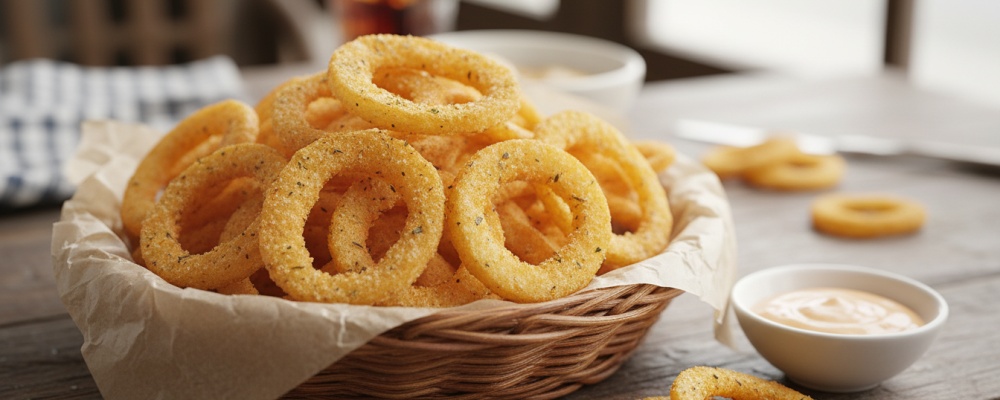

The science behind perfect onion rings is more complex than most people realize. It’s not simply about dunking onions in batter and hoping for the best—it’s about understanding how coating layers interact with heat and oil to create that distinctive crispy exterior while maintaining the onion’s tender, sweet interior. These Onion Ring Chips represent the pinnacle of what this classic appetizer can be when technique meets intention.
What sets this recipe apart is its triple-coating system. Each layer serves a specific structural purpose: the flour-cornmeal mixture provides initial adhesion and textural foundation, the egg wash acts as a binding agent, and the breadcrumbs create the final crispy barrier. This isn’t redundancy—it’s engineering. The cornmeal addition in the first layer is particularly clever, adding a subtle grittiness that enhances crunch while the breadcrumbs provide the familiar golden exterior everyone expects.
I’ve tested countless onion ring recipes over the years, and the ones that fail typically do so because they skip steps or try to simplify the coating process. The reality is that creating legitimately crispy onion rings requires commitment to the method. You can’t rush coating layers, you can’t compromise on oil temperature, and you must respect frying time. Do these things right, and you’ll achieve onion rings that stay crispy for 15-20 minutes after frying—not the soggy disappointments that go limp within five minutes.
The beauty of this recipe lies in its reliability. Once you understand the principles at work, you can execute it consistently. That’s what makes it valuable: it’s not dependent on luck or mysterious variables. Follow the technique, and you’ll produce restaurant-quality results every single time.
─────────
The Inspiration Behind This Recipe
Onion Ring Chips were inspired by the desire to create onion rings with exceptional crispiness and staying power. Traditional single-coating methods often result in breading that separates from the onion or becomes soggy quickly. The multi-layer approach used here draws from professional kitchen techniques where coating systems are carefully engineered to provide both adhesion and texture.
The term “chips” in the recipe name references the chip-like crispiness achieved through the specialized coating method. Unlike typical battered onion rings that can be somewhat soft or tempura-style rings that are delicate, these rings maintain a substantial, crunchy texture similar to potato chips. The cornmeal inclusion adds another dimension—a technique borrowed from Southern cooking traditions where cornmeal coatings are prized for their crispness and subtle corn flavor that complements fried foods beautifully.
─────────
A Brief History of Onion Rings
The exact origin of onion rings is debated, but they appeared in American cookbooks as early as 1802 in John Mollard’s “The Art of Cookery Made Easy and Refined.” However, the fried onion rings we know today—breaded and served as an appetizer or side dish—gained popularity in the early 20th century, particularly in the American Southwest and at drive-in restaurants.
The Pig Stand restaurant chain, which opened in Texas in 1921, is often credited with popularizing onion rings as a mainstream fast-food item. By the 1960s, onion rings had become a staple at burger joints, steakhouses, and casual dining establishments across America. The advent of frozen, pre-breaded onion rings in the 1970s brought them into home kitchens, though fresh, homemade versions have always been superior in flavor and texture.
The triple-coating method used in this recipe represents an evolution of traditional techniques, borrowing from professional kitchens and combining multiple coating traditions to achieve optimal results.
─────────
Why This Cooking Method Works
Triple-coating system creates multiple textural layers that protect the onion while generating exceptional crispiness. Each layer bonds to the previous one, forming an integrated structure rather than separate coatings.
Flour-cornmeal first layer serves dual purposes: the flour’s proteins create adhesion, while cornmeal adds textural interest and prevents the coating from becoming gummy. Cornmeal doesn’t absorb as much oil as pure flour, contributing to a lighter, crispier result.
Egg-milk wash acts as a protein-rich binder. When it hits hot oil, the proteins coagulate rapidly, essentially “gluing” the breadcrumb layer to the flour layer underneath. The milk dilutes the egg slightly, making it easier to work with while still providing binding power.
Breadcrumb outer layer creates the final textural barrier. Breadcrumbs have more surface area than flour or cornmeal alone, providing more opportunities for browning and crisping. They also absorb minimal oil compared to batter coatings.
Proper oil temperature (350°F) is critical. Too low, and the coating absorbs excess oil, becoming greasy and heavy. Too high, and the exterior burns before the onion softens. At 350°F, rapid moisture evaporation creates steam that puffs the coating while browning occurs simultaneously.
Batch frying maintains consistent oil temperature. Overcrowding lowers temperature dramatically, resulting in greasy, pale onion rings rather than crispy golden ones.
Paper towel draining wicks away surface oil immediately after frying, preventing the coating from becoming soggy as it cools.
─────────
Flavor Profile: What to Expect
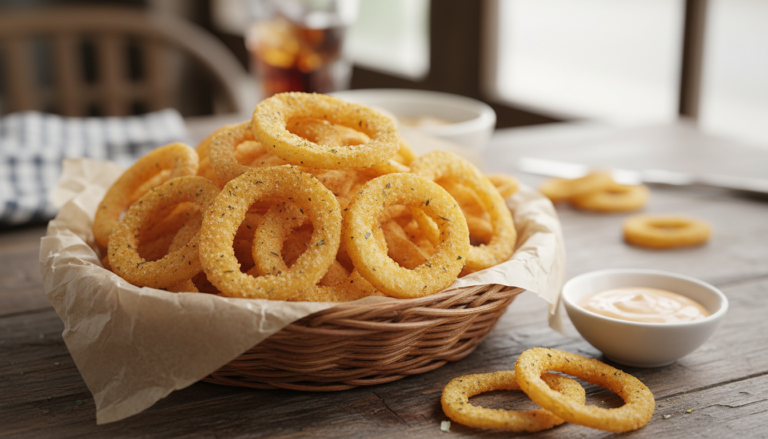
These Onion Ring Chips deliver a complex flavor and texture experience that goes beyond standard onion rings. The exterior is intensely crispy with a golden-brown coating that provides satisfying crunch. You’ll taste subtle corn sweetness from the cornmeal, savory depth from the breadcrumbs, and seasoning from the salt and pepper in the flour mixture.
The onion interior transforms during frying from pungent and sharp to sweet and tender. The heat caramelizes the onion’s natural sugars while breaking down harsh sulfur compounds, creating a mellow, almost buttery sweetness that contrasts beautifully with the savory coating.
The texture contrast is remarkable. Each bite begins with an audible crunch as you break through the multi-layered coating, followed by the tender, yielding onion inside. The cornmeal provides slight grittiness that adds interest, while the breadcrumbs contribute traditional fried food texture.
Seasoning is straightforward but effective—salt and black pepper enhance without overpowering. The coating tastes savory and slightly rich from the egg and oil absorption, while the onion provides natural sweetness that balances everything perfectly.
─────────
Tips for Making the Best Onion Ring Chips
- Choose the right onion: Large yellow or sweet onions work best. They’re mild enough when cooked and large enough to create substantial rings.
- Consistent thickness: Cut rings to uniform quarter-inch thickness. Thinner rings cook too quickly and can burn; thicker rings may have undercooked centers.
- Separate rings carefully: Work gently to keep rings intact. Broken rings won’t hold coating as well.
- Season each layer: Adding salt and pepper to the flour mixture ensures seasoning throughout, not just on the surface.
- Set up an assembly line: Arrange your coating stations in order (flour-cornmeal, egg-milk, breadcrumbs) for efficient workflow.
- Coat completely: Ensure every part of each ring is covered at each stage. Gaps in coating will result in soggy spots.
- Shake off excess: After each coating stage, shake gently to remove excess. Too much coating becomes gloppy and doesn’t crisp properly.
- Monitor oil temperature: Use a thermometer and adjust heat as needed to maintain 350°F consistently throughout frying.
- Don’t overcrowd: Fry 4-6 rings at a time depending on pan size. More than that drops oil temperature too much.
- Flip once: Let rings develop golden color on one side before flipping. Constant flipping prevents proper crisping.
- Drain properly: Use a slotted spoon and let oil drip back into pan before transferring to paper towels.
- Serve immediately: Onion rings are best within 15-20 minutes of frying while coating is still crispy.
─────────
Serving Suggestions and Side Pairings
Onion Ring Chips are incredibly versatile and pair well with numerous dishes and occasions:
As an appetizer: Serve with a variety of dipping sauces—ranch, chipotle mayo, BBQ sauce, honey mustard, or comeback sauce—for a crowd-pleasing starter.
As a side dish: Pair with burgers, steaks, grilled chicken, or BBQ pulled pork for a classic American meal combination.
Game day spread: Include them on a platter alongside wings, mozzarella sticks, and loaded nachos for ultimate entertaining.
Burger topping: Use smaller rings as a topping for burgers or sandwiches for added crunch and flavor.
Pairing suggestions:
- Classic beef burgers with all the fixings
- Grilled steaks with compound butter
- BBQ ribs or pulled pork sandwiches
- Fried chicken or chicken tenders
- Fresh coleslaw for cooling contrast
- Crispy french fries or sweet potato fries
- Creamy dipping sauces (ranch, blue cheese, garlic aioli)
─────────
Storage, Reheating, and Make-Ahead Tips
Storage: Onion rings are best consumed immediately, but leftovers can be stored in an airtight container in the refrigerator for up to 2 days. Note that they will lose significant crispiness.
Reheating: The best method for restoring crispiness is an oven or air fryer. Reheat in a 400°F oven for 5-7 minutes, or in an air fryer at 375°F for 3-4 minutes. Avoid microwaving, which makes coating soggy and rubbery.
Make-ahead coating: You can bread the onion rings up to 2 hours in advance. Place them on a wire rack over a baking sheet and refrigerate uncovered. This actually helps the coating adhere better. Fry directly from refrigerator.
Freezing option: Freeze breaded but unfried onion rings on a baking sheet until solid, then transfer to freezer bags. They’ll keep for up to 2 months. Fry from frozen, adding 1-2 minutes to cooking time.
Oil management: Strain and store used frying oil in an airtight container. It can be reused 2-3 times for similar recipes if kept clean and stored properly.
─────────
Why This Recipe Deserves a Spot in Your Rotation
Onion Ring Chips represent the pinnacle of what this classic appetizer can achieve. While they require more effort than some recipes, the results justify the investment. The multi-layer coating creates texture and crispiness that significantly exceeds what you’d get from simpler methods, and the technique itself teaches valuable lessons about coating and frying that apply across many recipes.
From a practical standpoint, homemade onion rings are remarkably economical. A single large onion yields substantial quantity, and the coating ingredients are pantry staples. You’re creating restaurant-quality results at a fraction of restaurant prices, with complete control over ingredients and quality.
These onion rings also have universal appeal. They’re crowd-pleasers that work for family dinners, game day gatherings, or special occasions. The crispy texture and sweet-savory flavor profile appeal to virtually everyone, making them a safe bet when entertaining diverse groups.
Most importantly, mastering this recipe builds confidence and skill. Once you understand how coating systems work and how to maintain proper frying temperature, you can apply these principles to countless other dishes—from fried chicken to fish to vegetables.
─────────
Recommended Drink Pairing
Beer: A crisp, cold lager or pilsner cuts through the richness of fried foods while cleansing the palate. An amber ale or brown ale also complements the sweet onion flavor nicely.
Wine: An off-dry Riesling provides sweetness that echoes the caramelized onion while offering acidity to balance the fried coating. For red wine drinkers, a light Pinot Noir won’t overwhelm the delicate onion flavor.
Non-alcoholic: Classic cola or root beer provides sweetness and carbonation that contrasts beautifully with savory fried foods. Iced tea (sweetened or unsweetened) also works well as a refreshing counterpoint.
Cocktail: A classic margarita with its salt rim and citrus notes provides bright, acidic contrast to rich fried onion rings, while the tequila base complements the slightly sweet onion flavor.
Onion Ring Chips
Onion Ring Chips are crispy, crunchy onion rings with a triple coating of seasoned flour, cornmeal, and breadcrumbs that delivers restaurant-quality crunch in every bite.
4
servings15
minutes10
minutes250
kcal25
minutesIngredients
1 large onion
0.5 cup all-purpose flour
0.25 cup cornmeal
0.5 tsp salt
0.25 tsp black pepper
1 large egg
0.5 cup milk
1 cup breadcrumbs
2 cups vegetable oil for frying
Directions
- Slice the onion into approximately quarter-inch thick rings and separate them carefully. Prepare a large deep pan suitable for frying.
- In a large shallow dish, combine the flour, cornmeal, salt, and black pepper. Set this mixture aside for later use.
- In another bowl, whisk together the egg and milk until evenly combined. This will be used as the wet mixture for coating.
- Pour the breadcrumbs into a separate dish. These will form the final coating layer for the onion rings.
- Heat the vegetable oil in the deep pan over medium heat until it reaches an appropriate frying temperature, around 350°F.
- Dip each onion ring into the flour mixture, then into the egg mixture, and finally coat it well with breadcrumbs.
- Fry the onion rings in batches in the hot oil until they are golden brown and crispy, about 2 to 3 minutes per side.
- Remove the cooked onion rings with a slotted spoon and place them on a paper towel-lined plate to absorb excess oil.
- Serve the onion ring chips warm with your preferred dipping sauce for additional flavor and enjoyment.
Nutrition Facts
- Total number of serves: 4
- Calories: 250kcal
- Cholesterol: 0mg
- Sodium: 620mg
- Potassium: 400mg
- Sugar: 8g
- Protein: 6g
- Calcium: 60mg
- Iron: 2mg
About This Author

Benjamin Brown
Recipe Developer
Benjamin is our flavor engineer. A classically trained chef turned recipe developer, he’s obsessed with balancing taste, texture, and creativity. He ensures that every recipe we publish is not only delicious but also reliable, approachable, and repeatable — even for beginners.
Favorite dish: Slow-braised short ribs with red wine reduction.
Kitchen motto: “Cooking is part science, part soul.”