
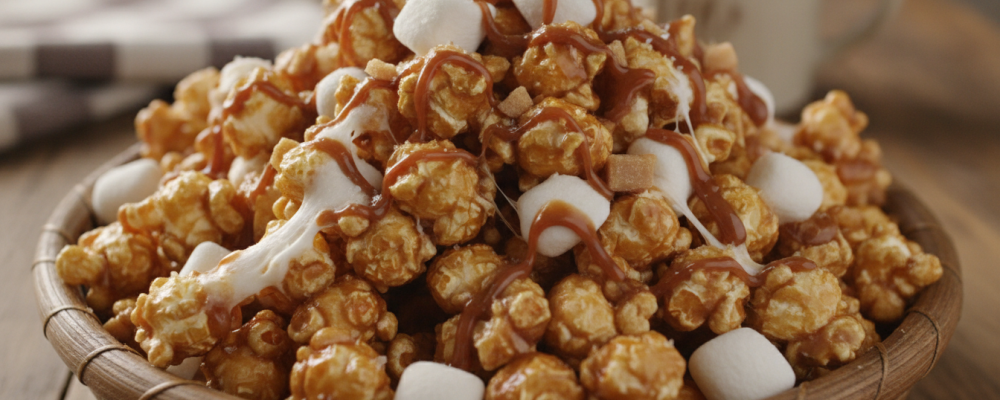

I want to tell you about the moment I fell completely in love with this recipe. I was standing at my kitchen counter on a Monday evening, the caramel bubbling on the stove—that deep, amber, intoxicating smell filling the entire apartment—when I realized I was smiling to myself for no particular reason. That’s what good candy-making does. There’s something about working with sugar that feels genuinely magical: you start with granulated crystals, apply heat, and watch the whole thing transform into something glossy and golden and extraordinary. It never gets old.
Marshmallow Caramel Corn occupies this wonderful space between confection and snack, between childhood nostalgia and genuine sophistication. The homemade caramel elevates it beyond anything that comes in a bag or a box—real butter, real brown sugar, real vanilla, cooked to that precise amber moment where bitterness and sweetness exist in perfect tension. Then the baking stage, which most caramel corn recipes skip, creates something different entirely: clusters that shatter satisfyingly when you bite them, with a crunch that the stovetop-only version simply cannot achieve.
And then the marshmallows. Oh, the marshmallows. Adding them at the end—warm but not baking them—is a detail I’m genuinely proud of because it creates two distinct textural experiences within the same bowl. Some marshmallows get folded into the warm caramel coating and melt slightly, creating gooey pockets. Others stay pillowy and soft, creating sweet contrast against the crunchy caramel clusters. It’s textural complexity achieved through timing, and it transforms good caramel corn into something you genuinely cannot stop eating.
I’ve made this for parties, for gifts, for movie nights, and for perfectly ordinary Mondays when I needed something beautiful and sweet to look forward to. It always delivers. The presentation alone—those golden clusters studded with white marshmallow pockets, piled high in a bowl or packaged in a cellophane bag—is enough to make people reach for it before they’ve even processed what it is. That’s my favorite kind of dessert: the kind that creates desire before you’ve taken a single bite.
─────────
The Inspiration Behind This Recipe
Marshmallow Caramel Corn emerged from a desire to take the beloved American classic of caramel corn and introduce the one element that would make it feel genuinely new: marshmallows. The concept draws from the tradition of s’mores and Rice Krispie treats—American confections that celebrate marshmallow’s unique properties of softness, vanilla sweetness, and textural contrast—and applies that same sensibility to caramel corn.
The inspiration also reflects a pastry chef’s instinct for textural contrast as a primary design principle. Exceptional confections rarely offer a single texture—they create experiences that evolve bite to bite. By combining the shattering crunch of properly baked caramel corn with the soft, pillowy give of mini marshmallows, this recipe creates that evolution within every handful. Some bites are predominantly crunchy, some are predominantly gooey, and some capture both simultaneously. That unpredictability is precisely what makes it addictive.
The marshmallow timing—added after baking rather than before—is the recipe’s central creative decision. Baking marshmallows with the popcorn would cause them to melt completely into the caramel, losing their distinct character. Adding them to warm (but not hot) caramel corn creates that spectrum of integration: some melt slightly into the coating, some remain entirely intact, creating the textural variety that distinguishes this recipe from everything else in the caramel corn category.
─────────
A Brief History of Caramel Corn and American Confection
Caramel corn’s history in America dates to the 1890s, when F.W. Rueckheim introduced Cracker Jack at the 1893 World’s Columbian Exposition in Chicago. The combination of popcorn, caramel, and peanuts in a portable format proved instantly and enduringly popular—Cracker Jack became a baseball stadium staple, celebrated in “Take Me Out to the Ballgame” as early as 1908 and achieving cultural landmark status that persists today.
The candy-making techniques underlying caramel corn draw from centuries of confectionery tradition. Sugar cookery—heating sugar solutions to specific temperatures to achieve distinct structural outcomes—has been practiced since medieval Arab confectioners developed sophisticated candy-making arts that eventually spread through Europe. The hard crack stage, where sugar becomes brittle and glassy upon cooling, is precisely what caramel corn achieves when it reaches proper temperature and then bakes.
Marshmallows themselves have an ancient history beginning with the mallow plant’s root sap, used medicinally and as a sweetener in ancient Egypt. Modern commercial marshmallows, made with gelatin and corn syrup rather than mallow root, emerged in the mid-19th century and became American pantry staples throughout the 20th century. Their appearance in Rice Krispie Treats (invented by Kellogg’s employees in 1939) and s’mores (popularized by the Girl Scouts in the 1920s) cemented their status as one of America’s most beloved confectionery ingredients.
This recipe honors both traditions while creating something that belongs entirely to the present.
─────────
Why This Cooking Method Works
Undisturbed boiling for 5 minutes is the recipe’s most critical technical instruction. Stirring a boiling sugar solution introduces seed crystals that cause recrystallization—the caramel turns grainy and sandy rather than smooth and glassy. The undisturbed boil allows sugar molecules to remain in an amorphous, non-crystalline state as they concentrate and deepen in color.
Brown sugar rather than white contributes molasses content that adds complexity and color beyond simple sweetness. The molasses also lowers the caramel’s crystallization threshold slightly, contributing to a more forgiving texture.
Corn syrup functions as an interfering agent—its large glucose molecules physically prevent sucrose molecules from organizing into crystals. This is the same principle that professional confectioners use to achieve smooth, glassy candy textures.
Baking soda addition at the end causes a chemical reaction with the caramel’s acidic components, generating carbon dioxide bubbles that aerate the coating and create a lighter, more porous texture that crisps more effectively during baking.
Vanilla extract added off heat preserves its delicate aromatic compounds. Added during boiling, vanilla’s volatile aromatics would dissipate before they could contribute flavor.
Low oven temperature (250°F) allows gradual moisture evaporation from the caramel coating without scorching. High heat would burn the sugar before moisture could escape, producing bitter rather than complex flavor.
Post-bake marshmallow addition times the marshmallow’s introduction to the moment when the caramel is set enough to hold its structure but warm enough to bond with the marshmallows partially. This creates the spectrum of integration—from fully intact to partially melted—that defines this recipe’s textural complexity.
Complete cooling before serving allows the caramel to achieve its final glassy structure. Eating warm caramel corn produces a different texture than properly cooled—satisfying but lacking the full crunch that defines the experience.
─────────
Flavor Profile: What to Expect
Marshmallow Caramel Corn delivers a multi-layered sweet experience that rewards attention. The caramel coating is the dominant flavor note—rich, buttery, and deeply caramelized with that characteristic balance between sweetness and the slight bitterness that develops at proper cooking temperature. The brown sugar’s molasses undertone adds complexity that white sugar caramel lacks entirely.
Vanilla weaves through everything with warm, floral sweetness that rounds out the caramel’s intensity and makes the whole confection smell as good as it tastes.
Popcorn provides the neutral, slightly salty, lightly toasted grain base that carries the caramel while providing structural contrast. The salt in the popcorn interacts beautifully with the caramel’s sweetness, creating that addictive sweet-salty dynamic.
Mini marshmallows offer vanilla sweetness and soft, yielding texture that contrasts with the caramel’s crunch. Those that melt slightly into the caramel coating create gooey pockets; those that remain intact provide clean, pillowy contrast.
Butter contributes rich dairy depth throughout—you taste it in the caramel’s mouthfeel as much as in its flavor, creating a roundness and richness that distinguishes homemade caramel from any commercial version.
The texture is the true experience: initial resistance from the glassy caramel coating, then the satisfying shatter into clusters, then the yielding softness of marshmallow. It’s complex in the most pleasurable way possible.
─────────
Tips for Making the Best Marshmallow Caramel Corn
- Use fresh popcorn: Day-old popcorn has absorbed moisture and won’t achieve maximum crispness. Pop fresh for best results.
- Remove ALL unpopped kernels: Biting into one in a caramel corn cluster is one of dessert’s great disappointments. Be thorough.
- Use a large enough saucepan: The baking soda addition causes rapid foaming that can overflow smaller pans. Choose a pot at least twice the volume of your caramel mixture.
- Don’t stir during boiling: This is the instruction home cooks most often ignore and most often regret. Grainy caramel results from stirring. Trust the process.
- Use a candy thermometer: If you have one, cook caramel to 250°F (soft ball stage) for optimal coating consistency. Visual color—deep amber—is your guide without a thermometer.
- Work quickly when pouring: Caramel sets rapidly as it cools. Pour over popcorn immediately and mix with urgency, using a greased spatula to prevent sticking.
- Grease your tools: Lightly spray your mixing spoon and spatula with cooking spray before contact with caramel. This prevents infuriating sticking.
- Let marshmallows cool slightly first: Add marshmallows when the caramel corn has cooled for 2-3 minutes from the oven. If too hot, marshmallows melt completely; if too cool, they won’t integrate at all.
- Cool on parchment: The parchment is essential—caramel corn bonds permanently to unlined baking sheets.
- Store with care: Humidity is caramel corn’s enemy. An airtight container is non-negotiable for maintaining the crunch.
─────────
Serving Suggestions and Side Pairings
Marshmallow Caramel Corn works beautifully across numerous occasions and contexts:
Movie night centerpiece: Pile high in a large bowl for sharing—the clusters make communal eating easy and satisfying.
Party dessert table: Include alongside other sweets on a dessert spread where its golden color and visual abundance create immediate appeal.
Gift giving: Package in cellophane bags tied with ribbon or in mason jars for homemade gifts that feel genuinely special and taste professionally made.
Holiday entertaining: This recipe scales beautifully for larger batches, making it ideal for holiday gifting, school events, or party favors.
Dessert board addition: Include alongside chocolate-covered items, nuts, and dried fruits for a complete sweet board where the caramel corn provides bulk and visual drama.
Pairing suggestions:
- Hot chocolate or warm apple cider for cozy contrast
- Cold milk for the classic confection pairing
- Coffee or espresso for bitter contrast against sweetness
- Vanilla ice cream for an indulgent dessert situation
- Fresh fruit like strawberries or apple slices for freshness
- Salted nuts for sweet-salty contrast
- S’mores Muddy Buddies for a complete sweet snack spread
─────────
Storage, Reheating, and Make-Ahead Tips
Storage: Store in an airtight container at room temperature for up to 1 week. The caramel’s hygroscopic nature means exposure to air makes it sticky and eventually soggy—proper sealing is essential.
Maintaining crunch: If caramel corn softens due to humidity, spread on a parchment-lined baking sheet and warm in a 250°F oven for 10 minutes. Cool completely before returning to an airtight container.
Make-ahead ideal: This is a perfect make-ahead treat. Prepare up to 5 days before needed and store properly for effortless entertaining.
Marshmallow timing note: The marshmallows will slowly integrate further during storage, with some becoming more embedded in the caramel coating over time. This is normal and actually improves the flavor as vanilla from the marshmallows permeates the coating.
Gifting preparation: Package only when completely cool. Warm caramel corn creates condensation inside packaging that compromises texture.
Freezing: Not recommended. The caramel coating absorbs moisture during thawing, becoming irreversibly sticky and losing its crunch.
Scaling: This recipe doubles and triples reliably. Use a larger pot for caramel and multiple baking sheets, rotating them through the oven sequentially.
Humidity considerations: In very humid climates or seasons, reduce cooling time before packaging and include a silica gel packet in the container to absorb ambient moisture.
─────────
Why This Recipe Deserves a Spot in Your Rotation
Marshmallow Caramel Corn deserves a permanent place in your dessert rotation because it occupies a category where very few recipes succeed: genuinely impressive, genuinely delicious, and genuinely achievable by anyone willing to give a saucepan their undivided attention for five minutes. The skills required are minimal. The ingredients are pantry staples. The result is something that looks and tastes like a professional confectioner made it.
From a practical standpoint, this recipe is extraordinarily versatile. It works as a casual Monday snack, a party dessert, a homemade gift, a holiday treat, or a bake-sale contribution. It stores well, travels easily, and scales effortlessly. One recipe in your rotation handles a remarkable range of occasions and needs.
The recipe also teaches foundational candy-making principles—sugar cooking stages, the crystallization-prevention role of corn syrup, the aeration effect of baking soda—that transfer to countless other confections. Understanding why the caramel behaves as it does here gives you insight into toffee, brittle, fudge, and other sugar-based sweets. This is a recipe that makes you a better baker simply by making it.
Most importantly, Marshmallow Caramel Corn creates pure joy—the unambiguous, uncomplicated happiness that the best sweet treats deliver. There’s no pretension here, no exotic ingredients, no techniques that require professional training. Just butter, sugar, popcorn, marshmallows, and the alchemy of heat and time turning them into something golden and extraordinary. That’s the magic of confectionery, and that’s why this recipe is worth making again and again and again.
─────────
Recommended Drink Pairing
Hot beverage: A rich hot chocolate with a pinch of sea salt provides bittersweet contrast that complements caramel beautifully—one of the great classic pairings applied here with particular success. Salted caramel coffee echoes the recipe’s dominant flavor.
Cold beverage: Cold whole milk remains the quintessential candy pairing—its creaminess and slight sweetness provide the perfect counterpoint to the caramel’s intensity and the popcorn’s salt.
Wine: A tawny port with its caramel, nut, and dried fruit character mirrors the confection’s flavor profile in liquid form. A Sauternes or late-harvest Riesling offers honeyed sweetness and acidity that cuts through the richness.
Beer: A milk stout or caramel ale provides malty sweetness and light bitterness that pairs with caramel corn in the same way that beer and pretzels complement each other—the grain base of both creating natural affinity.
Cocktail: A classic Old Fashioned—bourbon, bitters, sugar—provides caramel and vanilla notes that directly mirror the recipe’s flavor profile. The bitters add complexity that prevents the pairing from becoming one-dimensionally sweet.
Non-alcoholic: Sparkling apple cider provides festive effervescence and fruit sweetness that refreshes between handfuls of rich, buttery caramel corn without competing for flavor dominance.
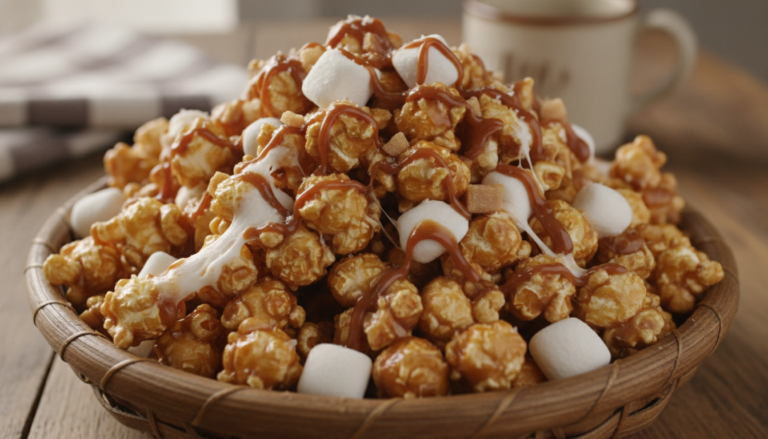
Marshmallow Caramel Corn
Marshmallow Caramel Corn coats freshly popped popcorn in glossy homemade caramel, bakes it to crunchy perfection, then folds in soft mini marshmallows for an irresistible sweet-and-salty treat that’s equal parts nostalgic and indulgent.
12
servings15
minutes20
minutes230
kcal35
minutesIngredients
12 cups popped popcorn
1 cup unsalted butter
1 cup brown sugar
0.25 cup light corn syrup
1 teaspoon vanilla extract
0.5 teaspoon baking soda
4 cups mini marshmallows
Directions
- Preheat the oven to 250°F (120°C) and line a large baking sheet with parchment paper.
- Place the popped popcorn in a large bowl, discarding any unpopped kernels.
- In a saucepan over medium heat, melt the butter, then add brown sugar and corn syrup. Stir continually until the mixture comes to a boil.
- Let the mixture boil for 5 minutes without stirring.
- Remove from heat and add vanilla extract and baking soda, stirring continuously.
- Pour the caramel over the popcorn and mix well to coat.
- Spread the popcorn mixture onto the prepared baking sheet and bake for 15 minutes.
- Remove from oven, sprinkle mini marshmallows over the popcorn, and gently fold to mix.
- Let it cool completely before serving or storing in an airtight container.
Nutrition Facts
- Total number of serves: 4
- Calories: 230kcal
- Cholesterol: 0mg
- Sodium: 620mg
- Potassium: 400mg
- Sugar: 8g
- Protein: 6g
- Calcium: 60mg
- Iron: 2mg
About This Author

Aurora Wright
Pastry Chef & Dessert Editor
Aurora is the sweet side of Daily Dish. A trained pastry chef and dessert stylist, she’s responsible for our mouth-watering cakes, cookies, and confections. She brings precision, artistry, and a touch of whimsy to every recipe she creates — and taste-tests more chocolate than she’ll admit.
Favorite dish: Flourless dark chocolate torte.
Kitchen motto: “Life’s too short to skip dessert.”















