Daily Dish

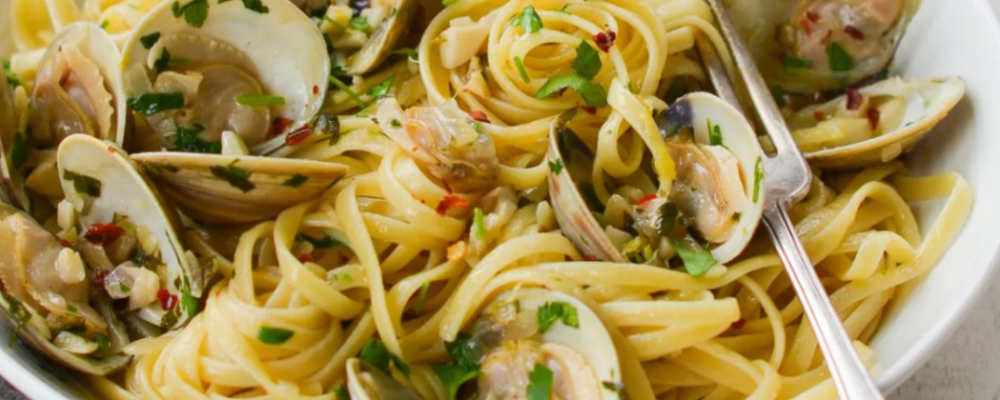
Linguine with Clams

Healthy Fact of the Day

Clams are a low-calorie, nutrient-dense seafood option, packed with protein, iron, vitamin B12, and omega-3 fatty acids. They also contain high levels of zinc, which supports immune function and wound healing. By using whole grain linguine and a moderate amount of olive oil and butter, you can create a balanced and nutritious meal.

Ingredients


  • 1 lb linguine pasta
  • 1/4 cup extra-virgin olive oil
  • 4 garlic cloves, minced
  • 1/2 tsp red pepper flakes (optional)
  • 2 lbs fresh clams, scrubbed and rinsed
  • 1/2 cup dry white wine
  • 1/4 cup fresh parsley, chopped
  • 2 tbsp unsalted butter
  • Salt and freshly ground black pepper to taste
  • Lemon wedges for serving


Instructions

  1. Bring a large pot of salted water to a boil. Cook the linguine according to the package instructions until al dente. Reserve 1/2 cup of the pasta cooking water, then drain the pasta.
  2. In a large skillet, heat the olive oil over medium heat. Add the minced garlic and red pepper flakes (if using), and sauté for 1-2 minutes, or until fragrant.
  3. Add the clams to the skillet and pour in the white wine. Cover the skillet and cook for 5-7 minutes, or until the clams have opened.
  4. Discard any clams that do not open.
  5. Remove the skillet from the heat and stir in the chopped parsley and butter until the butter is melted and the sauce is glossy.
  6. Add the cooked linguine to the skillet and toss it with the clam sauce, adding some of the reserved pasta water if needed to loosen the sauce.
  7. Season with salt and freshly ground black pepper to taste.
  8. Serve the linguine with clams immediately, garnished with lemon wedges for squeezing over the top.


Dive into a plate of this mouthwatering linguine with clams and let the briny, garlicky flavors transport you to a charming Italian seaside trattoria, where the pasta is always perfect, and the company is as warm as the Mediterranean sun!

Recent Recipes

The Frozen Foods Your Air Fryer Was

  • April 18, 2026
  • 3 min read

Herb and Cheese Scones

  • April 18, 2026
  • 11 min read

The Resting Rules Every Home Baker Breaks

  • April 18, 2026
  • 7 min read

Easy Pineapple Pork Chops

  • April 18, 2026
  • 10 min read

The Costco Dip That People Panicked Over

  • April 17, 2026
  • 4 min read

How Chefs Use Salt Differently Than Everyone

  • April 17, 2026
  • 7 min read

Shrimp Creole

  • April 17, 2026
  • 10 min read

Today Is the Day: Krispy Kreme’s Strawberry

  • April 16, 2026
  • 3 min read

Cherry Blossom Spritz

  • April 16, 2026
  • 10 min read

The Knife Habits That Separate Home Cooks

  • April 16, 2026
  • 7 min read

Tip of the Day

“Always let your meat rest before slicing.”

Whether you're roasting a chicken, grilling steak, or baking pork tenderloin, letting cooked meat rest for 5–10 minutes before slicing allows the juices to redistribute evenly. This simple step keeps your meat juicy and tender, ensuring every bite is flavorful and moist. Bonus: It gives you a moment to plate your sides or garnish for a perfect presentation!

Our Latest Recipes

Blog
Daily Disher

The Frozen Foods Your Air Fryer Was Born to Cook

The air fryer isn’t just a crispiness hack — it’s also a meaningful way to cut down on added fat. Most of these frozen foods come pre-oiled, which means they don’t need anything extra to get great results. Compare that to deep frying, which can add hundreds of calories per serving in absorbed oil alone. If you’re buying frozen, look for options with shorter ingredient lists and less sodium — the air fryer will do the rest without needing the extra stuff to compensate.

Read More »
Other
Benjamin Brown

Herb and Cheese Scones

Fresh herbs like parsley, thyme, and chives are packed with vitamins A, C, and K, plus antioxidants that support immune health—making these indulgent scones surprisingly nutrient-rich.

Read More »
Blog
Daily Disher

The Resting Rules Every Home Baker Breaks

Allowing bread to cool completely before slicing isn’t just a texture decision — it also affects how the body processes it. Fully cooled bread has a higher proportion of resistant starch than bread eaten warm, which slows digestion, lowers the glycemic response, and feeds beneficial gut bacteria. The same loaf, eaten at different temperatures, has a meaningfully different effect on blood sugar.

Read More »

Get your daily dose of delicious!

Skip to content