
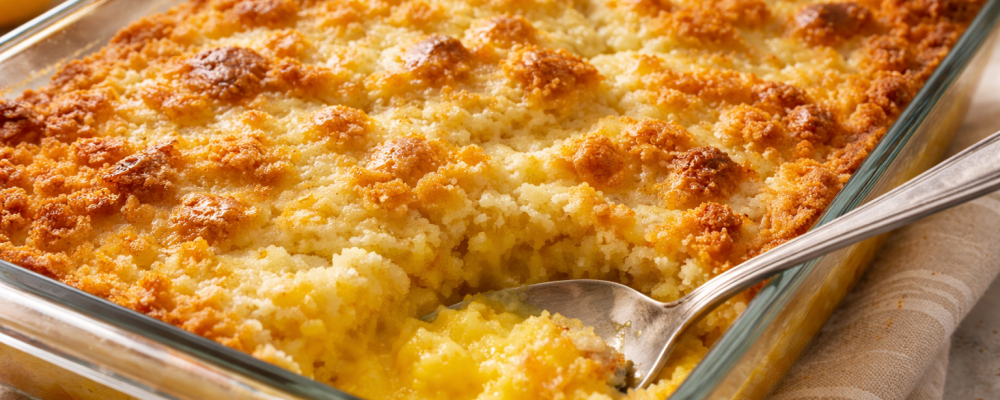

I need to be honest with you: when I first heard about dump cakes, I was skeptical. As someone who loves baking from scratch, the idea of just dumping ingredients in a pan without mixing seemed too simple to be good. But then I tried one at a church potluck, and I had to eat my words along with three helpings of cake. Sometimes the simplest methods produce the most satisfying results, and Lemon Dump Cake is proof that you don’t need complicated techniques or fancy ingredients to create something genuinely delicious.
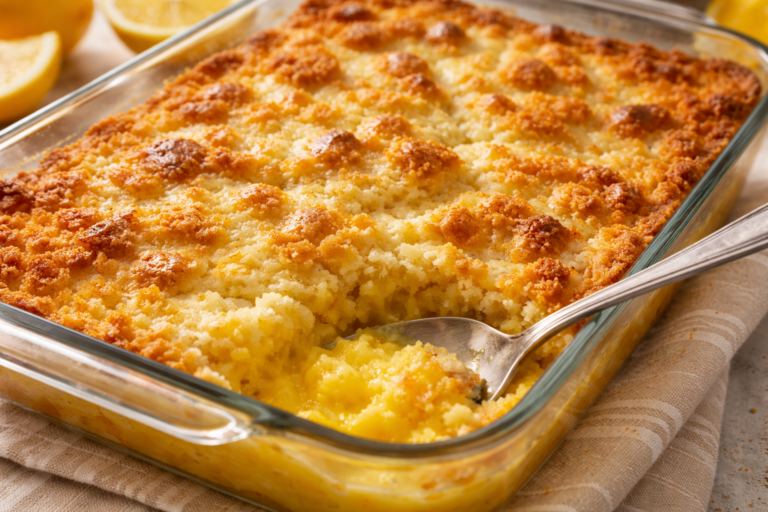
What makes this cake so special is the texture that develops during baking. The lemon pie filling on the bottom stays gooey and intensely lemony, almost like lava. The cake mix layer transforms into something magical—crispy and almost cookie-like where the butter hits it, tender and cake-like where it absorbs moisture from the filling below. The sour cream melts into everything, adding richness and a subtle tang that keeps the dessert from being one-dimensionally sweet. It’s not quite cake, not quite cobbler, not quite pudding—it’s its own wonderful thing.
I make this cake when life gets busy and I need something sweet without spending an hour in the kitchen. I make it when I’m craving lemon but don’t have the energy for a from-scratch lemon cake with homemade frosting. I make it when someone calls and says they’re stopping by in an hour and I want to seem like the kind of person who always has fresh-baked dessert ready. The best part? Everyone always asks for the recipe, and when I tell them it’s four ingredients and zero mixing, they never believe me. That’s the magic of dump cake—it looks and tastes like you tried much harder than you did.
─────────
The Inspiration Behind This Recipe
Dump cakes have been circulating in American home baking since at least the 1970s, when they became popular through community cookbooks and word-of-mouth sharing. The basic formula—canned fruit filling, dry cake mix, butter—created an entire category of ultra-simple desserts that required no mixing, no special equipment, and minimal cleanup. They were perfect for busy home cooks who wanted homemade desserts without the time investment.
Traditional dump cakes are delicious, but I wanted to elevate the concept slightly while maintaining the ease. That’s where the sour cream comes in. Most dump cake recipes are just three ingredients: fruit filling, cake mix, butter. I tested adding sour cream after remembering how it transforms simple cakes by adding moisture, richness, and a subtle tang. The sour cream melts into the cake mix as it bakes, creating a more complex flavor and a richer, more tender texture. It’s one extra ingredient, but it makes the difference between “good for how easy it is” and “genuinely great, period.”
Lemon specifically is perfect for dump cakes because the bright, tart flavor cuts through all that butter and sweetness. Cherry and apple dump cakes are classics, and they’re wonderful, but lemon feels more sophisticated somehow. It’s the kind of flavor that works for casual family dinners and elegant dinner parties equally well. The sunshine-yellow color doesn’t hurt either—it looks cheerful and inviting, like edible happiness.
─────────
A Brief History of Dump Cakes & Lemon Desserts
Dump cakes represent a distinctly American approach to baking—practical, efficient, and designed for busy home cooks. The concept likely evolved from fruit cobblers and crisps, but simplified even further by using cake mix instead of making a topping from scratch. The earliest documented dump cake recipes appear in community cookbooks from the 1960s and 1970s, often contributed by church ladies and PTA members who needed to feed crowds with minimal effort.
The method gained popularity during an era when convenience foods were celebrated rather than stigmatized. Cake mixes, introduced in the 1950s, were seen as modern miracles that freed women from tedious baking. Canned pie fillings similarly represented convenience and consistency—reliable fruit filling year-round regardless of season. Combining these two convenience products created something that was almost absurdly easy yet still tasted homemade.
Lemon desserts have deep roots in American baking, from colonial-era lemon chess pie to 19th-century lemon pound cakes to 20th-century lemon meringue pie and lemon bars. Lemons were once expensive imports, making lemon desserts special-occasion treats. Even after citrus became more affordable and available, lemon retained its association with celebration and sunshine. The bright, clean flavor feels sophisticated yet approachable, fancy yet familiar.
Lemon Dump Cake brings together these two traditions—convenience baking and lemon dessert heritage—into something that honors both. It’s easy enough for a weeknight but special enough for company, simple enough for novice bakers but delicious enough to satisfy experienced ones.
─────────
Why This Dump Method Works
Layering without mixing creates distinct textures. By not mixing the ingredients, you preserve different zones in the dessert. The pie filling stays on the bottom, creating a gooey fruit layer. The dry cake mix sits in the middle, absorbing moisture from below and fat from above. The butter melts down through the cake mix, creating those crispy, almost cookie-like spots. The sour cream adds pockets of richness. Each layer does its own thing, and together they create complexity that mixed batter couldn’t achieve.
Cake mix needs moisture to activate. When you sprinkle dry cake mix over wet pie filling, the moisture gradually wicks up into the mix from below while butter and sour cream provide fat and moisture from above. This creates a gradient of textures—drier and crispier on top where it’s exposed, softer and more cake-like in the middle where moisture penetrates, almost pudding-like at the very bottom where it meets the pie filling.
Butter provides structure and browning. The sliced butter melts and spreads across the surface, creating fat pockets that help the cake mix bind together and brown beautifully. Where butter hits the cake mix directly, you get those crispy, golden patches. Where butter misses, you get drier spots that add textural variety. This random distribution creates visual and textural interest—no two bites are exactly the same.
Sour cream adds richness and tang. As the sour cream heats, it melts and seeps into the cake mix, adding moisture, fat, and acidity. The acidity brightens the lemon flavor and prevents the dessert from being cloyingly sweet. The fat creates tenderness in what would otherwise be a drier cake mix layer. The sour cream essentially acts as a flavor amplifier and texture improver without requiring any mixing.
Baking temperature and time are crucial. At 350°F for 40-45 minutes, the cake mix has time to cook through and develop that golden-brown top while the pie filling bubbles and concentrates its flavor. Too hot and the top burns before the middle cooks; too cool and everything steams rather than baking, creating a mushy texture instead of the desired crispy-tender contrast.
Resting time improves texture. While dump cake can be served warm right from the oven, letting it rest for 15-20 minutes allows the layers to settle and makes serving much easier. The filling thickens slightly as it cools, and the cake layer sets enough to hold together when scooped.
─────────
Flavor Profile: What to Expect
Bright, tart lemon flavor hits you immediately—this is not a subtle lemon dessert. The pie filling provides concentrated citrus punch that’s both sweet and tart, like biting into lemon candy or lemon curd. It’s vibrant and alive, the kind of flavor that makes you sit up and pay attention.
Sweet cake base balances the tartness. The cake mix layer provides familiar vanilla-lemon cake flavor that’s sweet and comforting. It’s not as intensely lemony as the filling—it’s more mellow, acting as a buffer that prevents the lemon from being overwhelming.
Tangy sour cream richness adds complexity. You don’t taste “sour cream” specifically, but you notice a richness and depth that makes the dessert taste more sophisticated than basic dump cake. The slight tang enhances the lemon and prevents any cloying sweetness.
Buttery, golden-brown top provides that essential richness and slight saltiness that balances the sweetness. The browned butter notes add nuttiness and depth, especially in those crispy spots where butter pooled and caramelized.
Multiple textures make each bite interesting. You get crispy-crunchy edges, tender cake-like middle sections, and gooey lemon pudding at the bottom. Sometimes you hit a buttery crisp spot, sometimes a tangy sour cream pocket, sometimes pure lemon filling. The randomness is part of the charm.
The overall experience is comforting and sunny. This tastes like springtime, like sunshine, like happy childhood memories of lemon desserts at family gatherings. It’s not sophisticated in a fine-dining way—it’s sophisticated in a “sometimes simple pleasures are the best” way.
─────────
Tips for Making the Best Lemon Dump Cake
Choosing Your Ingredients:
- Use quality lemon pie filling—Comstock or Wilderness brands work well. You’ll need one 21-ounce can.
- Any lemon cake mix works, though Duncan Hines and Betty Crocker both produce good results. Don’t add the eggs, oil, or water called for on the box—use it dry.
- Real butter, not margarine—the flavor difference is significant. You’ll need about ½ cup (1 stick).
- Full-fat sour cream for best flavor and texture—low-fat works but won’t be as rich. You’ll need about ½ cup.
Preparation and Layering:
- Grease your pan well with butter or cooking spray. The edges can stick if not properly greased.
- Spread pie filling evenly across the bottom of the pan—aim for uniform thickness so it bakes evenly.
- Sprinkle cake mix evenly—don’t just dump it in one pile. You want coverage across the entire surface so every bite has cake layer.
- Don’t mix or stir at any point—that defeats the whole purpose and changes the texture.
- Slice butter into thin pats (about ¼-inch thick) for more even distribution. Aim for 10-12 slices covering the surface.
- Dollop sour cream randomly—small spoonfuls scattered across the top work best. Don’t worry about covering everything; random distribution creates textural variety.
Baking Tips:
- Use a glass or metal 9×13 pan—both work well, though glass allows you to see the bubbling filling through the sides.
- Place pan on a baking sheet to catch any overflow if the filling bubbles enthusiastically.
- Don’t open the oven for the first 30 minutes—temperature fluctuations can affect how the layers set.
- Look for bubbling around the edges and a golden-brown top as signs of doneness. The top should be set and spring back slightly when touched.
- Listen for bubbling—if you hear vigorous bubbling sounds, the filling is active and the cake is cooking properly.
Variations to Try:
- Add lemon zest—sprinkle fresh lemon zest over the cake mix layer before adding butter for extra lemon punch
- Mix berries into the filling—fold ½ cup fresh or frozen blueberries into the pie filling before spreading
- Add coconut—sprinkle ½ cup sweetened shredded coconut over the cake mix for tropical flair
- Try different citrus—substitute lime pie filling and lime cake mix for a different citrus experience
- Add poppy seeds—sprinkle 2 tablespoons poppy seeds over the filling for lemon-poppy flavor
Serving Suggestions:
- Let cool 15-20 minutes before serving for easier scooping and better texture
- Serve with ice cream while still warm for the ultimate comfort dessert
- Add whipped cream for extra richness and visual appeal
- Dust with powdered sugar for a prettier presentation
─────────
Serving Suggestions and Presentation Ideas
Classic Comfort: Scoop generous portions into bowls and serve warm with vanilla ice cream melting down the sides. The contrast of hot, tangy cake and cold, sweet ice cream is absolutely perfect. This is comfort food at its finest—no fancy plating needed.
Elegant Plated Dessert: Cut neat squares and place on white dessert plates. Add a dollop of whipped cream, a fresh lemon slice as garnish, and a sprig of fresh mint. Dust the plate with powdered sugar for restaurant-quality presentation. This elevates the humble dump cake into something dinner-party worthy.
Casual Potluck Style: Serve directly from the baking dish with a large spoon, letting guests help themselves. Keep whipped cream and ice cream nearby for self-service. This no-fuss presentation is perfect for church suppers, family reunions, or any gathering where ease matters more than elegance.
Brunch Addition: Serve at room temperature or slightly warm as part of a brunch spread. The bright lemon flavor works beautifully in the morning alongside coffee. Cut into smaller squares for brunch-appropriate portions and serve on a cake stand or platter.
Summer Picnic: This cake travels beautifully—keep it covered in its baking dish and transport in a cooler if it’s very hot. Serve at room temperature with disposable bowls and spoons for easy outdoor serving. The sunny lemon flavor is perfect for warm-weather gatherings.
Special Occasion Upgrade: Top with lemon curd drizzle and candied lemon slices for special celebrations. Pipe decorative whipped cream rosettes around the edges and add edible flowers for a spring or summer party. The simple cake becomes something celebration-worthy with these additions.
─────────
Storage, Reheating, and Make-Ahead Tips
Storage:
- Room Temperature: Cover tightly with foil or plastic wrap and store at room temperature for up to 2 days—the butter and lack of cream cheese make this stable enough for short-term room temperature storage.
- Refrigerator: Store covered in the refrigerator for up to 5 days. The texture firms up when cold but is still delicious.
- Freezer: Freeze portions wrapped tightly for up to 2 months. Thaw in the refrigerator overnight and reheat before serving.
Reheating: This cake is wonderful reheated:
- Microwave: Heat individual portions for 30-45 seconds until warm
- Oven: Cover with foil and reheat the whole pan at 325°F for 15-20 minutes
- The gooey lemon layer becomes molten and delicious when reheated—almost better than fresh from the oven
Make-Ahead Strategy: While this cake is so easy you can make it last-minute, it’s also excellent for advance preparation:
- Bake up to 2 days ahead and store covered at room temperature—reheat before serving
- Assemble but don’t bake—you can layer everything in the pan, cover tightly, and refrigerate for up to 24 hours before baking (add 5 minutes to baking time if starting from cold)
Serving Temperature: This cake is delicious at multiple temperatures:
- Warm from the oven—the filling is molten and the top is crispy
- Room temperature—easy to transport and still delicious
- Slightly chilled—refreshing on hot days, though the texture is firmer
Best Within: While this cake keeps for days, it’s best within 24 hours of baking when the textural contrast between crispy top and gooey bottom is most pronounced. After a day or two, everything softens together, which is still tasty but less texturally interesting.
─────────
Why This Recipe Deserves a Spot in Your Rotation
Lemon Dump Cake is the recipe you need when life gets overwhelming and you still want something homemade and delicious. It’s proof that easy doesn’t mean inferior, that convenience can coexist with quality, and that sometimes the simplest recipes are the ones you’ll make over and over again because they just work. This is not a recipe you make to impress fancy food critics—it’s a recipe you make to feed people you care about without spending your whole evening in the kitchen.
What makes this cake truly special is its complete lack of pretension. It doesn’t apologize for being easy. It doesn’t try to be something it’s not. It’s just bright, tangy, comforting lemon dessert that makes people happy. When someone asks for the recipe and you say “four ingredients, no mixing,” and they look at you skeptically, you get to feel that little thrill of sharing kitchen magic—the kind that proves good food doesn’t have to be complicated.
The practical advantages are enormous. No mixer to clean. No measuring cups beyond checking package labels. No worrying about overmixing or getting the texture just right. The randomness of the dump method actually works in your favor—those irregular butter pockets and crispy spots add character rather than indicating poor technique. It’s almost impossible to mess up, which makes it perfect for novice bakers, busy parents, or anyone who’s tired of complicated recipes that require precision.
The bright lemon flavor has universal appeal. People who love lemon absolutely rave about this cake because the flavor is so bold and pure. People who are lukewarm about lemon still enjoy it because the sweetness and richness balance the tartness. It works for spring and summer when you want sunshine flavors, but it’s also wonderful in winter when you need a reminder that brighter days are coming.
If you’re looking for a recipe that delivers homemade satisfaction without the work, that tastes like sunshine and comfort, that you can make even when you’re exhausted, that always gets rave reviews despite its simplicity—this is it. Lemon Dump Cake is proof that sometimes the best recipes are the ones that get out of their own way and just let good ingredients do their thing.
─────────
Recommended Drink Pairing
Iced Tea – Lemon or Peach: Cold lemon iced tea creates a flavor echo that lemon lovers will adore, while peach iced tea provides complementary sweetness and southern charm. The slight tannins cut through the richness beautifully. This pairing feels appropriate and refreshing for warm weather or casual gatherings.
Coffee – Medium Roast: A smooth medium roast coffee provides gentle contrast to the bright lemon without overwhelming the delicate citrus notes. The coffee’s warmth and slight bitterness balance the sweet-tart cake. This works beautifully for brunch service or afternoon dessert with a cup of coffee.
Sparkling Wine – Prosecco or Moscato: For adults, Prosecco’s bright bubbles and subtle sweetness complement the lemon beautifully while the effervescence cleanses the palate. Moscato d’Asti offers similar sparkle with more sweetness and honey notes. Both feel celebratory and turn dessert into something special for dinner parties or celebrations.
Lemonade – Fresh-Squeezed: Homemade lemonade or high-quality store-bought doubles down on lemon flavor for citrus enthusiasts. The cold, tart-sweet drink provides refreshing contrast to the warm, rich cake. This pairing feels natural and perfect for spring and summer gatherings, picnics, or family dinners.
Limoncello: For an Italian-inspired pairing, serve chilled limoncello as a digestif alongside the cake. The intensely lemony liqueur creates a cohesive lemon experience while the alcohol provides warming contrast to the sweet dessert. This pairing feels sophisticated and special for adult dinner parties.
Lemon Dump Cake
Lemon Dump Cake lives up to its name with the easiest method imaginable—just dump lemon pie filling in a pan, top with cake mix, butter, and sour cream, then bake until golden and bubbly for a dessert that’s ridiculously simple yet absolutely delicious.
8
servings10
minutes45
minutes300
kcal55
minutesIngredients
1 box lemon cake mix
1 can lemon pie filling
1 stick butter
1 cup sour cream
Directions
- Preheat your oven to 350°F (175°C) and grease a 9×13-inch baking dish.
- Spread the lemon pie filling evenly in the bottom of the baking dish.
- Sprinkle the lemon cake mix evenly over the lemon pie filling.
- Slice the butter and distribute the pieces evenly on top of the cake mix.
- Dollop sour cream over the top.
- Bake for 40-45 minutes or until the top is golden and bubbly.
- Allow the cake to cool slightly before serving.
Nutrition Facts
- Total number of serves: 4
- Calories: 300kcal
- Cholesterol: 0mg
- Sodium: 620mg
- Potassium: 400mg
- Sugar: 8g
- Protein: 6g
- Calcium: 60mg
- Iron: 2mg
About This Author

Amelia Grace
Editor-in-Chief & Culinary Director
The heart and guiding voice of Daily Dish, Amelia leads our editorial vision and recipe development. With a background in food journalism and over a decade spent in professional kitchens, she has a knack for blending gourmet technique with real-world accessibility. Her goal? To make every reader feel like a confident cook, one dish at a time.
Favorite dish: Creamy lemon risotto with a sprinkle of fresh thyme.
Kitchen motto: “Good food doesn’t have to be complicated — it just has to be made with heart.”















