
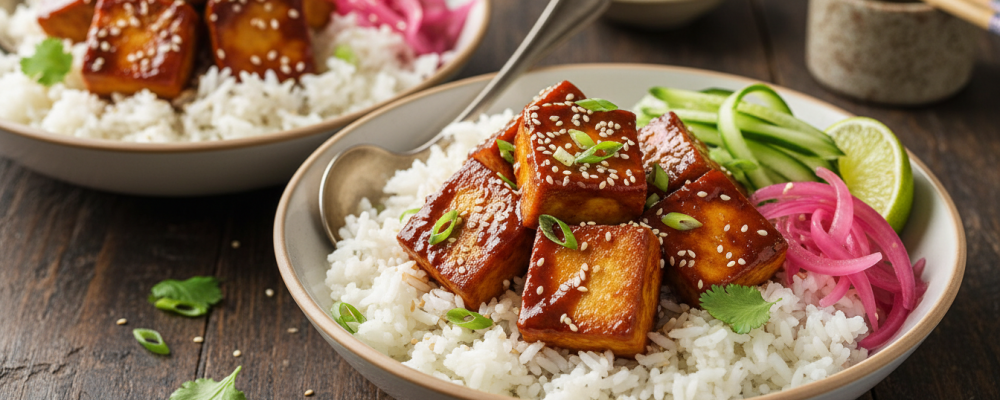

I want to talk about gochujang, because gochujang is the reason this bowl exists and the reason it tastes the way it does—and because I think it deserves more recognition than it typically receives in home kitchens outside of Korean cooking.
Gochujang is a fermented Korean chili paste—dried red chili, glutinous rice, fermented soybeans, salt—and it is one of those relatively rare ingredients that delivers several flavor dimensions simultaneously and without effort. It is spicy, but the heat is slower and more complex than fresh chili. It is sweet, but the sweetness has depth rather than simplicity. It is intensely savory in that fermented, umami-rich way that miso and soy sauce are savory, but with its own distinct character. And it is slightly funky in the best possible sense—the fermented quality that tells you something has been given time to become fully itself.
What gochujang does to tofu in this recipe is, in my experience, genuinely remarkable for how simple it is. The paste, whisked with soy sauce and honey and sesame oil and rice vinegar, produces a marinade that coats the tofu’s surface with a depth of flavor that most proteins require days to develop. Pan-fried until golden and then returned to the sauce as it thickens, each cube becomes lacquered—glossy, deeply red-orange, sticky, and fragrant—in a way that makes it impossible to look at and not immediately want to eat. The tofu is not a substitute for anything in this bowl. It is exactly the right ingredient for exactly this preparation. Gochujang is simply why.
─────────────────────────────────────────
The Inspiration Behind This Recipe
This recipe was designed around a conviction I hold about plant-based meal prep that I think is worth stating plainly: the reason many people don’t enjoy plant-based meal prep is not that they dislike vegetables or tofu—it is that most plant-based meal prep recipes are under-seasoned. They treat the absence of meat as requiring compensation through technique or through elaborate preparation, when what is actually required is simply the willingness to season boldly. A properly glazed, properly browned tofu in a well-built sauce is not a compromise. It is a different and equally satisfying thing.
Gochujang was the right sauce foundation for this reason specifically. It is bold enough to carry the preparation without any other strong flavoring agent—it provides heat, sweetness, umami, and fermented depth in a single ingredient—and it is assertive enough that the tofu’s naturally mild flavor does not read as blandness but as receptivity. The tofu absorbs the gochujang glaze and becomes a vehicle for it in the best possible sense: something that allows the sauce’s flavors to be present in every bite rather than in a pool at the bowl’s base. That relationship between protein and sauce—not protein with sauce alongside it, but protein as the delivery mechanism for the sauce—is the recipe design decision that makes this bowl genuinely satisfying.
Jasmine rice was chosen over other grain options for its aromatic quality—its characteristic floral, slightly buttery fragrance is released during cooking and remains subtly present in the finished bowl, providing a gentle sensory counterpoint to the gochujang’s intensity. In a bowl where the sauce is this assertive, a base with its own quiet fragrance makes the eating experience more layered and more interesting than a neutral grain would achieve.
─────────────────────────────────────────
A Brief History of Gochujang
Gochujang is one of the most fundamental ingredients in Korean cuisine—a fermented paste whose history stretches back to the Joseon Dynasty (1392–1897), where it first appears in culinary records as a staple condiment and cooking ingredient produced in earthenware pots and fermented outdoors in a process that could take anywhere from weeks to years depending on the desired intensity of flavor. Like miso in Japan and doubanjiang in China, gochujang occupies a position in Korean cooking that goes far beyond condiment—it is a foundational flavor that defines an entire culinary tradition and appears in virtually every category of Korean cooking from soups and stews to marinades, dipping sauces, and glazes.
The specific combination of dried red chili pepper, glutinous rice, and fermented soybean in gochujang reflects the historical convergence of ingredients and techniques that shaped Korean culinary identity over centuries. Dried chili peppers arrived in Korea through Portuguese traders via Japan in the late 16th century; within two generations they had been incorporated into the fermentation traditions that already existed around soybean pastes and became inseparable from what we now recognize as Korean flavor. The speed of that adoption—a foreign ingredient becoming a foundational national ingredient in roughly fifty years—speaks to both the chili’s compatibility with existing Korean culinary logic and the depth of the fermentation tradition into which it was absorbed.
Contemporary Western adoption of gochujang reflects a broader appreciation for the complexity that fermented ingredients bring to cooking—the same wave of recognition that has elevated miso, kimchi, and doenjang from niche specialty ingredients to mainstream pantry staples. For home cooks building a meal prep rotation around bold, deeply flavored bowls, gochujang is one of the most efficient and versatile additions available: a single tablespoon carries the flavor weight of a complex spice blend plus a fermented depth that no spice blend can replicate.
─────────────────────────────────────────
Why This Cooking Method Works for Meal Prep
Pressing the tofu before marinating is the foundational technique step that determines the quality of every subsequent stage in this recipe. Firm tofu is approximately 85% water by weight, and that water occupies the porous structure of the tofu in a way that prevents the marinade from penetrating the surface. Pressing for at least twenty minutes—longer if time allows—forces that water out through the tofu’s structure, creating a denser, firmer product with pores that are available to absorb the gochujang marinade rather than blocked by existing moisture. Pressed tofu also browns more effectively than unpressed tofu, because surface moisture is the primary obstacle to the Maillard reaction that produces the golden crust that makes pan-fried tofu satisfying rather than pallid and soft.
Pan-frying the marinated tofu rather than baking it is the cooking method choice that produces the best meal prep result. Baked tofu develops a drier, chewier exterior that provides a different textural quality—good in its own right, but not the lacquered, sauce-adhering surface that this recipe targets. Pan-frying in vegetable oil over medium heat creates direct contact heat that produces the golden, slightly crisped exterior that absorbs the thickened gochujang sauce as it’s added to the pan, creating the sticky, caramelized glaze that distinguishes this bowl from a simply sauced preparation.
Adding the remaining marinade after the tofu is golden and allowing it to thicken in the pan is the step that transforms the sauce from a coating into a glaze. As the marinade’s liquid evaporates under heat, the honey’s sugars concentrate and caramelize against the tofu’s surface, the gochujang paste’s complex compounds deepen, and the overall sauce reduces to a consistency that clings to each cube rather than running off. This concentration of flavor is what makes the finished tofu taste as deeply seasoned throughout the bowl as it does immediately out of the pan.
─────────────────────────────────────────
Flavor Profile: What to Expect
This bowl is bold, complex, and deeply satisfying—a flavor profile that demonstrates what Korean-inspired seasoning does at its most expressive:
- Sweet, spicy, fermented gochujang – The defining character of the entire bowl: simultaneously hot, sweet, savory, and funky with fermented depth that registers as more complex and more interesting than any non-fermented sauce of similar simplicity
- Caramelized glaze richness – The reduced sauce coats the tofu in a sticky, slightly amber layer where the honey’s sugars have caramelized against the gochujang’s heat—producing a sweetness that is more complex than raw honey and a heat that is more mellow than raw gochujang
- Nutty, toasted sesame – Sesame oil in the sauce and sesame seeds on the finished bowl create a persistent nuttiness that is both aromatic and flavor-forward—the secondary seasoning signature that makes Korean-inspired bowls instantly recognizable
- Bright, clean rice vinegar – The vinegar’s acidity cuts through the glaze’s richness and keeps the overall flavor profile balanced rather than cloying—a quiet but essential presence in every bite
- Aromatic jasmine rice – The rice’s floral fragrance is most perceptible as the bowl is assembled—a delicate, warm-sweet aroma that provides a gentle counterpoint to the gochujang’s assertiveness
- Savory, allium brightness – Sautéed garlic in the vegetable cook and fresh green onion at the finish provide the clean, sharp savory notes that frame and define the bowl’s more complex flavors
- Fresh, crisp vegetable contrast – Tender-crisp mixed vegetables provide color, texture, and a mild freshness that breaks the richness of the glaze and keeps each bite feeling balanced
The gochujang’s fermented complexity deepens overnight as its compounds continue to develop through the cooked tofu. Day-two bowls are reliably more cohesive and more deeply flavored than day-one—the sauce having had time to fully penetrate the tofu’s structure during refrigerator storage.
─────────────────────────────────────────
Tips for Making the Best Gochujang Glazed Tofu & Jasmine Rice Bowls
A few specific habits will make this bowl perform significantly better across the full week:
- Press the tofu properly and patiently – Twenty minutes is the minimum; thirty is better. Use a tofu press if available, or wrap the block in clean kitchen towels and set a heavy pan or books on top. The degree of pressing directly determines the degree of browning and flavor absorption possible in subsequent steps.
- Cut tofu into uniform cubes – Consistent cube size means consistent browning across the batch. Larger pieces take longer to brown and may be under-crisped when smaller pieces are ready; uniform cuts solve this entirely.
- Don’t crowd the pan during frying – Tofu cubes that touch in the pan steam each other rather than browning independently. Work in two batches if necessary—the browning on each piece is what makes the glaze adhere and what gives the finished bowl its defining textural quality.
- Marinate for at least 10 minutes, ideally 30 – The gochujang marinade penetrates the tofu’s pressed structure more deeply with additional time. A 30-minute marination produces tofu that is seasoned throughout rather than only at the surface, which makes a perceptible difference in the refrigerated bowl’s flavor on days two and three.
- Cook vegetables until tender-crisp, not soft – Vegetables removed from the pan while still slightly firm will soften to the ideal texture during refrigeration and reheating. Fully softened vegetables deteriorate further in storage and become unpleasant in texture by day three.
- Reserve a small amount of sauce – Set aside two tablespoons of the marinade before adding the tofu, and drizzle it fresh over assembled bowls at serving time. This fresh sauce application restores the bright, vivid gochujang flavor that mellows slightly during the thickening step.
Optional: A fried egg placed over the finished bowl adds a richness and a visual centerpiece that makes this plant-based bowl feel genuinely abundant—and provides additional complete protein for those building a higher-protein meal prep rotation.
─────────────────────────────────────────
Portioning and Container Suggestions
This recipe produces four generous bowls from a single batch—one per day across a four-day lunch or dinner rotation. A two-container system per serving works best: jasmine rice and mixed vegetables together in one wide, flat container, and the gochujang tofu stored separately to prevent the sticky glaze from saturating the rice base overnight. The tofu, stored in its own container with any excess glaze, continues to absorb and deepen in flavor through the refrigerator—a storage approach that actively improves the component over time rather than simply preserving it.
For daily assembly, the jasmine rice heats most evenly in a flat container rather than a tall one—the shallow layer allows microwave heat to distribute uniformly throughout rather than leaving a cold center while the edges overheat. A drizzle of sesame oil stirred through the rice before sealing prevents the grains from sticking together during refrigeration and adds a quiet aromatic richness to every serving.
Green onions and sesame seeds are best stored separately and added fresh at serving—green onions stored on assembled bowls become soft and lose their allium brightness overnight, and sesame seeds absorb moisture from the glaze and soften from their characteristically nutty crunch. Both take five seconds to add and make a visible and tasteable difference in every bowl across the full week.
─────────────────────────────────────────
Storage, Reheating, and Shelf Life Tips
- Gochujang tofu storage: Keeps in an airtight container for up to 4 days in the refrigerator. The glaze continues to deepen in flavor through the storage window—day-two and day-three tofu is often more intensely seasoned than day-one.
- Jasmine rice storage: Keeps for 4–5 days refrigerated. Add a teaspoon of water or a small drizzle of sesame oil before reheating to restore moisture and fragrance.
- Mixed vegetables: Keep for 3–4 days in an airtight container. Choose firmer vegetables (broccoli, bell pepper, snap peas, carrot) for the best refrigerator performance across the week.
- Freezer storage: Gochujang tofu freezes adequately for up to 2 months, though the texture becomes slightly denser after thawing. Jasmine rice freezes well for up to 2 months in portioned bags. Vegetables are best fresh-cooked when needed rather than frozen.
- Reheating the tofu: Microwave at 50–60% power for 60–90 seconds, or reheat briefly in a dry skillet over medium heat for 2–3 minutes. Skillet reheating is preferred—it restores some of the crisped exterior texture that softens in the refrigerator and re-caramelizes the glaze slightly. Avoid overheating, which causes the honey’s sugars in the glaze to burn.
- Reheating the rice: Add a teaspoon of water, cover loosely, and microwave at full power for 60–90 seconds, stirring halfway through.
- Garnish fresh: Always add green onions and sesame seeds at serving. These are not optional garnishes—they are flavor and texture components that read very differently fresh than they do after overnight storage.
─────────────────────────────────────────
Why This Recipe Deserves a Spot in Your Meal Prep Rotation
The most honest argument for keeping this bowl in a weekly rotation is the one I make for every recipe that represents a genuinely new flavor experience: it expands what a meal prep week can taste like. Most home prep rotations develop around familiar proteins and familiar seasonings—chicken, beef, salmon, seasoned with things already in the pantry. Gochujang is, for many home cooks, a step outside that familiar territory, and steps outside familiar territory are where a meal prep routine goes from something you maintain to something you actually enjoy.
This bowl makes that step easy. The gochujang is a single ingredient available in most grocery stores and all Asian markets, and one tub will last through many prep sessions. The tofu pressing and marinating are the only steps that require advance planning, and both are passive. The result—a deeply flavored, visually striking, genuinely satisfying plant-based bowl that holds its quality across four days—is the kind of meal prep win that makes the Sunday session feel worth it. A rotation that includes this bowl is a rotation that includes something genuinely unexpected and genuinely good, and that combination is, I’ve always found, the most reliable way to keep cooking for yourself week after week.
─────────────────────────────────────────
Meal Prep Pairing Suggestions
Gochujang Glazed Tofu & Jasmine Rice Bowls pair most naturally with other Asian-inspired grain bowls that share the same fermented, umami-forward flavor philosophy while offering genuine contrast in protein and spice character. Our Miso Ginger Chicken & Soba Noodle Bowls are the natural rotation partner—both are built on fermented Korean or Japanese flavor bases with soy and sesame as foundational aromatics, but the miso bowl’s gentle, warming depth and noodle format are completely distinct from gochujang’s bold, lacquered heat over rice. Alternating between them across the week provides two expressions of East Asian fermented ingredient cooking that feel meaningfully different at every lunchtime.
For a complete three-bowl weekly spread, our Teriyaki Salmon Rice Bowls round out the rotation with a Japanese-inspired, protein-rich rice bowl that covers the same format—sauce-glazed protein over jasmine rice—in a sweet, soy-forward direction that provides real contrast to gochujang’s heat without departing from the Asian-inspired flavor tradition the week is built around. Three bowls sharing a culinary philosophy but offering distinct proteins, distinct sauce traditions, and genuinely distinct eating experiences: a week that tastes varied, satisfying, and specifically itself rather than generically prepped. That is what a rotation built around bold, fermented flavors can achieve—and this bowl is the ingredient that makes that rotation genuinely exciting to return to each week.
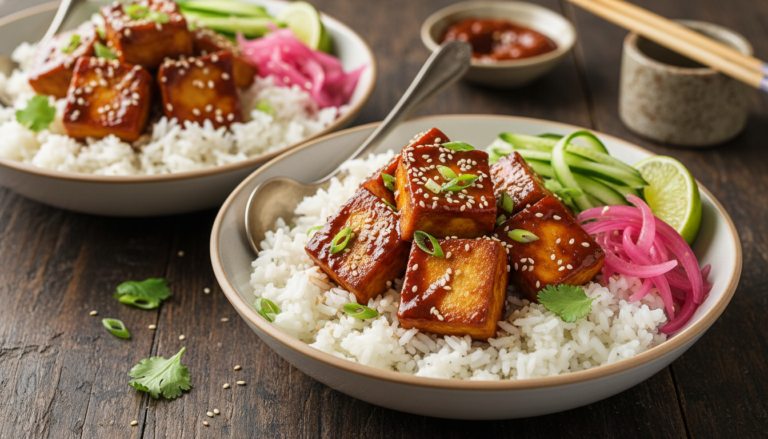
Gochujang Glazed Tofu & Jasmine Rice Bowls
These Gochujang Glazed Tofu & Jasmine Rice Bowls are a plant-based meal prep bowl with genuine depth—golden pan-fried tofu lacquered in a sweet, spicy, umami-rich gochujang glaze, served over fragrant jasmine rice with tender vegetables and sesame.
4
servings15
minutes25
minutes450
kcal40
minutesIngredients
1 block tofu, firm
3 tablespoons gochujang paste
2 tablespoons soy sauce
2 tablespoons honey
1 tablespoon sesame oil
1 tablespoon rice vinegar
2 cups jasmine rice, cooked
1 tablespoon vegetable oil
2 cups mixed vegetables, chopped
2 cloves garlic, minced
2 tablespoons green onions, sliced
1 tablespoon sesame seeds
Directions
- Press the tofu to remove excess moisture and cut into cubes.
- In a bowl, mix gochujang paste, soy sauce, honey, sesame oil, and rice vinegar.
- Marinate tofu cubes in the sauce for at least 10 minutes.
- Heat vegetable oil in a pan over medium heat; sauté garlic until fragrant.
- Add mixed vegetables and continue cooking until tender-crisp.
- Remove vegetables and in the same pan, cook marinated tofu until golden brown.
- Stir in remaining marinade and cook until sauce thickens.
- Serve tofu over jasmine rice, garnish with green onions and sesame seeds.
Nutrition Facts
- Total number of serves: 4
- Calories: 450kcal
- Cholesterol: 0mg
- Sodium: 620mg
- Potassium: 400mg
- Sugar: 8g
- Protein: 6g
- Calcium: 60mg
- Iron: 2mg
About This Author

Amelia Grace
Editor-in-Chief & Culinary Director
The heart and guiding voice of Daily Dish, Amelia leads our editorial vision and recipe development. With a background in food journalism and over a decade spent in professional kitchens, she has a knack for blending gourmet technique with real-world accessibility. Her goal? To make every reader feel like a confident cook, one dish at a time.
Favorite dish: Creamy lemon risotto with a sprinkle of fresh thyme.
Kitchen motto: “Good food doesn’t have to be complicated — it just has to be made with heart.”















