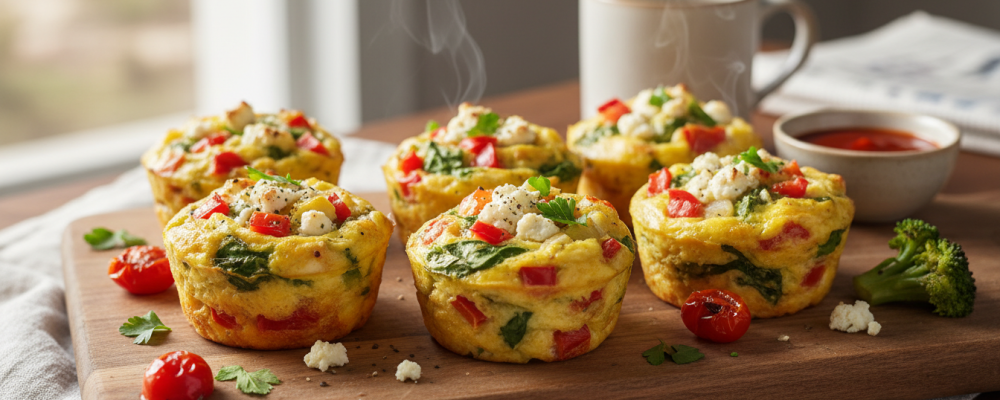

Egg-based meal prep presents a specific technical challenge: eggs are temperamental proteins that can easily become rubbery, watery, or sulfurous when overcooked or improperly stored. Most breakfast egg preparations fail by day three—scrambled eggs turn gray and release moisture, hard-boiled eggs develop that characteristic green ring and sulfur smell, omelets become tough and dried out. These muffin cups solve these problems through strategic cooking methodology that creates stable protein structure resistant to the textural degradation that typically occurs during refrigerated storage and reheating.
The muffin tin format delivers multiple technical advantages over sheet pan or skillet preparations. Individual portions mean faster, more even cooking—the small volume allows heat to penetrate quickly without requiring excessive oven time that would toughen the eggs. The cups’ cylindrical shape creates consistent thickness throughout, eliminating the thin edges that overcook while centers remain undercooked. The muffin tin’s metal construction conducts heat efficiently, creating even browning on the bottom and sides while the top sets from radiant oven heat.
What makes this recipe particularly effective for meal prep is understanding the relationship between cooking temperature, protein coagulation, and moisture retention. Eggs begin setting at approximately 144°F and fully coagulate by 158°F. The 375°F oven temperature and 20-minute baking time are calibrated to bring the eggs to full coagulation without exceeding safe temperatures by more than a few degrees—this narrow window between “set” and “overcooked” determines whether your muffin cups remain tender for days or become rubbery by Tuesday.
The vegetable selection reflects both nutritional objectives and practical storage considerations. Spinach, bell peppers, mushrooms, and onions all have relatively high moisture content in their raw state, but controlled cooking in the oven environment allows that moisture to evaporate without creating watery eggs. The vegetables also contribute fiber, vitamins, minerals, and phytonutrients that transform these from simple protein delivery into comprehensive nutrition. This isn’t just breakfast—it’s strategically engineered fuel designed to support sustained energy and satiety.
─────────
The Inspiration Behind This Recipe
This recipe emerged from analyzing why commercial egg bite products (particularly those from coffee chains) succeed where home preparations often fail. The key insight: those commercial products use precise temperature control and specific cooking vessels to create eggs that remain tender for multiple days. I needed to replicate those results using standard home equipment without requiring sous vide circulators or specialized molds.
The muffin tin method proved to be the optimal solution. Standard 12-cup muffin tins create portions of approximately 3-4 ounces (roughly 1/3 to 1/2 cup)—the perfect size for a single breakfast serving that provides 10-12 grams of protein per cup. The metal construction ensures even heat distribution, and the non-stick coating (or oil greasing) allows clean release after baking. Most importantly, the individual portions mean you can grab exactly what you need without committing to reheating an entire pan of eggs.
I tested various egg-to-vegetable ratios before settling on this combination. Too many vegetables and the cups don’t bind properly, falling apart when removed from the tin. Too few vegetables and they taste like plain baked eggs—nutritionally adequate but texturally boring and visually unappealing. This ratio creates cups that hold together structurally while providing sufficient vegetable content to contribute both nutrition and textural interest in every bite.
The cheese serves dual purposes beyond flavor. Cheddar’s fat content contributes to moisture retention, preventing the eggs from drying out during storage. The cheese also creates additional binding as it melts during baking and then re-solidifies during cooling, essentially acting as a protein glue that helps vegetables adhere to the egg matrix. This structural contribution matters more than most people realize—it’s the difference between cups that maintain integrity for five days and ones that crumble apart by day three.
─────────
A Brief History of Baked Egg Preparations and Portion Control
Baked egg dishes have existed for centuries across multiple cuisines—from French quiche to Italian frittata to Spanish tortilla. These preparations emerged partly from practicality (baking eggs feeds many people with minimal active cooking time) and partly from the reality that baked eggs maintain texture better than scrambled or fried eggs when held for service. The individual portion concept, however, is distinctly modern.
The muffin tin egg cup format gained popularity in the 2010s as meal prep culture expanded and people sought breakfast options that could be prepared in advance without quality degradation. Food bloggers and recipe developers recognized that muffin tins—already ubiquitous in home kitchens—could portion virtually any egg mixture into grab-and-go formats. The format solved multiple problems simultaneously: portion control through defined serving sizes, even cooking through standardized volumes, and convenient storage through stackable individual portions.
What distinguishes contemporary egg muffin cups from their historical predecessors is the emphasis on protein density and nutritional completeness rather than merely creating a vehicle for vegetables and cheese. Modern consumers understand protein’s role in satiety, muscle maintenance, and metabolic function, making these cups strategic nutrition rather than just convenient breakfast. The format has evolved from simple preparation method into optimized meal prep architecture designed for specific nutritional and lifestyle requirements.
─────────
Why This Baking Method Works for Meal Prep
The success of these egg muffin cups for extended storage hinges on understanding protein chemistry and how eggs behave under different cooking conditions. Eggs contain primarily two proteins: ovalbumin in the whites and ovotransferrin throughout. When heated, these proteins denature (unfold from their native structure) and then coagulate (bond together), creating the solid structure we recognize as cooked eggs. The temperature and speed of this process determine final texture.
Rapid, high-heat cooking (scrambling in a hot pan) causes proteins to coagulate quickly, squeezing out moisture and creating tight, sometimes rubbery texture. Gentle, moderate-heat baking allows proteins to denature and coagulate gradually, retaining more moisture within the protein network. This creates tender eggs rather than tough ones. The 375°F oven provides sufficient heat to fully cook the eggs in 20 minutes without the aggressive temperatures that would drive off excessive moisture or create tough texture.
The vegetable preparation contributes to moisture management as well. Chopping vegetables into small, uniform pieces (approximately 1/4-inch dice) ensures they release moisture gradually during baking rather than creating pockets of water that would make eggs soggy. The vegetables’ moisture partially evaporates in the oven’s dry heat while some integrates into the egg mixture, contributing to overall moisture balance without creating waterlogged results. Raw vegetables would release too much liquid; pre-cooked vegetables would contribute insufficient moisture—using raw vegetables with controlled size creates optimal balance.
The greasing step prevents sticking, but it also contributes to texture. The thin oil layer creates a barrier between eggs and metal, moderating heat transfer slightly and preventing the bottom from overcooking while the top finishes setting. This results in more uniform texture throughout each cup rather than having tough, browned bottoms and barely-set tops. Silicone muffin cups work similarly but with less browning—a matter of preference regarding texture and appearance.
From a storage and reheating perspective, these cups maintain quality because the cooking process creates stable protein structure. Unlike scrambled eggs that continue releasing liquid during storage (syneresis), properly baked eggs retain moisture within their coagulated protein network. The individual portion format also optimizes reheating—a single cup reaches serving temperature in 30 seconds without the uneven heating (dried edges, cold center) that occurs when reheating large portions.
─────────
Flavor Profile: What to Expect
These egg and veggie muffin cups deliver savory, satisfying flavors with excellent nutritional balance:
- Rich and eggy from properly cooked eggs that taste like eggs rather than overcooked sulfur
- Savory and slightly earthy from sautéed mushrooms that contribute umami depth
- Sweet and vegetal from bell peppers that add subtle sweetness and bright color
- Mild and slightly bitter from spinach that provides green vegetable nutrition without overwhelming
- Sharp and aromatic from onions that add flavor complexity and aromatic base notes
- Sharp and creamy from cheddar cheese that provides tangy richness and satisfying fat content
- Well-seasoned from salt and black pepper that enhance rather than mask the natural vegetable and egg flavors
The overall composition creates breakfast that tastes substantial and satisfying—like a proper meal rather than just grabbing something quick. The eggs provide comforting richness, the vegetables contribute freshness and textural variety, and the cheese adds indulgent notes that make these feel special despite being meal prep.
Over the first 2-3 days of storage, flavors continue integrating as the eggs absorb some of the vegetables’ aromatic compounds. The onions mellow from sharp to sweet, the mushrooms’ umami becomes more pronounced, and the cheese distributes its flavor more evenly throughout each cup. By day three, many people prefer the more integrated flavor to day one’s brighter but more distinct components. The eggs themselves maintain their mild, pleasant character without developing the sulfurous off-flavors that occur with overcooked or improperly stored eggs.
─────────
Tips for Making the Best Egg & Veggie Muffin Cups
Precision in technique transforms this straightforward recipe into genuinely excellent meal prep:
- Beat eggs thoroughly: Whisk for 30-60 seconds until completely uniform with no visible whites remaining. Proper incorporation ensures even texture rather than white and yellow streaks in finished cups.
- Chop vegetables uniformly: Aim for 1/4-inch dice on all vegetables. Consistent sizing ensures even cooking and distribution throughout the egg mixture. Large chunks cook unevenly and create structural weak points.
- Don’t overfill muffin cups: Fill each cup 3/4 full maximum. Eggs expand slightly during baking, and overfilled cups overflow, creating mess and uneven portions. Underfilling creates small, sparse-looking cups.
- Grease muffin tin generously: Even non-stick tins benefit from greasing. Use olive oil, cooking spray, or butter to coat every surface—bottom, sides, and rim. This ensures clean release without cups sticking or tearing.
- Use silicone muffin liners for easiest removal: Paper liners work but can stick to eggs. Silicone liners release cleanly every time and are reusable, making them worth the investment for regular meal prep.
- Don’t overbake: Check cups at 18 minutes. They’re done when centers are just set and no longer jiggle when gently shaken. Carryover cooking will finish them as they cool. Overbaking creates rubbery texture.
- Cool in pan for 5 minutes: This resting period allows structure to set fully. Remove too soon and cups may collapse or tear. After 5 minutes, run a knife around edges and lift out gently.
- Store properly cooled: Let cups reach room temperature before refrigerating (no more than 2 hours). Hot cups create condensation in sealed containers, which makes them soggy and reduces shelf life.
- Customize vegetable combinations: The base egg mixture works with virtually any vegetables. Try broccoli-cheddar, tomato-basil-mozzarella, or southwest style with peppers and Mexican cheese. Maintain similar total vegetable volume for consistent results.
- Pre-cook high-moisture vegetables: If using tomatoes or zucchini, sauté them first to remove excess moisture. Raw high-moisture vegetables create watery cups that don’t hold together well.
The most critical factors are oven temperature accuracy and avoiding overbaking. Even 5 minutes too long significantly impacts texture, creating tough, dry cups rather than tender, moist ones.
─────────
Portioning and Container Suggestions
This recipe yields 12 standard muffin-sized egg cups, which divides conveniently into 6 days of breakfast (2 cups per serving) or 12 days of protein-rich snacks (1 cup per serving). Two cups provide approximately 20-24 grams of protein—substantial enough to satisfy most people’s breakfast needs without requiring additional protein sources. Single cups work excellently as mid-morning or afternoon snacks when you need protein without full meal volume.
For storage, airtight containers maintain optimal freshness. Glass containers with snap lids work beautifully—they don’t absorb odors, allow microwave reheating directly from storage, and stack efficiently in refrigerators. A standard 6-cup rectangular container holds half a batch perfectly in a single layer. Plastic containers work fine but may eventually absorb egg odors—not harmful, just cosmetically undesirable.
For grab-and-go convenience, individually wrap each cup in plastic wrap or place in small containers (2-cup capacity works well for a full breakfast serving). This pre-portioning eliminates morning decision-making—just grab, reheat if desired, and eat. Individual portions also travel well in lunch bags or gym bags, providing portable protein for mid-day refueling.
If you’re meal prepping for the whole family or want to stock up, double the recipe and bake in two muffin tins simultaneously. These freeze beautifully, so there’s no downside to making 24+ cups. Keep one week’s worth refrigerated for immediate use and freeze the rest, transferring cups from freezer to fridge as needed.
─────────
Storage, Reheating, and Shelf Life Tips
- Refrigerator storage: Store in airtight containers for 4-5 days. Properly baked and stored cups maintain excellent texture and flavor throughout, with minimal quality degradation.
- Layer separation: If stacking cups, place parchment paper between layers to prevent sticking and maintain shape. Direct contact can cause cups to stick together, especially if they contain cheese.
- Freezer storage: Freeze for up to 3 months. Flash-freeze unwrapped cups on a baking sheet for 1 hour, then transfer to freezer bags. This prevents them from freezing together in a solid block.
- Reheating from refrigerated: Microwave 1 cup for 30-40 seconds, 2 cups for 60-75 seconds. Start with less time and add more as needed—overheating makes eggs rubbery.
- Reheating from frozen: Microwave 1 frozen cup for 60-90 seconds, flipping halfway through for even heating. Alternatively, thaw overnight in refrigerator and reheat as directed for refrigerated cups.
- Oven reheating option: For firmer texture, reheat at 300°F for 8-10 minutes (refrigerated) or 15-18 minutes (frozen). This method takes longer but better maintains the original texture than microwaving.
- Eating cold is acceptable: These cups are safe and reasonably palatable eaten cold straight from the refrigerator—convenient for eating at your desk or during commutes when reheating isn’t available.
- Add moisture when reheating: If cups seem dry after several days, place a damp paper towel over them during microwaving. The steam refreshes texture and prevents further drying.
- Prevent rubberiness: The primary enemy is overcooking—both initial baking and reheating. Use minimum necessary time for reheating and stop as soon as they’re warm through.
- Quality indicators: Fresh cups smell like eggs and vegetables without any sulfurous odor. If you detect sour or off smells, or see any mold growth, discard immediately. Within 4-5 days, this shouldn’t occur.
- Texture expectations: Refrigerated cups remain tender and moist through day 4. By day 5, they may be slightly drier but remain perfectly edible. Frozen and reheated cups have minimally different texture from fresh—one of the few egg preparations that freezes well.
─────────
Why This Recipe Deserves a Spot in Your Meal Prep Rotation
From an efficiency standpoint, these egg muffin cups deliver remarkable return on time investment. Total preparation time—beating eggs, chopping vegetables, mixing, baking—runs approximately 30 minutes including baking time (which is passive). That generates 12 servings, working out to 2.5 minutes per breakfast. Compare this to making eggs fresh each morning (10-15 minutes including cleanup) or stopping for breakfast (20-30 minutes including travel and wait time), and the time savings compound dramatically over weeks and months.
The economic calculation is equally compelling. Twelve egg cups cost approximately $4-6 to prepare—roughly $0.40-0.50 per cup or $0.80-1.00 for a two-cup breakfast serving. Restaurant egg-based breakfasts typically cost $8-12, while convenience store breakfast sandwiches run $4-6. You’re saving $3-11 per breakfast, which annualizes to $780-2,860 in savings if you eat these five times weekly. These aren’t trivial numbers—this represents significant budget optimization from a single meal prep recipe.
The nutritional architecture provides comprehensive benefits. Each cup delivers complete protein with all essential amino acids for muscle maintenance and metabolic function. The vegetables contribute fiber, vitamins (particularly vitamins A and C from bell peppers and spinach), minerals, and antioxidants. The eggs provide choline for brain health and lutein for eye health. The cheese contributes calcium. This combination creates breakfast that supports multiple health objectives simultaneously rather than just filling your stomach.
But perhaps most valuable is how these cups solve the breakfast compliance problem. One of the primary reasons people skip breakfast or make poor choices is lack of preparation meeting time constraints. When you wake up and know you have protein-rich, ready-to-eat breakfast requiring only 30 seconds of reheating, the barrier to eating well essentially disappears. You’re not choosing between nutrition and punctuality—you’re getting both simultaneously. That removal of friction, that conversion of healthy eating from effortful to effortless, often makes the difference between sustainable habits and temporary compliance that fades when life gets busy.
─────────
Meal Prep Pairing Suggestions
Egg muffin cups function optimally as part of a comprehensive breakfast strategy that provides variety without multiplying preparation complexity. Pair them with Baked Oatmeal Cups or Greek Yogurt Parfaits for a week of alternating breakfast options—some mornings call for warm, savory protein from egg cups, other mornings something sweet and carb-forward sounds more appealing. Having multiple options prepped covers different cravings and contexts without requiring daily cooking.
For those wanting heartier breakfasts or higher protein intake, these cups pair excellently with Breakfast Burritos. Keep both in your freezer and choose based on appetite and schedule—egg cups for lighter mornings or when you’re eating at your desk, burritos for substantial mornings or when you need portable food for your commute. Both reheat quickly, so choosing between them adds no complexity to your morning routine.
These cups also function brilliantly beyond breakfast. As mid-morning or afternoon snacks, a single cup provides 10-12 grams of protein that bridges hunger between meals without the sugar crash that comes from typical snack foods. Athletes and active individuals can use them as pre-workout fuel (2 cups eaten 60-90 minutes before training provides sustained energy without digestive distress) or post-workout recovery (the complete protein supports muscle repair).
From a complete weekly meal prep perspective covering all eating occasions, combine these egg muffin cups (breakfast) with Greek Chicken Wraps or Mason Jar Salads (lunch), Sheet Pan Chicken with Vegetables (dinner), and Dark Chocolate Energy Bites or Stuffed Mini Peppers (snacks). This comprehensive system means Sunday preparation covers every meal and snack Monday through Friday—no decisions, no emergency drive-throughs, no skipped meals because you lack prepared options. The egg cups anchor your mornings with reliable protein that prevents the mid-morning energy crash and subsequent poor lunch choices that often derail healthy eating intentions. When breakfast is handled, everything else tends to fall into place more easily.
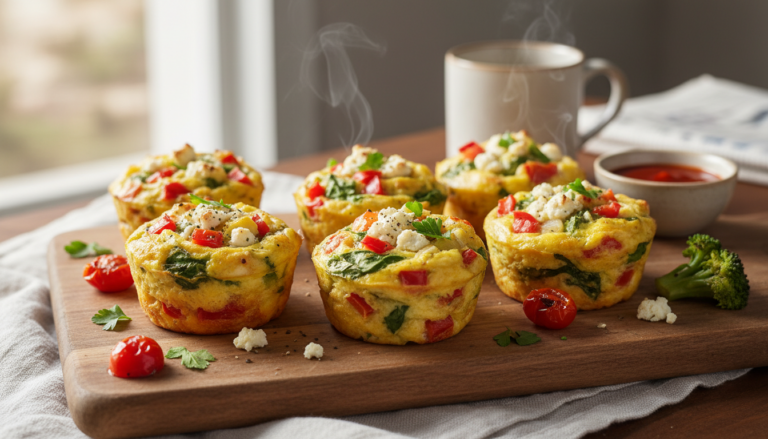
Egg & Veggie Muffin Cups
This egg and veggie muffin cups recipe transforms simple eggs and vegetables into perfectly portioned, protein-rich breakfast cups that store for days and reheat in seconds.
12
servings15
minutes20
minutes100
kcal35
minutesIngredients
6 large eggs
1 cup spinach, chopped
1 cup bell peppers, diced
1 cup mushrooms, chopped
0.5 cup onions, diced
0.5 cup cheddar cheese, shredded
0.25 teaspoon salt
0.25 teaspoon black pepper
1 tablespoon olive oil
Directions
- Preheat your oven to 375°F (190°C).
- Grease a 12-cup muffin tin using olive oil.
- In a large bowl, beat the eggs with salt and pepper.
- Add chopped spinach, bell peppers, mushrooms, onions, and cheese to the egg mixture.
- Mix well until all the ingredients are combined.
- Pour the mixture evenly into the greased muffin tin.
- Bake for 20 minutes or until the eggs are set.
- Allow the muffin cups to cool slightly before removing them from the tin.
- Serve warm or store in the refrigerator for up to 3 days.
Nutrition Facts
- Total number of serves: 4
- Calories: 120kcal
- Cholesterol: 0mg
- Sodium: 620mg
- Potassium: 400mg
- Sugar: 8g
- Protein: 6g
- Calcium: 60mg
- Iron: 2mg
About This Author

Benjamin Brown
Recipe Developer
Benjamin is our flavor engineer. A classically trained chef turned recipe developer, he’s obsessed with balancing taste, texture, and creativity. He ensures that every recipe we publish is not only delicious but also reliable, approachable, and repeatable — even for beginners.
Favorite dish: Slow-braised short ribs with red wine reduction.
Kitchen motto: “Cooking is part science, part soul.”