Daily Dish

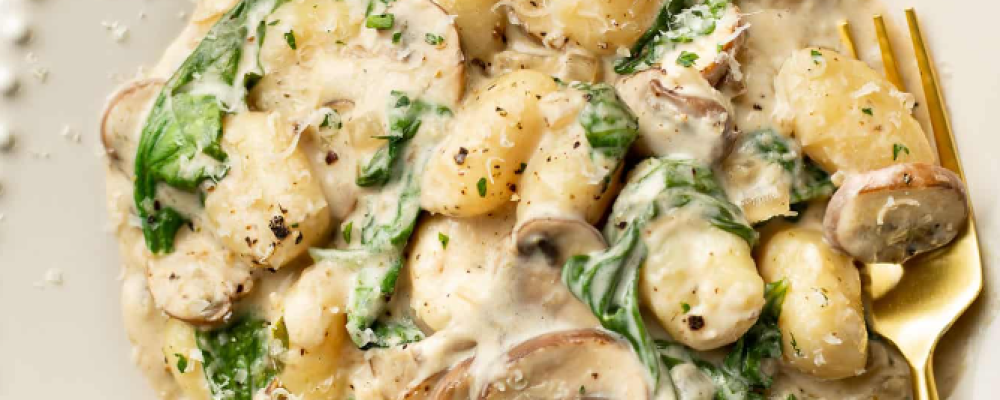
Creamy Gnocchi with Mushrooms and Spinach

Healthy Fact of the Day

Gnocchi is a great source of complex carbohydrates for sustained energy, while mushrooms and spinach provide important vitamins, minerals, and antioxidants. The cream sauce adds richness and flavor, but you can also use a lighter cream or milk alternative for a healthier option.

Ingredients


  • 1 lb potato gnocchi
  • 2 tablespoons olive oil
  • 8 oz mushrooms (cremini or button), sliced
  • 3 cloves garlic, minced
  • 1/2 cup dry white wine (optional)
  • 1 cup heavy cream
  • 1/2 cup grated Parmesan cheese, plus more for serving
  • 4 cups fresh baby spinach
  • Salt and pepper to taste
  • Chopped fresh parsley for garnish


Instructions


  1. Cook the gnocchi according to package instructions. Drain and set aside.

  2. In a large skillet, heat the olive oil over medium-high heat.

  3. Add the sliced mushrooms and sauté for 5-7 minutes until they start to brown and release their moisture.

  4. Add the minced garlic and cook for 1 minute until fragrant.

  5. If using white wine, pour it into the skillet and let it simmer for 2-3 minutes, scraping any browned bits from the bottom of the pan.

  6. Reduce the heat to medium-low and pour in the heavy cream. Let it simmer for 2-3 minutes, stirring occasionally, until slightly thickened.

  7. Stir in the grated Parmesan cheese until melted and combined.

  8. Add the cooked gnocchi and fresh spinach to the skillet. Gently toss everything together until the spinach is wilted.

  9. Season with salt and pepper to taste.

  10. Serve the creamy gnocchi hot, garnished with chopped fresh parsley and extra Parmesan cheese, if desired.

Enjoy this comforting and indulgent yet nutritious creamy gnocchi dish as a satisfying vegetarian main course or side dish!
Recent Recipes

Burger King Is Giving Away Free Burgers

  • May 27, 2026
  • 3 min read

Apple Cider Pork with Mash Sweet Potatoes

  • May 27, 2026
  • 13 min read

The Foods That Tell You Where You

  • May 27, 2026
  • 9 min read

Bang Bang Fried Rice

  • May 27, 2026
  • 10 min read

White Castle Is Putting Slider Vending Machines

  • May 26, 2026
  • 4 min read

Spicy Shrimp Tacos with Watermelon Salsa

  • May 26, 2026
  • 9 min read

Why Learning to Cook Later in Life

  • May 26, 2026
  • 8 min read

One Pot Mac & Chorizo

  • May 26, 2026
  • 9 min read

What’s New at Kroger Right Now —

  • May 25, 2026
  • 4 min read

Greek Feta Dip

  • May 25, 2026
  • 11 min read

Tip of the Day

“Always let your meat rest before slicing.”

Whether you're roasting a chicken, grilling steak, or baking pork tenderloin, letting cooked meat rest for 5–10 minutes before slicing allows the juices to redistribute evenly. This simple step keeps your meat juicy and tender, ensuring every bite is flavorful and moist. Bonus: It gives you a moment to plate your sides or garnish for a perfect presentation!

Our Latest Recipes

Blog
Daily Disher

Burger King Is Giving Away Free Burgers Tomorrow — Here’s How to Get Yours

National Hamburger Day is a great excuse to enjoy a burger — and a few small choices can make the meal feel more balanced without taking the fun out of it. Ordering a plain hamburger over a double or triple patty keeps saturated fat in check, and loading up on tomato, lettuce, and onion adds fiber and nutrients without extra calories. Skipping the fries in favor of a side salad or apple slices — where available — is the easiest swap to lighten the overall meal while still enjoying the main event.

Read More »
Blog
Daily Disher

The Foods That Tell You Where You Are

Traditional regional foods — the cheeses, fermented products, cured meats, and agricultural staples of specific geographic areas — often reflect centuries of nutritional adaptation to local conditions. Mountain cheeses from high-altitude grazing regions tend to be higher in fat-soluble vitamins from the diverse alpine flora the animals consume. Coastal food traditions tend to include higher consumption of omega-3-rich seafood. Regional diets, eaten in their place of origin and in their traditional form, often represent nutritional systems that evolved in relationship with the specific needs and conditions of the people who developed them — a dimension of food culture that industrial standardization has progressively diminished.

Read More »

Get your daily dose of delicious!

Skip to content