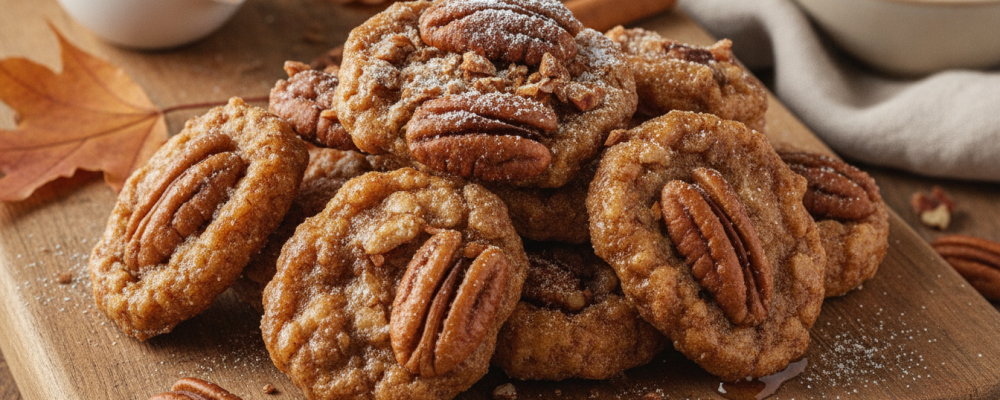

I want to establish something before we discuss technique or storage or any of the practical matters: these clusters are, in all the ways that matter culinarily, a simplified pecan praline. Not a praline in the strict French confectionery sense—which involves a more precisely controlled sugar cook and produces a harder, more uniform result—but a praline in the American Southern sense, which is a looser, more rustic, more forgiving preparation where butter and sugar are cooked together with pecans until the sugar caramelizes and the whole thing sets into a soft, yielding confection that is specifically, completely irresistible.
The reason this matters is that butter is the ingredient that distinguishes this cluster from every other nut cluster in this collection, and the distinction is not minor. Every other cluster uses honey or coconut oil or olive oil as the fat phase—each of which produces a specific caramelization outcome. Butter produces something different. Butter contains water, fat, and milk solids—the protein and lactose compounds that constitute the non-fat portion of dairy—and those milk solids undergo their own Maillard browning at temperatures above 250°F, producing the nutty, slightly smoky, deeply complex flavor that bakers call beurre noisette and that makes brown butter one of the most transformative ingredients in the pastry kitchen. When butter is melted into maple syrup and applied to pecans and placed in a 350°F oven, the milk solids brown alongside the maple’s caramelizing sugars, producing a coating with two simultaneous Maillard processes occurring in the same fat phase—a flavor complexity that honey or coconut oil simply cannot generate because they contain no milk solids to brown.
The result is a cluster that tastes specifically of toasted pecan, caramelized maple, and browned butter—three deeply related flavors that share an earthy, slightly smoky, specifically sweet character that makes the combination feel inevitable rather than constructed. This is not an accident of ingredient availability. It is one of American baking’s most considered and most enduring flavor relationships.
─────────────────────────────────────────
The Inspiration Behind This Recipe
The inspiration is the pecan praline of the American South—specifically the New Orleans version, which is softer and more yielding than the firm, brittle pralines of French confectionery and which has been made in the kitchens and on the stovetops of Louisiana for at least three centuries. The combination of pecan, butter, and sugar caramelized together into a soft confection reflects the specific collision of ingredients that characterized colonial Louisiana’s culinary tradition: native pecans from the North American forests, butter and cream from the European dairy tradition, and cane sugar from the Caribbean plantations that supplied the Gulf Coast economy.
The cluster format rather than the individual praline format is the contemporary adaptation that makes this recipe suitable for a weekly meal prep context: while a traditional praline requires careful sugar-temperature monitoring to produce a properly set individual candy, a cluster preparation uses the oven’s even, controlled heat to caramelize the butter-maple coating at a rate that produces a reliably consistent result without the watchfulness that stovetop sugar work demands. The oven is the technique that takes the praline flavor and makes it practically achievable for any home cook on any Sunday afternoon.
Maple syrup rather than refined sugar reflects both a flavor preference and a specific caramelization property. Maple syrup’s sugar composition—primarily sucrose with smaller amounts of glucose and fructose from its inversion during the evaporation process—and its significant mineral content interact with the butter’s milk solids during browning to produce a caramelized coating with a distinctive, specifically maple character that refined sugar cannot replicate. The maple flavor in a maple-caramelized nut cluster is not simply sweetness with a flavoring added; it is the flavor that emerges from the specific caramelization chemistry of maple’s particular sugar mixture. It is worth using real maple syrup specifically rather than maple-flavored syrup.
─────────────────────────────────────────
A Brief History of the Pecan Praline
The praline’s origins lie in French confectionery of the 17th century, where the legend attributes its creation to the kitchen of Marshal du Plessis-Praslin, whose cook allegedly invented a preparation of caramelized sugar and almonds as a digestive aid for his employer. The preparation spread through French aristocratic culture as praslin before the term became praline and the preparation evolved across French regional traditions. When French colonizers established New Orleans in 1718, they brought the praline tradition with them—but in Louisiana, almonds were unavailable and pecans were abundant, and the Gulf Coast heat and humidity produced a climate that favored the soft, creamy praline over the harder French brittle version.
The New Orleans pecan praline became one of the city’s most iconic confections by the 19th century, sold on street corners by pralinières—praline sellers, predominantly Black women who became significant economic actors in New Orleans’ food culture through their praline businesses. These women developed and refined the preparation over generations, producing the characteristically soft, yielding, butter-and-cream-enriched New Orleans praline that remains distinct from any other praline tradition in the world and that is the direct ancestor of the cluster preparation in this recipe.
Cinnamon’s addition to the praline tradition is a relatively recent enhancement—one that appears in 20th century American home cooking as cinnamon’s association with warm, sweet preparations deepened through the century’s baking culture. Its combination with maple syrup in the contemporary cluster format is a natural convergence: both cinnamon’s cinnamaldehyde and maple’s caramelized lactone compounds belong to the same warm, woody, slightly sweet aromatic family, and they amplify rather than compete with each other in the presence of butter’s browned milk solid compounds.
─────────────────────────────────────────
Why This Cooking Method Works for Meal Prep
The oven roasting method—rather than the stovetop sugar cook of the traditional praline—is the preparation technique that makes this recipe reliably executable for a meal prep context and produces a consistent result across batches. Traditional praline requires monitoring the sugar’s temperature through specific color and texture stages, which demands experience and attention that the home cook preparing multiple Sunday recipes simultaneously cannot always provide. The oven at 350°F achieves caramelization at a slower, more forgiving rate: the butter’s water content evaporates gradually, the milk solids brown progressively, and the maple’s sugars caramelize evenly across the full surface area of the spread pecans rather than concentrated at the base of a saucepan. The fifteen-to-twenty-minute window allows for the halfway stir that redistributes the more-caramelized edge pieces toward the center without the urgency of stovetop sugar work.
Melting the butter with the maple syrup, cinnamon, and salt in the saucepan before applying to the pecans—rather than tossing the pecans with the ingredients separately and applying them cold—produces a coating that is more uniformly distributed and more cohesive in the finished cluster. Warm butter is fully liquid and immediately wets every pecan surface it contacts; cold butter applied in pieces creates uneven coverage with fat-heavy and fat-light areas that caramelize at different rates. The thirty-second saucepan step is the preparation that makes the coating behave like a coating rather than a collection of separate ingredients.
The complete cooling period before breaking into clusters is the final step that the butter-maple caramelization specifically requires. Butter-based caramelized coatings behave differently from honey-based ones during cooling: the butter’s saturated fat solidifies progressively below 70°F, contributing a firmer set and a more pronounced snap than honey-based preparations that set primarily through sugar crystallization. The full fifteen minutes of cooling allows both mechanisms—sugar crystallization and fat solidification—to complete before the clusters are disturbed, producing pieces that hold their shape cleanly and maintain their textural character through the storage window.
─────────────────────────────────────────
Flavor Profile: What to Expect
These clusters are rich, warmly sweet, and deeply caramelized—a flavor profile that is specifically of the Southern American confectionery tradition:
- Toasted, buttery pecan – The foundational flavor: the pecan’s distinctive richness, its specific combination of buttery fat and gentle tannin bitterness, deepened by the oven’s heat into something specifically toasted and warm—a flavor that no other nut quite replicates
- Browned butter and maple caramel – The coating’s defining character: the combined Maillard products of butter’s milk solids and maple’s caramelizing sugars producing a flavor that is simultaneously more nutty, more complex, and more specifically caramel than either ingredient achieves in isolation
- Warm cinnamon spice – The aromatic that frames every other flavor: warm, sweet, and specifically complementary to both the pecan’s earthiness and the maple’s caramel depth, making the whole preparation taste more cohesive and more intentional
- Salt contrast – Present in the coating as the balance element that makes the sweet taste sweeter and the caramel taste more complex—the detail that prevents the cluster from reading as simply very sweet and produces instead the specifically compelling sweet-and-salty balance that makes praline-adjacent preparations so difficult to stop eating
- Caramelized sugar snap – The textural signature: the cluster’s surface coating, fully set through the combined mechanisms of sugar crystallization and butter fat solidification, producing a clean snap on the first bite that yields to the pecan’s yielding, slightly chewy interior
The butter’s fat-soluble aromatic compounds continue distributing through the caramelized coating during the cooling period and into the first day of room-temperature storage. Day-two clusters are measurably more cohesive in flavor—the browned butter character more forward and more evenly present throughout—than clusters eaten immediately after cooling.
─────────────────────────────────────────
Tips for Making the Best Cinnamon Maple Roasted Pecan Clusters
The butter and maple preparation stage and the cooling step are where this recipe rewards the most attention:
- Use real maple syrup, not maple-flavored syrup – This is a non-negotiable quality specification. Maple-flavored syrup is corn syrup with artificial flavoring and does not produce the specific caramelization chemistry that makes maple syrup in a cluster preparation specifically, recognizably maple. The flavor difference between the two in a finished cluster is immediately and completely apparent.
- Use good butter – European-style butter with a higher fat content (82–84% versus American standard 80%) produces a richer, more complexly flavored caramelized coating because more fat means proportionally less water to evaporate and more milk solid to brown. Worth using here if available.
- Stir the saucepan mixture just until combined – Over-agitation of the butter-maple mixture introduces air that can cause the coating to bubble unevenly during baking. Stir just until the cinnamon and salt are incorporated and the mixture is uniform, then immediately pour over the pecans.
- Coat pecans thoroughly before spreading – Every pecan surface needs contact with the butter-maple mixture before the sheet pan goes into the oven. A full sixty seconds of stirring in the bowl—longer than seems necessary—ensures complete and even coverage. Uncoated surfaces bake to a different color and texture than coated ones, producing a visually and texturally inconsistent cluster.
- Watch the color in the final five minutes – Butter’s milk solids brown significantly faster than the maple’s sugars in the final minutes of baking. The clusters are done when they are deep amber-brown throughout—not pale gold, not dark brown. The color changes quickly at the end; check every two minutes after the fifteen-minute mark.
- Cool without disturbing – The cooling period is the cluster-formation process. Moving, touching, or attempting to break the pecans before complete cooling produces pieces that are soft, sticky, and formless. The full fifteen minutes on the sheet pan, untouched, produces clusters that break cleanly along their natural fault lines.
Optional: A light drizzle of additional maple syrup over the warm clusters immediately after baking—applied in a thin stream across the surface of the sheet before cooling begins—adds a glossy, darker maple lacquer to the top surface of each cluster that is both visually beautiful and specifically, intensely maple at the first bite.
─────────────────────────────────────────
Portioning and Container Suggestions
A standard batch yields approximately twelve to sixteen clusters of varying size depending on the density of the pecan layer and the size of the broken pieces — three to four clusters per serving as a satisfying snack, or one to two alongside coffee or tea as a small afternoon treat. The irregular, hand-broken shape of each cluster is part of its specific visual charm: no two are identical, and the deep amber caramelized coating against the darker pecan surface produces a visual that is specifically beautiful in the way that praline-adjacent preparations always are — rich, warm, and unmistakably of something indulgent.
These clusters store best in a sealed glass jar or airtight tin at room temperature, away from direct sunlight and moisture. A glass jar on a counter or pantry shelf, the clusters visible through the glass in their deep amber and brown, is one of the most inviting snack storage visuals in the collection — the kind of thing that guests notice and immediately ask about. The answer — “just pecans, butter, maple syrup, cinnamon, and salt” — is one of those small cooking revelations where the simplicity of the ingredients and the sophistication of the result produce a genuinely satisfying moment.
For an entertaining or gifting presentation — these clusters are a natural gift-tin preparation, a holiday board addition, or a coffee-pairing offering — arrange in a shallow bowl or on a board with a light dusting of additional cinnamon over the surface and a few additional whole pecans placed decoratively alongside. The deep auburn and amber color palette is specifically beautiful and requires no additional garnishing.
─────────────────────────────────────────
Storage, Reheating, and Shelf Life Tips
- Room temperature storage (required): Keeps in a sealed airtight container for up to 10 days. The butter’s saturated fat is stable at room temperature within this window, and the caramelized maple coating maintains its snap and the pecan’s crunch throughout.
- Refrigerator storage: Not recommended. The refrigerator’s humidity softens the butter-fat coating within twenty-four hours, and the condensation that forms when cold clusters are brought to room temperature for eating can compromise the caramelized coating’s integrity. Room temperature in a sealed container is the correct storage environment.
- Re-crisping: If clusters have softened due to humidity exposure, spread on a parchment-lined baking sheet and warm at 300°F for four to five minutes. Cool completely before returning to storage — the coating will re-firm as the butter fat and caramelized sugar re-harden.
- Freezer storage: Freeze exceptionally well for up to 3 months in an airtight bag with parchment paper between layers. Thaw at room temperature for twenty minutes — both the butter fat and the caramelized sugar return to their original firm texture within this window. Freezer storage is particularly useful for batch preparation: make a double batch, freeze half, and rotate as needed.
- No reheating required: These are a room-temperature confection. The butter’s fat-based caramel is at its optimal snap-and-yield texture at room temperature; heating would melt the coating and destroy the cluster’s structure.
- Humidity note: Butter-based caramelized coatings are somewhat more humidity-sensitive than oil-based ones because the butter’s water content was driven off during baking and any reintroduction of moisture partially reverses the caramelization. A sealed container is essential; a food-safe silica gel packet inside the container is worthwhile in humid climates.
─────────────────────────────────────────
Why This Recipe Deserves a Spot in Your Meal Prep Rotation
I have a simple test I apply to every sweet snack preparation I include in a collection: would I make this if I had access to the best possible commercial version of the same thing? For most preparations, the honest answer is yes—the homemade version is fresher, more controllable, and less expensive, but the commercial version is acceptable. For this cluster, the answer is different. There is no commercial version of a butter-and-maple-caramelized pecan cluster that comes close to the flavor of the freshly made version—the browned butter’s specific Maillard products, the real maple’s caramelization chemistry, the salt’s precise balance—because commercial production cannot accommodate the temperature sensitivity and the short shelf life that make this preparation specifically excellent. The best version of this cluster is the one made at home, on Sunday, with five ingredients and twenty minutes. There is no available shortcut that produces the same result.
That rarity—the snack that is genuinely better made at home than purchased—earns a permanent place on any weekly prep list. These clusters are worth making every two weeks, which is approximately how long each batch lasts before being finished. They are worth the sourcing of real maple syrup and good butter. They are worth the twenty minutes of a Sunday afternoon. And they are worth the specific, repeated pleasure of opening a jar of something that smells of cinnamon and caramel and toasted pecan on a Wednesday afternoon when the week has been going long. That is what a truly good snack does. This one does it every single time.
─────────────────────────────────────────
Meal Prep Pairing Suggestions
Cinnamon Maple Roasted Pecan Clusters pair most naturally with snack preparations that offer genuine contrast in flavor intensity and nut character within the roasted cluster category. Our Chili Honey Roasted Cashew Clusters make a compelling companion — both are oven-roasted nut clusters built on a caramelized sweetener coating that sets into a crunchy, breakable cluster, but the cashew clusters’ bold chili heat and clean honey sweetness are a completely different experience from these clusters’ warm, spiced, buttery indulgence. Together they give the week’s cluster snacking two different intensity levels and two different flavor directions within the same satisfying format.
For a broader snack rotation that includes a bold-savory counterpoint alongside the clusters’ warm sweetness, our Smoked Paprika Roasted Almonds & Dried Cherry Clusters provide the smoky-sweet-tart alternative that covers the roasted nut snack occasion from a completely different flavor angle — the dried cherry’s tartness and the paprika’s smoke providing the sharp, complex contrast to the pecan cluster’s deeply warm, caramelized richness. Three cluster preparations covering warm-and-buttery, bold-and-chili-spiced, and smoky-and-fruit-forward: a cluster snack collection with the range to satisfy every snacking mood the week can produce, assembled on Sunday, and genuinely worth reaching for every afternoon it’s needed.
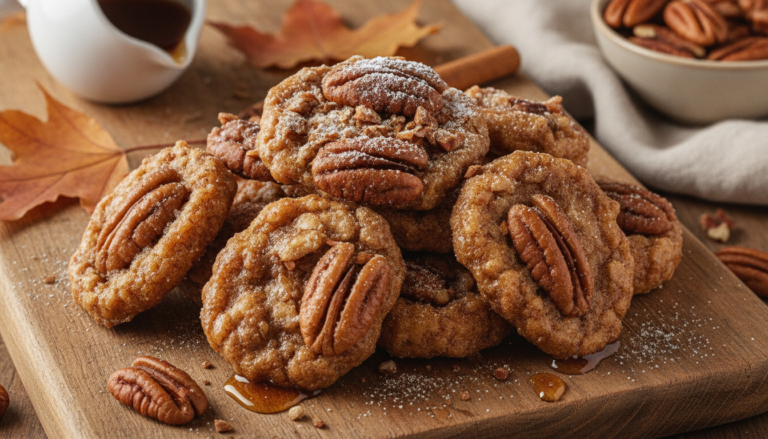
Cinnamon Maple Roasted Pecan Clusters
These Cinnamon Maple Roasted Pecan Clusters are a five-ingredient, oven-baked confection built on the butter-and-maple caramelization that is the foundational chemistry of the American pecan praline—producing clusters that are visually stunning, deeply aromatic, and substantially more elegant than anything requiring only twenty minutes and a saucepan.n every satisfying bite.
8
servings10
minutes20
minutes210
kcal30
minutesIngredients
250 g pecans
60 ml maple syrup
1 tsp ground cinnamon
30 g butter
1 pinch salt
Directions
- Preheat the oven to 350°F (175°C) and line a baking sheet with parchment paper.
- In a saucepan, melt the butter over low heat.
- Add maple syrup, cinnamon, and salt to the melted butter, stirring until combined.
- Place pecans in a large bowl and pour the butter mixture over them, stirring to coat evenly.
- Spread the pecans in a single layer on the prepared baking sheet.
- Roast in the oven for 15-20 minutes, stirring halfway through, until pecans are golden brown.
- Remove from oven and let cool completely to allow the coating to harden.
- Break the clusters into pieces and enjoy.
Nutrition Facts
- Total number of serves: 4
- Calories: 210kcal
- Cholesterol: 0mg
- Sodium: 620mg
- Potassium: 400mg
- Sugar: 8g
- Protein: 6g
- Calcium: 60mg
- Iron: 2mg
About This Author

Aurora Wright
Pastry Chef & Dessert Editor
Aurora is the sweet side of Daily Dish. A trained pastry chef and dessert stylist, she’s responsible for our mouth-watering cakes, cookies, and confections. She brings precision, artistry, and a touch of whimsy to every recipe she creates — and taste-tests more chocolate than she’ll admit.
Favorite dish: Flourless dark chocolate torte.
Kitchen motto: “Life’s too short to skip dessert.”