
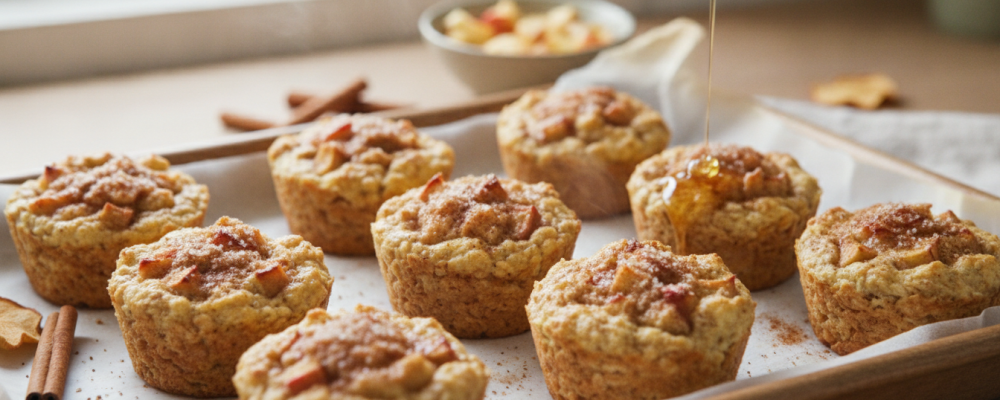

There are exactly two things that happen when cinnamon apple bakes in an oven. The first is that the kitchen fills with a fragrance so universally recognized as good that it is essentially the smell of comfort itself—warm, sweet, slightly spiced, and so deeply embedded in culinary memory across virtually every culture that has access to both ingredients that it bypasses the critical faculties entirely and produces a response that is approximately: yes, this is exactly right, something good is happening here. The second thing that happens is that everyone within range of the kitchen appears in the doorway within approximately four minutes.
I have baked with apple and cinnamon for my entire professional life—in tarts, in cakes, in crumbles, in strudels, in compotes that went under and over and alongside other preparations—and I have never once had the experience of removing something apple-and-cinnamon from the oven without someone in the vicinity noticing and commenting on it. The fragrance is not merely pleasant; it is socially adhesive. It draws people toward it in a way that lavender does not, that matcha does not, that even vanilla does not quite manage in the same direct and universal way. Apple and cinnamon together in a hot oven is the olfactory equivalent of a very warm welcome, and it is one of the reasons I believe so strongly in making this particular cup on a Sunday morning rather than saving it for a weekday—because the Sunday kitchen should smell like something, and this is the best possible something.
What the cup itself delivers—fragrant, golden, with soft apple pieces throughout and the familiar warmth of cinnamon and honey—is the breakfast equivalent of a conversation that goes exactly as you hoped it would. Comfortable, specific, and better than the version you imagined before it actually happened.
─────────────────────────────────────────
The Inspiration Behind This Recipe
The inspiration is simple and honest: apple and cinnamon baked into something is one of the most fundamentally satisfying flavor combinations in existence, and the cottage cheese oat cup is the format that makes it available every morning of the week without any morning effort. That is the entire design premise—bring the fragrance and the flavor of the best possible apple-cinnamon baked thing into a format that preps in thirty minutes and delivers across five mornings, with a protein profile that justifies eating it enthusiastically rather than guiltily.
The cottage cheese base was chosen for exactly the reason it appears in every baked cup in this category: its moisture-retaining properties keep the cup soft and yielding through the refrigerator storage window in a way that a standard flour-dominant muffin cannot sustain, its mild tang provides a subtle dairy note that makes the honey and cinnamon taste more specifically of themselves by contrast, and its protein content makes each cup genuinely sustaining in a way that pure carbohydrate muffins do not aspire to be. A baked cup built on cottage cheese is not a healthy compromise—it is a structurally superior preparation that happens to also be nutritionally excellent.
The apple is diced rather than grated or pureed specifically for the textural event it creates in the finished cup. Grated apple dissolves almost completely into the batter during mixing and baking, distributing its moisture throughout the oat matrix and producing a cup that is uniformly apple-flavored but lacks the distinct soft-apple pieces that make each bite specifically different from the ones around it. Diced apple maintains its identity through the baking process—softening into yielding, slightly jammy pieces while retaining enough structure to be encountered as distinct textural events in the crumb. That distinction—the moment of finding a soft apple piece in an otherwise tender oat crumb—is one of the cup’s most specifically pleasurable qualities.
─────────────────────────────────────────
A Brief History of Apple and Cinnamon in Baking
Apple and cinnamon have been paired in baked preparations for as long as both ingredients have been accessible to the same kitchen—which, in Europe and the Americas, is a surprisingly long time. Cinnamon, traded from Sri Lanka and Southeast Asia through Arab merchants to European markets, was one of the most valued and widely used spices in medieval European cooking and baking, appearing in preparations across every social class from the simple spiced breads of ordinary households to the elaborate spice-laden pastries of royal courts. Apples, native to Central Asia and cultivated across Europe for millennia, were the most widely available fruit in most European climates and the natural first choice for cooked and baked preparations through most of culinary history.
The specific combination of apple and cinnamon in baked pastry is so ancient and so widely replicated across European baking traditions that tracing it to any single origin is essentially impossible—it appears in English apple pies, French tarte Tatin, German Apfelkuchen, Austrian strudel, and American pie with equal authority and similar technique, each culture arriving independently at the same conclusion that these two ingredients belong together in a hot oven. The combination’s universality reflects not culinary borrowing but the simple fact that apple’s sweet acidity and cinnamon’s warm spice complexity are, at a flavor chemistry level, designed to amplify each other — the cinnamon’s cinnamaldehyde compounds make apple’s natural esters smell more intensely fruity, while the apple’s acidity prevents the cinnamon from reading as harsh or medicinal.
The cottage cheese oat cup is the most contemporary iteration of this ancient baking partnership — a preparation that owes its structure to the European tradition of fresh cheese in sweet baked goods, its grain base to the oat preparations of Scottish and Irish baking heritage, and its fruit-and-spice combination to centuries of accumulated culinary consensus that apple and cinnamon belong together in a warm oven. It is, in the most legitimate sense, a recipe with a very long history that simply required a muffin tin to reach its final form.
─────────────────────────────────────────
Why This Cooking Method Works for Meal Prep
The single-bowl mixing method — combining all wet and dry ingredients progressively in one bowl — is the correct approach for a cottage cheese oat batter, and the reason is control over the oat’s hydration. Oats begin absorbing liquid immediately upon contact, and the rate of absorption depends on the order in which ingredients are combined. Combining the oats and cottage cheese first — before the eggs and honey — allows the oats to begin absorbing the cottage cheese’s liquid content in the most gradual, even way possible, producing a batter that is consistently hydrated throughout rather than having over-soaked and under-soaked areas that bake at different rates. The eggs and remaining liquid added subsequently work into an already partially cohesive matrix, producing a smoother, more uniform batter than a simultaneous everything-together approach.
Dicing the apple uniformly before folding it in is the preparation step that most determines the cup’s texture distribution. Uniformly diced apple pieces — approximately half-inch cubes — distribute through the batter at a consistent rate during stirring, ensuring that every cup in the muffin tin receives a similar number of apple pieces. Randomly chopped apple distributes unevenly, producing some cups with concentrated apple pockets and others with almost none — a consistency problem that affects both the eating experience and the visual appeal of the finished batch.
The twenty-five minute baking time is calibrated for the specific moisture content of a cottage-cheese-and-oat batter with diced fresh apple included. Fresh apple releases moisture during baking — more than the dried fruits that often appear in oat cups — and the batter requires adequate time to absorb and set around this released moisture before the cup is structurally stable. A toothpick test at twenty-three minutes is more reliable than the timer: the cup is done when the toothpick emerges with a few moist crumbs but no wet batter, and the surface is golden and spring-back firm when lightly pressed.
─────────────────────────────────────────
Flavor Profile: What to Expect
These cups are warm, familiar, and gently complex — the flavor of the most comforting possible baked thing in a portable, protein-enriched format:
- Warm, spiced cinnamon – The defining aromatic of the cup: immediately recognizable, specifically warm, and distributed evenly through the batter so that every bite carries the same consistent cinnamon character from the first forkful to the last
- Soft, slightly jammy apple – The textural and flavor event that makes each bite specifically interesting: gentle, slightly tart, and concentrated by the oven’s heat into something more specifically apple-flavored than the fresh dice that went in
- Floral honey sweetness – The sweetener whose natural complexity — more layered than white sugar, more specifically flavored than maple — complements the apple’s brightness and the cinnamon’s warmth without overwhelming either
- Warm vanilla depth – The bakery-like aromatic that rounds every other flavor into something specifically, memorably pleasant — most perceptible in the cup’s fragrance and in the background of every bite
- Mild, tangy cottage cheese – The base’s quiet character: slightly tangy, primarily textural, and contributing the moisture-retaining creaminess that makes the cup soft through day four in a way that standard muffin batter cannot sustain
- Wholesome oat body – The grounding structure that gives each cup its satisfying weight and its slightly chewy, substantive quality alongside the softer apple pieces
The cinnamon and honey flavors integrate more fully overnight as their compounds distribute through the cottage cheese crumb. Day-two cups are noticeably more cohesive and more deeply spiced than the freshly baked version — the apple’s released moisture having had time to settle into the surrounding oat structure and the cinnamon’s aromatic compounds having permeated more fully through the fat phase. These are cups that improve in the refrigerator, which is genuinely useful information for anyone planning a prep week.
─────────────────────────────────────────
Tips for Making the Best Cinnamon Apple Baked Cottage Cheese Oat Cups
Careful apple preparation and attention to the doneness check produce a noticeably better cup:
- Choose a firm baking apple – Not all apples behave the same in a baked preparation. Soft eating apples like Red Delicious dissolve almost completely during baking, losing their textural identity in the crumb. Firm varieties like Granny Smith, Honeycrisp, Braeburn, or Pink Lady hold their shape through the baking window and emerge as distinct, soft-but-identifiable pieces. The firmer the apple going in, the more texturally present it is in the finished cup.
- Dice apple uniformly and small – Half-inch cubes are the correct size: large enough to be encountered as a distinct textural event, small enough to distribute through the batter without sinking to the base of each cup. Larger pieces are too heavy and migrate downward; smaller pieces dissolve into the batter. Uniformity ensures even distribution across all cups in the tin.
- Don’t substitute low-fat cottage cheese beyond the recipe — use what is specified — Though low-fat cottage cheese is specified here, avoid non-fat cottage cheese, which has a higher water content that makes the batter too loose. Low-fat is the correct balance of moisture and protein for this preparation.
- Use muffin liners – Cottage cheese batters with fresh fruit have more moisture than standard muffin batters and adhere to unlined or insufficiently greased tins more aggressively. Liners eliminate this problem entirely and keep each cup intact through removal and storage.
- Test doneness with a toothpick, not the timer – Fresh apple’s moisture content varies by variety and ripeness, which affects baking time. The toothpick test — clean or nearly clean emergence from the cup’s center — is more reliable than the twenty-five-minute mark. Check at twenty-three minutes and extend in two-minute increments if needed.
- Cool in the tin – The apple’s released moisture keeps these cups slightly more fragile immediately out of the oven than cups without fresh fruit. Five minutes in the tin allows the cottage cheese protein structure to firm around the apple pieces before release; immediate removal risks the cup splitting along the apple pockets.
Optional: A light dusting of additional ground cinnamon over the surface of each cup immediately before baking creates a faintly spiced crust that deepens the cinnamon’s presence at the surface and adds a subtle visual distinction between the golden oat surface and the darker cinnamon top. It takes five seconds and makes a perceptible aromatic and flavor difference at the first bite.
─────────────────────────────────────────
Portioning and Container Suggestions
This recipe produces twelve individual cups — two to three per serving as a breakfast portion, yielding four to six complete servings from a single batch. The cups’ compact, uniform size makes them among the most efficiently stored baked preparations in the collection: twelve cups fit comfortably in a wide, flat airtight container with a single layer of parchment paper between stacked layers, and their structural integrity through refrigerator storage means stacking is safe once the cups are fully cooled.
The visual of twelve golden-domed cups with visible apple pieces at the surface — some slightly caramelized where the diced fruit was close to the top — is one of the most naturally inviting baked presentations in the collection. A container of these in the refrigerator, visible through a glass lid, is the kind of meal prep visual that makes the refrigerator worth opening even on the mornings when motivation is low.
Keep liners on through the storage window — they support each cup’s structure during handling and prevent moisture absorption at the sides. The liner also serves as a convenient wrapper if transporting cups to a desk or eating on the go; the cup can be peeled from its liner cleanly without any additional packaging or utensils required.
─────────────────────────────────────────
Storage, Reheating, and Shelf Life Tips
- Refrigerator storage: Keeps in an airtight container for up to 5 days. The cinnamon and honey flavors integrate more fully through days two and three — the peak flavor window. The cottage cheese keeps the crumb moist and the apple pieces soft throughout the storage window.
- Freezer storage: Freeze well for up to 2 months. Cool completely, keep liners on, and wrap each cup individually in plastic wrap before transferring to a labeled freezer bag. The cottage cheese protein structure and the apple pieces are both freeze-stable with no significant texture change after thawing.
- Oven reheating (recommended): Place cups on a baking sheet at 300°F for 8–10 minutes from refrigerated. This method warms the cup gently and releases the cinnamon and apple aromatics — the cup smells as good reheated in the oven as it did when first baked, which is a genuinely pleasant way to begin any morning.
- Microwave reheating: Wrap in a damp paper towel and microwave at 50% power for 45–60 seconds. Lower power preserves the cottage cheese’s protein texture and prevents the apple pieces from overheating and becoming mushy. The damp paper towel maintains the cup’s surface moisture.
- Room temperature serving: These cups are lovely at room temperature — the cinnamon fragrance is most present without refrigerator suppression, and the apple pieces are at their most yielding and most specifically flavored. Bring to room temperature twenty minutes before eating for the most relaxed, most fully flavored version.
- Apple moisture note: Fresh apple releases moisture during baking and continues to release small amounts during refrigerator storage. By days four and five, the apple pieces will be slightly softer and more jammy than on day one. Both states are delicious; the progression is one of deepening fruit concentration.
─────────────────────────────────────────
Why This Recipe Deserves a Spot in Your Meal Prep Rotation
I could make the nutritional case — cottage cheese protein, apple’s quercetin and pectin, oat fiber, honey’s antioxidants — and it would be a true and reasonable case. I could make the efficiency case — thirty minutes of prep, five days of storage, twelve portions from a single batch — and it would be equally true and equally reasonable. But the case I actually want to make is simpler than either of these, and it is the case that I think matters most when a recipe is being evaluated for whether it earns a permanent spot on the weekly prep list.
The case is this: on a Wednesday morning, when the week has already been going longer than it should have been, there is a specific and genuine comfort in reaching into the refrigerator and pulling out something that smells of cinnamon and apple and honey and warm vanilla, that is soft under the first bite, that has a piece of sweet, yielding apple in it, and that tastes specifically of a kitchen where someone was paying attention on Sunday. That experience is not trivial. It is one of the small, reliable pleasures that make an ordinary week feel specifically, genuinely taken care of — and the recipe that produces it reliably, from a thirty-minute Sunday prep session, earns its place on the list permanently. This cup earns it. Make it every week.
─────────────────────────────────────────
Meal Prep Pairing Suggestions
Cinnamon Apple Baked Cottage Cheese Oat Cups pair most naturally with baked breakfast preparations that offer genuine contrast in fruit character and flavor profile while sharing the cottage cheese base’s structural advantages. Our Lemon Poppy Seed Cottage Cheese Baked Cups make the ideal companion within the cottage-cheese-based baked cup category — both use the same moisture-retaining fresh dairy base and produce protein-rich cups that hold beautifully through the storage window, but lemon-poppy’s bright, citrusy vivacity is the tonal opposite of these cups’ warm, cinnamon-spiced comfort. Together they cover the full emotional range of the cottage cheese cup format — bright and refreshing on one end, warm and comforting on the other — across the same prep week.
For a complete three-cup rotation, our Brown Sugar Fig Baked Cottage Cheese Cups round out the collection with a third fresh-dairy-cheese cup in a warmer, more concentrated fruit direction — the fig cup’s caramelized depth and honey-molasses richness providing a third flavor identity that sits between lemon-poppy’s brightness and apple-cinnamon’s warmth. Three cottage cheese baked cups — bright citrus, warm spiced apple, and deep caramelized fig — assembled across a single Sunday baking session and delivering the most varied, most cohesive, and most protein-rich baked breakfast rotation in the collection. A week with all three is, genuinely and specifically, a very good week of mornings.
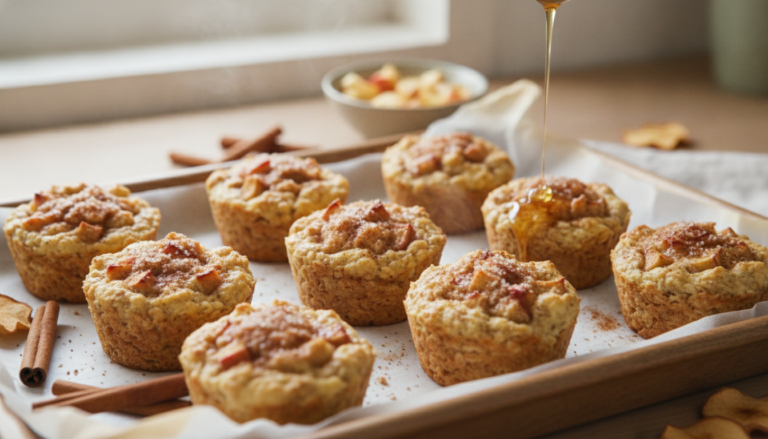
Cinnamon Apple Baked Cottage Cheese Oat Cups
These Cinnamon Apple Baked Cottage Cheese Oat Cups bring the most universally beloved baking combination in the world—apple and cinnamon—into a protein-rich, cottage-cheese-based baked oat cup that delivers all the comfort of a fresh-from-the-oven apple pastry, every morning of the week.
6
servings15
minutes25
minutes150
kcal40
minutesIngredients
1 cup rolled oats
1 cup low-fat cottage cheese
2 eggs
1 tsp vanilla extract
1 tsp ground cinnamon
1 apple, diced
2 tbsp honey
1 tsp baking powder
0.25 tsp salt
Directions
- Preheat your oven to 350°F (175°C) and line a muffin tin with paper liners.
- In a large bowl, mix together oats, cottage cheese, and eggs until well combined.
- Add vanilla extract, cinnamon, diced apple, honey, baking powder, and salt. Stir to combine.
- Spoon the mixture evenly into the prepared muffin tin cups.
- Bake for 25 minutes or until the tops are golden and firm to touch.
- Let cool for a few minutes before serving or store in an airtight container.
Nutrition Facts
- Total number of serves: 4
- Calories: 150kcal
- Cholesterol: 0mg
- Sodium: 620mg
- Potassium: 400mg
- Sugar: 8g
- Protein: 6g
- Calcium: 60mg
- Iron: 2mg
About This Author

Aurora Wright
Pastry Chef & Dessert Editor
Aurora is the sweet side of Daily Dish. A trained pastry chef and dessert stylist, she’s responsible for our mouth-watering cakes, cookies, and confections. She brings precision, artistry, and a touch of whimsy to every recipe she creates — and taste-tests more chocolate than she’ll admit.
Favorite dish: Flourless dark chocolate torte.
Kitchen motto: “Life’s too short to skip dessert.”















