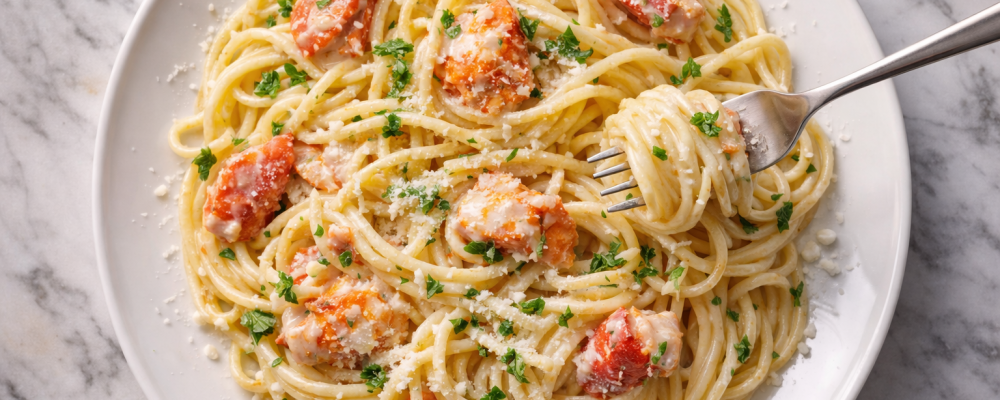

There are certain dishes that immediately signal “special occasion,” and lobster pasta is absolutely one of them. This Buttered Lobster Pasta delivers restaurant-level luxury with surprising simplicity—tender chunks of sweet lobster meat bathed in a rich, garlicky butter and cream sauce that coats every strand of spaghetti. The beauty of this dish lies in its restraint: rather than overwhelming the delicate lobster with heavy sauces or competing flavors, it lets the premium ingredient shine while providing just enough richness and aromatics to make every bite feel indulgent.
I developed this recipe while exploring how high-end restaurant techniques could be adapted for home cooking without requiring specialized equipment or hard-to-find ingredients. The key was understanding that lobster doesn’t need elaborate preparation—it just needs to be treated with respect. By building a simple but luxurious sauce from butter, cream, garlic, and Parmesan, then gently warming the lobster in that sauce rather than cooking it aggressively, you preserve its tender texture and sweet flavor while creating a cohesive dish that tastes expensive because it is—but not because it’s difficult.
What makes this pasta particularly successful is the balance of richness and brightness. The butter and cream provide luxurious body, the Parmesan adds nutty, salty depth, the garlic brings aromatic complexity, and the red pepper flakes contribute just enough heat to keep the richness from becoming cloying. Fresh parsley at the end adds color and a hint of freshness that lifts everything. When you twirl that first forkful and catch a piece of sweet lobster coated in glossy sauce, you understand why simple preparations often triumph over complicated ones.
The Inspiration Behind This Recipe
This dish emerged from studying Italian approaches to seafood pasta, where the philosophy is consistently “less is more”—let quality ingredients speak for themselves with minimal interference. In Italian coastal regions, premium seafood like lobster is treated simply, often with just olive oil, garlic, white wine, and herbs. This preparation honors that tradition while incorporating the butter and cream that Americans associate with lobster.
The technique draws from both Italian pasta traditions and French butter sauces, creating a hybrid that’s distinctly American in its approach. By using cooked lobster meat rather than starting with live lobsters, I made the recipe accessible to home cooks who might be intimidated by the prospect of preparing whole lobsters but still want that luxurious experience.
Through testing, I found that the key to success is gentle heat—lobster meat is already cooked, so it just needs warming through in the sauce. Aggressive heat toughens it and destroys its delicate texture. This restraint in cooking technique separates good lobster pasta from exceptional lobster pasta.
A Brief History of Lobster in Pasta
Lobster wasn’t always considered luxury food—in colonial America, it was so abundant that it was fed to prisoners and used as fertilizer. Its transformation into a premium ingredient happened gradually in the 19th and early 20th centuries as overfishing reduced supply and improved transportation made it available to inland markets where scarcity drove up prices.
Italian immigrants brought traditions of seafood pasta to America, but lobster pasta as we know it today—rich, buttery, cream-based—is more American than Italian. Classic Italian lobster pastas tend to be lighter, often using olive oil and white wine rather than butter and cream. The American version embraces richness in a way that reflects our love of indulgent, special-occasion foods.
This Buttered Lobster Pasta represents that American approach—taking Italian technique and sensibility but delivering the luxurious richness that makes this feel like true celebration food.
Why This Cooking Method Works
Cooking pasta until al dente ensures it has structure to hold up to the rich sauce without becoming mushy. The slight resistance in properly cooked pasta provides textural contrast to the tender lobster and smooth sauce.
Sautéing garlic in butter over medium heat blooms its flavor without burning—garlic burns easily and becomes bitter, so gentle heat and constant attention during this step are crucial. The brief cooking releases the garlic’s aromatic compounds into the fat, flavoring the entire sauce base.
Adding cream to melted butter and bringing it to a simmer creates an emulsion that’s stable and silky. The Parmesan melts into this warm base, adding flavor and helping thicken the sauce to proper coating consistency. This technique creates a sauce that clings to pasta rather than pooling at the bottom of the bowl.
Warming the lobster gently in the finished sauce prevents it from toughening. Lobster meat is delicate and overcooks easily—it just needs to heat through, which takes only a minute or two in warm sauce. This gentle warming preserves its tender, sweet character.
Flavor Profile: What to Expect
This pasta delivers luxurious, well-balanced flavors:
- Sweet, delicate lobster that’s tender and succulent
- Rich, buttery sauce that coats everything thoroughly
- Creamy, velvety texture from heavy cream
- Nutty, salty depth from Parmesan cheese
- Aromatic garlic that’s present but not overwhelming
- Subtle heat from red pepper flakes that brightens richness
- Fresh, herbal finish from parsley
The result is pasta that tastes expensive and indulgent while remaining balanced rather than overwhelming—luxury you can actually finish rather than food that’s rich for richness’s sake.
Tips for Making the Best Buttered Lobster Pasta
Technical precision ensures consistently excellent results:
- Use quality lobster: Fresh cooked lobster is ideal, but frozen works if properly thawed—avoid imitation lobster.
- Don’t overcook the lobster: It’s already cooked—you’re just warming it through.
- Use good Parmesan: Freshly grated Parmigiano-Reggiano melts smoothly and tastes infinitely better than pre-grated.
- Watch the garlic: Burnt garlic ruins everything—keep heat moderate and remove from heat if it starts browning too quickly.
- Reserve pasta water: A splash can help thin the sauce if it becomes too thick.
- Serve immediately: This dish is best enjoyed hot, while the sauce is silky and the lobster is perfectly warmed.
For extra elegance, you can add a splash of white wine after sautéing the garlic, letting it reduce before adding cream. This adds complexity and acidity that balances the richness.
Serving Suggestions and Side Pairings
This luxurious pasta deserves equally elegant accompaniments:
- Simple arugula salad with lemon vinaigrette
- Garlic bread or crusty Italian bread
- Roasted asparagus with lemon
- Steamed green beans with almonds
- Caesar salad for classic pairing
The pasta is rich and substantial, so sides should be relatively light and provide acidity or bitterness to cut through the cream and butter. Focus on simple preparations that don’t compete with the star of the show.
Storage, Reheating, and Make-Ahead Tips
This pasta is best enjoyed fresh but stores reasonably well:
- Refrigerate leftovers for up to 2 days maximum—lobster doesn’t keep as long as other proteins
- Reheat very gently on stovetop with splash of cream or milk—microwave can toughen lobster
- Don’t freeze: Both lobster and cream sauce suffer significantly when frozen
- Make components ahead: Cook pasta and make sauce base separately, combine with lobster when ready to serve
For entertaining, you can have everything prepped and ready, then quickly combine when guests arrive. The actual cooking takes less than 15 minutes once ingredients are prepared.
Why This Recipe Deserves a Spot in Your Rotation
This Buttered Lobster Pasta proves that impressive, luxurious meals don’t require complicated techniques or professional training. It delivers the kind of experience you’d pay premium prices for at restaurants, but with straightforward methods that confident home cooks can execute successfully. While it’s special-occasion food by nature of the ingredient cost, the preparation itself is accessible enough to make whenever you want to celebrate or impress.
Once you’ve experienced how simple it is to create restaurant-quality lobster pasta at home, you’ll find yourself making it for anniversaries, birthdays, Valentine’s Day, or any time you want dinner to feel like an event.
Recommended Drink Pairing
The rich, luxurious nature of this pasta pairs beautifully with wines that offer complementary richness or contrasting acidity. A buttery Chardonnay echoes the butter in the sauce, while a crisp Champagne or sparkling wine cuts through the richness with celebratory elegance. For white wine lovers, a white Burgundy or Viognier provides enough body to stand up to the cream.
For beer, try a Belgian witbier or wheat beer that won’t overwhelm the delicate lobster. Non-alcoholic options like sparkling water with lemon or white grape juice provide refreshing contrast without competing with the subtle seafood flavors.
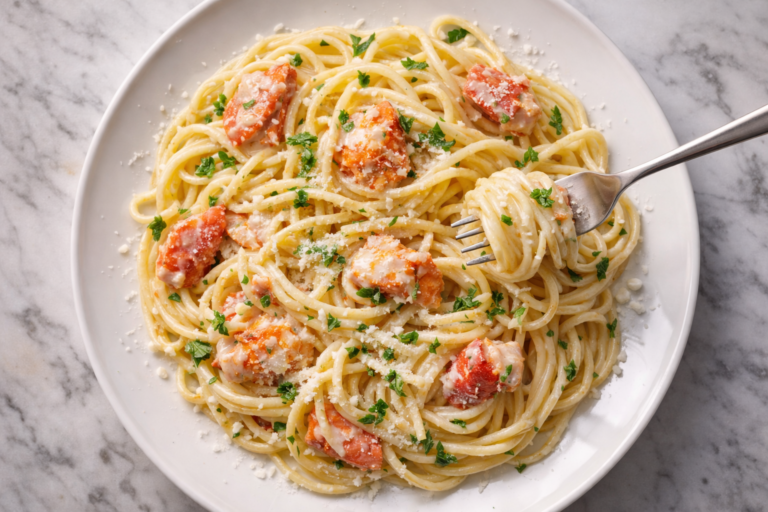
Buttered Lobster Pasta
Buttered Lobster Pasta features tender lobster meat in a rich garlic-butter cream sauce with Parmesan, tossed with spaghetti for elegant indulgence.d-boiled eggs for refined flavor.
4
servings15
minutes20
minutes700
kcal35
minutesIngredients
2 cups cooked lobster meat
0.5 pound spaghetti
3 tablespoons unsalted butter
2 cloves garlic, minced
1 cup heavy cream
0.25 cup grated Parmesan cheese
0.25 teaspoon crushed red pepper flakes
to taste salt
to taste black pepper
2 tablespoons chopped fresh parsley
Directions
- Bring a large pot of salted water to a boil and cook the spaghetti according to package instructions until al dente. Drain and set aside.
- In a large skillet, melt the butter over medium heat. Add the minced garlic and sauté for about one minute or until fragrant.
- Pour in the heavy cream and bring the mixture to a simmer, stirring occasionally. Add the Parmesan cheese and stir until fully melted and smooth.
- Add the cooked lobster meat to the sauce and heat through, about two minutes. Stir in the red pepper flakes and season with salt and black pepper to taste.
- Add the cooked spaghetti to the skillet, tossing to coat the pasta evenly with the sauce.
- Serve the pasta hot, garnished with chopped fresh parsley, and enjoy your buttered lobster masterpiece.
Nutrition Facts
- Total number of serves: 4
- Calories: 700kcal
- Cholesterol: 0mg
- Sodium: 620mg
- Potassium: 400mg
- Sugar: 8g
- Protein: 6g
- Calcium: 60mg
- Iron: 2mg
About This Author

Benjamin Brown
Recipe Developer
Benjamin is our flavor engineer. A classically trained chef turned recipe developer, he’s obsessed with balancing taste, texture, and creativity. He ensures that every recipe we publish is not only delicious but also reliable, approachable, and repeatable — even for beginners.
Favorite dish: Slow-braised short ribs with red wine reduction.
Kitchen motto: “Cooking is part science, part soul.”