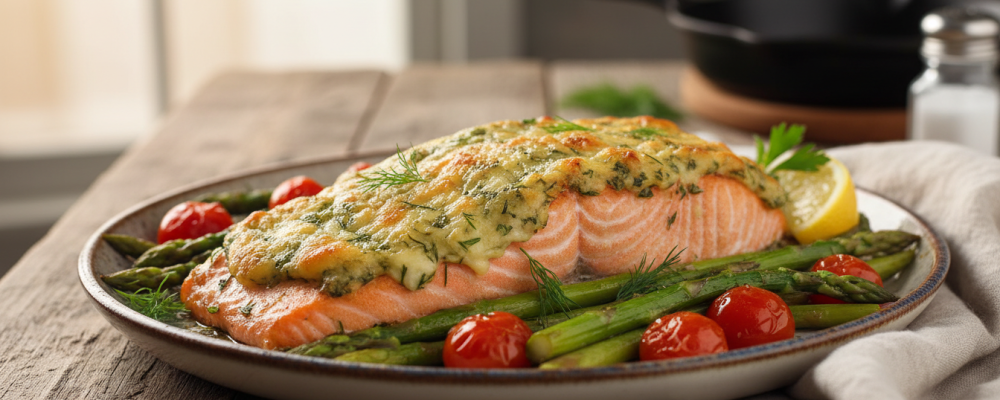

There are dishes that achieve elegance through complexity, and then there are dishes like this Baked Boursin Salmon that prove simplicity can be just as impressive. The genius here lies in letting a few high-quality ingredients do all the work—the richness of salmon, the creamy, herb-infused decadence of Boursin cheese, and the bright notes of lemon and dill. When these elements come together in a hot oven, something almost magical happens: the Boursin melts into a luxurious sauce that bastes the fish as it cooks, creating a dish that looks and tastes like it came from an upscale restaurant.
I developed this recipe while exploring how flavored cheese spreads could elevate simple proteins. Boursin, with its blend of garlic, herbs, and cream cheese base, is essentially a complete sauce in spreadable form. By using it as a topping for salmon, you eliminate the need for making a separate sauce while ensuring the fish stays incredibly moist and flavorful. The cheese acts as both seasoning and protection, preventing the lean fish from drying out while infusing it with its sophisticated herb and garlic profile.
What makes this technique particularly brilliant is its versatility and reliability. The method works consistently regardless of salmon fillet size—you just adjust the cooking time. The Boursin melts at precisely the right rate, never burning or separating, always creating that glossy, herb-flecked coating that makes each fillet look Instagram-worthy. It’s the kind of recipe that makes you look like a culinary genius when all you really did was combine excellent ingredients and let the oven work its magic.
─────────
The Inspiration Behind This Recipe
This dish emerged from studying French cooking techniques where flavored butters and cheese compounds are used to enrich and finish proteins. Boursin cheese, created in France in the 1950s, represents this tradition in convenient, consistent form—herbs, garlic, and cream cheese blended into something that adds instant sophistication to whatever it touches.
I wanted to create a salmon preparation that felt special enough for entertaining but remained accessible enough for weeknight cooking. Traditional methods often involve making herb butters or cream sauces, which add steps and complexity. By using Boursin, you get all those flavors pre-blended and ready to go, making restaurant-quality results achievable in the time it takes the oven to preheat.
The addition of lemon zest and fresh dill isn’t strictly necessary—the Boursin is flavorful enough on its own—but they add brightness and visual appeal that takes the dish from “simple and good” to “elegant and impressive.”
─────────
A Brief History of Boursin and Compound Preparations
Boursin cheese was created in 1957 by François Boursin in Normandy, France, inspired by a traditional Norman practice of mixing herbs and garlic into fresh cheese. The product revolutionized the concept of flavored cheese spreads, creating a category that combined convenience with gourmet flavor profiles.
The technique of topping proteins with herb-infused fats has deep roots in French cuisine, where compound butters (beurre composé) have been used for centuries to add richness and flavor to meat and fish. These preparations allow cooks to infuse multiple flavors into a protein with minimal effort, relying on heat to melt the compound and distribute its flavors.
This Baked Boursin Salmon represents that culinary evolution—taking a traditional French technique and making it even more accessible through a product that delivers consistent results every time while maintaining the sophistication of the original approach.
─────────
Why This Cooking Method Works
Baking at 375°F provides moderate, even heat that cooks salmon gently without drying it out. This temperature is hot enough to melt and slightly brown the Boursin while cooking the fish through to the perfect doneness—still moist and slightly translucent in the center if you prefer it medium, or fully opaque if you like it well-done.
The Boursin serves multiple functions: it acts as insulation, preventing moisture loss from the top of the fillet; it provides continuous basting as it melts and spreads; and it creates a flavorful crust that adds textural interest. The herbs and garlic in the cheese infuse into the salmon as it cooks, penetrating the flesh rather than just sitting on top.
Using parchment paper ensures easy cleanup and prevents the cheese from sticking to the pan, while a light coating of olive oil on the salmon helps conduct heat and adds another layer of richness.
─────────
Flavor Profile: What to Expect
This dish delivers sophisticated, restaurant-quality flavors:
- Rich, buttery salmon with its natural oceanic sweetness
- Creamy, herb-forward sauce from the melted Boursin
- Garlic depth that’s present but not overwhelming
- Bright citrus notes from lemon zest
- Fresh, aromatic dill that complements the fish perfectly
- Subtle complexity from the herbs in the Boursin
- Luxurious mouthfeel from the cream cheese base
The result is a dish that tastes like you’ve invested significant time and technique when you’ve actually just assembled and baked.
─────────
Tips for Making the Best Baked Boursin Salmon
Small details ensure perfect results every time:
- Use room temperature Boursin: It spreads more easily and melts more evenly than cold cheese.
- Choose quality salmon: Wild-caught sockeye or king salmon offer superior flavor, but farmed Atlantic works well too.
- Don’t overcook: Salmon is done at 125-130°F internal temperature for medium—it will continue cooking as it rests.
- Check for pin bones: Run your fingers over the fillet and remove any bones with tweezers before cooking.
- Let it rest: Allow 3-5 minutes after baking for juices to redistribute.
- Use fresh dill: Dried doesn’t provide the same bright, fresh contrast.
For extra elegance, you can briefly broil during the last minute of cooking to add golden color to the Boursin, watching carefully to prevent burning.
─────────
Serving Suggestions and Side Pairings
This elegant salmon pairs beautifully with sides that complement its richness:
- Roasted asparagus or green beans for color and textural contrast
- Garlic mashed potatoes or fingerling potatoes
- Rice pilaf or wild rice blend
- Simple arugula salad with lemon vinaigrette
- Roasted Brussels sprouts or broccoli
The dish is sophisticated enough that sides should be relatively simple, allowing the salmon to be the star while providing balance and variety to the plate.
─────────
Storage, Reheating, and Make-Ahead Tips
This salmon is best enjoyed fresh but stores reasonably well:
- Refrigerate leftovers in an airtight container for up to 2 days
- Reheat gently in a 300°F oven covered with foil, or enjoy cold over salad
- Prep ahead by spreading Boursin on salmon and refrigerating up to 4 hours before baking
- Don’t freeze cooked salmon with Boursin—the texture of both components suffers
The Boursin-topped salmon can be assembled completely in the morning, refrigerated, and baked when you get home for a quick, impressive dinner. Just add a few minutes to the cooking time if starting from cold.
─────────
Why This Recipe Deserves a Spot in Your Rotation
This Baked Boursin Salmon proves that impressive cooking doesn’t require complicated techniques or extensive ingredient lists. It delivers restaurant-quality results with minimal effort, making it perfect for everything from romantic dinners to hosting guests who appreciate good food. The recipe is virtually foolproof—as long as you don’t drastically overcook the salmon, you’ll end up with something beautiful and delicious.
Once you’ve experienced how well this simple technique works, you’ll find yourself using it regularly and perhaps even experimenting with different Boursin flavors or applying the concept to chicken or other proteins.
─────────
Recommended Drink Pairing
The rich, herb-forward flavors of this salmon pair beautifully with wines that offer complementary characteristics. A buttery Chardonnay echoes the creamy richness of the Boursin, while a crisp Sauvignon Blanc or Albariño provides refreshing contrast. For rosé lovers, a dry Provence-style rosé offers both elegance and versatility.
For beer, try a Belgian witbier or wheat beer that won’t overwhelm the delicate fish. Non-alcoholic options like sparkling water with lemon, white grape juice, or a light herbal tea complement the dish without competing with its subtle flavors.
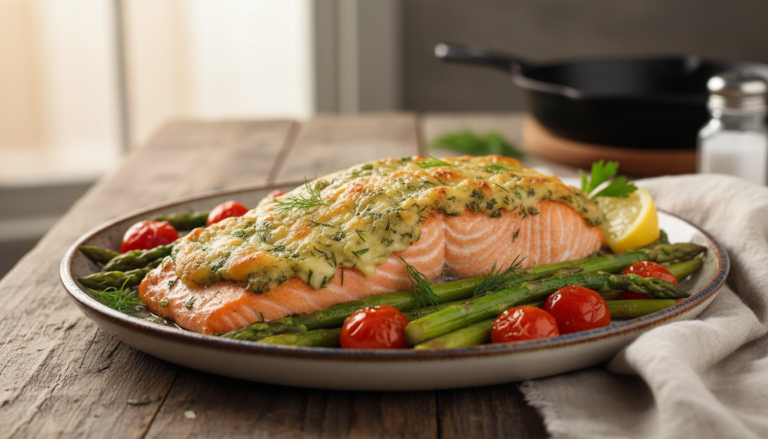
Baked Boursin Salmon
Baked Boursin Salmon tops tender fillets with creamy, herb-infused Boursin cheese that melts into a luxurious sauce as it bakes.
4
servings10
minutes20
minutes400
kcal30
minutesIngredients
4 fillets salmon
5 ounces Boursin cheese
2 tablespoons olive oil
1/2 teaspoon salt
1/4 teaspoon black pepper
1 teaspoon lemon zest
1 tablespoon fresh dill
Directions
- Preheat oven to 375°F (190°C) and line a baking sheet with parchment paper for easy cleanup and to prevent sticking.
- Place salmon fillets on the prepared baking sheet and drizzle them with olive oil, ensuring they are well-coated.
- Season the salmon with salt, black pepper, and lemon zest, making sure the seasoning is evenly distributed.
- Spread an even layer of Boursin cheese over the top of each salmon fillet using a butter knife or spatula.
- Bake in the preheated oven for about 15-20 minutes, or until the salmon is cooked through and flakes easily with a fork.
- Garnish the baked salmon with fresh dill before serving to enhance the flavor and presentation of the dish.
Nutrition Facts
- Total number of serves: 4
- Calories: 400kcal
- Cholesterol: 0mg
- Sodium: 620mg
- Potassium: 400mg
- Sugar: 8g
- Protein: 6g
- Calcium: 60mg
- Iron: 2mg
About This Author

Benjamin Brown
Recipe Developer
Benjamin is our flavor engineer. A classically trained chef turned recipe developer, he’s obsessed with balancing taste, texture, and creativity. He ensures that every recipe we publish is not only delicious but also reliable, approachable, and repeatable — even for beginners.
Favorite dish: Slow-braised short ribs with red wine reduction.
Kitchen motto: “Cooking is part science, part soul.”