
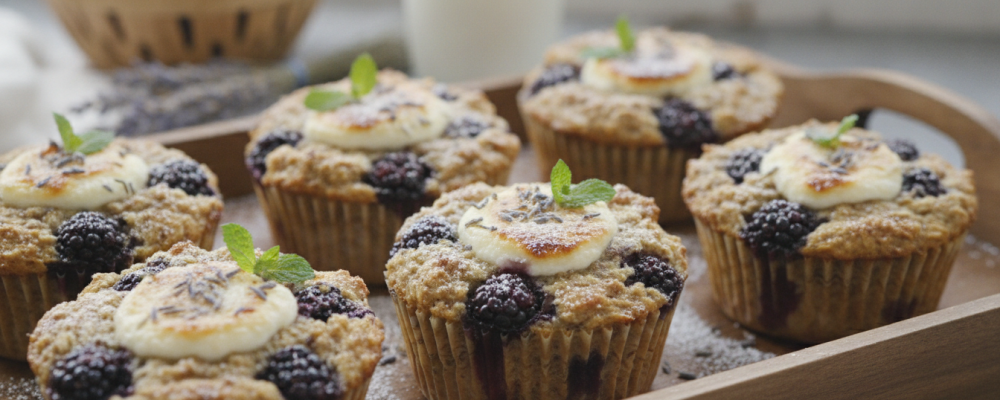

I want to talk about lavender, because lavender is one of the most misunderstood ingredients in baking—and getting it right in this cup is the difference between something that tastes exquisitely floral and something that tastes like you accidentally ate a bar of soap.
Here is the rule: lavender in a baked preparation should be present as a whisper, not a statement. The aromatic compounds in dried lavender—primarily linalool and linalyl acetate—are intensely volatile and intensely potent. Too much lavender and the preparation tastes medicinal; the floral note crosses from delicate to aggressive, and no amount of honey or vanilla can recover it. The correct amount of lavender in a sweet baked cup is the amount where, on the first bite, you think there’s something beautiful happening here that I can’t quite name—and on the second bite, you think lavender. That sequence is the goal. The lavender should arrive as a revelation rather than an announcement.
The blackberry is what makes the lavender work in this cup specifically. Blackberry’s deep, slightly tart, jammy sweetness is one of the few fruit flavors bold enough to stand alongside lavender without being overwhelmed by it—the berry’s assertive character gives the lavender something to work with rather than simply being a background for it to dominate. They are a pairing with genuine history in the pastry world, and they are a pairing that rewards every baker who encounters it for the first time: the moment the lavender and the blackberry meet in a warm batter and the kitchen begins to smell like the best possible version of a summer afternoon is one of those small cooking moments that justifies the whole project.
─────────────────────────────────────────
The Inspiration Behind This Recipe
The inspiration was, in the most direct sense, a lavender and blackberry jam I once encountered at a farmers’ market in early summer—a small jar with a handwritten label and a color somewhere between midnight blue and deep violet that made it look as if it had been made from something rare. The flavor was extraordinary: the blackberry’s tartness and depth carrying the lavender’s floral note rather than the lavender overwhelming the fruit, a balance that the best lavender preparations always achieve and the worst always fail to.
Translating that balance into a baked oat cup required solving the same calibration problem in a different format. In a jam, the sugar concentration keeps the lavender in balance; in a baked preparation, the lavender’s volatile compounds are subject to both heat and time, and the risk of over-lavender is significantly higher because the compounds concentrate in the enclosed baking environment rather than volatilizing off into open air. The solution is restraint at the ingredient level—less lavender than you think you need—combined with the strategic placement of honey and vanilla as flavors that both carry and soften the lavender’s character.
Ricotta as the dairy base was the choice that completed the recipe. Ricotta’s mild, slightly sweet, very faintly tangy character is the ideal canvas for lavender and blackberry—neutral enough to let both flavors come forward clearly, moist enough to keep the oat base from drying out across the baking window, and protein-rich enough to give the cup a structure that holds together cleanly when removed from the tin. It is the same ricotta logic that makes the Cardamom Pear Baked Ricotta Cups work—a fresh cheese that does the work of enriching without the weight of heavier dairy bases.
─────────────────────────────────────────
A Brief History of Lavender in Pastry
Lavender’s culinary use has a long and distinguished history in the French Provençal cooking tradition, where the plant has grown wild on the hillsides of the region for centuries and has been incorporated into both savory and sweet preparations with a specificity of touch that reflects generations of cooks learning exactly how much is enough. In Provençal pastry, lavender appears in navettes (small boat-shaped cookies), in honey preparations, in crème brûlée infusions, and in the quatre-épices spice blends that season festive preparations. The lavender-honey pairing specifically is one of the most established in this tradition—lavender honey from Provence is considered among the finest honeys in the world, its floral character derived from the same linalool compounds that make lavender so potent as a flavoring.
The pairing of lavender with berries—particularly blackberries, blueberries, and raspberries—is a more specifically contemporary pastry development, emerging from the Californian and Pacific Northwest cooking traditions where both lavender cultivation and artisan berry production intersect. The flavor logic is straightforward: lavender’s floral, slightly herbal character amplifies the fruit-forward, slightly tart character of dark berries in the same way that vanilla amplifies chocolate—not by tasting like the primary ingredient, but by making it taste more fully of itself. The pairing has become a staple of artisan bakeries and farmers’ market confections across both regions, and its appearance in a baked oat cup format is the domestic translation of that tradition into a meal prep context.
─────────────────────────────────────────
Why This Cooking Method Works for Meal Prep
The ricotta-and-oat base behaves differently from a standard muffin batter during baking, and understanding that difference is what makes this cup work across the storage window. A standard muffin batter relies on flour’s gluten development for structure; this base relies on the ricotta’s protein coagulation and the egg’s binding capacity. The result is a cup that has more of a pudding-like interior texture than a traditional muffin—tender, slightly yielding, with a moisture content that remains higher through the refrigerator storage window because the ricotta continues to bind moisture within the crumb rather than losing it to evaporation. This is the same moisture-retention mechanism that makes any ricotta-based baked preparation more meal-prep-stable than its flour-only equivalent.
Folding the blackberries in gently rather than mixing them through is the technique that produces the jeweled, visible pockets of berry that make these cups so visually striking. Blackberries mixed aggressively bleed their deep purple-black juice through the entire batter before it bakes, producing a uniformly lavender-colored cup that is perfectly pleasant but lacks the visual drama of distinct berry pockets visible through the golden surface. Gently folded berries remain largely intact through mixing and the first minutes of baking before they begin to burst and release their juice—by which point the surrounding batter has set enough to contain the juice in defined pockets rather than allowing it to spread.
The 25-30 minute baking window is longer than a standard muffin requires for the same tin volume, and the reason is the ricotta’s moisture content. Ricotta introduces significantly more liquid to the batter than butter or oil would in an equivalent volume, and that liquid needs time to evaporate and the proteins need time to set before the cup is structurally stable. A toothpick test is the correct doneness check for this recipe—the cup is done when the toothpick emerges with no wet batter attached, a few moist crumbs acceptable.
─────────────────────────────────────────
Flavor Profile: What to Expect
These cups are floral, fruity, and warmly sweet—a flavor profile that is more specifically beautiful than it is boldly assertive:
- Restrained lavender florality – The defining aromatic note: present as a whisper in the first bite and a recognition in the second—floral, slightly herbal, and elegant rather than aggressive when used correctly
- Deep, tart blackberry – The fruit’s jammy, slightly acidic sweetness is the color and flavor anchor of every bite—concentrated in the pockets where intact berries have softened and released their juice, and distributed subtly through the surrounding crumb
- Warm honey sweetness – Floral honey carries the lavender’s aromatic character while balancing the blackberry’s tartness—the sweetener that is most naturally compatible with both primary flavors and makes the cup taste specifically of summer
- Soft vanilla warmth – Threading through every other flavor with its bakery-like depth, rounding the lavender’s herbal edge into something more approachable and more comforting
- Creamy, mild ricotta – The base’s quiet character: slightly tangy, faintly sweet, and present primarily as a textural quality—the creaminess that makes each bite yielding and tender rather than dry or dense
- Wholesome oat body – The mild, grassy substance that gives the cup its structure and its satisfying weight without competing with the more delicate flavors above it
The lavender and blackberry flavors integrate more fully overnight, as the floral aromatic compounds continue to distribute through the ricotta crumb and the blackberry’s juice continues to permeate the surrounding oat base. Day-two cups are measurably more cohesive in flavor—the lavender more integrated, the berry flavor more evenly distributed—and are, in my professional assessment, the best version of this cup.
─────────────────────────────────────────
Tips for Making the Best Blackberry Lavender Baked Ricotta Oat Cups
Precision with the lavender and gentleness with the blackberries are the two critical technique considerations:
- Measure dried lavender carefully – Start with half a teaspoon for a four-cup batch. Taste the unbaked batter after mixing—the lavender should be present but gentle. Add another quarter teaspoon only if you want a more prominent floral note. It is significantly easier to add lavender before baking than to correct too much afterward.
- Use culinary lavender, not craft lavender – Lavender sold for potpourri or craft projects may be treated with oils or perfumes that are not food-safe and that taste artificial in a baked preparation. Culinary lavender is dried for food use and produces a clean, pure floral flavor.
- Use full-fat ricotta – Lower-fat ricotta has a higher water content that makes the batter too loose and produces a cup that takes longer to set and is softer when cooled. Full-fat ricotta’s higher protein-to-water ratio produces a more cohesive, better-structured cup.
- Fold blackberries in last and gently – Three or four turns of a spatula is sufficient. Any more and the berries burst, bleeding their juice through the batter and losing their structural presence in the finished cup. Under-mixed is better than over-mixed for this ingredient specifically.
- Line the muffin tin with liners – The ricotta-and-oat base has less fat than a standard muffin batter and will stick aggressively to an unlined or insufficiently greased tin. Liners eliminate this problem and keep each cup’s exterior intact through removal and storage.
- Cool in the tin before attempting removal – These cups are more fragile when warm than a standard muffin due to their ricotta protein structure, which needs time to fully set after leaving the oven. Ten minutes in the tin, then a gentle release, produces clean cups; immediate removal produces crumbling.
Optional: A small drizzle of additional honey over each cup immediately after baking—while still warm—creates a glossy surface that emphasizes the blackberry jewels visible through the golden top and adds a concentrated sweetness at the surface that makes the first bite particularly beautiful.
─────────────────────────────────────────
Portioning and Container Suggestions
A standard 12-cup muffin tin produces twelve individual cups—two to three per serving as a breakfast portion, or one as a dessert. The cups’ visual appeal—golden surface, blackberry pockets visible at the top, occasionally a few drops of deep purple juice that have burst and caramelized at the cup’s edges—makes them one of the most naturally beautiful baked preparations in the collection. A container of these cups in the refrigerator, their surfaces visible through a glass lid, is a genuinely appealing sight.
Store in a wide, flat airtight container with parchment paper between layers—essential both for preventing the moist cups from adhering to each other and for absorbing any condensation that accumulates during refrigerator storage. Keep the liners on through the storage window; they protect the cups’ sides from moisture absorption and make each cup easy to handle and unwrap without crumbling.
For a particularly beautiful serving presentation—these cups are genuinely appropriate for a brunch spread, a weekend dessert, or an elegant morning offering for guests—arrange on a board with fresh blackberries scattered alongside, a small jar of good honey for drizzling, and a few fresh lavender sprigs laid decoratively across the surface. The composition requires thirty seconds and produces something that looks as though it arrived from a very good bakery. Which, in the most meaningful sense, it did.
─────────────────────────────────────────
Storage, Reheating, and Shelf Life Tips
- Refrigerator storage: Keeps in an airtight container for up to 4 days. The lavender and blackberry flavors integrate more fully through days two and three—the peak flavor window for this recipe. The ricotta keeps the crumb moist through day four.
- Freezer storage: Freeze well for up to 2 months. Cool completely, keep liners on, and wrap each cup in plastic wrap before transferring to a freezer bag. Thaw overnight in the refrigerator—the ricotta protein structure is freeze-stable with minimal texture change after thawing.
- Oven reheating (recommended): Place cups on a baking sheet at 300°F for 8–10 minutes from refrigerated. This method warms the cup gently, slightly re-crisps the surface, and releases the lavender’s aromatic compounds in a way that the microwave cannot—the cup smells as good reheated in the oven as it did when first baked.
- Microwave reheating: Wrap in a damp paper towel and microwave at 50% power for 45–60 seconds. Lower power preserves the ricotta’s protein structure; full power toughens it. The damp towel prevents the cup’s surface from drying.
- Room temperature serving: These cups are genuinely beautiful at room temperature—the lavender fragrance is most present without heat suppression, and the blackberry’s flavor is most vivid when not competing with microwave warmth. A valid and lovely serving option.
- Lavender intensity note: The lavender’s aromatic presence will be most vivid on day one and gradually integrates into the background by days three and four—becoming part of the cup’s overall fragrance rather than its defining note. Both stages are delicious.
─────────────────────────────────────────
Why This Recipe Deserves a Spot in Your Meal Prep Rotation
There is a category of recipe that earns its place not through efficiency or through nutritional density or through the speed of its preparation, but through the specific quality of the experience it produces—the way it makes Tuesday morning feel like something worth being awake for. Blackberry lavender baked ricotta cups are in that category, and they are in it without apology or qualification.
They are also, to be clear, genuinely practical: four days of refrigerator stability, a five-minute morning reheat in a 300°F oven, a protein return that exceeds most conventional muffins, and a visual that makes every person who opens the refrigerator and sees them ask what they are. But the reason to keep them on the weekly prep list is not the practicality—it is the morning. The moment the oven warms them and the lavender begins to release its fragrance and the kitchen smells, briefly, like somewhere entirely different from wherever you are. That moment, reliably produced every morning you reach for one of these cups, is worth every minute of the Sunday afternoon that made it possible. There are not many recipes in this collection that deliver that specific quality. This is one of them.
─────────────────────────────────────────
Meal Prep Pairing Suggestions
Blackberry Lavender Baked Ricotta Oat Cups pair most naturally with baked breakfast preparations that offer genuine contrast in flavor profile while sharing the same fresh-dairy-cheese base or sweet fruit-forward character. Our Cardamom Pear Baked Ricotta Cups make the ideal companion within the baked ricotta cup category—both use full-fat ricotta as the moisture-retaining base and both build a sweet, fruit-forward cup around it, but cardamom-spiced pear’s warm, autumnal character is completely distinct from blackberry-lavender’s cool, floral, summer-afternoon depth. Together they give the ricotta cup format two genuinely different seasonal identities that feel designed rather than repeated.
For a complete three-breakfast rotation, our Lemon Poppy Seed Cottage Cheese Baked Cups round out the week with a fresh-cheese-based baked cup in a bright, citrus-forward direction—completely different in flavor from both ricotta cups and covering the same moisture-retaining fresh-cheese baking technique from a third aromatic angle. Three baked cups, three fresh dairy bases, three distinct flavor stories—floral-berry, warm-spiced-fruit, and bright-citrus—assembled across a single Sunday baking session and delivering a week of mornings that are, each one, specifically and genuinely beautiful. That is what a well-designed sweet baked breakfast rotation looks like at its finest. These cups belong at its center.
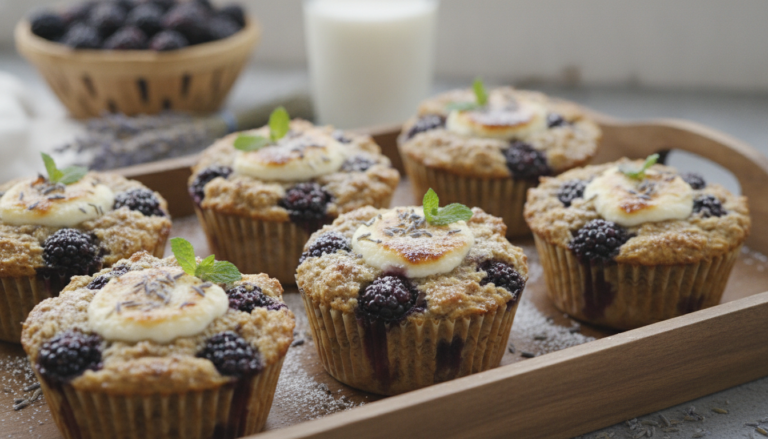
Blackberry Lavender Baked Ricotta Oat Cups
These Blackberry Lavender Baked Ricotta Oat Cups are a warmly fragrant, visually stunning baked breakfast built on the classical pastry pairing of blackberry and lavender—folded through a ricotta-and-oat base and baked until golden, jeweled, and deeply aromatic.
6
servings20
minutes30
minutes250
kcal50
minutesIngredients
1 cup rolled oats
1/2 cup ricotta cheese
1 cup fresh blackberries
1 tablespoon honey
1/2 teaspoon dried lavender flowers
1 teaspoon vanilla extract
1 large egg
1/2 teaspoon baking powder
1/4 teaspoon salt
Directions
- Preheat the oven to 350°F (175°C).
- In a bowl, mix the rolled oats, ricotta cheese, honey, dried lavender flowers, vanilla extract, and egg.
- Add baking powder and salt into the mixture and stir well.
- Gently fold in the blackberries.
- Line a muffin tin with paper liners.
- Spoon the mixture evenly into the lined muffin tin.
- Bake for 25-30 minutes or until golden brown.
- Let cool for 10 minutes before serving.
Nutrition Facts
- Total number of serves: 4
- Calories: 250kcal
- Cholesterol: 0mg
- Sodium: 620mg
- Potassium: 400mg
- Sugar: 8g
- Protein: 6g
- Calcium: 60mg
- Iron: 2mg
About This Author

Aurora Wright
Pastry Chef & Dessert Editor
Aurora is the sweet side of Daily Dish. A trained pastry chef and dessert stylist, she’s responsible for our mouth-watering cakes, cookies, and confections. She brings precision, artistry, and a touch of whimsy to every recipe she creates — and taste-tests more chocolate than she’ll admit.
Favorite dish: Flourless dark chocolate torte.
Kitchen motto: “Life’s too short to skip dessert.”















