
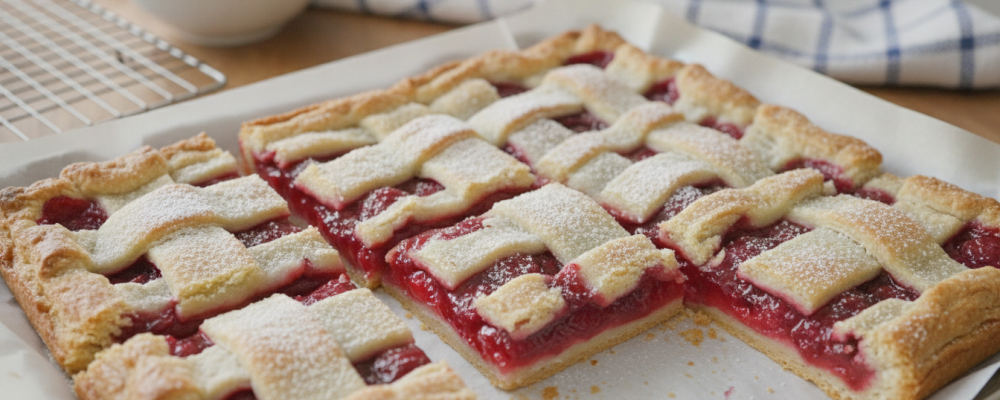

Cherry pie has an almost mythological status in American baking—it’s the pie that appears in cultural idioms, the one George Washington was (apocryphally) associated with, the one that signals summer celebrations and Fourth of July tables. But traditional cherry pie is genuinely demanding: making proper flaky pastry requires cold butter, delicate handling, precise rolling, careful blind baking, and either a lattice top or a second crust that needs ventilation. For a pie with such iconic status, it has a surprisingly high barrier to entry. Sheet Pan Cherry Pie Bars solve that problem completely.
What I find most technically interesting about this recipe is how it achieves the sensory experience of cherry pie through completely different construction. Traditional pie relies on laminated fat-flour layers that create flaky, tender pastry through steam expansion during baking. These bars use a press-in cookie dough that’s enriched with egg, which creates a completely different but equally satisfying texture—more like a soft cookie or cake layer rather than pastry, but absolutely appropriate as a vehicle for cherry filling. The texture change from laminated pastry to enriched cookie base is significant, yet the overall experience remains recognizably cherry pie in character.
The almond extract is where this recipe gets genuinely sophisticated. Cherries and almonds are botanical relatives—they share many of the same aromatic compounds, particularly benzaldehyde, which is responsible for that characteristic stone-fruit almond flavor. This is why cherry and almond have been a classic flavor pairing for centuries. Adding almond extract to these bars doesn’t just add “almond flavor”—it amplifies the cherry’s own inherent flavor, making it taste more intensely of itself. That’s the kind of ingredient interaction that separates thoughtful recipes from merely functional ones.
─────────
The Inspiration Behind This Recipe
Sheet pan desserts represent a genuinely smart category of baking—the large, shallow format allows for even heat distribution, easy cutting into portions, and serving crowds without individual assembly. Sheet pan cookies, brownies, and bars have been popular in commercial and institutional baking for decades; the home baker adoption of this format accelerated recently as home cooks recognized the advantages of feeding fifteen to twenty people from a single pan without the complexity of layer cakes or individual pastries.
Cherry pie bars specifically emerged as home bakers sought ways to capture the flavors of celebration pies without pie crust’s technical demands. The press-in crust technique has been used in bar cookies for decades—lemon bars use it, some cheesecake bars use it, streusel-topped fruit bars use it. What makes this version particularly clever is the reserve-and-crumble technique: one batch of the same dough serves as both the base crust (pressed flat and smooth) and the topping (crumbled over the filling), creating textural variety and visual appeal without making two different components.
The decision to use canned cherry pie filling rather than fresh cherries is strategic and unapologetic. Pie filling has already been cooked to the right consistency, sweetened appropriately, and thickened so it holds together when cut. Using fresh cherries would require cooking them down with sugar and starch, then cooling before adding—additional steps that add time without adding meaningful flavor improvement for a bar cookie format. Smart pastry cooking knows when convenience serves quality.
─────────
A Brief History of Cherry Pie & American Bar Cookie Culture
Cherry pie’s place in American culinary culture is both deep and somewhat mythological. The association with George Washington (“I cannot tell a lie—I did chop down the cherry tree”) cemented cherries in American iconography, though the story itself is apocryphal. What’s historically accurate is that sour cherries—particularly Montmorency cherries grown in Michigan and Wisconsin—became the preferred American pie cherry, prized for their bright tartness that balances pie filling’s sweetness.
American pie culture developed throughout the 19th century as fruit cultivation expanded and sugar became more affordable. Cherry pie specifically became associated with summer celebrations, particularly Fourth of July, and with the bounty of American agriculture. By the early 20th century, canned cherry pie filling made cherry pie accessible year-round and to bakers who couldn’t access fresh sour cherries, further cementing its cultural position.
Bar cookies as a format emerged from practical necessity in American home baking—church suppers, school bake sales, community gatherings required desserts that could be made in large quantities and served without individual plating. The bar cookie format, which produces anywhere from 24 to 48 servings from a single pan, solved this problem elegantly. Fruit bars specifically—using the same sweet-filling-plus-crust combination as pies—became popular as a way to deliver pie flavors in bar format.
These Sheet Pan Cherry Pie Bars represent the logical evolution of both traditions: cherry pie’s beloved flavor profile, bar cookie’s practical format, and sheet pan baking’s crowd-serving efficiency, all combined into a single recipe that honors its heritage while solving real baking challenges.
─────────
Why This Press-In and Crumble Method Works
The egg-enriched base dough creates a spreadable, pressable consistency. Unlike traditional pie pastry (which uses only fat, flour, and a small amount of cold water), this base dough includes eggs. Eggs add protein, fat, and emulsifying lecithin that transform the crumb mixture into something cohesive enough to press into an even layer across a large sheet pan. The egg proteins also create structure during baking, producing a base that’s firm enough to support the filling without becoming soggy.
Cutting in chilled butter creates the right texture for both base and crumble. Working cold, cubed butter into flour and sugar by cutting (rather than melting or creaming) creates irregular pieces of fat coated in flour. During baking, these fat pieces melt and create small cavities where steam collects, producing a slightly flaky, tender texture. This same technique creates the crumble topping’s irregular, golden pieces. The key is keeping butter cold until the moment of use—warm butter would fully incorporate into the flour, creating a smooth dough rather than a crumble.
Reserving one cup before adding eggs creates two distinct textures from one batch. The reserved cup of butter-flour mixture, when sprinkled over the filling, bakes into irregular, slightly crispy golden crumbles that contrast with the smoother base layer below. If you mixed eggs into everything and then tried to crumble some of it, the egg proteins would create a dough that doesn’t crumble properly. The reserve-before-eggs technique is a simple but clever solution that produces two distinct textural outcomes from one ingredient batch.
Cherry pie filling is already optimally thickened. Pie filling contains modified food starch or cornstarch that has already been cooked with the fruit and sugar to create the right gel consistency. When heated again during bar baking, this filling warms and softens without becoming watery—it maintains the consistency needed for clean bar cutting. Fresh cherries or homemade filling would need precise starch calibration to achieve the same result.
Almond extract amplifies cherry flavor through shared aromatic compounds. Cherries, like all stone fruits, contain benzaldehyde—the compound responsible for that characteristic “marzipan” or “almond” aroma. Adding pure almond extract (which is primarily benzaldehyde) to the dough amplifies the cherry filling’s own inherent aromatic character, making it taste more intensely and authentically cherry. This is flavor chemistry working elegantly—the extract doesn’t add a competing flavor but strengthens the primary one.
The sheet pan format ensures even baking. A 13×18-inch sheet pan’s shallow depth means heat reaches the center quickly and evenly. There’s no thick center section that might underbake while edges overbake, as happens with deep-dish pies. Every section of these bars receives essentially the same baking treatment, producing consistent texture and color throughout.
Cooling completely is critical for clean bars. Cherry pie filling remains liquid when hot and gel-like when warm. Cutting warm bars would compress the filling and cause it to squirt from between the layers, creating uneven portions with messy edges. Completely cooled bars have filling that’s set to its final gel consistency—firm enough to stay in place when cut but still soft and jammy when eaten.
─────────
Flavor Profile: What to Expect
Sweet-tart cherry dominates with that unmistakable stone fruit character—bright, slightly acidic, deeply fruity. Cherry pie filling has a concentrated, jammy quality that intensifies during baking as the moisture reduces slightly. The tartness that makes cherries so distinctive in pie is present and essential here, preventing the bars from being one-dimensionally sweet.
Almond undertone weaves through everything subtly and sophisticatedly. You likely won’t identify it as “almond” immediately—instead, the cherry flavor seems deeper and more complete than you’d expect from pie filling alone. This is the benzaldehyde effect in action: the almond extract doesn’t announce itself, it amplifies the cherry. This is what distinguishes these bars from a simple cherry jam bar.
Buttery, slightly sweet cookie base provides familiar comfort and richness. The pressed base layer is denser and softer than pie pastry—it’s a cookie in character, with butter’s richness and a gentle sweetness that doesn’t compete with the filling. The texture is tender and slightly crumbly, with a golden bottom from direct contact with the pan.
Vanilla warmth appears subtly alongside the almond, rounding out the dough’s flavor and adding depth without calling attention to itself. The combination of vanilla and almond extracts creates a more complex aromatic profile than either alone.
Golden crumble topping provides textural contrast and visual appeal. The crumbled top pieces are slightly crispier than the base (more surface area exposed to heat) and have a delicate, shortbread-like quality. Some pieces caramelize slightly golden, others remain paler—this variation creates textural interest.
The overall experience is cherry pie simplified and perfected. These bars taste like excellent cherry pie—sweet-tart filling, buttery crust, golden crumble—but in a format that’s more casual, more shareable, and honestly, easier to eat. The filling-to-crust ratio is generous, and the almond extract elevates the whole thing from simple to special.
─────────
Tips for Making the Best Sheet Pan Cherry Pie Bars
Preparing the Dough:
- Keep butter truly cold—remove from refrigerator and cube just before using. Warm butter won’t create proper crumbles; it will incorporate too fully and create a smooth paste.
- Use a pastry cutter, two forks, or your fingertips to cut in butter—work quickly to prevent hand heat from warming the butter.
- The right texture: pea-sized butter pieces coated in flour, with some smaller sandy bits. Some visible butter pieces are good—they create flakiness.
- Reserve exactly 1 cup of the crumb mixture before adding eggs. Pack into a measuring cup and set aside in the refrigerator while you work.
- Add eggs, vanilla, and almond extract to the remaining crumb mixture and mix until it comes together as a cohesive dough—it should hold together when squeezed but not be sticky.
Pressing the Base Layer:
- Grease the sheet pan generously with butter or non-stick spray—cherry filling can make bars sticky if the pan isn’t properly prepared.
- Consider lining with parchment with overhang on two sides—this creates “handles” that allow you to lift the entire bar slab out for easier, cleaner cutting.
- Press dough evenly across the entire 13×18-inch pan using your hands, then smooth with the flat bottom of a measuring cup for an even layer.
- The layer will be thin—this is correct. A thin base creates the right crust-to-filling ratio.
- Pay attention to corners and edges—these areas tend to be thicker than the center, which affects baking uniformity.
Adding Cherry Filling:
- Spread evenly using an offset spatula, reaching all corners and edges.
- The filling layer should be even—thick spots take longer to set, thin spots may dry out.
- Don’t skip to the edges—leave a very small border (about ¼ inch) if desired, though this is optional for sheet pan bars.
Creating the Crumble Topping:
- Use fingers to crumble the reserved cold mixture over the cherry layer in irregular pieces—vary the size from pea-sized to marble-sized for interesting texture variation.
- Cover the filling evenly but don’t press down—the crumble should sit loosely on top to develop that characteristic golden, irregular texture.
- Some filling showing through is beautiful and intentional.
Baking and Cooling:
- Rotate the pan halfway through baking for even browning across the large surface area.
- Look for golden crumble topping and slightly bubbling cherry filling at the edges as signs of doneness.
- Cool completely in the pan—minimum 2 hours at room temperature. Overnight cooling produces the cleanest cuts.
- Refrigerate for 30 minutes after cooling for the absolute cleanest cuts if presentation matters.
- Cut with a sharp knife cleaned between each cut for crisp, professional edges.
Flavor Variations:
- Cherry-chocolate: Scatter ½ cup mini chocolate chips over the cherry filling before adding the crumble topping
- Spiced cherry: Add ¼ teaspoon cinnamon and pinch of nutmeg to the dough for warm spice notes
- Lemon-cherry: Add 1 teaspoon lemon zest to the dough for brightness that amplifies the cherry’s tartness
- Mixed berry: Substitute blueberry or strawberry pie filling for cherry for a different fruit experience
─────────
Serving Suggestions and Presentation Ideas
Classic Bar Presentation:
Cut into neat rectangles (4×6 = 24 bars for a crowd) and arrange on a white platter or wooden board. The ruby-red cherry filling visible through the golden crumble topping looks beautiful with no additional garnish. Dust lightly with powdered sugar just before serving for an elegant finishing touch.
Elevated Plated Dessert:
Place a bar on a white dessert plate with a scoop of vanilla ice cream or dollop of whipped cream alongside. Add a fresh cherry (with stem) on top of the cream for visual reference to the filling inside. A light dusting of powdered sugar on the plate creates a clean, professional presentation.
Holiday Celebration:
For Fourth of July or Christmas celebrations (where cherry’s red color feels especially appropriate), arrange bars on a patriotic platter or holiday serving board. Add white chocolate drizzle over the bars and fresh mint leaves for red, white, and green holiday presentation. These bars are naturally festive.
Potluck and Bake Sale:
Leave bars in the sheet pan, cover with plastic wrap, and transport in the pan—then cut and serve on-site. This is the most practical approach for large gatherings. Provide a pie server or wide spatula for easy serving. Label with a sign that mentions the almond extract for guests with nut allergies.
Tea Party Presentation:
Cut into smaller squares (5×8 = 40 smaller pieces) for elegant finger-food portions appropriate for afternoon tea. Arrange on a tiered cake stand dusted with powdered sugar and garnished with fresh mint. The smaller size makes them appropriate for grazing alongside other tea accompaniments.
À La Mode Experience:
Warm individual bars in the microwave for 15-20 seconds and serve in bowls topped with vanilla ice cream and a drizzle of cherry sauce or warm caramel. The warm cherry filling becomes almost jammy, and the partially melted ice cream creates its own sauce. This transforms a simple bar into a complete plated dessert experience.
─────────
Storage, Make-Ahead, and Serving Tips
Storage:
- Room Temperature: Store covered with plastic wrap or in an airtight container for up to 3 days. The cherry filling keeps the bars moist and prevents drying.
- Refrigerator: Store for up to 1 week in an airtight container. Cold bars have a firmer filling texture that some people prefer—more distinct layers, cleaner eating.
- Freezer: Freeze individually wrapped bars for up to 3 months. Thaw at room temperature for 1-2 hours. The texture holds up beautifully—cherry filling doesn’t become watery after freezing like fresh fruit sometimes does.
Make-Ahead Strategy:
These bars are ideal for advance preparation:
- Bake 1-2 days ahead—the almond and cherry flavors actually deepen and meld beautifully overnight
- Store uncut in the pan until ready to serve—cutting just before serving produces the cleanest edges
- Freeze up to 1 month ahead for holiday preparation—thaw the day before serving
For holiday baking specifically, these bars are among the best advance-prep options because they genuinely improve with a day’s rest and freeze without quality loss.
Flavor Development:
These bars peak at 12-24 hours after baking. The almond extract mellows and integrates, the cherry filling sets fully and its flavor deepens, and the dough layers absorb just enough moisture from the filling to create that ideal slightly-softer-than-crispy texture. Day-of bars are good; day-after bars are better.
Cutting for Clean Results:
- Cool completely (overnight if possible) before cutting
- Use a sharp chef’s knife or bench scraper rather than a serrated knife
- Dip knife in hot water and wipe dry before each cut
- Apply firm downward pressure in a single motion rather than sawing
- Wipe knife clean between cuts to prevent cherry filling smearing
Portion Planning:
For a 13×18-inch sheet pan:
- 24 standard bars (4×6 grid)—appropriate for dessert portions
- 32 smaller bars (4×8 grid)—appropriate for buffet or bake sale portions
- 48 finger-food squares (6×8 grid)—appropriate for cocktail parties or dessert tables
─────────
Why This Recipe Deserves a Spot in Your Rotation
Sheet Pan Cherry Pie Bars solve a real baking problem with elegance and efficiency. Cherry pie is beloved but technically demanding—the pastry requires skill, the lattice top requires patience, and the whole thing can only serve eight people. These bars deliver the same emotional satisfaction of homemade cherry pie while serving up to 48 people from a single pan, requiring no pastry skills, and coming together in under an hour. That’s a genuine improvement in every practical dimension.
What makes this recipe genuinely clever is its dual-function dough. One batch, one bowl, one technique—produces both a pressed crust and a crumble topping that are distinct in texture but cohesive in flavor. This economy of ingredients and technique is beautiful pastry design. You’re not making two separate components and managing two different processes; you’re making one component and using it strategically. Understanding and appreciating this technique makes you a smarter baker.
The almond extract inclusion elevates this from basic to memorable. Without it, these are good cherry bars. With it, they’re special. That single ingredient decision—using almond extract to amplify cherry’s inherent flavor rather than adding a competing flavor—demonstrates the kind of thoughtful recipe development that distinguishes excellent baking from merely competent baking. Every time I teach this principle to home bakers, it changes how they think about flavor building.
The sheet pan format has genuine practical advantages beyond just serving more people. The large, thin format means every bar has the same ratio of crust to filling to crumble—there’s no “fighting over the center piece” as with round pies. Every portion is equally good, which matters when you’re serving a crowd and want everyone to be equally satisfied.
This recipe is also culturally resonant in a way that matters. Cherry pie’s American iconography—its presence at Fourth of July celebrations, its association with home and tradition—transfers to these bars. Serving them at summer gatherings feels appropriate and celebratory. They look festive without requiring festive effort. That combination of cultural resonance and practical simplicity is rare and valuable.
If you’re looking for a recipe that delivers iconic American pie flavor in practical bar format, that uses clever technique to create textural variety from minimal components, that serves a crowd effortlessly, that improves with advance preparation, and that earns genuine enthusiasm through both its appearance and flavor—this is it. Sheet Pan Cherry Pie Bars prove that sometimes the best recipes are the ones that take something beloved and make it more accessible without making it any less special.
─────────
Recommended Drink Pairing
Coffee – Medium Roast:
A smooth medium roast coffee provides gentle bitterness that balances the cherry filling’s sweetness without overwhelming the delicate almond flavor. The coffee’s warmth creates a pleasant contrast with the bars served at room temperature. This is the everyday pairing—appropriate for morning coffee, afternoon break, or after-dinner service.
Sparkling Rosé or Cherry Wine:
Sparkling rosé with its berry notes and effervescence creates a harmonious pairing that amplifies cherry flavor while the bubbles cut through the buttery crust’s richness. Cherry wine (particularly tart cherry wine from Michigan) creates the ultimate cherry-on-cherry experience for fruit wine enthusiasts. Both feel celebratory and appropriate for summer gatherings.
Vanilla Bean Latte:
A vanilla bean latte (hot or iced) echoes the vanilla extract in the dough while the coffee provides welcome bitterness. The milk’s creaminess mirrors what ice cream or whipped cream would do as an accompaniment. This feels cohesive and sophisticated—appropriate for afternoon serving at gatherings or tea-party contexts.
Almond Milk or Horchata:
For a non-dairy option that’s also thematically appropriate, almond milk (sweetened or unsweetened) echoes the almond extract in the bars, creating a flavor mirror that makes both taste more intensely almond-y. Horchata (rice and cinnamon drink) provides similar almond notes with added cinnamon warmth. These are unexpected but genuinely excellent pairings.
Iced Tea – Black or Cherry:
Cold black iced tea provides tannins and refreshing temperature contrast that balances cherry sweetness beautifully. Cherry-flavored iced tea creates a cohesive cherry flavor experience from bar to beverage. Either option works for casual summer entertaining where something refreshing and non-alcoholic is appropriate for all ages.
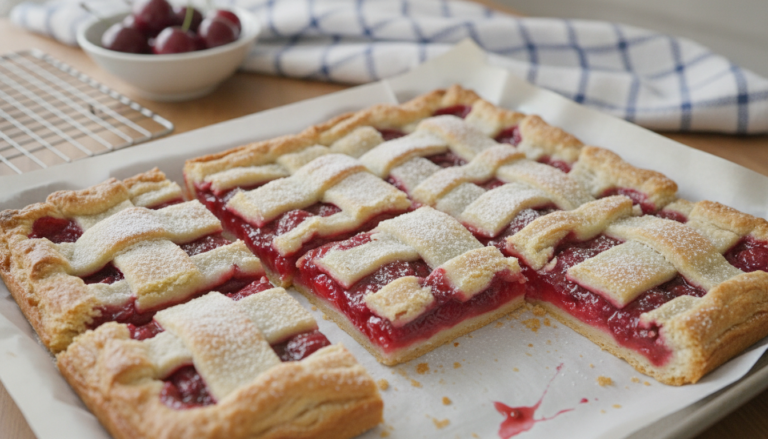
Sheet Pan Cherry Pie Bars
Sheet Pan Cherry Pie Bars deliver everything beloved about classic cherry pie—sweet-tart filling, buttery crust, golden crumble topping—in an easy sheet pan format that serves a crowd beautifully without the fuss of traditional pie making.
24
servings30
minutes30
minutes250
kcal1
hourIngredients
2 cups all-purpose flour
2 cups granulated sugar
1 cup unsalted butter, chilled and cubed
4 large eggs
1 teaspoon vanilla extract
1 teaspoon almond extract
1 can cherry pie filling (21 ounces)
Directions
- Preheat oven to 350°F (175°C). Grease a 13×18-inch sheet pan.
- In a large bowl, mix flour and sugar.
- Cut in the butter until the mixture resembles coarse crumbs.
- Reserve 1 cup of this mixture.
- To the remaining mixture, add eggs, vanilla, and almond extract. Mix well.
- Spread mixture evenly on the prepared sheet pan.
- Spread cherry pie filling evenly over the crust.
- Sprinkle reserved crumb mixture over the top.
- Bake for 25-30 minutes or until golden brown.
- Cool completely in the pan before cutting into bars.
Nutrition Facts
- Total number of serves: 4
- Calories: 250kcal
- Cholesterol: 0mg
- Sodium: 620mg
- Potassium: 400mg
- Sugar: 8g
- Protein: 6g
- Calcium: 60mg
- Iron: 2mg
About This Author

Aurora Wright
Pastry Chef & Dessert Editor
Aurora is the sweet side of Daily Dish. A trained pastry chef and dessert stylist, she’s responsible for our mouth-watering cakes, cookies, and confections. She brings precision, artistry, and a touch of whimsy to every recipe she creates — and taste-tests more chocolate than she’ll admit.
Favorite dish: Flourless dark chocolate torte.
Kitchen motto: “Life’s too short to skip dessert.”















