

There is a specific kind of conversation that happens between generations around the subject of food.
It usually begins with a meal — something eaten at a grandparent’s table, or a dish encountered in a photograph, or the mention of an ingredient that one generation considers ordinary and another has never heard of. And it reveals, in the space of a few exchanges, how dramatically the food landscape has changed in a single lifetime.
The person who grew up in the 1970s or 1980s in an average American household ate in a world that would be, in certain specific ways, unrecognizable to a person growing up today. Not entirely different — many of the same ingredients, many of the same basic meal structures. But different in ways that are worth examining: in what was available, what was considered normal, what the relationship between cooking and convenience looked like, and what the cultural meaning attached to different kinds of food had become.
The food of one generation is not better or worse than the food of another. But it is different. And the specific ways in which it is different reveal something about the forces that shape what we eat — forces that are cultural, economic, technological, and deeply personal.
The Processed Food Revolution and Its Children
The generation that grew up in the 1950s through the 1980s was the first to grow up primarily on processed food — on products designed, manufactured, and marketed by the industrial food system that had developed in the post-war era and that had, by the 1960s and 1970s, fundamentally transformed the American food landscape.
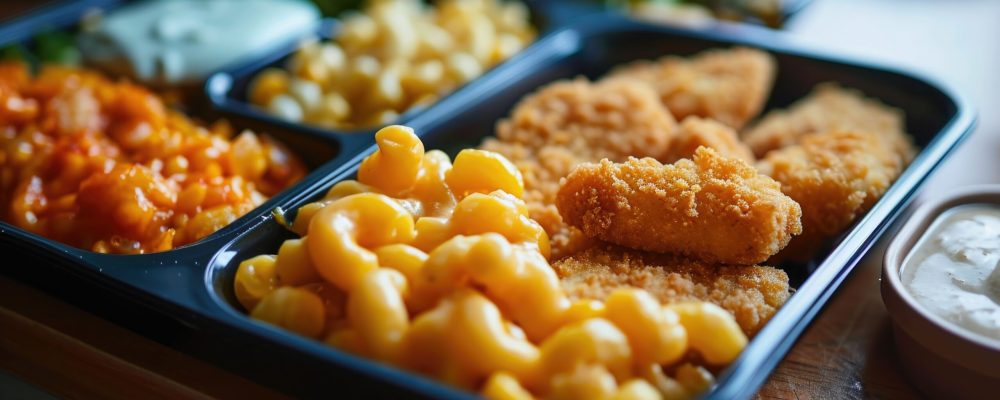
The TV dinner. The canned soup. The boxed macaroni and cheese. The frozen vegetable medley. The specifically engineered snack foods — the chips, the crackers, the cookies — designed to be shelf-stable, consistent, convenient, and precisely calibrated to maximize palatability.
These products were not marketed as substitutes for something better. They were marketed as progress — as the liberation of the housewife from the kitchen, as the democratization of convenience that had previously been available only to those wealthy enough to employ domestic staff. The time saved by not cooking from scratch was time available for other pursuits. The consistency of the processed product was presented as a virtue compared to the variability of homemade.
The generation that grew up on these products formed specific flavor memories — specific associations between specific synthetic flavors and specific emotional states — that are as real and as powerful as the associations formed by any other food. The artificial cheese flavor of the boxed macaroni. The specific sweetness of the canned tomato soup. The particular crunch of a specific snack food that appeared in school lunches every day for years.
These flavors are not objectively good flavors. Measured against the complexity and depth of their whole-food equivalents, they are pale and artificial. But they are not nothing. They are the flavors of specific moments in specific lives — and dismissing them as merely processed is to dismiss the people who carry those memories, which is not the point.
The Global Kitchen That Wasn’t
The food landscape of the 1970s American household was, by contemporary standards, remarkably narrow in its geographic range.
Italian food — in its Italian-American form — was the primary exception to a baseline of Northern European and American culinary tradition. Chinese food — in the form of the Cantonese-American dishes served in Chinese restaurants across the country — was present but understood as a specific outing rather than an influence on home cooking. Mexican food existed in the Southwest and in specific communities elsewhere but was largely absent from the national culinary consciousness.
Thai food, Vietnamese food, Korean food, Ethiopian food, Indian food — these were essentially unavailable outside of specific immigrant communities and specific coastal cities. The home cook in an average American city in 1975 had access to a range of ingredients and culinary influences that would be considered impoverished by the standards of a contemporary well-stocked supermarket.
The transformation that occurred in American food culture over the following decades — driven by immigration, by travel, by the specific influence of food media, and by the gradual expansion of the supply chain that made ingredients from global culinary traditions available across the country — produced a contemporary food landscape of extraordinary variety that the previous generation could not have imagined.
The person who grew up in the 1970s eating spaghetti and meatballs as the most exotic food in their regular rotation may have children or grandchildren for whom Thai takeout and Korean barbecue and Ethiopian injera are familiar Tuesday night options. The expansion of the available culinary universe in a single generation is one of the more remarkable changes in the history of American food culture.
The Cooking That Was Lost and the Cooking That Was Found
In the same period that processed food was consolidating its dominance of the American diet, something else was happening — a loss of cooking knowledge that occurred so gradually and so invisibly that most of the people experiencing it didn’t notice until it was already complete.
The cooking skills that had been transmitted from generation to generation — the knowledge of how to break down a whole animal, how to make stock from bones, how to preserve vegetables through fermentation, how to bake bread from a starter, how to make pasta from flour and eggs — these skills required transmission to survive. They were embodied knowledge, learned by watching and doing rather than by reading, and they died when the people who carried them stopped passing them on and the people who might have received them stopped learning.
The generation that grew up in the 1960s and 1970s was the first in which this transmission broke down at scale — in which the convenience of processed food and the cultural messages around liberation from the kitchen intersected with the specific economic and social changes that took women into the workforce and reduced the time available for the daily practice of cooking from scratch.
The result was a gap — a generation or two in which the knowledge that had sustained the home kitchen for centuries was not transmitted, and in which the skills required to cook from whole ingredients were not developed because they were not needed.
The food revival of the last twenty years — the return to fermentation, to whole animal cooking, to bread baking, to preserving and making from scratch — is partly a response to this gap. It is a generation that didn’t learn these skills from their parents and grandparents choosing to learn them anyway — from books, from classes, from online communities, from the specific enthusiasm that comes from recovering something that was lost.
The Restaurant Revolution
The relationship between Americans and restaurant eating transformed dramatically over the course of one generation — in ways that changed not just where people ate but how they understood food and cooking.
The restaurant was, for most of American history, a specific occasion — a place visited for celebrations, for business, for the specific pleasure of a meal that was beyond the ordinary. The idea of eating at a restaurant on a Tuesday because cooking seemed like too much effort would have been understood, by most previous generations, as an extraordinary extravagance.
The expansion of affordable restaurant options — fast food chains in the 1950s and 1960s, casual dining chains in the 1970s and 1980s, the explosion of delivery and takeout options in the 1990s and beyond — transformed the restaurant from an occasional luxury to a routine option that competed directly with home cooking for the daily feeding of American households.
This transformation had profound effects on cooking culture. As restaurant eating became normalized for ordinary occasions, the expectation of what home cooking was for changed. Home cooking was no longer the default means of feeding a household — it became one option among several, competing with takeout and delivery and fast food and frozen meals and the vast prepared food sections of supermarkets that now occupy more square footage than the produce department.
The cook who chose to cook from scratch in this new landscape was making a specific choice — an investment of time and effort that had alternatives. And the specific meaning attached to that choice changed: from the ordinary daily practice of feeding a household to a deliberate act with cultural implications, associated with specific values around health, sustainability, tradition, and the rejection of industrial food culture.
The Technology That Changed Everything
The transformation of cooking technology in a single generation has been as significant as any other change in the food landscape — and its effects on how people cook and how they relate to cooking are still playing out.
The smartphone and the internet transformed the relationship between home cooks and culinary knowledge in ways that are difficult to fully assess because they happened so recently. The cook who needed to find a recipe in 1985 consulted a cookbook they owned or called their mother. The cook who needs a recipe today has access to millions of them within seconds, along with video tutorials, community forums, ingredient substitution guides, and the collective wisdom of millions of other cooks who have made the same dish and left comments about what worked and what didn’t.
This democratization of culinary knowledge has produced an extraordinary expansion in what home cooks attempt — in the complexity of the techniques they tackle, the range of cuisines they explore, the specific ambitions they bring to their kitchens. The home cook who would never have attempted croissants without professional instruction now has access to detailed video tutorials that walk through each step of the lamination process.
But the technology also created new forms of relationship between cooking and audience that have their own complications. The cook who photographs their food before eating it is in a different relationship with the meal than the cook who eats it without documentation. The cook who measures their success by the response to a social media post is measuring themselves against a public standard rather than the private satisfaction of having fed themselves and the people they love well.
The Food Culture We’re Building Now
The generation growing up today is inheriting a food culture that is more complex, more varied, more connected, and in some ways more anxious than any that preceded it.
More complex: the range of ingredients, cuisines, and techniques available to any home cook has never been wider. The child growing up today in a food-curious household might learn to make dumplings from a Chinese American grandmother, watch their parent ferment vegetables inspired by Korean tradition, and eat takeout from a Thai restaurant in the same week.
More varied: the food available in even ordinary supermarkets reflects a global supply chain and a multicultural food culture that would have been unimaginable to the previous generation. The produce section contains ingredients whose names required translation a generation ago.
More connected: the online food communities, the cooking shows, the food media, the social platforms where food is documented and shared have created a food culture that is more visible and more discussed than any in history.
And in some ways more anxious: the specific anxieties around food — around health, around environmental impact, around ethical sourcing, around the intersection of eating and identity — are more acute and more publicly navigated than in previous generations. The question of what to eat has never been more loaded with non-culinary significance.
The Takeaway
The food of one generation tells the story of that generation — of the forces that shaped what was available, what was normal, and what the relationship between cooking and eating meant.
The processed food of the mid-twentieth century told the story of industrialization and convenience and the specific liberation and losses that accompanied them. The global kitchen of the late twentieth and early twenty-first centuries tells the story of immigration, of connectivity, of the expanding culinary universe available to any curious eater.
The food culture being built now — more complex, more varied, more connected, more anxious — will tell its own story to the generation that comes after it.
What that story will say is still being written.
And every meal is a sentence in it.














