
There are meals that sustain you, and meals that actually lift you—and the difference between them, I’ve come to believe, has very little to do with the number of ingredients or the complexity of the technique. It has to do with intention. With the choice to make something that is genuinely, honestly delicious rather than simply adequate. With the conviction that the middle of a busy Tuesday deserves better than a sad desk lunch, and that a little Sunday effort is one of the kindest investments you can make in the week that follows.
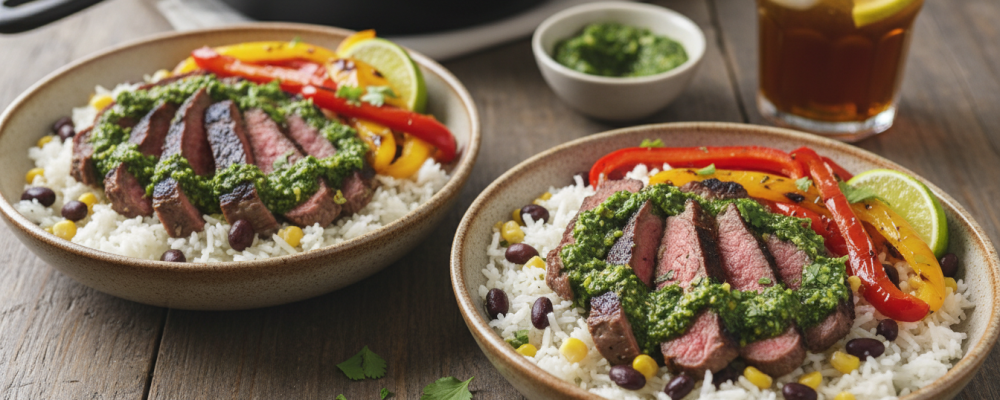
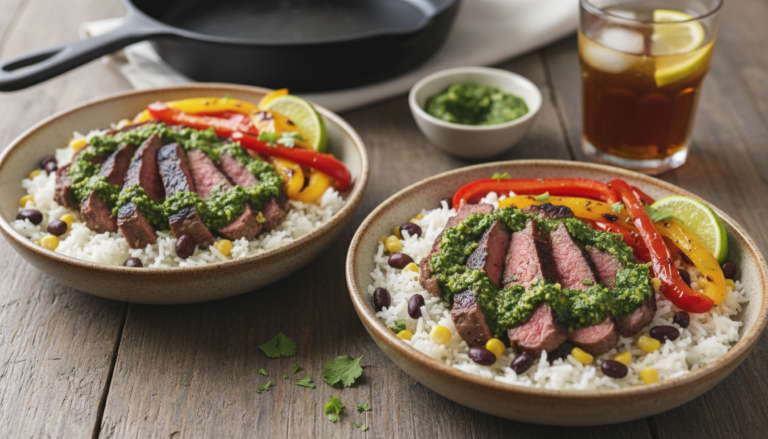
This Chimichurri Steak & Roasted Pepper Rice Bowl is, for me, the purest expression of that conviction in a meal prep recipe. It is not a complicated dish. Flank steak, seasoned and grilled to your liking. White rice, cooked simply and well. Bell peppers, roasted until they caramelize and sweeten at the edges. And over all of it—the thing that ties every component together and makes the whole bowl taste like something you’d order somewhere lovely—a homemade chimichurri that you made yourself, with fresh parsley and garlic and red wine vinegar, blended in five minutes on Sunday and waiting in a jar in the refrigerator all week long.
That jar of chimichurri is the heart of this recipe, and I mean that in both the culinary and the emotional sense. It’s the element that makes the bowl feel considered rather than assembled—that communicates care across the four or five lunchtimes it has to cover. And it does something that very few sauces in a meal prep context can do: it tastes as vivid and as freshly made on Friday as it did on Sunday, because the acidity of the red wine vinegar actually preserves the herbs’ brightness rather than dulling it. A sauce that keeps its promise across the whole week is a rare and genuinely wonderful thing.
─────────────────────────────────────────
The Inspiration Behind This Recipe
I’ve always believed that the best meal prep recipes are the ones built around a single element that does extraordinary work—one ingredient or preparation that carries the entire dish and elevates everything around it simply by being present. For this bowl, that element is the homemade chimichurri. It is the decision that makes the recipe worth making rather than simply worth eating.
The specific inspiration was a very simple frustration: the bottled chimichurri available in most grocery stores is a diluted, over-preserved shadow of what the sauce is supposed to be. Real chimichurri is abundantly herbed—it should taste aggressively of fresh parsley, of raw garlic, of bright vinegar and fruity olive oil and the gentle heat of red pepper flakes. It should be the kind of sauce that makes your eyes widen a little at the first taste, the one that makes the grilled steak beside it taste richer and more flavorful by contrast. A blender, a handful of parsley, a few cloves of garlic, and five minutes of Sunday afternoon are all it takes to achieve that result—and the difference between that result and a store-bought alternative is genuinely profound.
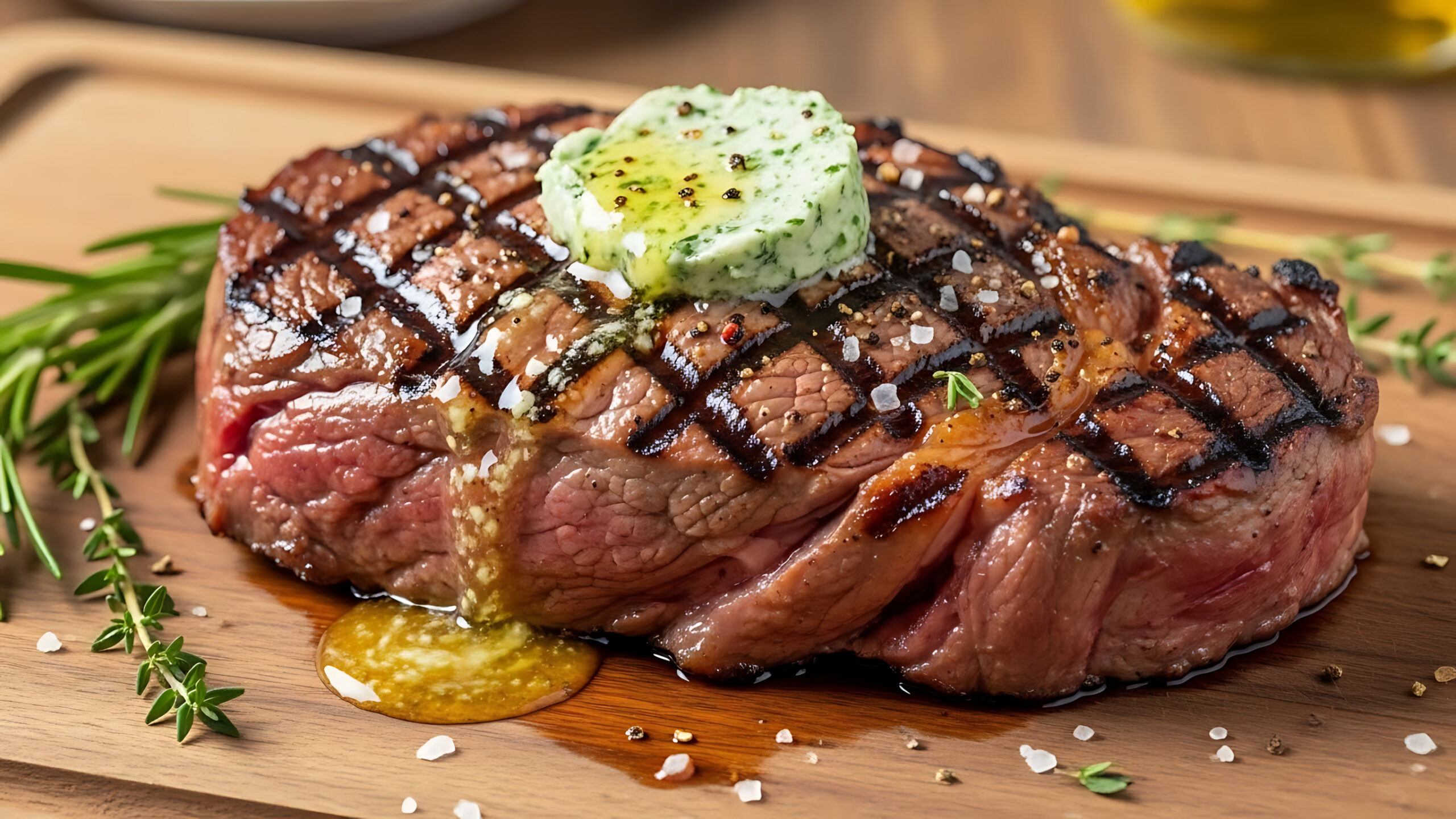
Flank steak was chosen for this recipe specifically for its character as a meal prep cut. It is lean, full of flavor, and takes beautifully to the high-heat sear or grill that develops the caramelized crust that holds its integrity through refrigeration and reheating. Sliced thinly against the grain, it yields tender, elegant pieces that layer over the rice beautifully and absorb the chimichurri drizzle across every exposed surface. It is a cut that rewards the attention you give it in prep and returns that attention in every subsequent bowl.
─────────────────────────────────────────
A Brief History of Chimichurri
Chimichurri is Argentina’s great culinary gift to the world—a sauce so fundamental to the country’s food culture that it is almost impossible to imagine Argentine cooking without it. Its origins are the subject of warm debate: some food historians connect it to the Basque immigrants who settled in Argentina’s Pampas in the 19th century, bringing with them the European tradition of herb-and-oil condiments that they adapted to the native parsley and garlic of their new home. Others trace linguistic roots to the British soldiers who passed through the Río de la Plata region in the early 1800s, leaving behind a mispronounced phrase that gradually became the sauce’s name.
What is beyond dispute is what chimichurri represents in Argentine culture: the essential companion to asado—the tradition of wood-fired and charcoal grilling that is not just a cooking method but a social ritual, a gathering of family and friends around fire and food that is among the most cherished experiences in Argentine life. The sauce is always present at the asado table, passed around in a jar, spooned generously over whatever has come off the grill. It is a sauce that belongs to community and warmth and the particular pleasure of eating something simple and honest together.
Bringing chimichurri into a weekly meal prep context is, in one sense, a thoroughly practical adaptation—a beloved sauce preserved in a jar in the refrigerator, ready to elevate the week’s lunches rather than a single afternoon’s gathering. But I like to think it carries something of its original spirit even here: the sense that a meal made with attention and real ingredients is worth making, that the people eating it deserve something better than the minimum, that food—even prepped food, even desk food, even Thursday’s reheated lunch—can be an act of care. That is, at its heart, what chimichurri has always been about.
─────────────────────────────────────────
Why This Cooking Method Works for Meal Prep
Grilling or searing flank steak over medium-high heat is the cooking method that produces the most meal-prep-stable result for this particular cut. Flank steak’s relatively uniform thickness and pronounced muscle grain make it well-suited to high-heat, short-duration cooking—it reaches the correct internal temperature quickly, develops a properly caramelized exterior crust under direct heat, and retains its moisture through the resting period that follows. That resting period is not a suggestion: the five minutes of rest before slicing allows the muscle fibers to relax and the internal juices to redistribute evenly, producing slices that are moist throughout rather than wet at the center and dry at the edges.
The homemade chimichurri is, in addition to being this bowl’s defining flavor, one of the most meal-prep-compatible sauces available. Red wine vinegar—the acid backbone of a traditional chimichurri—acts as both a flavor brightener and a preservation agent for the fresh herbs and garlic in the sauce. Unlike fresh herb dressings made with lemon juice or without acid entirely, a chimichurri properly built with red wine vinegar maintains its vivid green color and herbal brightness in the refrigerator for up to a full week rather than oxidizing and losing its character within a day or two. The vinegar is the ingredient that makes this sauce as reliable on Friday as it is on Sunday, and it’s worth using generously.
Roasting the bell peppers at 400°F for fifteen minutes produces the caramelization that makes them far more interesting than raw or lightly cooked peppers would be in this bowl. The high heat drives off surface moisture quickly, concentrating the peppers’ natural sugars into a sticky, slightly charred sweetness that provides a genuinely satisfying counterpoint to the chimichurri’s sharpness and the steak’s savory depth. Peppers roasted to this point hold their flavor integrity through refrigeration in a way that barely-cooked peppers don’t—their concentrated sweetness only deepens overnight, making day-two and day-three bowls taste more cohesive than the freshly assembled version.
─────────────────────────────────────────
Flavor Profile: What to Expect
This bowl is bold, herb-forward, and layered—every element playing a specific and intentional role in the overall balance:
- Bright, garlicky chimichurri – Fresh parsley and garlic lead with an aggressive, herbal vitality sharpened by red wine vinegar and warmed by red pepper flakes—a sauce that announces its presence in every bite and makes everything beneath it taste more alive
- Oregano-and-oil depth – Dried oregano woven through the chimichurri adds an earthy, slightly floral Mediterranean note that rounds the fresh parsley’s sharpness into something more complex and considered
- Rich, savory flank steak – The seared or grilled beef provides a deeply flavored, slightly smoky anchor—its lean, full-flavored flesh absorbing the chimichurri across every cut surface in a way that makes each slice taste sauced throughout rather than merely dressed on top
- Caramelized pepper sweetness – Roasted red and yellow bell peppers contribute a concentrated, jammy sweetness that balances the chimichurri’s acidity and the steak’s savoriness, softening the bowl’s overall profile toward something warmly complete
- Clean, neutral rice base – White rice provides the quiet, starchy foundation that lets every other flavor in the bowl come forward without competition—absorbing the chimichurri drizzle at the base of each bowl into something richly flavored
- Bright red pepper warmth – Red pepper flakes in the chimichurri provide a slow, building heat that arrives gently rather than aggressively, making the bowl feel energizing rather than spicy
The flavors are most vibrantly distinct on day one and most harmoniously integrated from day two onward, as the chimichurri’s herbs and garlic permeate the rice and the steak slices more fully overnight. Both states are worth appreciating—the fresh-assembled brightness and the deepened, cohesive richness of the rested bowl.
─────────────────────────────────────────
Tips for Making the Best Chimichurri Steak & Roasted Pepper Rice Bowls
A few thoughtful habits make a meaningful difference in both the day-one quality and the week-long performance of this recipe:
- Use the freshest parsley you can find – Chimichurri is only as good as its parsley, and parsley is only as good as its freshness. Wilted, yellowing parsley produces a flat, slightly bitter sauce; vibrant, bright-green parsley produces the vivid, assertive chimichurri that makes this bowl what it is. If your parsley looks tired, wait for a better bunch.
- Don’t over-blend the chimichurri – The sauce should be textured and herb-forward, not completely smooth. Pulse rather than blend continuously—stopping when the parsley is finely chopped but still visible as distinct pieces. An over-blended chimichurri loses the freshness that makes it distinctive and becomes something closer to a puree than a sauce.
- Rest the steak—always – Five minutes is the minimum; seven or eight is better if time allows. A steak sliced immediately off the heat loses its juices onto the cutting board rather than retaining them in the meat. Those juices, once lost, cannot be recovered.
- Slice flank steak thinly, against the grain – The grain of flank steak runs visibly along its length. Cutting perpendicular to those fibers produces short, tender muscle strands that yield easily under the knife and the tooth; cutting with the grain produces long, chewy strands that make the steak seem tougher than it is.
- Season the chimichurri generously – Taste the sauce before portioning and adjust. A well-seasoned chimichurri should taste slightly aggressive on its own—salter, more garlicky, more acidic than seems right in isolation—because it will be tempered by the rice and steak it’s served over. A timid chimichurri disappears into the bowl; a bold one elevates everything around it.
- Reserve extra chimichurri for the week – Make slightly more than the recipe requires and store the excess in a small sealed jar. A fresh drizzle of chimichurri applied at serving time—on top of the portion already stored with the steak—restores the sauce’s vivid herbal brightness and makes each day’s bowl taste as freshly sauced as the first.
Optional: A scatter of thinly sliced red onion, soaked briefly in the red wine vinegar before assembling, adds a quick-pickled sharpness that complements the chimichurri beautifully and introduces a bright, tangy element that makes the assembled bowl feel even more complete.
─────────────────────────────────────────
Portioning and Container Suggestions
This recipe portions cleanly into four generous bowls—one per day for a four-day lunch or dinner rotation. A two-container system works best for each day: white rice and roasted peppers together in one container, and sliced steak stored separately in a second container to prevent the steak’s juices from softening the rice base overnight. The chimichurri stores beautifully in a small glass jar—enough for generous daily drizzling with a small reserve for a fresh finishing application at serving.
Wide, shallow containers are ideal for the rice and pepper base, keeping the components in a single, accessible layer rather than compressing under their own weight in a deep container. The steak slices store best arranged in a single layer with a drizzle of chimichurri applied directly, which keeps them from sticking together and seasons them further as they rest overnight.
For grab-and-go ease, pre-portion the rice and steak into individual daily containers on Sunday and store the chimichurri jar and the shared pepper container as the week-long supply to draw from each morning. Assembly takes under two minutes—open the containers, scatter the peppers, drizzle the chimichurri—and the result looks and tastes like something considerably more considered than a meal that was put together in two minutes on a Tuesday morning. Which is, at its heart, the quiet gift of a well-planned meal prep week.
─────────────────────────────────────────
Storage, Reheating, and Shelf Life Tips
- Flank steak storage: Sliced steak keeps in an airtight container for up to 3–4 days in the refrigerator. The chimichurri applied during storage continues to season and tenderize the slices—day-two and day-three steak is often more flavorful than day one.
- Rice storage: Cooked white rice keeps for 4–5 days refrigerated. Add a teaspoon of water before reheating and fluff with a fork to restore its texture.
- Roasted peppers: Keep refrigerated in an airtight container for up to 5 days. Their flavor deepens and sweetens through the week—one of this recipe’s quiet pleasures.
- Chimichurri: Keeps in a sealed glass jar for up to 7 days refrigerated. The color may darken slightly as the parsley oxidizes—stir well and add a small drizzle of fresh olive oil to refresh the gloss before using.
- Freezer storage: Sliced steak freezes well for up to 2 months in portioned bags. Cooked white rice freezes equally well for up to 2 months. Chimichurri can be frozen in ice cube portions for up to 3 months and thawed overnight in the refrigerator.
- Reheating the steak: Microwave at 50% power for 45–60 seconds only. Flank steak tightens quickly under high heat—low power and a short time preserves the tenderness of the original cook far better than full-power microwaving.
- Reheating the rice: Add a teaspoon of water, cover loosely, and microwave at full power for 60–90 seconds, stirring halfway through.
- Cold serving option: This bowl is genuinely excellent at room temperature or slightly chilled—the chimichurri’s herbal brightness is most vivid without heat, and the steak has an appealing, almost carpaccio-like quality when served cool and thinly sliced. A no-reheat lunch option worth considering.
─────────────────────────────────────────
Why This Recipe Deserves a Spot in Your Meal Prep Rotation
The best case for keeping this bowl in the weekly rotation is the simplest one: it makes you glad to be eating lunch. Not just fed, not just fueled—genuinely glad. There is a version of a Thursday lunch that you eat because it’s there, because you prepped it and you should, because the alternative is spending money on something worse. And then there is this bowl—the one where you open the container and the chimichurri is still bright and vivid and smells of fresh herbs and garlic, and the steak is tender under the knife of your fork, and the peppers have sweetened even further overnight, and the whole thing tastes like something you would have ordered somewhere and felt good about.
That experience—the small, genuine pleasure of a lunch that is worth looking forward to—is the most important thing a meal prep recipe can offer, because it is the experience that keeps the rotation going. Recipes that merely function get dropped by week three. Recipes that make the week a little better, a little more worth having—those are the ones that earn a permanent place on the Sunday list. This one earns it, and it earns it every week.
─────────────────────────────────────────
Meal Prep Pairing Suggestions
Chimichurri Steak & Roasted Pepper Rice Bowls pair most naturally with other protein-forward bowl options that offer genuine contrast in flavor tradition and sauce character. Our Honey Mustard Chicken & Farro Bowls are the ideal rotation partner—both are built on a seared or baked protein over a grain base with a sauce that does the defining flavor work, but the honey mustard’s warm, sweet-and-tangy American comfort profile is completely distinct from chimichurri’s bold, herb-forward Latin-American brightness. Alternating between them gives the week’s lunches a flavor range that prevents any sense of repetition.
For a complete three-bowl weekly spread, our Teriyaki Salmon Rice Bowls bring a third flavor tradition into the rotation—Japanese-inspired, soy-and-mirin sweet, and built around a different protein entirely—that rounds out the week with maximum variety from a single Sunday prep session. Three bowls, three sauce traditions, three proteins, and the quiet satisfaction of a week in which every lunch was worth the effort of making it. That is what a well-designed meal prep rotation is supposed to feel like—and these three recipes, together, deliver exactly that.
Chimichurri Steak & Roasted Pepper Rice Bowls
These Chimichurri Steak & Roasted Pepper Rice Bowls are a bold, herb-forward meal prep recipe built around a homemade chimichurri sauce that transforms flank steak and roasted peppers into a deeply satisfying lunch you’ll genuinely look forward to every day of the week.
4
servings20
minutes25
minutes600
kcal45
minutesIngredients
1 lb flank steak
1 cup white rice
2 cups water
1 unit red bell pepper, sliced
1 unit yellow bell pepper, sliced
1 bunch fresh parsley
3 cloves garlic
1/4 cup red wine vinegar
1/2 cup olive oil
1 tsp dried oregano
1/2 tsp red pepper flakes
1 tsp salt
1/2 tsp black pepper
Directions
- Season the flank steak with salt and black pepper on both sides.
- Grill or sear the steak over medium-high heat, cooking to desired doneness. Let it rest before slicing.
- Cook the rice according to package instructions using water.
- Roast the sliced bell peppers in the oven at 400°F for 15 minutes until tender and slightly charred.
- To prepare the chimichurri sauce, blend parsley, garlic, red wine vinegar, olive oil, oregano, and red pepper flakes.
- Arrange rice in bowls, top with sliced steak and roasted peppers.
- Drizzle chimichurri sauce over the steak and serve.
Nutrition Facts
- Total number of serves: 4
- Calories: 600kcal
- Cholesterol: 0mg
- Sodium: 620mg
- Potassium: 400mg
- Sugar: 8g
- Protein: 6g
- Calcium: 60mg
- Iron: 2mg
About This Author

Amelia Grace
Editor-in-Chief & Culinary Director
The heart and guiding voice of Daily Dish, Amelia leads our editorial vision and recipe development. With a background in food journalism and over a decade spent in professional kitchens, she has a knack for blending gourmet technique with real-world accessibility. Her goal? To make every reader feel like a confident cook, one dish at a time.
Favorite dish: Creamy lemon risotto with a sprinkle of fresh thyme.
Kitchen motto: “Good food doesn’t have to be complicated — it just has to be made with heart.”