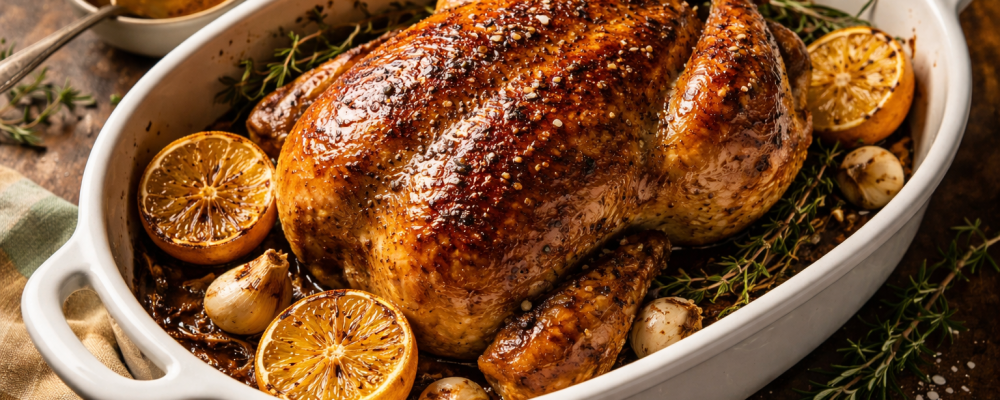

There are recipes that feel like the very definition of home cooking—dishes so fundamentally right, so deeply satisfying, and so universally beloved that they transcend trend and season to become true kitchen classics. Lemon Herb Roasted Chicken is exactly that kind of recipe. A whole chicken rubbed with fragrant olive oil, dried thyme and rosemary, and brightened with fresh lemon and garlic tucked into the cavity—it’s a dish that fills the house with the most incredible aroma for over an hour before it even reaches the table, and then delivers on every promise that aroma makes.
I’ve always believed that roasting a whole chicken is one of the most valuable skills a home cook can develop—not because it’s technically demanding, but because it produces such a spectacular return on a relatively modest investment. This recipe is my go-to version: simple enough to execute confidently on any given Sunday, flavorful enough to feel genuinely special, and versatile enough to anchor an entire week of meals from a single cook. The lemon and herb combination is timeless for good reason—bright, aromatic, deeply savory, and perfectly suited to the natural richness of a well-roasted bird.
What I love most about this recipe is the technique of getting the herb rub under the skin. That extra two minutes of effort ensures the seasoning flavors the meat directly rather than just the exterior, producing chicken that’s deeply seasoned and fragrant all the way through rather than just on the surface.
The Inspiration Behind This Recipe
This recipe was inspired by the French rotisserie tradition and the deeply satisfying simplicity of classical European roasted chicken—a preparation that has defined Sunday cooking in French, Italian, and Mediterranean households for centuries. The combination of lemon, garlic, and fresh herbs is one of the oldest and most beloved flavor profiles in European cooking, appearing in virtually every culinary tradition that has access to these ingredients because the combination is simply, undeniably perfect.
There’s also a deeply personal inspiration here. A roasted chicken filling the house with the scent of herbs and lemon on a weekend afternoon is one of those sensory experiences that feels fundamentally like home—the kind of cooking that connects us to something larger than a single recipe or a single meal. This recipe is my attempt to capture that feeling in the most honest, straightforward way possible.
It’s also a recipe rooted in a practical philosophy: that a single beautifully roasted chicken can anchor multiple meals across the week, making it one of the most economical and satisfying investments in the home cook’s repertoire.
A Brief History of Roasted Chicken
Roasting whole birds over fire is one of the oldest cooking techniques in human history, with evidence of poultry preparation dating back thousands of years across virtually every major civilization. In France, the poulet rôti—roasted chicken—became a cornerstone of both home cooking and restaurant culture, with the rotisserie chicken emerging as a beloved street food tradition throughout French cities from the medieval period onward.
The specific combination of lemon, garlic, and herbs with roasted chicken reflects the broader Mediterranean culinary tradition where these ingredients have always been considered the most natural and complementary partners for poultry. In Italian cooking, pollo al limone represents a beloved regional preparation that celebrates exactly this pairing. In Greek cooking, lemon and oregano over chicken is a foundational flavor combination that has defined the cuisine for generations.
The American Sunday roast chicken tradition draws on all of these European influences, combining them into a uniquely American expression of the form that has become one of the most beloved and enduring rituals in home cooking across the country.
Why This Roasting Method Works
Every technique in this recipe serves a specific and important purpose. Patting the chicken completely dry before applying the herb rub is the foundational step that enables the beautifully golden, crispy skin that defines a great roasted chicken. Moisture on the surface of the bird creates steam during roasting, which prevents browning—dry skin, by contrast, begins to crisp and caramelize from the first minutes in the oven.
Getting the herb and olive oil rub under the skin is the technique that most dramatically improves the finished bird. The skin acts as a natural barrier that prevents surface seasonings from penetrating the meat during roasting—but seasonings placed directly on the meat beneath the skin season the chicken from the inside out, producing flesh that’s fragrant and flavorful all the way through rather than just at the surface.
The lemon halves and fresh herbs placed inside the cavity function as an aromatic steam source throughout the roasting process, filling the interior of the bird with fragrant lemon and herb vapor that seasons the meat continuously from within. The ten-minute rest after roasting allows the juices to redistribute throughout the bird, ensuring every carve produces moist, flavorful slices rather than dry, juice-depleted meat.
Flavor Profile: What to Expect
This roasted chicken delivers a beautifully layered, deeply aromatic flavor experience that’s both elegant and deeply comforting:
Deeply golden, crackling crispy skin with a fragrant herb crust that shatters slightly with each carve and delivers concentrated, caramelized flavor in every bite
Juicy, tender white and dark meat that’s fragrant with thyme, rosemary, and lemon all the way through to the bone
Bright, clean lemon acidity that lifts the richness of the roasted chicken and provides a fresh, citrusy finish that keeps every bite feeling vibrant
Warm, earthy dried thyme and rosemary that build the herbal backbone of the entire dish and create that unmistakable roasted chicken aroma that fills the house during cooking
Fragrant roasted garlic from inside the cavity that perfumes the meat gently and adds a mellow, sweet savory depth to the overall flavor profile
Fresh thyme that contributes a bright, floral herbal note that the dried herbs alone cannot replicate and adds a subtle complexity to the finished bird
The overall effect is deeply satisfying, elegantly simple, and profoundly comforting—a dish that delivers the kind of wholesome, genuine flavor that makes everyone at the table slow down and savor every bite.
Tips for Making the Best Lemon Herb Roasted Chicken
A few thoughtful details make a meaningful difference in the finished bird:
Dry the chicken thoroughly: Use paper towels to pat every surface completely dry before applying the herb rub. This is the single most important step for achieving beautifully crispy, golden skin.
Get the rub under the skin: Use your fingers to gently loosen the skin from the breast and thigh meat and push the herb rub directly onto the flesh beneath. This seasons the meat far more effectively than surface seasoning alone.
Bring the chicken to room temperature: Allowing the chicken to sit at room temperature for thirty minutes before roasting promotes more even cooking from surface to bone—the cold center of a refrigerator-cold bird can result in overcooked exterior meat before the interior reaches the right temperature.
Use a meat thermometer: The only reliable way to know when a whole chicken is perfectly cooked is internal temperature. The thigh meat should reach 165°F at the thickest point, away from the bone.
Don’t skip the rest: Ten minutes of resting after roasting is non-negotiable for a juicy bird. Cutting too soon releases the juices before they’ve had time to redistribute throughout the meat.
Collect and save the pan drippings: The drippings that accumulate in the roasting pan during cooking are liquid gold—fragrant, deeply flavored, and perfect for making a quick pan sauce or gravy to serve alongside.
Serving Suggestions and Side Pairings
A beautifully roasted chicken is one of the most versatile centerpieces in home cooking and pairs naturally with a wide range of sides:
Creamy mashed potatoes to soak up the fragrant pan drippings and create the most classic, satisfying Sunday dinner combination
Roasted root vegetables cooked in the same oven alongside the chicken for an effortless, all-in-one approach to the meal
A simple green salad with lemon vinaigrette that echoes the citrus character of the chicken beautifully
Warm, crusty bread for mopping up the pan juices—essentially mandatory at the table
Roasted asparagus or green beans dressed with olive oil and lemon for a clean, bright vegetable pairing that complements the herb flavors naturally
Storage, Reheating, and Make-Ahead Tips
A whole roasted chicken is one of the most practical make-ahead investments in any home cook’s repertoire.
Refrigerate leftover chicken on the bone or carved in an airtight container for up to 4 days—the meat stays moist and flavorful throughout.
Use leftover meat for sandwiches, salads, soups, pasta, tacos, or grain bowls throughout the week—one roasted chicken yields enough meat for multiple subsequent meals.
Reheat carved portions gently in a 325°F oven covered with foil with a splash of chicken broth to prevent drying, or enjoy cold in salads and sandwiches where the lemon herb flavor is equally delicious.
The carcass and bones make an extraordinary homemade chicken stock—simmer with vegetables and herbs for two to three hours for a deeply flavored stock that elevates every soup and sauce it touches.
Why This Recipe Deserves a Spot in Your Rotation
Lemon Herb Roasted Chicken deserves a permanent, weekly place in your recipe collection because it is, quite simply, one of the most fundamentally satisfying and practically rewarding things you can cook in a home kitchen. It feeds a family beautifully, fills the house with an aroma that makes everyone genuinely happy, provides leftovers that fuel multiple subsequent meals, and produces a result that feels both effortlessly elegant and deeply comforting at the same time. This is the recipe that makes Sunday cooking feel meaningful, and the one that reminds you why a simple, well-executed classic will always be the most satisfying thing on any table.
Once it’s in your weekly rhythm, the weekend doesn’t quite feel complete without it.
Recommended Drink Pairing
The bright, lemon-forward, herb-scented character of this roasted chicken calls for a wine with enough elegance and acidity to complement its delicate flavors without overwhelming them. A white Burgundy or a lightly oaked Chardonnay is the ideal choice—its subtle richness and clean acidity echoing the lemon and roasted garlic notes beautifully. A Viognier or a white Côtes du Rhône also works wonderfully, its floral, aromatic character pairing naturally with the thyme and rosemary.
For red wine lovers, a light Pinot Noir with its earthy, cherry-forward character is the most elegant red pairing for a herb-roasted chicken. For non-alcoholic options, a sparkling water with lemon and fresh thyme, a chilled white grape juice spritzer, or a warm chamomile and honey tea all complement the bright, aromatic, herb-forward character of this beautiful roasted bird.
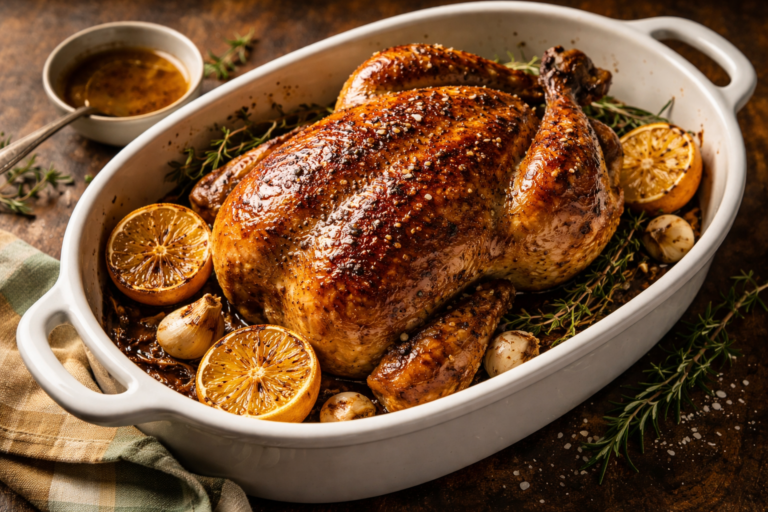
Lemon Herb Roasted Chicken
A whole chicken rubbed with olive oil, dried herbs, and fresh lemon—roasted until golden, crispy, and deeply fragrant from skin to bone.
4
servings15
minutes1
hour15
minutes550
kcal1
hour30
minutesIngredients
1 whole chicken
2 tablespoons olive oil
1 teaspoon salt
0.5 teaspoon black pepper
1 teaspoon dried thyme
1 teaspoon dried rosemary
1 whole lemon
3 cloves garlic
1 sprig fresh thyme
Directions
- Preheat the oven to 375°F (190°C).
- Pat the chicken dry and place it in a roasting pan.
- In a small bowl, mix olive oil, salt, pepper, dried thyme, and rosemary.
- Rub the mixture all over the chicken, including under the skin.
- Cut the lemon in half. Squeeze juice over the chicken; place halves inside the cavity.
- Add garlic cloves and the sprig of thyme into the chicken cavity.
- Roast in the oven for 1 hour and 15 minutes or until golden brown and cooked through.
- Let the chicken rest for 10 minutes before carving.
Nutrition Facts
- Total number of serves: 4
- Calories: 550kcal
- Cholesterol: 0mg
- Sodium: 620mg
- Potassium: 400mg
- Sugar: 8g
- Protein: 6g
- Calcium: 60mg
- Iron: 2mg
About This Author

Amelia Grace
Editor-in-Chief & Culinary Director
The heart and guiding voice of Daily Dish, Amelia leads our editorial vision and recipe development. With a background in food journalism and over a decade spent in professional kitchens, she has a knack for blending gourmet technique with real-world accessibility. Her goal? To make every reader feel like a confident cook, one dish at a time.
Favorite dish: Creamy lemon risotto with a sprinkle of fresh thyme.
Kitchen motto: “Good food doesn’t have to be complicated — it just has to be made with heart.”