
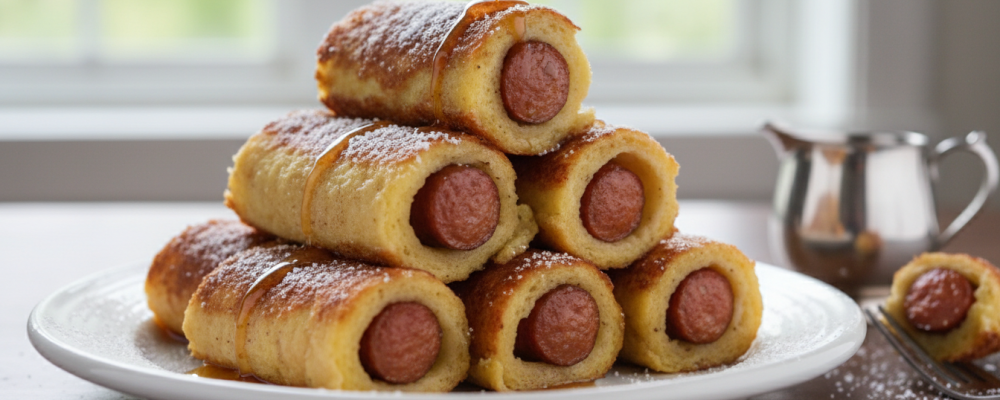

There are certain recipe ideas that make you slap your hand on the counter and say “of course—why didn’t I think of that sooner?” Sausage French Toast Roll-Ups are exactly that kind of idea. French toast is wonderful. Breakfast sausage is wonderful. Rolling one inside the other and creating a handheld, dippable, cinnamon-sugar-dusted breakfast log of joy? Absolutely brilliant. These roll-ups manage to be simultaneously fun and delicious, playful and genuinely satisfying—the kind of breakfast that makes everyone at the table a little happier than they were five minutes ago.
What I love about these roll-ups from a pastry perspective is how beautifully they execute the sweet-savory balance. The cinnamon sugar coating and vanilla-scented custard bring all the French toast sweetness you crave, while the sausage inside provides rich, savory depth that keeps everything grounded. They don’t compete—they complement each other the way the best flavor pairings always do, each element making the other taste better. And when you dip them in maple syrup? That extra sweetness against the salty, savory sausage creates this incredible flavor harmony that makes it impossible to stop at just one.
I also adore how these roll-ups are inherently interactive. They beg to be picked up with your fingers, dipped in syrup, passed around. They turn breakfast into a shared experience rather than everyone silently eating from individual plates. Food that encourages connection and playfulness has a special kind of magic, and these roll-ups deliver that alongside genuinely fantastic flavor. Make them once and they’ll immediately join your regular breakfast rotation—I guarantee it.
─────────
The Inspiration Behind This Recipe
This recipe was born from the eternal breakfast question: how do you make something familiar feel completely new? French toast and breakfast sausage have coexisted on breakfast plates for generations, always side by side but never truly together. The idea of rolling the sausage inside the bread before the French toast treatment wasn’t just a clever trick—it fundamentally changed the eating experience. Every bite includes both elements in perfect proportion rather than the random ratio of fork-to-sausage you get when eating them separately.
The flattening technique was the key insight. Regular bread is too thick and structured to roll without cracking, but once you flatten it with a rolling pin it becomes pliable, almost like a thin dough that wraps and holds its shape perfectly. This creates a tight seal around the sausage that maintains structure through dipping and cooking, resulting in a roll-up that holds together beautifully and creates that satisfying cross-section when you bite through the layers.
The cinnamon sugar finishing step elevates everything from good to spectacular. It adds a slightly crunchy, spiced coating that contrasts with the soft, custardy interior—that textural surprise makes each bite more interesting. It also creates a beautiful visual presentation, those golden-brown roll-ups dusted with cinnamon sugar looking like something from a bakery case rather than a home kitchen. That combination of impressive appearance and genuine deliciousness is exactly what I aim for in every recipe.
─────────
A Brief History of French Toast Roll-Ups
French toast itself dates back centuries—known as “pain perdu” (lost bread) in France, it originated as a practical way to revive stale bread through soaking in eggs and milk before cooking. This resourceful technique spread throughout Europe and eventually to America, where it became a breakfast staple enjoyed across all social classes. The dish’s versatility and ability to transform humble bread into something delicious made it enduringly popular.
The roll-up variation represents a distinctly modern innovation, emerging from food blogs and social media in the 2010s as home cooks experimented with ways to make familiar recipes more fun and photographable. The concept of rolling French toast around fillings—sweet or savory—gained rapid popularity precisely because it solved multiple problems: easier to eat, more interesting presentation, better flavor integration, and inherently shareable content for social platforms.
The specific combination of sausage filling with sweet French toast coating reflects the American tradition of embracing sweet-savory breakfast combinations. Pancakes and syrup served alongside bacon, French toast with sausage links—these pairings have always existed on American breakfast plates. The roll-up format simply integrates them more completely, creating a single item that captures both elements rather than keeping them as separate components. It’s a small innovation that makes a significant difference in the eating experience.
─────────
Why This Cooking Method Works
Flattening the bread with a rolling pin compresses the crumb structure, making it pliable and creating a denser texture that holds up to rolling, dipping, and cooking without falling apart. Unflattened bread would crack when rolled and allow the egg mixture to seep in unevenly. The flattening also reduces thickness, ensuring the bread cooks through completely during the relatively quick skillet time—thick bread might remain doughy in the center while the outside browns. This seemingly simple step is what makes the entire technique viable.
Rolling the sausage tightly in flattened bread before dipping creates a sealed package that maintains its cylindrical shape throughout cooking. The bread’s compressed structure grips the sausage securely, and the egg mixture coating acts as additional adhesive that sets during cooking. If you dipped the bread first and then tried to roll it around sausage, the wet, slippery bread would resist rolling and fall apart. The dry roll followed by custard dipping is the correct sequence for structural integrity.
Cooking in butter over medium heat while turning frequently ensures even golden-brown color on all sides. Unlike flat French toast that has only two sides, roll-ups have a 360-degree exterior that requires constant rotation for uniform cooking. The butter adds flavor while promoting the Maillard reaction that creates those appealing golden-brown surfaces. Medium heat (rather than high) gives the custard-soaked bread time to cook through and set before the exterior over-browns. Adding cinnamon sugar after cooking (rather than before) prevents burning and ensures the spiced sugar coating stays fresh, crunchy, and visible rather than caramelizing away during cooking.
─────────
Flavor Profile: What to Expect
These roll-ups deliver classic French toast sweetness wrapped around savory satisfaction:
- Cinnamon sugar crunch – Spiced sweetness coating that provides textural contrast and visual appeal
- Vanilla custard – Aromatic, slightly sweet egg mixture soaked into the bread
- Savory sausage – Juicy, well-seasoned pork with herby, slightly spiced flavor
- Buttery golden exterior – Rich browning from the skillet that adds depth
- Soft bread interior – Custardy, tender layers wrapped around the sausage
- Maple syrup sweetness – When dipped, adds caramel-like sweetness and sticky richness
- Sweet-savory harmony – The combination creates flavor contrast that makes both elements taste better
The overall experience is genuinely fun—these are food that makes you smile while eating. The initial bite through the cinnamon sugar crust, then the soft custard bread, then hitting the juicy savory sausage creates a sequence of textures and flavors that keeps things interesting throughout. Dipping in maple syrup adds another dimension that amplifies the sweetness and creates that perfect sweet-salty-savory combination. They’re indulgent without being heavy, playful without sacrificing real flavor.
─────────
Tips for Making the Best Sausage French Toast Roll-Ups
Use soft, thin-sliced sandwich bread—it flattens most easily and creates the most pliable, rollable wrapper.
- Remove every bit of crust – Crusts resist rolling and cause cracking; be thorough when trimming
- Flatten aggressively – Roll firmly and repeatedly until bread is very thin and flexible
- Use fully cooked sausage – The skillet time finishes the bread, not the sausage; ensure it’s cooked through first
- Roll tightly – Loose rolls fall apart during dipping and cooking; press firmly as you roll
- Seal with the seam down – Start cooking seam-side down to help the roll hold its shape
- Keep turning – Don’t let any side brown too deeply before rotating; these need frequent attention
- Add cinnamon sugar immediately – Sprinkle while still hot so it adheres properly to the warm surface
- Serve promptly – These are best within minutes of cooking while the exterior is still slightly crispy
For a fun variation, add a thin layer of cream cheese or peanut butter inside before adding the sausage—the extra richness creates an even more indulgent version that kids especially love.
─────────
Serving Suggestions and Side Pairings
These roll-ups are fun and filling enough to anchor a casual brunch, but they pair beautifully with sides that add freshness and balance. Fresh fruit—particularly berries, sliced bananas, or apple segments—provides sweet, bright contrast to the rich, savory roll-ups. Yogurt with honey offers creamy tang that complements the cinnamon sugar coating. For a heartier spread, scrambled eggs or a simple egg scramble adds protein without competing with the roll-ups’ starring role.
For presentation, arrange roll-ups on a platter fanned out from a central dipping bowl of warm maple syrup—it looks beautiful and creates that interactive eating experience that makes brunch more fun. A light dusting of additional powdered sugar or cinnamon across the platter adds visual appeal. For kids’ brunches or casual gatherings, stick toothpicks or small skewers into each roll-up for easy grabbing without sticky fingers.
These roll-ups shine at family weekend breakfasts, kids’ birthday brunches, slumber party mornings, or any occasion where you want food that creates excitement. They’re also excellent for brunch potlucks because they travel well and can be kept warm in a low oven. The handheld format makes them particularly good for casual gatherings where people are eating in different spots rather than seated together.
─────────
Storage, Reheating, and Make-Ahead Tips
- Cook sausage ahead: Prepare links up to 2 days ahead; refrigerate until ready to assemble
- Prep bread early: Trim and flatten bread up to 1 hour ahead; cover with a damp towel to prevent drying
- Assemble before cooking: Roll-ups can be assembled (uncooked) up to 30 minutes ahead; refrigerate
- Store cooked roll-ups: Refrigerate in an airtight container for up to 2 days
- Reheat in skillet: Pan-fry in a little butter over medium heat for 2-3 minutes per side to restore crispness
- Reheat in oven: Arrange on baking sheet and warm at 350°F for 8-10 minutes
- Avoid microwave: Creates soft, soggy exterior rather than desired crispness
- Freeze cooked roll-ups: Wrap individually and freeze for up to 1 month; reheat from frozen in oven
Like most French toast preparations, these are genuinely best fresh and hot from the skillet when the exterior is still slightly crispy and the cinnamon sugar is fragrant. However, they reheat remarkably well in a skillet with a little butter, making them practical for batch cooking and warming throughout a long brunch service.
─────────
Why This Recipe Deserves a Spot in Your Rotation
This recipe earns its place because it makes breakfast genuinely exciting without requiring any advanced skills or special equipment. Once you understand the simple flatten-roll-dip-cook technique, you have a versatile method that works with countless fillings—sweet or savory, simple or elaborate. These sausage versions represent the perfect starting point: universally appealing flavors, reliable results, and enough novelty to make breakfast feel special every time you make them.
Beyond versatility, these roll-ups create something genuinely difficult to manufacture: spontaneous breakfast joy. There’s something about their playful format, the cinnamon sugar dusting, the maple syrup dipping ritual that makes people of all ages smile and reach for another one. Food that creates that kind of uncomplicated happiness is valuable and worth keeping in your regular recipe rotation. These roll-ups do that beautifully—delivering real flavor, real fun, and the kind of effortless impressiveness that makes weekend mornings something to look forward to.
─────────
Recommended Drink Pairing
The sweet cinnamon sugar coating and savory sausage filling create a complex flavor profile that pairs beautifully with beverages offering either complementary warmth or refreshing contrast. Coffee is the natural choice—a medium roast with caramel or nutty notes echoes the cinnamon and maple flavors while providing the bitterness needed to balance the sweetness. A cinnamon dolce latte or vanilla cappuccino amplifies the warm spice notes and creates a thoroughly indulgent breakfast experience that feels thoroughly cohesive.
For something lighter, fresh orange juice provides bright citrus acidity that cuts through the butter and egg custard while complementing both the sweet coating and savory sausage. The combination of sweet roll-ups and tart orange juice mirrors the classic breakfast pairing of French toast and juice. Apple juice or warm apple cider brings fruit sweetness that harmonizes with the cinnamon without competing.
Hot chocolate creates an especially fun, indulgent pairing—the cocoa richness alongside cinnamon-dusted French toast roll-ups feels celebratory and special. For brunch gatherings, mimosas add sparkling elegance with citrus brightness that cuts through richness, while a sparkling apple cider option keeps things festive for all ages. Chai tea brings complementary cinnamon and warming spices that mirror the roll-ups’ spice profile while adding aromatic complexity. Cold milk remains the quintessential choice—cooling, creamy, and perfectly calibrated to balance both the sweetness and the savory elements while making the maple syrup dipping experience feel nostalgic and complete.
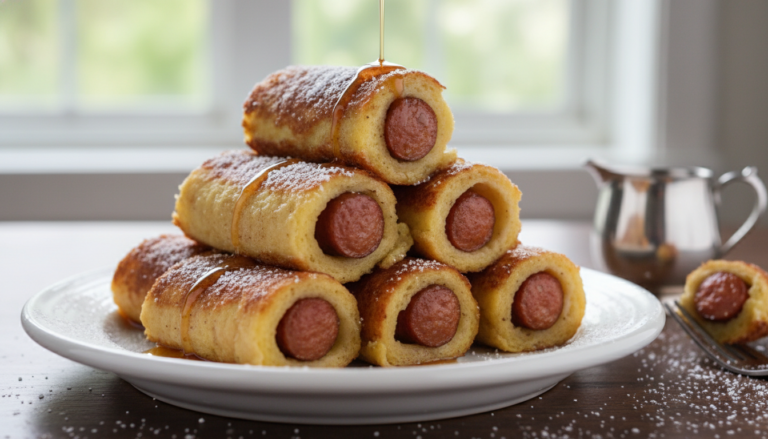
Sausage French Toast Roll-Ups
These Sausage French Toast Roll-Ups wrap juicy breakfast sausage in soft, egg-dipped bread coated in cinnamon sugar—creating handheld breakfast bites that deliver the perfect sweet-savory combination in every golden, crispy bite.
4
servings15
minutes15
minutes430
kcal30
minutesIngredients
8 slices bread
8 links breakfast sausage
2 large eggs
0.5 cup milk
1 teaspoon vanilla extract
1 tablespoon cinnamon sugar
2 tablespoons butter
0.5 cup maple syrup
Directions
- Remove crusts from bread and flatten slices with a rolling pin.
- Cook sausage links according to package instructions, then set aside.
- Whisk together eggs, milk, and vanilla extract in a shallow bowl.
- Place one sausage link on each bread slice and roll up tightly.
- Dip each roll-up in the egg mixture, coating all sides.
- In a skillet, melt butter over medium heat.
- Cook roll-ups in the skillet, turning frequently, until all sides are golden brown.
- Sprinkle cinnamon sugar over the cooked roll-ups.
- Serve warm with maple syrup for dipping.
Nutrition Facts
- Total number of serves: 4
- Calories: 430kcal
- Cholesterol: 0mg
- Sodium: 620mg
- Potassium: 400mg
- Sugar: 8g
- Protein: 6g
- Calcium: 60mg
- Iron: 2mg
About This Author

Aurora Wright
Pastry Chef & Dessert Editor
Aurora is the sweet side of Daily Dish. A trained pastry chef and dessert stylist, she’s responsible for our mouth-watering cakes, cookies, and confections. She brings precision, artistry, and a touch of whimsy to every recipe she creates — and taste-tests more chocolate than she’ll admit.
Favorite dish: Flourless dark chocolate torte.
Kitchen motto: “Life’s too short to skip dessert.”















