Black Eyed Peas Stew

Black Eyed Peas Stew

Healthy Fact of the Day

Black-eyed peas are rich in protein, fiber, and folate, supporting heart health and stable blood sugar levels. Soaking them overnight improves digestibility and reduces cooking time while maintaining nutrients.
Black Eyed Peas Stew

Black Eyed Peas Stew

Recipe by Daily Disher

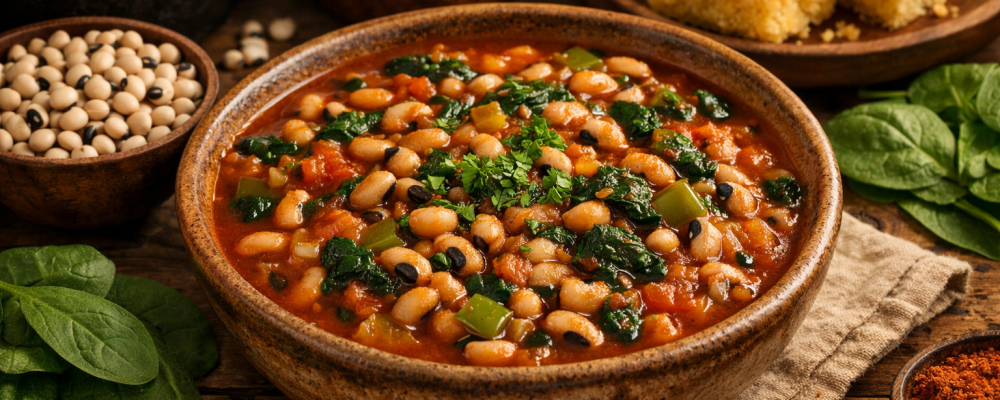
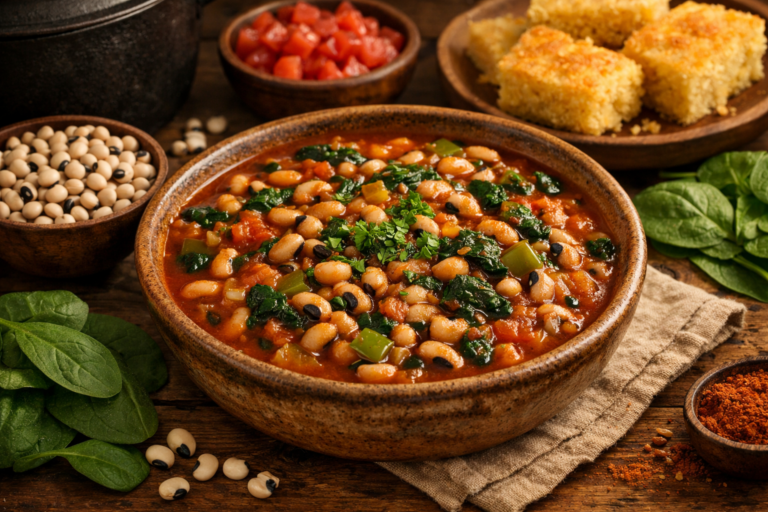
Black Eyed Peas Stew features tender black-eyed peas simmered with onions, bell peppers, tomatoes, and spinach in a flavorful broth spiced with paprika and cumin.

Course: MainCuisine: AmericanDifficulty: Easy
2.8 from 4 votes
Servings

4

servings
Prep time

15

minutes
Cooking time

45

minutes
Calories

350

kcal

1

hour 

    Ingredients

    • 1 cup dried black-eyed peas

    • 2 tablespoons olive oil

    • 1 onion, chopped

    • 2 cloves garlic, minced

    • 1 green bell pepper, chopped

    • 1/2 teaspoon paprika

    • 1/2 teaspoon cumin

    • 4 cups vegetable broth

    • 1 can diced tomatoes

    • 1/2 teaspoon salt

    • 1/4 teaspoon black pepper

    • 2 cups spinach, chopped

    Directions

    • Rinse and soak the black-eyed peas in water for at least 4 hours or overnight for best results.
    • In a large pot, heat olive oil over medium heat. Add chopped onions and cook until they are soft and translucent.
    • Add minced garlic and chopped green bell pepper to the pot. Sauté for a few minutes until the peppers are tender.
    • Stir in paprika and cumin to the sautéed vegetables, mixing well to evenly coat the ingredients with spices.
    • Add soaked black-eyed peas, vegetable broth, and diced tomatoes to the pot. Stir to combine all ingredients.
    • Bring the stew to a boil, then reduce heat to a simmer. Cover the pot and cook for about 45 minutes.
    • Season the stew with salt and black pepper, adjusting to taste. Stir in the chopped spinach until it wilts.
    • Serve the black-eyed peas stew hot, garnished with your choice of fresh parsley or additional spices.

    Nutrition Facts

    • Total number of serves: 4
    • Calories: 350kcal
    • Cholesterol: 0mg
    • Sodium: 620mg
    • Potassium: 400mg
    • Sugar: 8g
    • Protein: 6g
    • Calcium: 60mg
    • Iron: 2mg

    This Black Eyed Peas Stew brings Southern tradition and wholesome nutrition together in a warming bowl that’s perfect for New Year’s Day or any time you want comforting, plant-based goodness. Tender black-eyed peas simmer with aromatic vegetables and tomatoes in a flavorful broth enriched with warm spices like paprika and cumin, while fresh spinach wilts in at the end for a pop of color and nutrients. According to tradition, eating black-eyed peas on New Year’s Day brings good luck and prosperity—and with flavors this good, you’ll want to make this stew all year long.


    2.8 from 4 votes

    Recent Recipes

    The Kitchen Confidence Gap and How to

    • June 25, 2026
    • 10 min read

    Coconut Vodka Lime Crush

    • June 25, 2026
    • 11 min read

    Hawaiian Crispy Fried Chicken

    • June 25, 2026
    • 8 min read

    Little Caesars Just Launched a Spider-Man Pizza

    • June 24, 2026
    • 3 min read

    The Stories Behind the World’s Most Iconic

    • June 24, 2026
    • 11 min read

    Portobello Mushrooms with Wine and Thyme

    • June 24, 2026
    • 12 min read

    Pizza Grilled Cheese

    • June 24, 2026
    • 8 min read

    Coffee Mate’s Most-Requested Creamer Is Coming Back

    • June 23, 2026
    • 3 min read

    The Art of the Cheese Board: What

    • June 23, 2026
    • 10 min read

    Spinach and Corn Tacos with Guacamole

    • June 23, 2026
    • 10 min read

    Tip of the Day

    “Always let your meat rest before slicing.”

    Whether you're roasting a chicken, grilling steak, or baking pork tenderloin, letting cooked meat rest for 5–10 minutes before slicing allows the juices to redistribute evenly. This simple step keeps your meat juicy and tender, ensuring every bite is flavorful and moist. Bonus: It gives you a moment to plate your sides or garnish for a perfect presentation!

    Our Latest Recipes

    Blog
    Daily Disher

    The Kitchen Confidence Gap and How to Close It

    Research on cooking self-efficacy — the belief in one’s ability to prepare healthy meals — consistently identifies it as one of the strongest predictors of home cooking frequency and dietary quality, independent of actual cooking skill. People who believe they can cook well tend to cook more often, use more whole ingredients, and produce nutritionally superior meals compared to people with equivalent skills who lack this confidence. Building kitchen confidence is, in measurable terms, one of the most effective interventions for improving dietary health — making the confidence gap a nutritional issue as much as a culinary one.

    Read More »
    Beverages
    Aurora Wright

    Coconut Vodka Lime Crush

    Coconut water contains natural electrolytes including potassium, magnesium, and sodium that support hydration and muscle function — making this one of the most replenishing cocktails you can enjoy!

    Read More »
    Chicken Recipes
    Benjamin Brown

    Hawaiian Crispy Fried Chicken

    Using a buttermilk marinade rather than a plain brine tenderizes the chicken naturally through lactic acid, which means the finished chicken stays juicy with a thinner, more aerated crust—absorbing less oil during frying than a densely battered preparation. The baking powder in the dredge creates a lighter crust texture that maintains its crispness without requiring a second fry.

    Read More »

    Get your daily dose of delicious!

    Skip to content