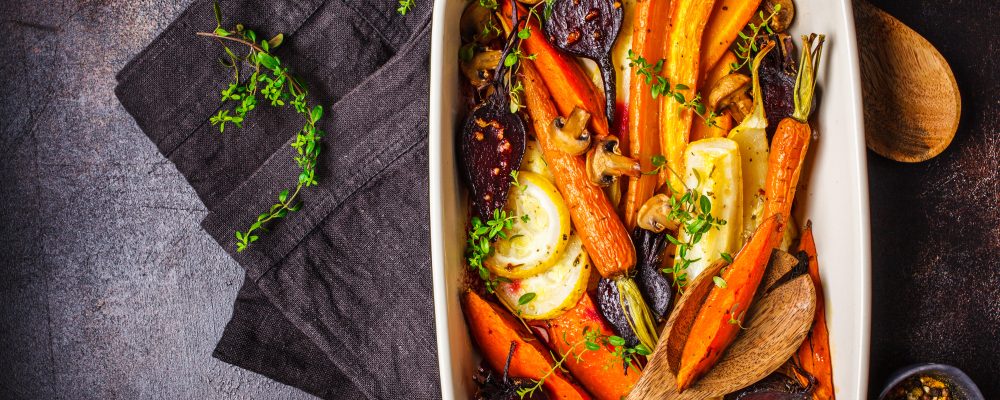

You roast vegetables hoping for caramelized edges and sweet, concentrated flavor.
What you get instead is pale, steamed vegetables that taste bland and look anemic.
You followed the recipe. You set the oven to 400°F. You tossed the vegetables in oil. You roasted them for the suggested time.
But they never developed that deep browning and crispy texture you see on restaurant plates.
The problem isn’t your oven or your vegetables.
It’s a series of small decisions—how you prep, how you arrange them, what temperature you actually use—that determine whether vegetables caramelize properly or just sit in the oven getting soft.
The Oven Isn’t Hot Enough
400°F sounds hot. For roasting vegetables, it’s actually moderate.
At this temperature, vegetables soften and cook through, but they don’t brown aggressively. They steam in their own moisture before caramelization can happen.
Chefs roast vegetables at 425°F to 450°F. Sometimes even hotter for certain vegetables.
This high heat drives off moisture quickly and creates the intense surface heat needed for caramelization.
The difference between 400°F and 450°F isn’t subtle. It’s the difference between vegetables that brown and vegetables that don’t.
If your vegetables consistently come out pale, increase the temperature. That alone will often solve the problem.
The Pan Is Overcrowded
You have a pound of vegetables. You put them all on one sheet pan because that’s convenient.
They’re touching. Overlapping. Piled on top of each other in places.
Crowded vegetables steam instead of roast. The moisture they release has nowhere to go. It creates a humid environment that prevents browning.
Chefs spread vegetables in a single layer with space between pieces. If they have too many vegetables, they use multiple pans or roast in batches.
This allows air to circulate. Moisture evaporates instead of pooling. Every surface is exposed to dry heat, which is what creates caramelization.
At home, people often try to fit everything on one pan. It’s understandable—who wants to wash two pans?
But crowding guarantees poor results. Use two pans if needed. The improvement is worth the extra cleanup.
The Vegetables Are Wet
Washing vegetables is necessary. Roasting them while they’re still wet is not.
Surface moisture has to evaporate before browning can begin. Wet vegetables spend the first 10 to 15 minutes of roasting time just drying out.
By the time they’re dry enough to brown, they’re often already fully cooked through. You’ve missed the window for developing color while maintaining texture.
Chefs dry vegetables thoroughly after washing—with towels or in a salad spinner.
The vegetables go into the oven completely dry. Browning starts immediately instead of being delayed by evaporation.
This seems like a minor detail. It’s not. Dry vegetables roast completely differently than wet ones.
The Pieces Are Too Small
Tiny vegetable pieces cook through before their surfaces can caramelize.
By the time you get color, the interior is overcooked and mushy.
Chefs cut vegetables into substantial pieces—large enough that they can develop a crust while the interior stays tender.
For most vegetables, that means chunks at least one inch across. Smaller for delicate vegetables like asparagus or green beans, larger for dense ones like potatoes or winter squash.
Home cooks often cut vegetables too small, thinking smaller pieces will cook faster or more evenly.
They do cook faster. But they also overcook easily and never develop proper caramelization.
You’re Not Using Enough Oil
A light spray or minimal drizzle doesn’t create the environment needed for browning.
Oil conducts heat better than air. It helps vegetables brown evenly and prevents them from drying out before they caramelize.
Chefs toss vegetables in enough oil to coat every surface—not dripping, but definitely more than a mist.
This seems excessive if you’re trying to keep calories down. But using too little oil produces vegetables that are dry and pale instead of caramelized and appealing.
The vegetables end up less satisfying, so you’re more likely to overeat other parts of the meal to compensate.
Use enough oil. The texture and flavor payoff is worth it.
The Vegetables Aren’t Being Flipped
Putting vegetables in the oven and leaving them untouched until time’s up doesn’t work.
The side touching the pan browns. The top stays pale. You end up with unevenly cooked vegetables—dark on one side, light on the other.
Chefs flip or stir vegetables halfway through roasting. This ensures even browning on multiple surfaces.
It’s one extra step that takes 30 seconds. But it’s the difference between vegetables that look professionally roasted and vegetables that look like they were cooked by someone who didn’t care.
Set a timer for the midpoint. Open the oven. Flip everything. Close the door. That’s it.
Different Vegetables Are Roasted Together
Brussels sprouts, carrots, and bell peppers all have different moisture content and density.
They cook at different rates. What’s perfect for one vegetable is overcooked or undercooked for another.
Chefs either roast vegetables separately or add them in stages based on cooking time.
Dense vegetables like carrots go in first. Medium-density vegetables like Brussels sprouts get added later. Quick-cooking vegetables like bell peppers go in last.
Home cooks often toss everything together and roast it all for the same amount of time. Then they wonder why some vegetables are burnt while others are raw.
If you must roast mixed vegetables on one pan, stagger their addition. Don’t put everything in at once.
The Pan Is Too Thin
Thin sheet pans heat and cool quickly. They have hot spots that cause uneven browning.
Vegetables on thin pans often burn in some spots while staying pale in others—even when arranged in a single layer.
Heavy, thick sheet pans distribute heat more evenly. They maintain consistent temperature across the entire surface.
Restaurants use commercial-grade sheet pans that are much thicker than most home pans.
If you’re using thin, flimsy pans, your vegetables will never roast as consistently as restaurant vegetables.
Invest in at least one thick, heavy-duty sheet pan. It makes a noticeable difference.
You’re Not Preheating the Pan
Putting vegetables on a cold pan, then putting that pan in a hot oven means the vegetables heat gradually.
By the time the pan is hot enough to brown them, they’ve already started releasing moisture.
Some chefs preheat the empty pan in the oven, then add oiled vegetables to the hot surface. This creates an immediate sear and jumpstarts caramelization.
It’s not necessary for all vegetables. But for things like potatoes or root vegetables where you want serious browning, it helps.
At home, people usually assemble everything on a cold pan because it’s easier. But that gentle warmup works against caramelization.
The Oven Door Keeps Opening
Every time you open the oven to check on vegetables, you drop the temperature significantly.
It takes several minutes for the oven to recover. During that time, vegetables are roasting at lower heat than intended.
Chefs check vegetables once—maybe twice—not every five minutes.
They trust the process. They know from experience approximately how long vegetables need at a given temperature.
Home cooks often check constantly, worried about burning. Each check delays browning and extends cooking time.
Set a timer. Don’t open the door until it goes off. Check then. Adjust if needed. But minimize door openings.
The Vegetables Aren’t Seasoned Properly
Underseasoned vegetables taste bland even when perfectly caramelized.
Salt before roasting does more than add flavor. It helps draw out some moisture, which actually aids in browning. It also seasons the vegetables throughout, not just on the surface.
Chefs season vegetables generously with salt before roasting. They also often add herbs, spices, or aromatics that bloom in the high heat.
Home cooks often either forget to season before roasting or use such a small amount that it makes no impact.
Season assertively. Vegetables can handle it. And properly seasoned, well-caramelized vegetables taste like they’re worth eating, not like a chore.
Convection Isn’t Being Used
If your oven has a convection setting, use it for roasting vegetables.
The fan circulates hot air, which speeds up moisture evaporation and promotes more even browning.
Convection roasting typically requires 25°F lower temperature than conventional roasting, or reduced cooking time at the same temperature.
Chefs use convection for almost all roasting. It produces superior results—faster cooking, better browning, more consistent texture.
Home cooks often ignore the convection setting, thinking it’s unnecessary or complicated. It’s neither. It’s just a fan.
If you have it, use it. Your vegetables will thank you.
What You Can Do This Week
Preheat your oven to 450°F—not 400°F.
Cut vegetables into substantial, uniform pieces. Dry them completely. Toss with enough oil to coat generously.
Spread them in a single layer on a heavy pan with space between pieces. Use two pans if necessary.
Roast without opening the door. Flip halfway through.
Pull them when they’re deeply browned with some charred edges—darker than you might initially think looks right.
That’s how you get caramelized vegetables. Not steamed, not pale, not limp.
Actually caramelized.
The Takeaway
Caramelized vegetables aren’t the result of magic or special equipment.
They’re the result of understanding what causes browning and creating the conditions for it to happen.
High heat. Dry vegetables. Single layer. Adequate oil. No crowding.
Miss any of these factors and caramelization suffers. Get all of them right and even basic vegetables become something you actually want to eat.
Restaurants serve vegetables that look and taste appealing because they follow these principles every time.
Home cooks often skip one or more steps, then blame the vegetables or the oven when results are disappointing.
But it’s not the vegetables. It’s the technique.
And now you know what that technique actually requires.
Not guessing. Not hoping. Just creating the right environment for caramelization to occur.
Do that, and your vegetables will finally look and taste the way they should.